
Manjunath Nayak:
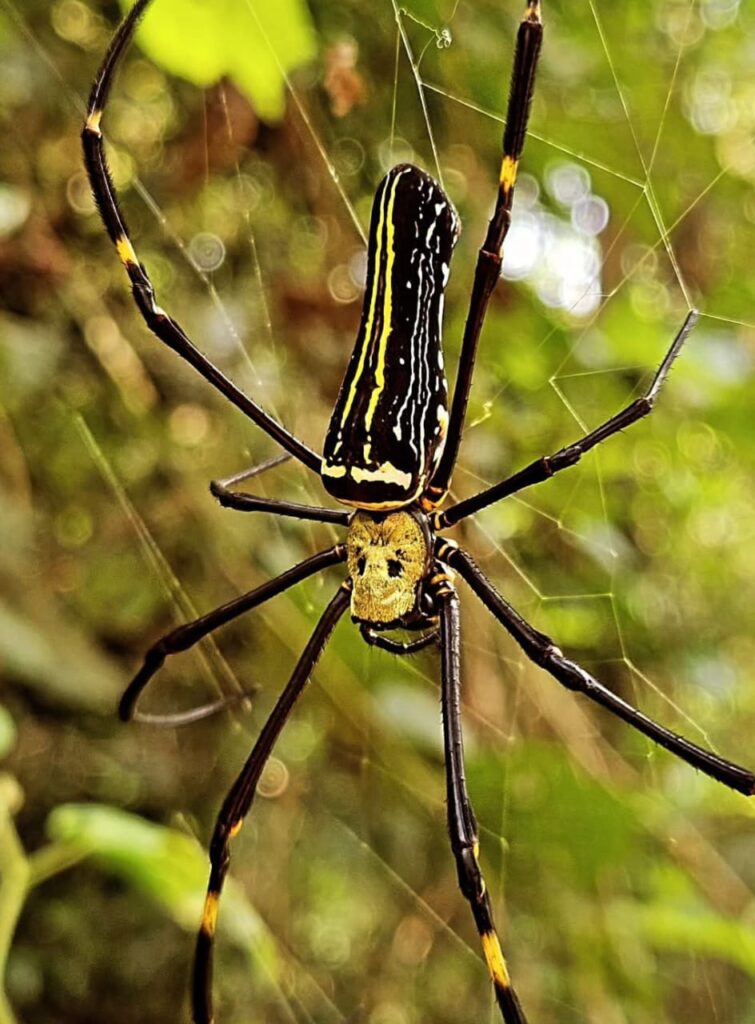
Sasarwad is a unique island in Shirahatti taluk, Gadag district, Karnataka. The Sasarwad Island is surrounded by Tungabhadra River which has natural bamboo forest and houses a good number of different variety of snakes. Giant wood spider which is common in the dense forests of Western Ghats has been found in the forests of Sasarwad Island.
This spider was first spotted by Sangamesh Kadagd, Sharanu Goudar, Shantappa forest watcher while studying and observing different migratory birds in the Gadag district.
The giant wood spider, also known as the Golden orb-weaver (Nephila pilipes or Nephila maculata) is a large orb-weaver spider found in tropical forests of Asia and Australia. It is known for its impressive, large, golden-hued webs that can be several meters in diameter, strong enough to catch large insects and even small birds. Females are significantly larger than males, with males often living a klepto-parasitic life on the female’s web.
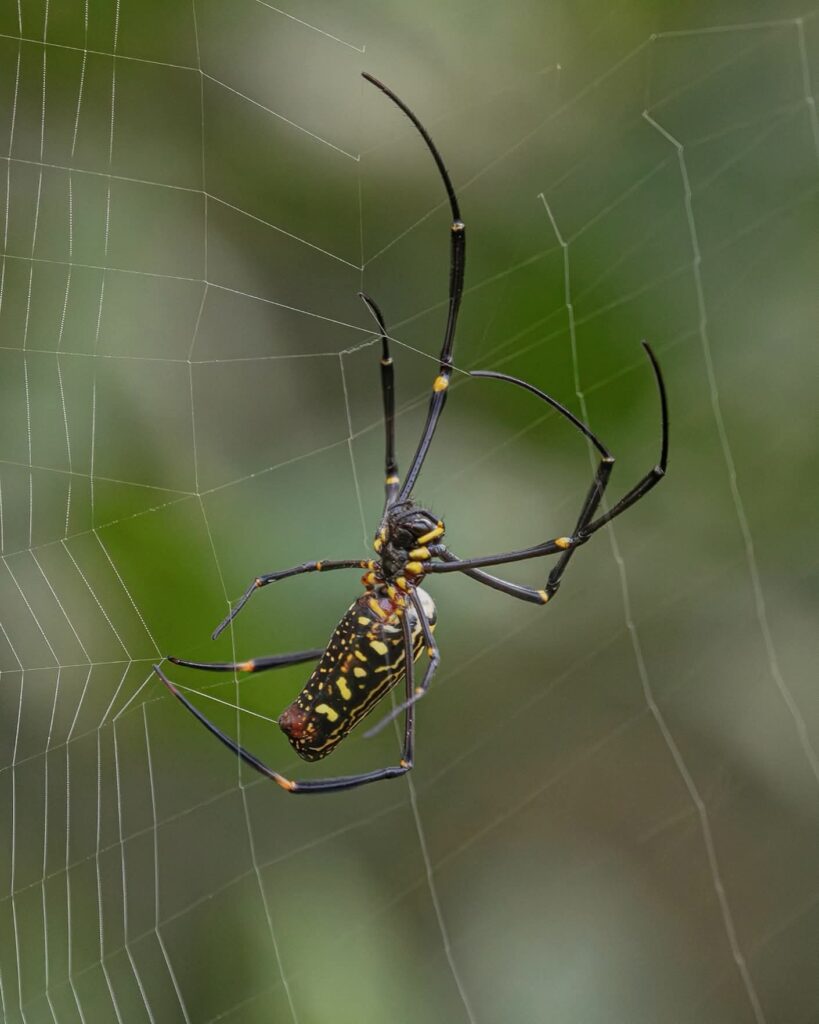
- Appearance and size: Females are much larger than males, growing up to 30-50 mm in body size, with a leg span of up to 20 cm. Total size – 3 inches to 4 inches. Males are only 1-6 mm in body size.
- Web: They build large, strong, golden-colored orb webs, sometimes up to 2 meters in diameter. The silk is yellow due to the presence of xanthurenic acid and quinones.
- Habitat: They are commonly found in forested areas, plantations, and gardens with tall trees. Their web architecture can vary depending on the density of the forest.
- Prey: Their diet includes large insects like flies and beetles. While their strong webs can occasionally trap small birds, they do not typically eat them.
- Behavior: Males often live on the female’s web, stealing food (klepto-parasitism). After mating, males may deposit a “mating plug” in the female’s genitalia to ensure they father any resulting offspring. Females lay egg sacs in a small pit dug in the ground, which they cover with leaf litter and soil.
- Toxicity: They have a neurotoxin that they use to immobilize their prey after capture.
(PHOTO CREDIT: ALL IMAGES BY SANGAMESH KADAGAD)