
Meera Bhardwaj:
The recent Supreme Court order mandates holding of Tiger Safaris in tiger reserves (TR) as per NTCA (National Tiger Conservation Authority) guidelines on tourism. However, most media and news outlets appear to be misreading the Supreme Court Judgment of November 17, 2025, and have reported that tiger safaris have been banned in the core and critical habitat of the tiger reserves.
As per Supreme Court order dated November 17, 2025, all States must adhere to the NTCA guidelines on tourism, thus, adopting the overarching aim for regulation to move towards a system of community-based tourism around Tiger Reserves.
Vehicular carrying capacity, as prescribed in the NTCA guidelines, needs to be calculated and strictly enforced. Further, complete ban on night tourism must be implemented. Let us take a look at the wide-ranging order of the SC based on the expert committee report.
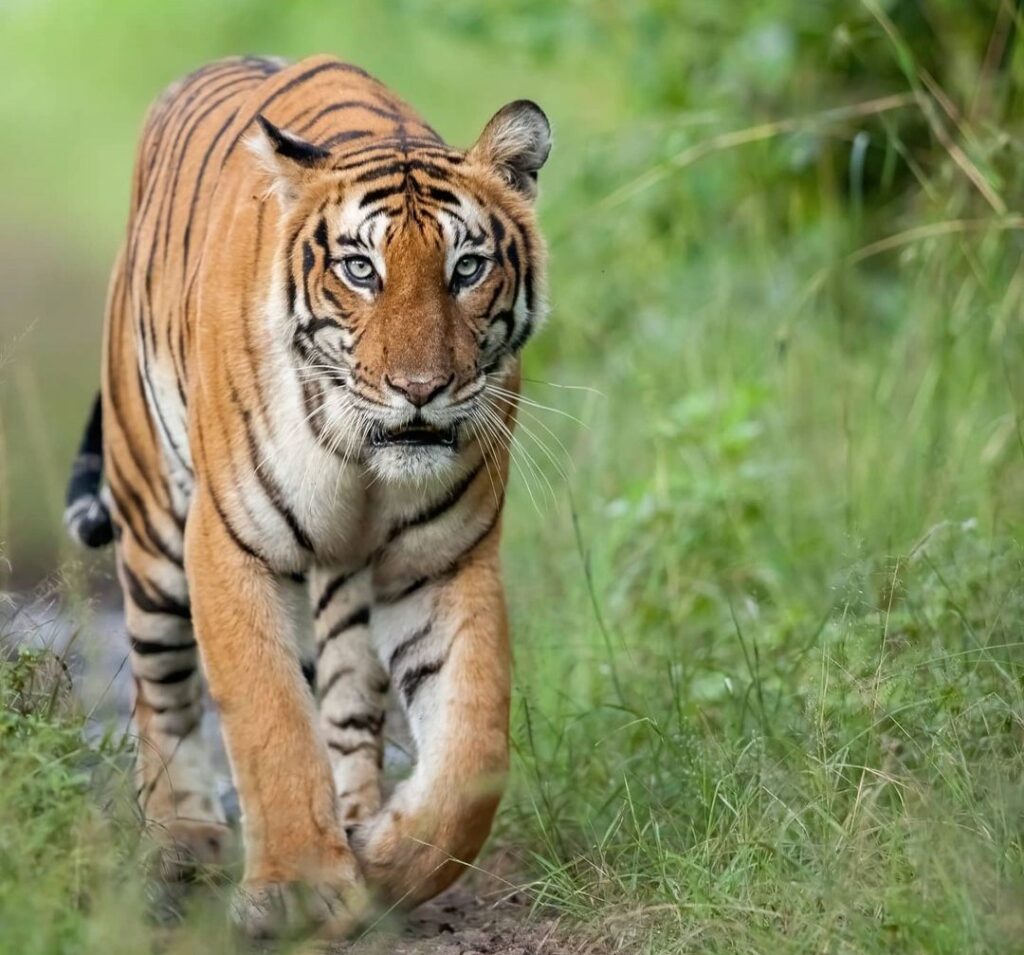
SC ORDER ON TOURISM & OTHER ISSUES IN TIGER RESERVES
48.1. Ecotourism cannot resemble mass tourism and must be adequately regulated and adhere strictly to NTCA Guidelines;
48.2. New eco-friendly resorts may be allowed in buffer but shall not be allowed in an identified wildlife corridor;
48.5. Mobile phones within tourism zones of the core habitat of the tiger reserve should not be permitted;
48.6. Vehicular carrying capacity as prescribed in the NTCA guidelines needs to be calculated and strictly enforced;
48.7. Complete Ban on Night Tourism must be implemented;
48.8. In those TR where roads traverse the core/critical habitat, strict night regulation (traffic ban from dusk to dawn) except ambulances or emergency;
49. Permissible noise levels from the boundary of TR will be applicable;
49.1. Entire Area of protected area (including ESZs) shall be notified as “Silence Zones” under the Noise Pollution Act within February 16, 2026.
50.1.1. Delineation of core and buffer areas: Notifying buffer areas is imperative for tiger land tenure dynamics to operate in a landscape and to effectively implement the landscape approach to conservation. Hence, all the States are hereby directed to notify the buffer and core areas of the Tiger Reserves within May 16, 2026.
50.1.2. Preparation of Tiger Conservation Plan: In light of the findings of the Expert Committee that TCPs are not uniformly in place, all States are hereby directed to prepare a Tiger Conservation Plan within February 16, 2026.
50.1.3. Steering Committees: Since the Expert Committee found that Steering Committees in many States have not framed TCPs and are not meeting regularly, it is, therefore, directed that Steering Committee if not yet constituted for each Tiger Reserve, shall be done so within January 16, 2026.
50.1.4. We further direct the NTCA to monitor the issue as to whether the TCPs have been put in place or not and whether they have been meeting on a regular basis or not. It is directed that the Steering Committees shall hold at least two meetings in a year.
50.2.6. TCP should also have the tiger carrying capacity calculated as per extant norms, based on which habitat interventions should be decided;
50.1.5. Adherence to the NTCA guidelines on tourism: We direct that all States must adhere to the NTCA guidelines on tourism, thus adopting the overarching aim for regulation to move towards a system of community-based tourism around Tiger Reserves. Its prescription against night tourism in entirety, is also hereby approved.
50.3.1. The MoEFCC and CEC are directed to jointly set up a Special Cell to review and assess staffing patterns and cadre requirements in all Tiger Reserves. This exercise shall be completed in a time-bound manner, no later than November 17, 2026.
RESCUE & REHABILITATION CENTRES
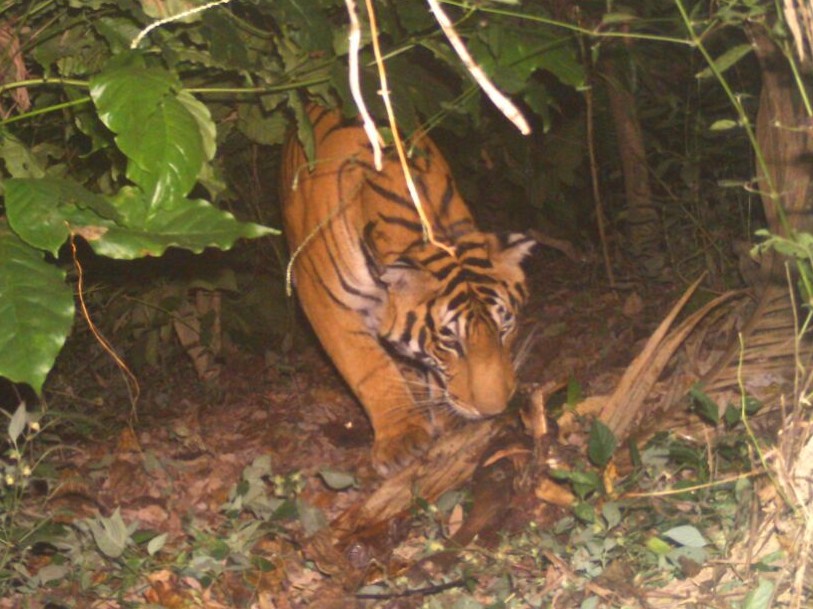
The Supreme Court ruling is very clear on the establishment of tiger safaris in tiger reserves. It mandates: Tiger Safaris (TS) shall be allowed only in association with a full-fledged rescue and rehabilitation centre for tigers where conflict, injured or abandoned animals are housed for care and rehabilitation.
Further, the Supreme Court has stated they may be established and run with due consideration of the ‘Guidelines to Establish Tiger Safari in Buffer and Fringe Areas of Tiger Reserves 2019’ issued by the NTCA.
ESZ NOTIFICATION FOR TR
Not all tiger reserves in the country have notified Eco-Sensitive Zone (ESZ), so the apex court has directed all state govts to notify ESZ around all TR. This should include buffer and fringe areas.
The ESZ notification shall be done no later than November 16, 2026. The formulation of the ESZ for these TR will abide by NTCA guidelines and MoEFCC letter dated 23.4.2018.
CONSTITUTE STEERING COMMITTEES & TCPs
However, the real worrisome aspect is the reckless manipulation of habitat in the Core Areas of Tiger Reserves. This is driven by huge funding approved on the basis of ecologically disastrous Tiger Conservation Plans (TCPs).
The apex court has held that that Steering Committees in many States have not framed TCPs and are not meeting regularly. All States with tiger reserves are now under directions to constitute Steering Committees within two months of the judgment that is by January 17, 2026.
WHAT ABOUT TIGER SAFARIS IN KARNATAKA?
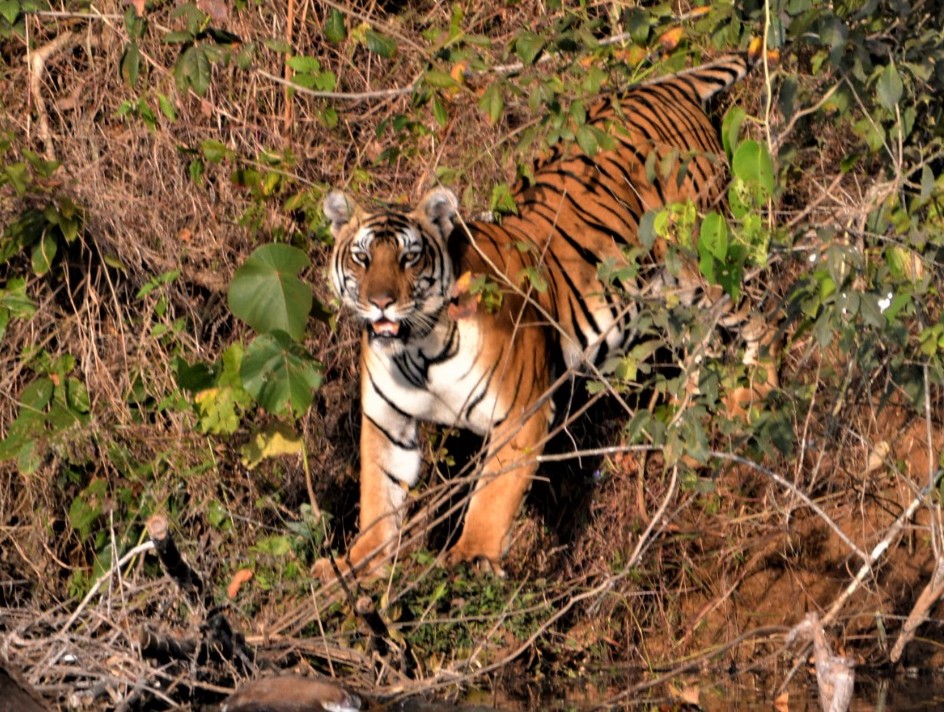
With the recent Supreme Court order mandating the holding of tiger safaris as per NTCA guidelines, the Karnataka Forest Department (KFD) will have to carry out studies, review and revise the present tiger safaris in all the five tiger reserves. Coming to Karnataka, all the five tiger safaris are currently held in the core areas of Nagarhole, Bandipur, Kali, BRT and Bhadra tiger reserves.
As per Karnataka Forest Department (KFD), they are held in identified and regulated zones keeping in mind the utmost importance of tiger conservation. But there have been lot of issues about unauthorized core zone tourism activities in Karnataka TR highlighting the urgent need for stricter enforcement as per NTCA guidelines.
TIGER SAFARIS IN CORE HABITAT
Speaking to Green Minute News, B K Singh, former PCCF who has served as Chief Wildlife Warden for three years in Karnataka said, “Tiger Safaris are held in the core and critical habitats of all the five tiger reserves in Karnataka and any information that it is being held in buffer area is totally misleading.”
However, activists say a lot of violations have been reported especially from Nagarhole and Bandipur tiger reserve wherein they have exceeded the “carrying capacity” affecting the very survival of the tigers. They also allege construction of linear structures for facilitating tiger safaris in tiger reserves.
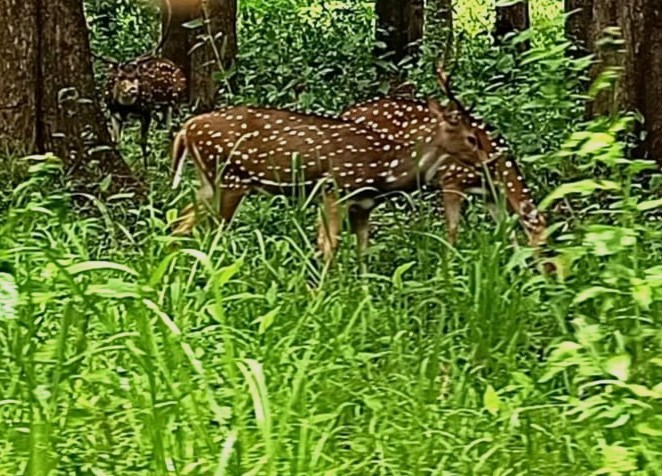
SAFARI BAN IN NAGARHOLE-BANDIPUR, PHASED RESUMPTION
Currently, tiger safaris have been banned temporarily (since November) in both Bandipur and Nagarhole Tiger Reserves due to recurring tiger attacks. This is in wake of rising human-wildlife conflict, death of three persons and one permanently disabled, straying of tigers from the fringe areas into villages resulting in frequent conflicts, said Forest, Ecology & Environment Minister Eshwar Khandre.
In view of suggestion for gradual, phased resumption of tiger safari in Bandipur and Nagarhole, an Expert Committee will study whether wildlife is coming out of the forest due to the annoyance of tiger safari vehicles. The EC will also study the carrying capacity of the TRs. This was decided in the 20th meeting of Karnataka State Wildlife Board on January 2 under the chairmanship of CM Siddaramaiah.
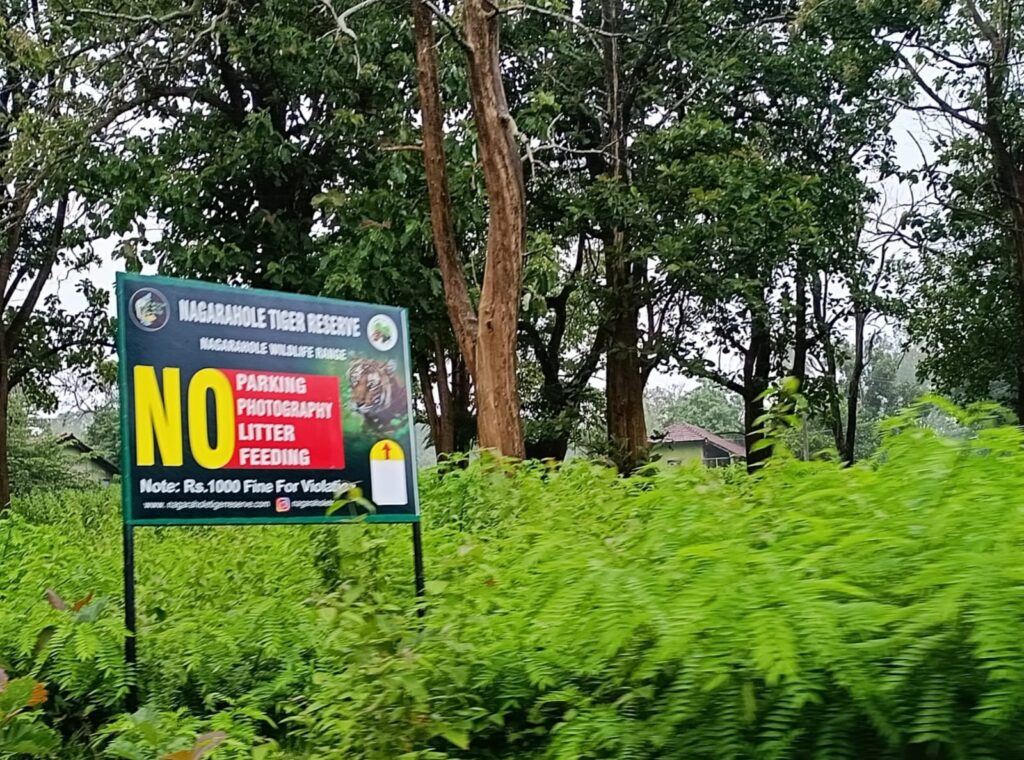
WILL TIGER SAFARIS UNDERGO CHANGES?
Tiger Safaris in Karnataka are in designated areas with new and future tourism activities planned in buffer areas, says a former PCCF. He opines, “As per NTCA guidelines, we expect to find tiger safaris with newer or revised routes. This will give a fillip to tiger conservation and a strong push to keep not only core but also forested buffer areas pristine for the tigers.”
Now with Supreme Court’s wide-ranging order on the conduct of tiger safaris in TR, how will Karnataka conduct its tiger safaris even as abiding by NTCA guidelines that is mandated for tiger conservation, well it remains to be seen?
All tiger range states have to keep in mind that tiger Safaris shall be subject to the conditions and restrictions mentioned in the report of the Expert Committee (EC) which was set up by Supreme Court early 2025. The EC comprised members Chandra Prakash Goyal (CEC Member), Vaibhav C Mathur (DIG Forests, NTCA), Dr Qamar Qureshi (Scientist G, WII), and R Raghu Prasad (IG Forests, Wildlife) as Member Secretary, focusing on eco-tourism, staff welfare, and habitat protection.