
Meera Bhardwaj:
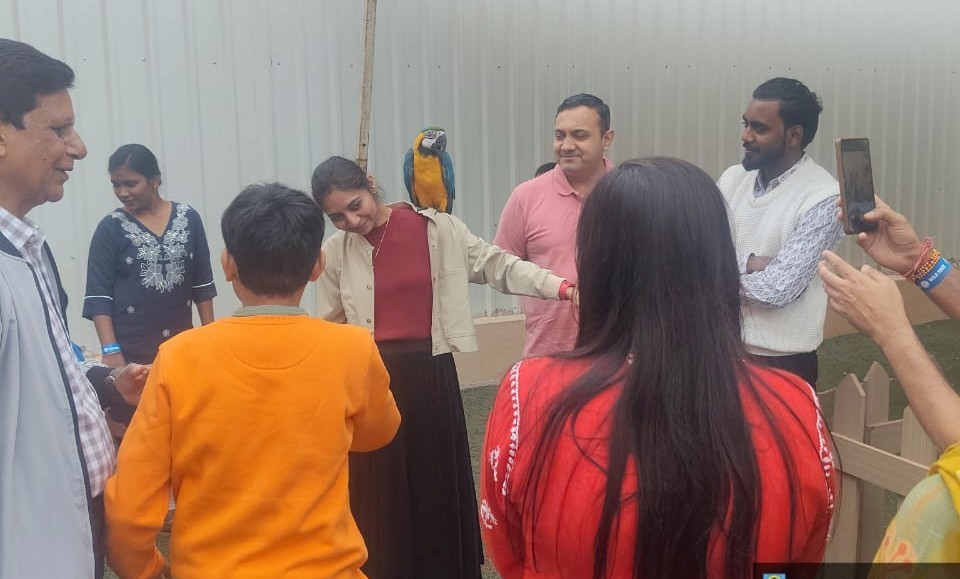
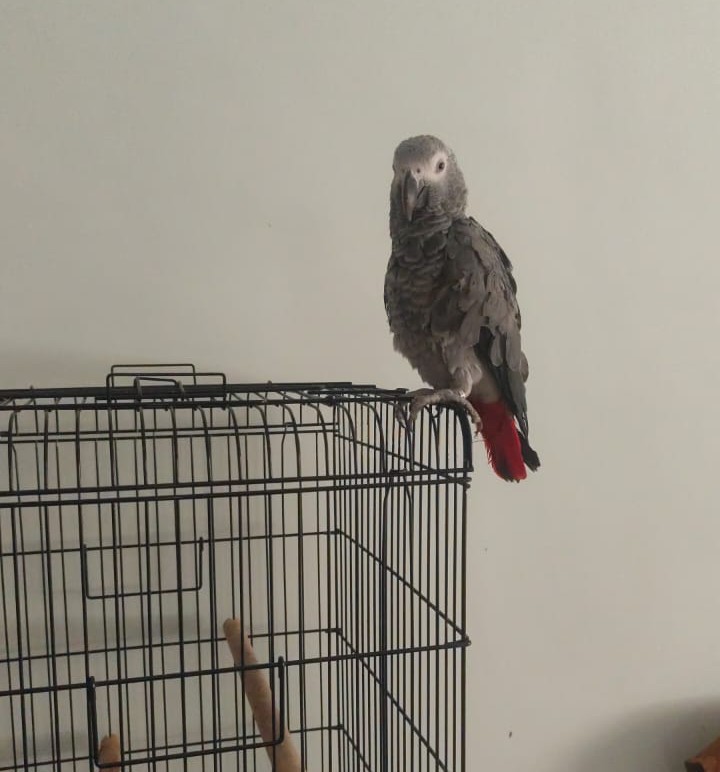
Live and Exotic birds including Blue and Yellow Macaw, African Grey Parrot and Conures were seized in Bengaluru on Sunday. They all carry certain “Zoonotic Diseases and can be transmitted to humans.
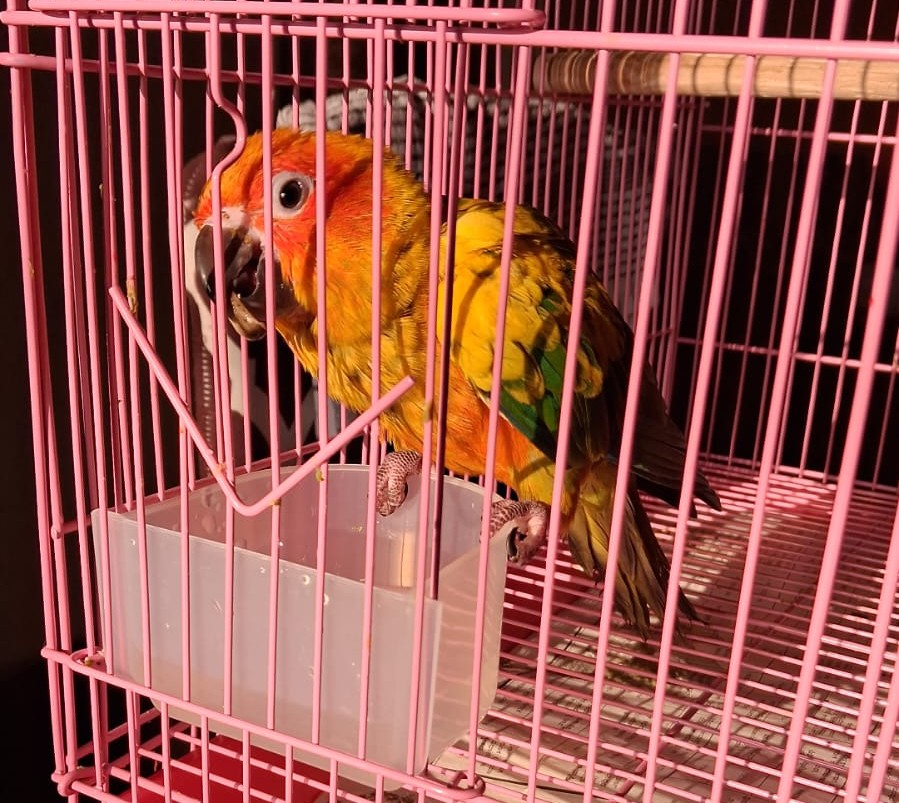
These exotic birds were seized from a Pub in northern part of Bengaluru. This unethical and illegal practise of showcasing and exhibiting Live and Exotic species for commercial purposes is on the rise in recent times. Conures are small to medium-sized parrots illegally traded from central & south America.
In fact, displays of Live and Exotic animals are prohibited under Schedule VI of Wildlife (Protection) Amendment Act, 2022. Illegal trading of Exotic Species and keeping them as Pets has become a menace in Bengaluru.
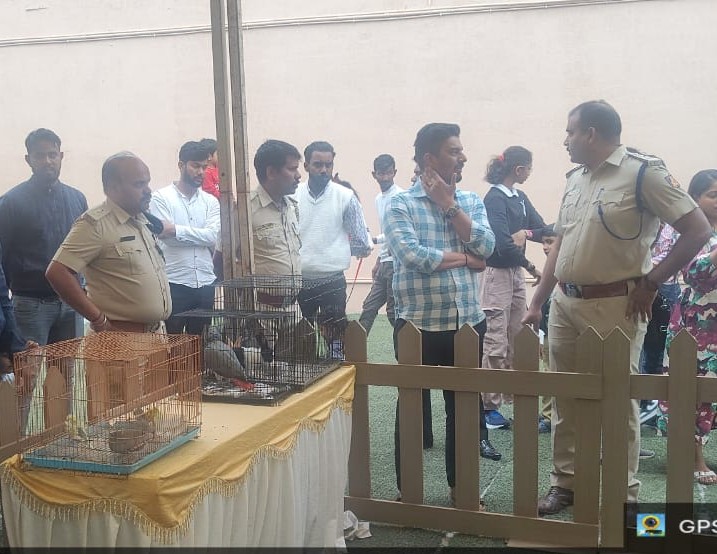
Based on videos and images on social media, officers of the Karnataka Forest Department from Yelahanka Range, Bengaluru Urban division, under the guidance of the Conservator of Forests, S Sivasankar and Deputy Conservator of Forests, N Ravindra Kumar, cracked down on Wild Pour Pub at Hennur Bagalur Main Road.
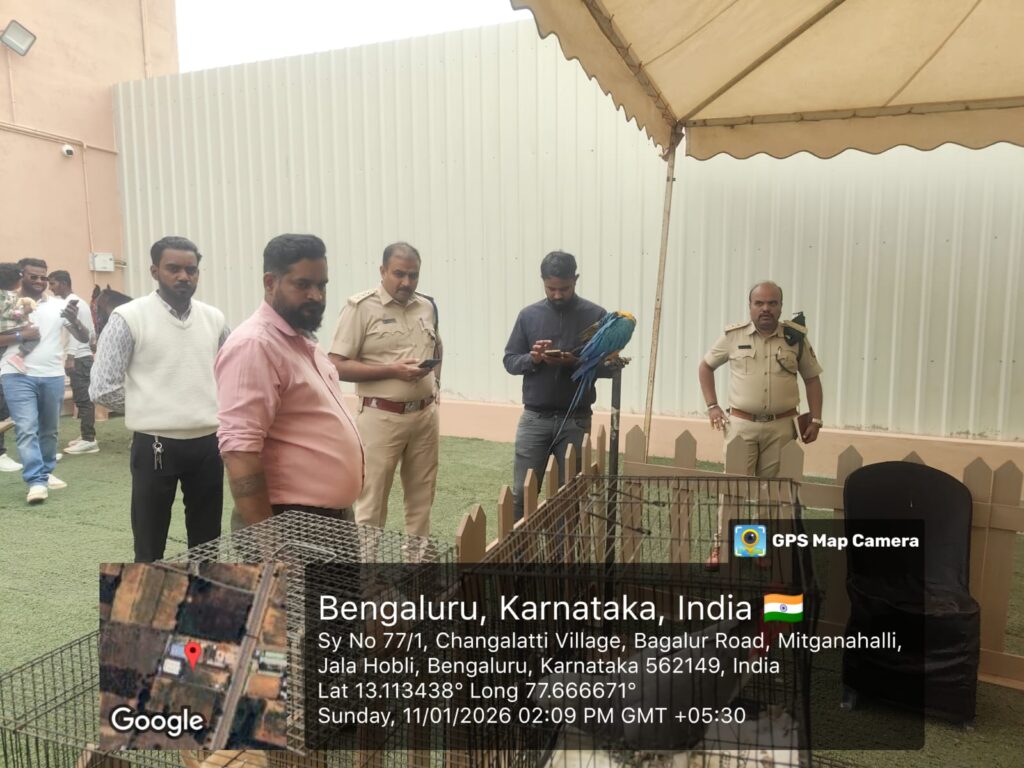
On 11.01.2026, Sunday, they seized Live and Exotic birds including Blue and Yellow Macaw, African Grey Parrot and Conures which belong to Psittacidae family and are protected under Appendix I & II of Schedule VI of Wildlife (Protection) Amendment Act, 2022.
The Wild Pour Pub management bought such exotic bird species on rental basis from a vendor named Roohidh Pasha and allowed the display of Live and Exotic animals as an added attraction for the entertainment of its customers and charged certain rates. This clearly proves how exotic but protected species are being exploited for commercial purposes without adhering to existing norms.
Upon interrogating the accused Roohidh Pasha from Guddadahalli, he confessed that the Blue and Yellow Macaw was bought on rent from one Chandan Acharya of Pets Choice centre in Vajrahalli, Kanakapura road and the African Grey Parrot was bought from Mahendra’s Saloon shop in J P Nagar 8th phase. However, the accused failed to provide any valid permit or registration for possessing the Live and Exotic bird species which are protected animals.
Under the supervision of ACF, Apoorva and Ganesh, the team comprising Varun Kumar, RFO, Yelahanka, Ramesh Babu, DRFO along with staff – Srikanth Rathod, Shashikumar, Ramesh and Thoufik Bhasha were involved in the seizure operations and rescued the animals from their illegal possession.
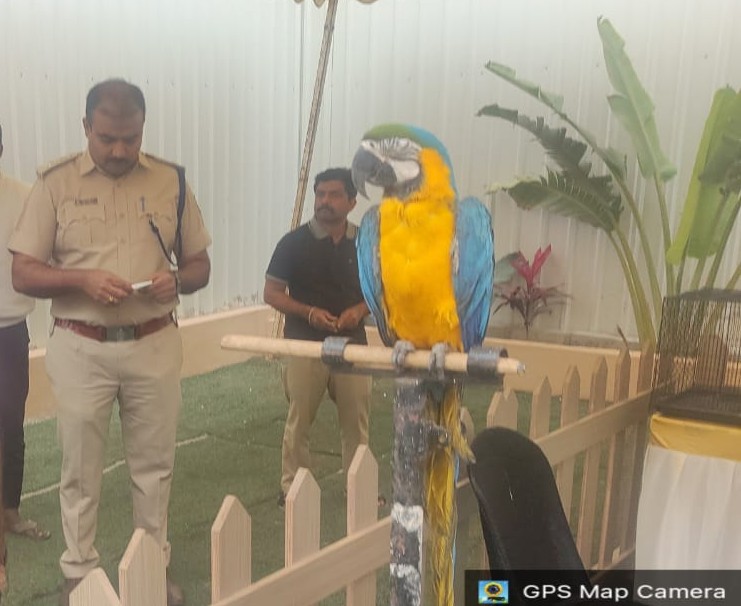
Speaking to Green Minute, Yelahanka RFO Varun said, “Such illegal practise of displaying exotic species is on the rise in Bengaluru. Possession is allowed but it cannot be displayed for earning money. As per the 2022 amendment to the Wildlife (Protection) Act, one has to declare such possessions on the website of MoEFCC parivesh. That is without proper permit, one cannot display such Live and Exotic bird species. Although it is a bailable offence, it is illegal to exhibit them for earning money and such acts will attract an imprisonment of three years.”
Wildlife Offence case WLOR-02/2025-26 has been booked and the seized exotic birds have been handed over to the rescue centre at Bannerghatta Biological Park. Based on the statements of the accused, further investigation and raids will be carried out in the coming days.
EXOTIC SPECIES AS PETS ON RISE
Bringing exotic species illegally and selling them as pets has become a big menace in Bengaluru as such exotic species may turn invasive in the local environment and may, seriously affect the ecology. For instance, exotic species like the Red Eared Slider Turtles brought from other countries have become the world’s worst invasive species and severely impacted local species in wetland habitats.
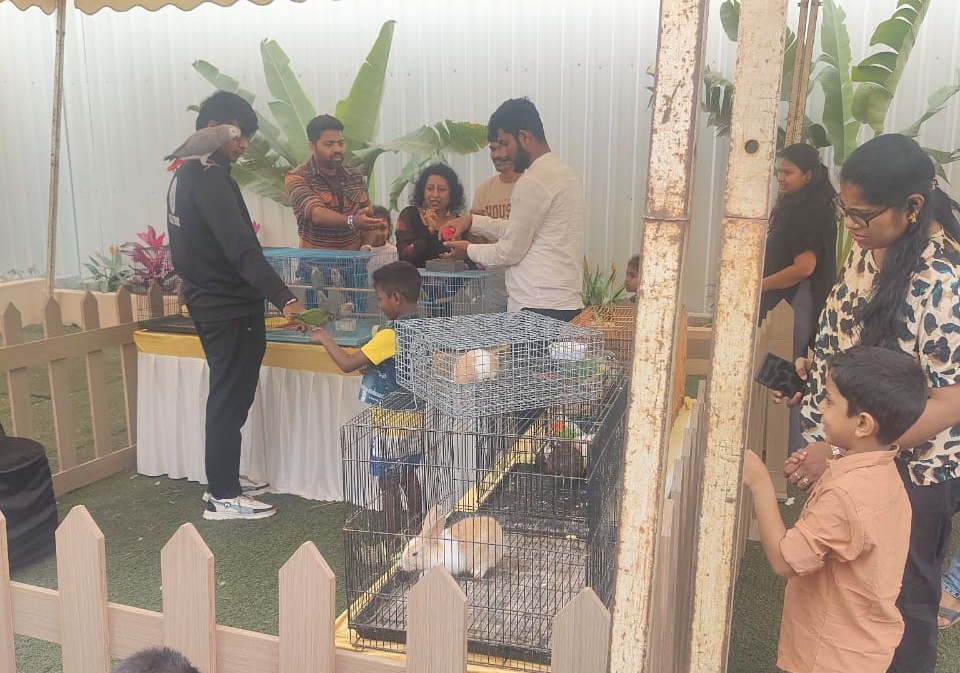
EXOTIC SPECIES AS PETS IN BENGALURU
- African Grey Parrots
- Sun Conures
- Blue and Yellow Macaws
- Red Eared Slider Turtles
- Suckermouth Sailfin Catfish
- Green Iguana
- Cockatoos
- Lovebirds
- Hamsters
Further, lots of people in Bengaluru are in possession of exotic species and keep them as pets in their homes without realizing the serious consequences of such exotic species on the local environment. Keeping them as pets at home without any knowledge of a foreign species is dangerous.
ILLEGAL TRADING OF EXOTIC SPECIES AS PETS
For decades now, African Grey Parrot and Macaw have been illegally traded from Congo, Uganda, other countries through transit points of Bangladesh and Myanmar. The species is widely available in Indian pet markets despite a near-total ban on international commercial trade, pointing to massive illegal imports and black-market activities.
Sun Conures are illegally brought to India from south America through Bangladesh, Nepal, Dubai and south east Asia.
The Endangered African grey parrot is listed under Appendix I of the CITES, which affords it the highest level of protection and effectively bans all commercial international trade. The species is also classified as “Endangered” by IUCN due to population decimation from wild capture.
Further, keeping an African Grey Parrot as a pet in India is highly regulated and effectively illegal for most people, as the species is CITES Appendix I (highly endangered), requiring strict permits (CITES, DGFT) and registration, which are rarely, if ever, issued as personal pets.
IMPACT OF EXOTIC SPECIES ON HUMANS, OTHER SPECIES
Exotic birds and animals escaping captivity or being released by people can transmit various zoonotic viruses, bacteria, and parasites to humans and local species through direct contact, droppings, aerosols, or vectors like mosquitoes, says a veterinarian expert from Delhi.
Common threats include psittacosis from parrots and avian influenza from waterfowl, which have caused outbreaks in native wildlife and human pneumonia cases.These pathogens disrupt local ecosystems and public health, especially in India with high biodiversity.
DISEASES FROM EXOTIC BIRDS
Psittacosis (Chlamydia psittaci): Bacterial infection from parrots or cockatoos’ spreads via inhaled dust, causing severe flu or pneumonia in humans and respiratory disease in local birds.
Avian Influenza (e.g., H5N1): Viruses from smuggled or pet birds infect humans (often fatally via respiratory failure) and also wipe out wild poultry flocks.
Newcastle Disease: Paramyxovirus leads to neurological issues in birds and eye infections in humans; highly contagious to local fowl.
Salmonella: Faecal bacteria cause diarrhoea in humans and gastro-intestinal illness in native animals.
If one recollects, how Corona Virus, SARS infection and Swine Flu spread from wildlife to humans, there is need for utmost caution by people not to buy exotic bird species like African Grey Parrot, Yellow Blue Macaw or Conures or any other reptiles like turtles and pythons, mammal species like hamsters to keep them as pets. Now only time will tell, how these exotic birds will destroy our ecology and human health.
DO NOT KEEP EXOTIC PETS
Yelahanka RFO adds, “The exotic species are becoming an invasive menace when they breed and multiply or when relased or escape from homes. We are cracking down on people who are involved in such illegal selling in the Bengaluru Urban district. We have no statistics on how many people keep such pets and the dire consequences of keeping such exotic species as pets.”
There is an urgent need to educate people how Parthenium and Water Hyacinth brought by the British to India have today become invasive and are occupying both city and rural spaces, causing allergies, respiratory diseases while Water Hyacinth has destroyed lakhs of water bodies in the country and their removal, till date, is the biggest headache to the authorities.