
Meera Bhardwaj:
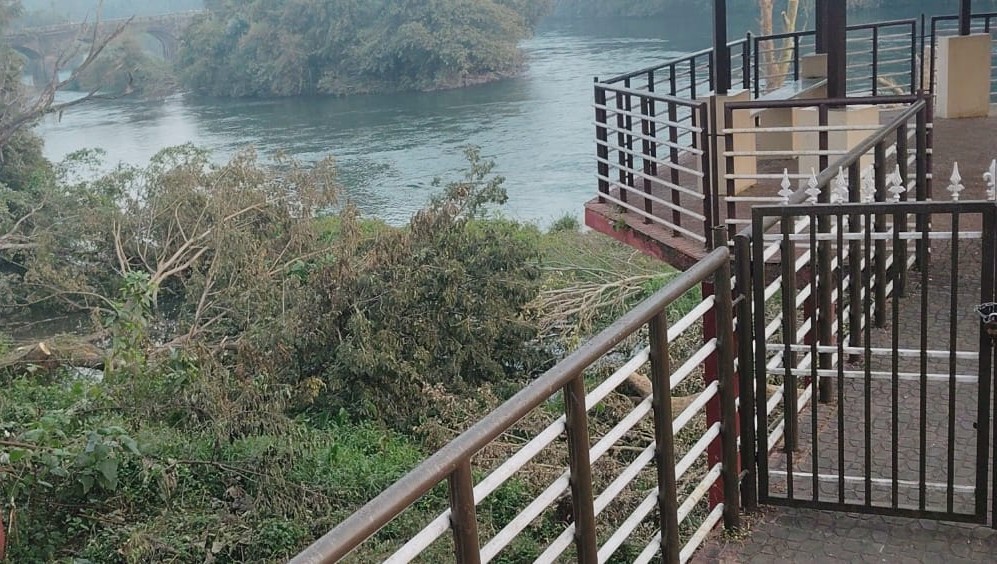
Even as Dandeli is busy celebrating the Annual Hornbill Festival, a tragic event occurred 18 days back – five trees were mercilessly felled and burnt near the Kali River bank. These trees including melia dubia, fishtail palm, Nandi tree & bamboo clusters were destroyed and burnt in the PWD Inspection Bungalow (IB) near Dandelappa Main Temple in Dandeli, Uttar Kannada district, Karnataka, India.
Ironically, the Annual Hornbill Festival in Dandeli organized by the Karnataka Forest Department aims to promote awareness, conservation, and appreciation for hornbills and their habitat in Dandeli which is a prime birding spot. “How can govt officials fell trees and burn bamboo clusters – the prime habitat of hornbills near the Kali River just to get a better view of the river for their VIP guests. 50-60 hornbills used to perch on these trees at a time,” question agitated activists.
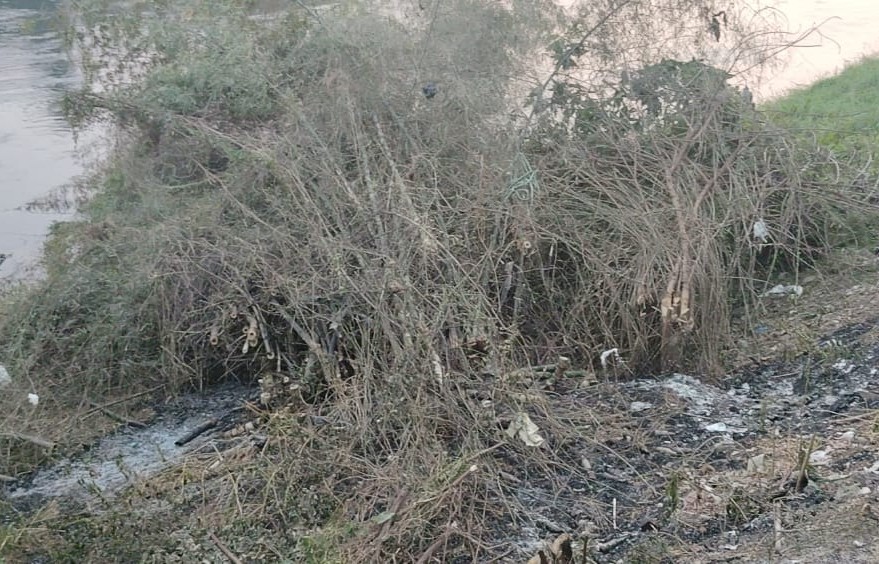
As per forest department sources, a case has been filed against the cook for the destruction of the trees, however, activists wonder how can a mere cook take decision to fell four old trees and burn bamboo clusters. The cook has been made a scapegoat by the govt officials, activists add.
PIT STOP FOR HORNBILLS
It was on 27-28 December, a prime habitat – the PWD Inspection Bungalow (IB) on the banks of Kali River in Dandeli Town saw the merciless felling of five trees including bamboo clusters on which different hornbill species used to feed, roost and nest. For many hornbills, these trees were a pit stop for resting, taking shelter and feeding on fruits.
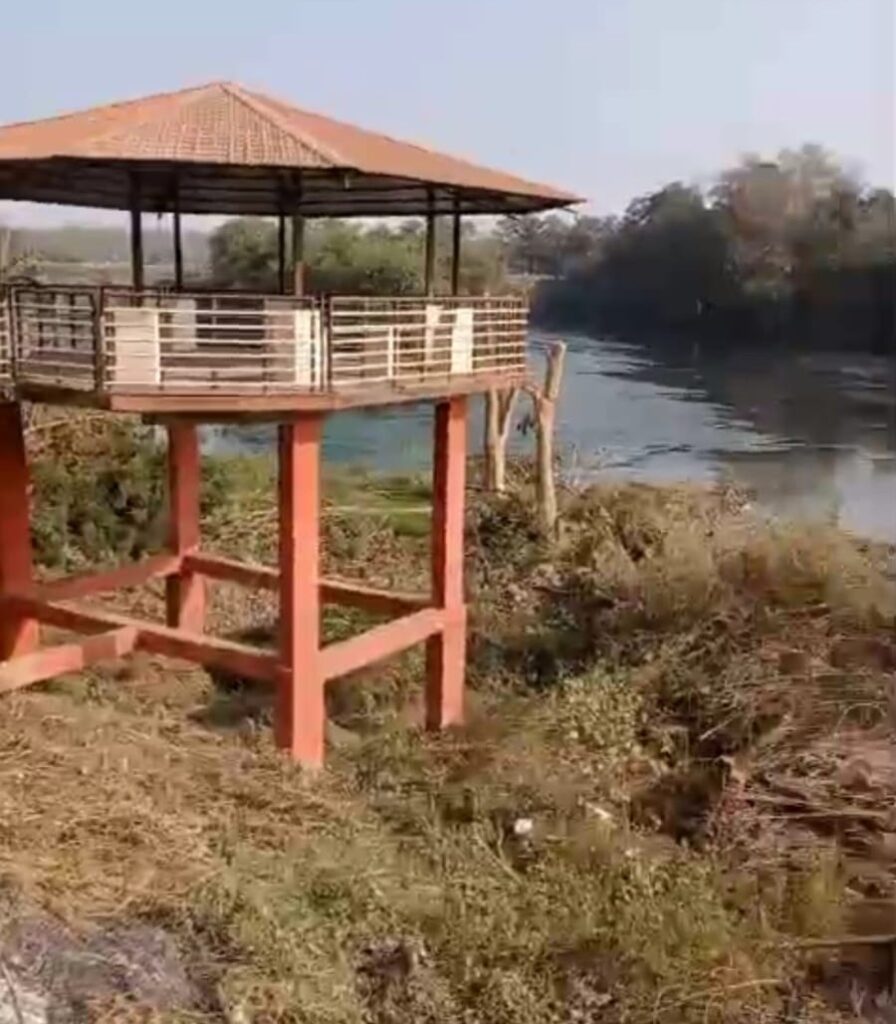
Naturalists from Dandeli say, “Permission was taken from forest department for bush cuttings and branch trimming but the entire tree cover was destroyed and now this verdant space looks like an open habitat. In fact, the Great Hornbills have been seen feeding on fishtail palm fruits and further documented feeding the fruits to their chicks. Now where will the hornbills go if their habitat is destroyed and that too in an area that is part of the Hornbill Conservation Reserve.”
Earlier too, the PWD had vertically cut a 350-year-old tamarind tree into half under the guise of pruning. Now why were they allowed to cut a heritage tree? Instead of celebrating the Hornbill Festival, we should be mourning the felling of these trees – prime habitat of hornbills, activists add.
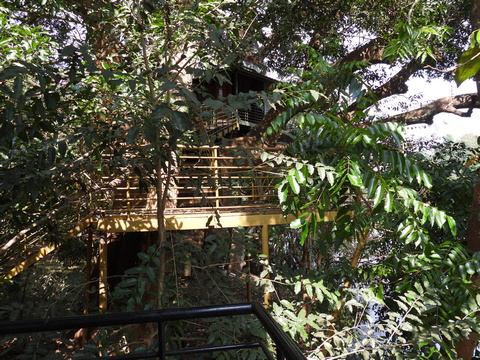
FOUR FELLED SPECIES INCLUDE:
- Dougha Bamboo (Bambusa bambos),
- Nandi tree (Spathodea campanulata),
- Miladubhi fruit tree (Milea dubia) and
- Fish Tailed Palm Fruit (Caryota mitis).
The above picture depicts how verdant it was before the tree felling. In this area near the Dandelappa Main Temple, many species of hornbills have been recorded using these trees for roosting, perching and feeding and foraging purposes, according to birders in Dandeli and Ganeshgudi. The old Nandi tree here was known to attract various birds. Its soft wood makes it suitable for hole-building birds. And this tree was felled to get a better view of the Kali River for the benefit of VIP guests who stay in the IB.
“Apart from the timber yard depot, many hornbills were found on old, heritage trees in the PWD Inspection Bungalow which are their main roosting sites. And in this season, they are found in large numbers. Further, the IB forms part of the Hornbill Conservation Reserve,” activists add. While hornbills do not typically nest or perch in the hollows of bamboo as they do with tree cavities, they are found in bamboo forests as part of their habitat. Alas! the bamboo clusters were burnt in the PWD Inspection Bungalow.
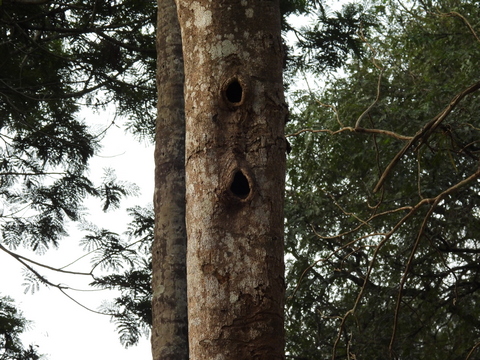
FARMERS OF THE FOREST
Several species of hornbills were known to eat the fruits and leaves of Melia dubia which have medicinal properties. But more importantly hornbills were observed to gather on Melia dubia trees in great numbers and found feeding on fruits wholly and later regurgitating the seeds, thereby, regenerating the forest ecosystem, said an avid birder from Dandeli.
Several hornbill species including the Great hornbill are known to eat the fruits of the fishtail palm (Caryota mitis or Caryota urens). At the PWD IB, the hornbills used to eat the fruits of the fishtail palm tree and then fly off to an island in the Kali River which is at an hour’s distance.
HABITAT DESTRUCTION
Further, inside the Dandakaranya Eco-Park near the Dandeli Bus Stand backside, three 60-70-years-old trees were felled earlier. In fact, the habitat of hornbills is being destroyed under the guise of development. Apart from this, a big hall has been built in the Timber Depot, Dandeli and are given for marriage and musical events. The Timber depot is part of the Hornbill Conservation Reserve and the events at the hall are disturbing the hornbills to no end.
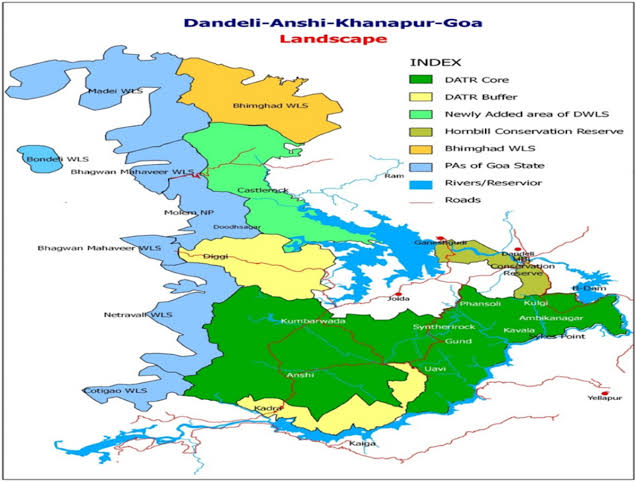
The area of Hornbill Conservation Reserve is about 53 square kilometres and further, the reserve’s boundaries cover areas around Ganeshgudi, the Dandeli timber depot, and the banks of the Kali River, providing crucial roosting and nesting sites for the four types of hornbills found in Karnataka. The above picture shows the area of the Hornbill Conservation Reserve.
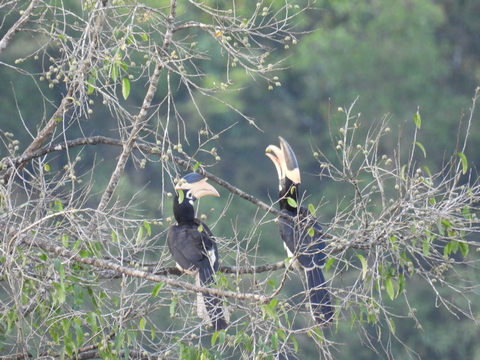
The Haliyal division of the Karnataka Forest Department, in association with Kali Tiger Reserve, is hosting the Hornbill Festival-2026 at Dandeli in Uttara Kannada district on Jan 16 and 17 to promote hornbill conservation.
In the background of continuing habitat destruction, activists question the holding of the annual hornbill festival as the destruction of a significant hornbill habitat has taken place in a government premises that is part of the Hornbill conservation Reserve.