

R S Tejus:
Cauvery Sanctuary is not an artificial landscape. It is a river forest, shaped over centuries by the flow of the Cauvery River, seasonal streams, and natural cycles of wet and dry periods. The Cauvery River, though semi-perennial, remains the single most important and continuous source of water for wildlife inside the Cauvery Sanctuary.
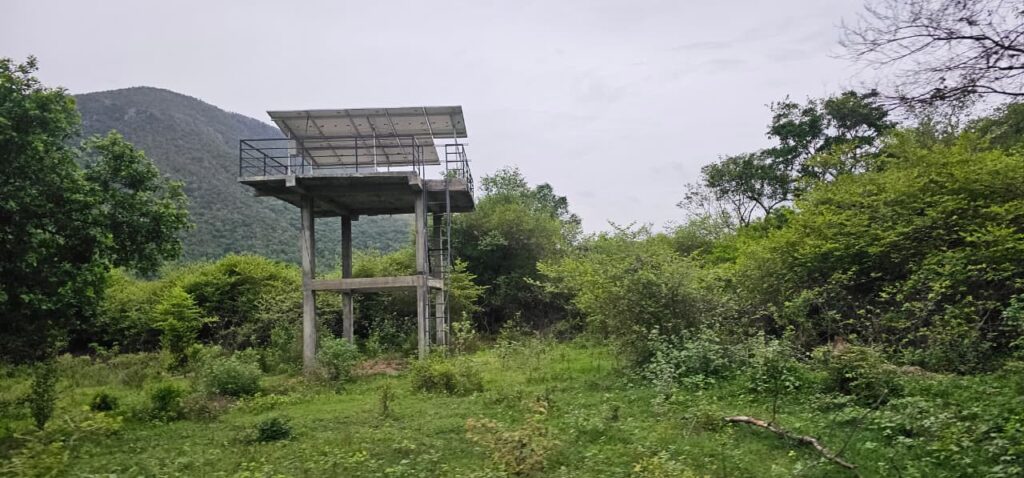
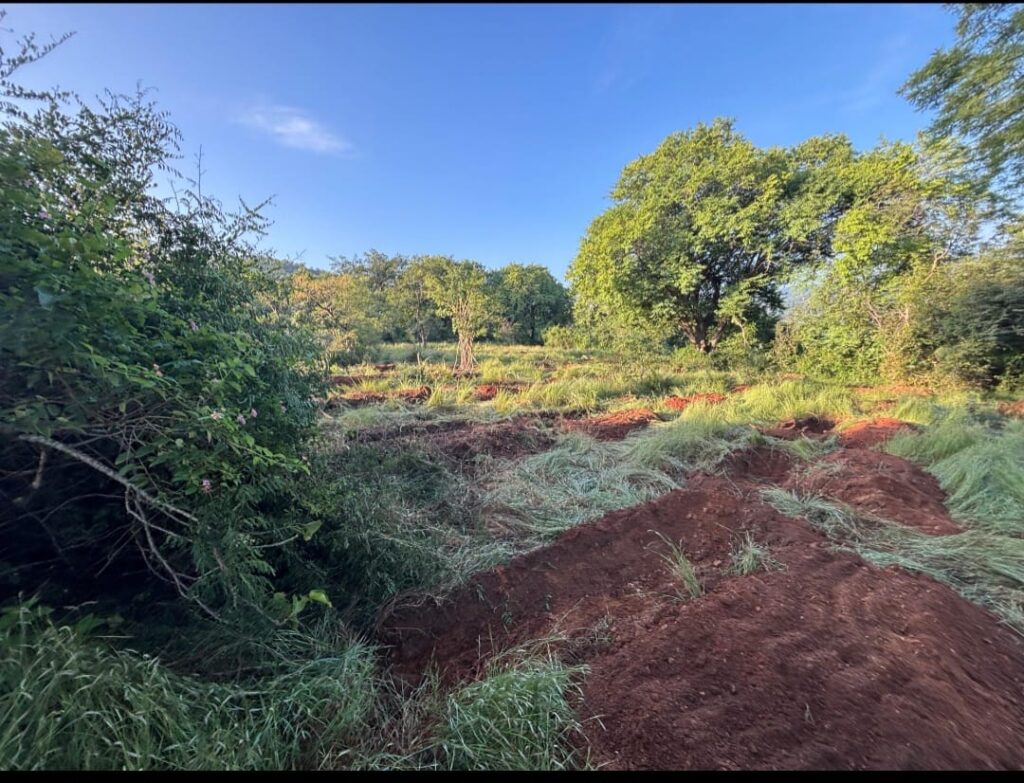
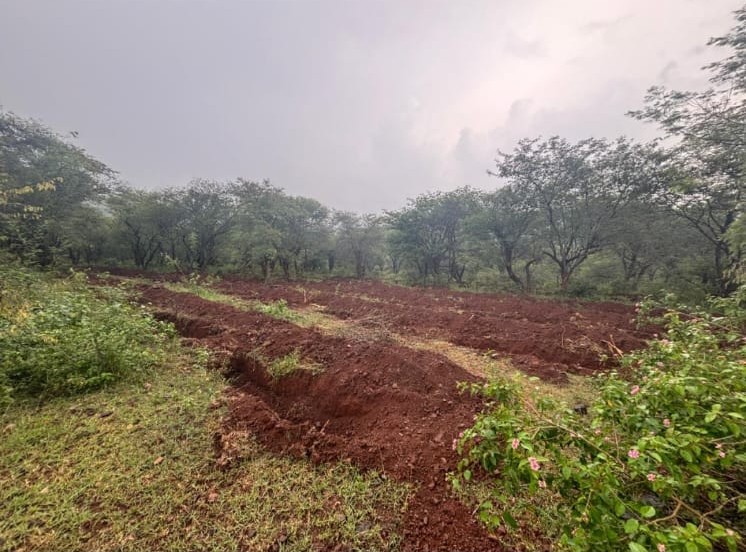
Yet in recent years, Cauvery Sanctuary has witnessed additional digging of artificial waterholes and percolation pits, along with the erection of solar-powered pumping towers deep inside the forest. These interventions—often supported through CSR funds have triggered serious concern among conservationists and field-level sources, raising a fundamental question: what is the scientific basis for altering a natural forest from within?
“This is being packaged like wildlife improvement,” said a conservationist familiar with dry forest ecology. “But these are habitat-altering activities. Once you alter habitat, you don’t ‘improve’ it—you change it permanently.”
What the numbers reveal?
According to the management plan, Cauvery Sanctuary already has 261 waterholes. The range with the highest number of waterholes is Halaguru Range, which has 64 waterholes. Despite this baseline, new digging and new structures have been promoted in parts of the landscape. Conservationists question how the Forest Department arrived at the conclusion that even more water points are required in a landscape sustained by the Cauvery River.
“There is no publicly available ecological assessment explaining how many waterholes are optimal in a river-fed sanctuary,” a conservationist said. “Without that, expansion becomes a habit, not a science-led decision.”
A dry forest is not a broken forest
Much of Cauvery Sanctuary is dry for part of the year. That is not an ecological failure. Dry deciduous forests are designed to experience seasonal stress. Wildlife has evolved to respond to this stress through movement, diet shifts, and natural population regulation.
Intervening in this process by creating permanent artificial water availability interferes with natural selection, a core ecological principle. Conservationists argue that when managers attempt to erase seasonal hardship through engineering, they risk creating deeper instability—such as unnatural crowding, altered movement and future conflict.
“Nature knows how to balance,” said a renowned wildlife conservationist. “When we keep meddling with scarcity, we often create new problems that we don’t fully understand.”
Scientific studies from comparable elephant landscapes indicate that elephants primarily depend on natural rivers, streams and seepage zones during the dry season. Artificial waterholes do not replicate the ecological value of natural riverine habitat. Conservationists add that if elephants occasionally use artificial waterholes, it should not be treated as success; it may be a sign of ecological stress and distortion.
“If wildlife begins adjusting to artificial water points, that is a warning sign,” a conservationist said. “It may look like a solution, but it can become a big ecological trap.”
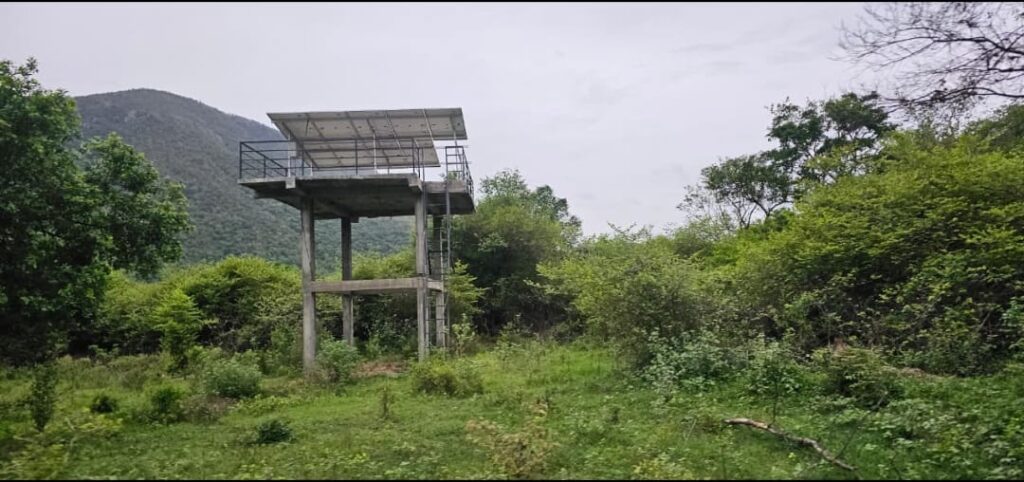
Solar-powered towers inside Cauvery Sanctuary
One of the most troubling interventions inside Cauvery Sanctuary has been the construction of solar-powered towers to pump water into artificial tanks. These are not minor structures. They require clearance and levelling, concrete bases, metal frameworks, wiring, and repeated human entry for maintenance.
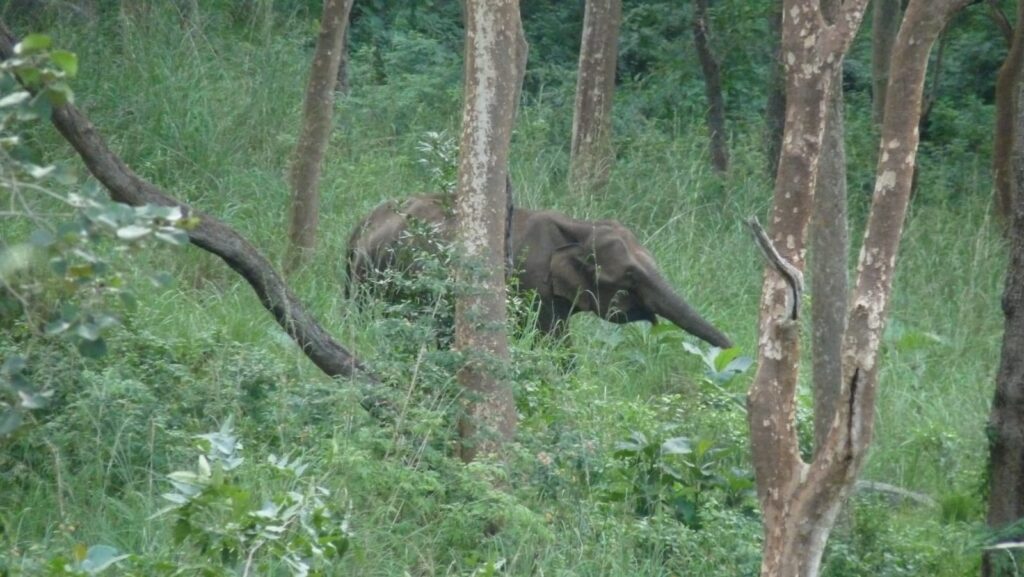
Sources said that the disturbance during construction had immediate consequences. According to them, a herd of elephants was displaced completely from the area due to noise, movement of machinery and human activity linked to the erection of solar-powered “This is not a small issue,” said a field-level source. “If elephants are getting displaced because of construction inside the forest, it shows how disruptive these so-called ‘improvement works really are.”
Sources in the forest department and at the field level said that CSR-funded digging of waterholes and construction of solar towers inside Cauvery Sanctuary has now been stopped following internal concerns. However, they added that there is no written order yet, and the lack of formal documentation leaves room for repetition elsewhere.
What role do heavy machines have inside a forest?
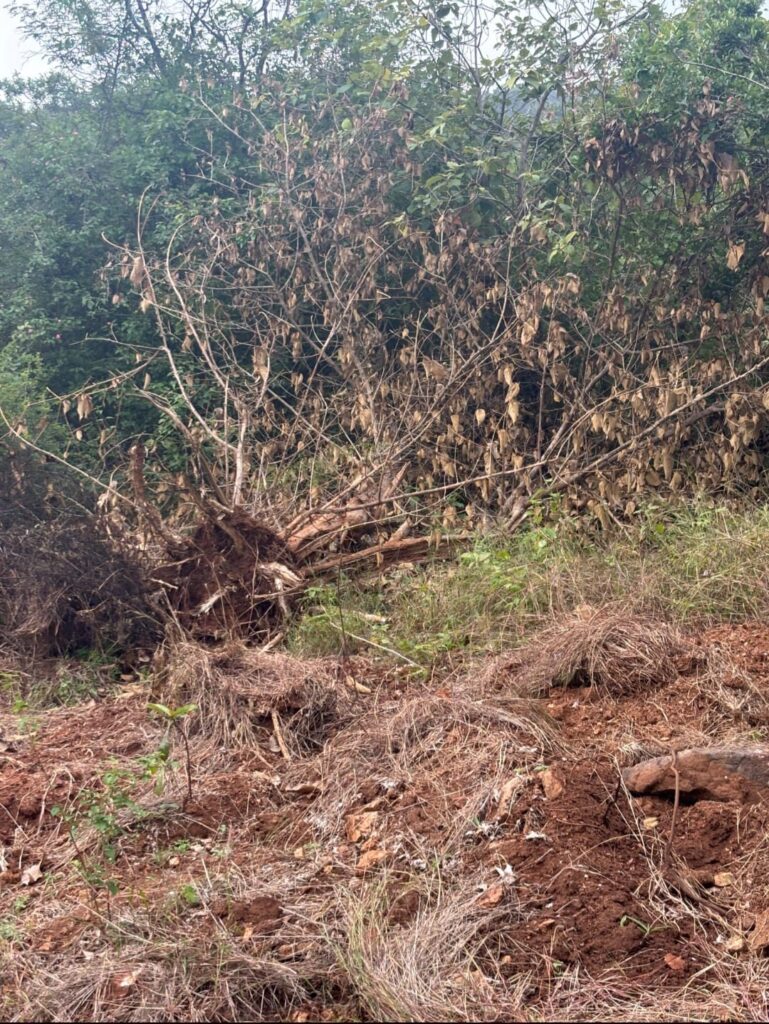
The digging of waterholes and percolation pits has involved heavy earth-moving machinery, including excavators and JCBs. Conservationists argue that such machines have no ecological role inside a Protected Area. Their impact is well known:
- soil compaction that reduces infiltration and damages root zones,
- destruction of microhabitats used by insects, reptiles and small mammals,
- alteration of drainage lines,
- creation of permanent tracks that later become roads,
- introduction of invasive plant seeds via tyres and buckets.
“Habitat alteration is as dangerous as hunting or ill-planned development,” said a conservationist. “The difference is that habitat alteration happens quietly under the label of conservation.”
Once soil structure and hydrology are altered, recovery is slow—and sometimes impossible.
CSR funds and misplaced priorities
CSR funds have increasingly been used for habitat-altering works—waterholes, percolation pits, solar pumps and towers, and civil structures. While these projects appear positive on paper and in photographs, conservationists say they often lack ecological grounding.
“CSR is meant to support conservation, not redesign ecosystems,” said a conservation expert. “If CSR is available, it should strengthen protection, staff welfare, conflict mitigation outside forests, and voluntary relocation support—not digging and construction inside forests.”
Around Cauvery Sanctuary, many farmers have already given up farming because of repeated crop loss and elephant movement. It remains an extremely sensitive issue. Conservationists argue that altering the forest interior does not address the real drivers of conflict at the boundary.
Not just Cauvery — a statewide pattern that needs a statewide audit
What is happening in Cauvery Sanctuary is not an isolated case. Similar habitat-altering activities—artificial waterholes, percolation pits, check dams, solar infrastructure and machine-led works—are being carried out across Protected Areas in Karnataka.
“This has become a pattern,” said a conservationist. “Once it is normalised in one PA, it spreads everywhere.”
That is why conservationists are now calling for:
- A statewide audit across Karnataka’s Protected Areas to document:
- where artificial waterholes have been dug,
- where check dams and percolation pits have been created,
- where solar-powered towers have been erected,
- what machinery was used,
- what approvals were taken and
- what ecological impacts have been recorded.
A clear statewide circular to stop unscientific habitat alteration and to prevent CSR funds from being used for such activities inside Protected Areas is necessary.
“These are not wildlife improvement programmes,” a conservationist said. “These are habitat-altering activities. The state must treat this as a high-priority conservation problem.”
Protection, not alteration
Forests are not engineering projects. Cauvery Sanctuary, anchored by the Cauvery River, has functioned as a living ecosystem long before machines arrived. Conservationists say the Forest Department’s priority should be protection, not alteration—because habitat alteration can be as destructive as hunting, encroachment, or poorly planned development.
The reported pause in CSR-funded works, even if informal, offers a moment for reflection. Whether this pause becomes policy will determine not just the future of Cauvery Sanctuary, but the direction of conservation across Karnataka’s Protected Areas.
“Stopping now is not a loss,” a conservationist said. “It is the last chance to protect what still exists.”