
P M Muthanna & Paul Benjamin Clement:
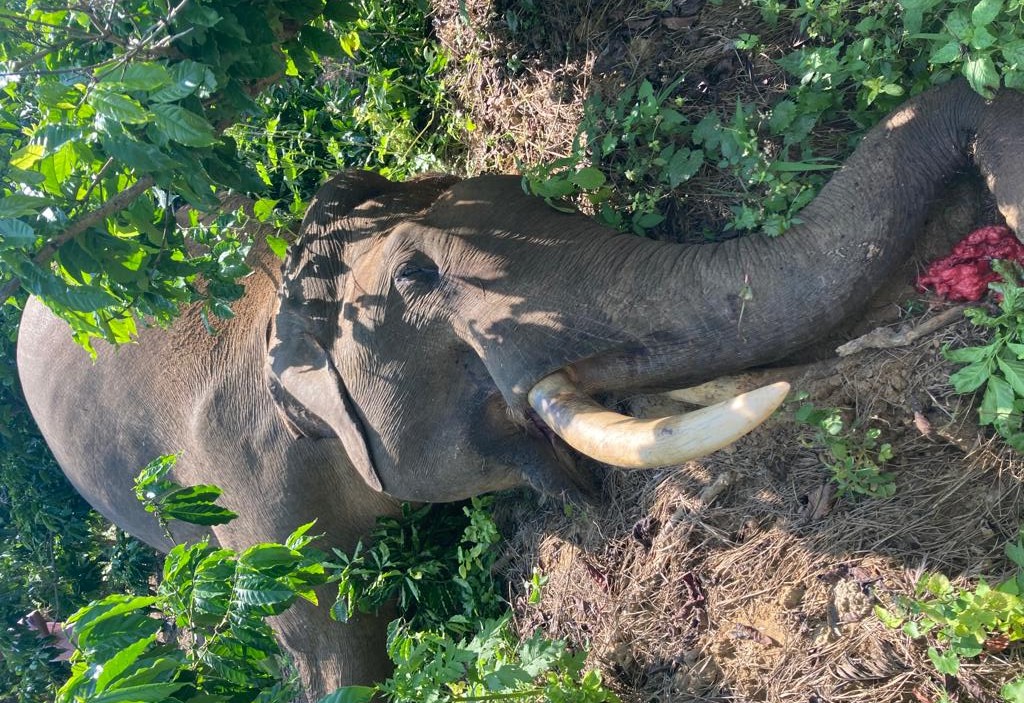
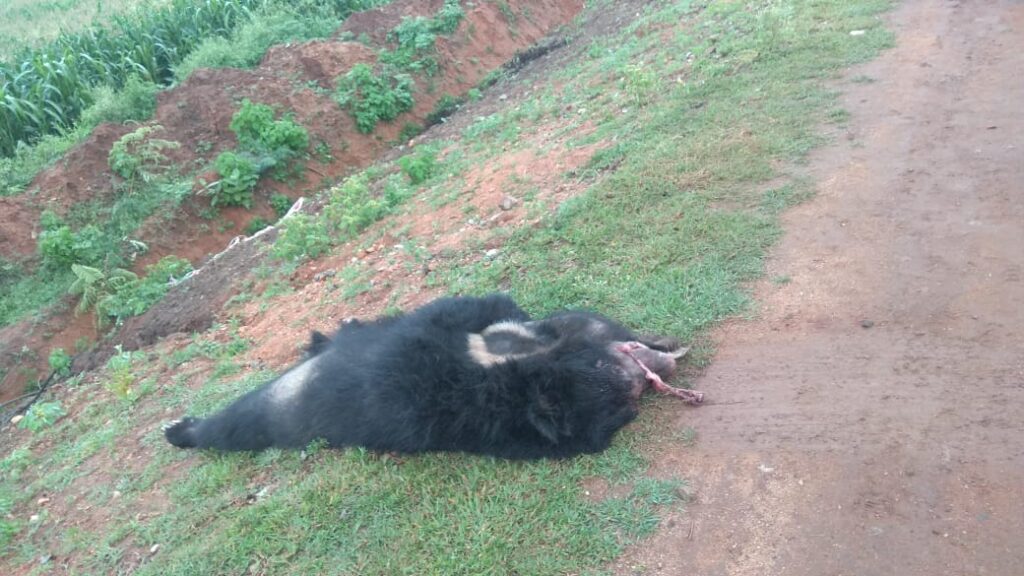
On January 10, 2026, the carcass of a female elephant calf (just 1.6 years old) was found in the Sathyamangalam Tiger Reserve which had consumed an explosive bait unknowingly. However, such horror incidents go back a lot further. In June 2020, the death of a 15-year-old pregnant elephant in Kerala’s Palakkad district had shocked the entire nation. Further, there have been a few incidents of killings of sloth bears in 2015-17 and 2025 in Ramanagara (now Bengaluru South district) after consuming explosive baits meant for wild boars.
The animal suffered fatal injuries after biting into a pineapple, laced with explosives. With its mouth and tongue destroyed, the elephant stood helplessly in the river near Silent Valley National Park for days before succumbing to a slow and agonizing death. Graphic images from this tragedy sparked nationwide outrage, online petitions, and calls for justice, alongside promises of stern action from political leaders.
Usage of Crude Explosives to ward off Wildlife
For those familiar with the widespread use of crude explosives in rural areas to ward off wild animals, however, this incident was neither isolated nor new. It was a stark reminder of a longstanding threat that has largely been ignored. Even after five years, little has changed at the grassroots level.
Locally made explosives have become a far greater danger, comparable to landmines scattered across a war zone. These devices are typically made from readily available materials, such as firecracker powder, and mixture of fertilizers. Improvised triggers, including match-head fuses are used to detonate the explosives, while glass shards and iron nails are often wrapped around them to increase their lethality. Most of these raw materials are freely available in local markets, and people have learned to assemble the devices with alarming ease.
Resembling Ordinary Firecrackers
Although these explosives may resemble ordinary firecrackers, they are capable of killing large animals such as wild pigs and spotted deer. Initially, they were used for wild pigs under the guise of crop protection. To lure the wild pigs, crude explosives were wrapped in chicken or goat intestines.
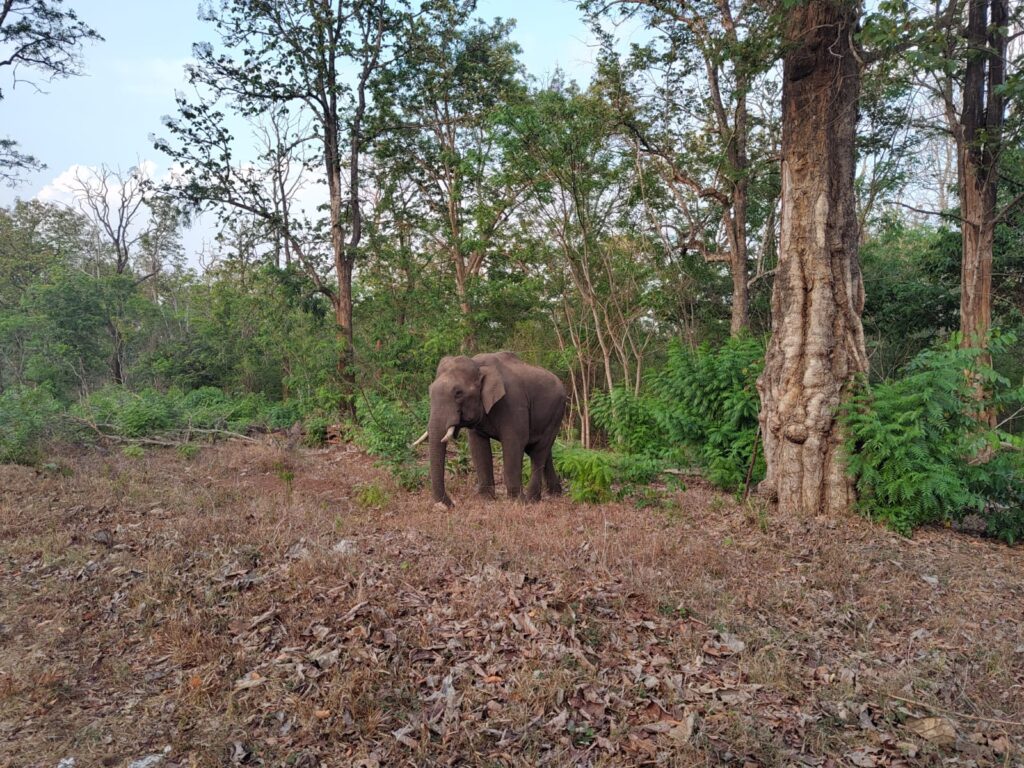
As populations of other wildlife, including spotted deer and sambar, increased, the method evolved further, with explosives hidden inside sugarcane and fruits. In Palakkad, a farmer inserted a large quantity of explosives into a pineapple to target elephants raiding crops.
Accessible Explosive Baiting Traps
Compared to other hunting methods, this technique is extremely accessible. It requires no firearms, no trained hunting dogs, and no effort to venture into the forest in search of prey. Wild animals can be easily lured into the forest edge with food, and this baited explosive costs as little as Rs 50-100.
In villages along the Karnataka-Tamil Nadu border, petty shops openly sell materials needed to make these explosives. A few local entrepreneurs have mastered the skill of preparing them. Some have gone further by offering a “buyback” arrangement, purchasing the carcasses of wild pigs, spotted deer, or sambar killed by these devices. Over time, a quiet but efficient network has emerged, connecting suppliers to a growing demand for wild meat.
Deadly Toll of Normalized Explosive Hazards
The cost of this practice is grave. The full extent of the damage inflicted on wildlife is unknown, beyond a few high-profile cases such as this pregnant elephant in Silent Valley.
In rural areas of Chamarajanagar and Bengaluru South (earlier Ramanagara) districts in Karnataka, and Krishnagiri, Dharmapuri, and Erode districts in Tamil Nadu, there are no official records of how many domestic animals, such as cows, dogs or goats, have been killed.
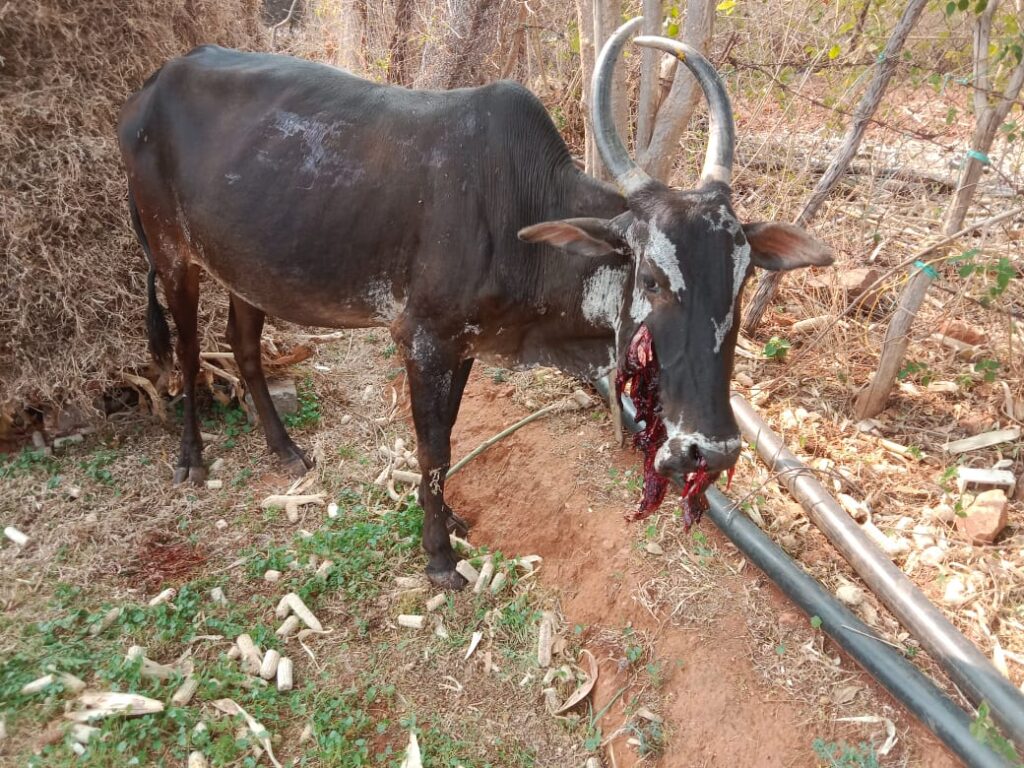
The widespread use of homemade explosives is now revealing the scale of this crisis.
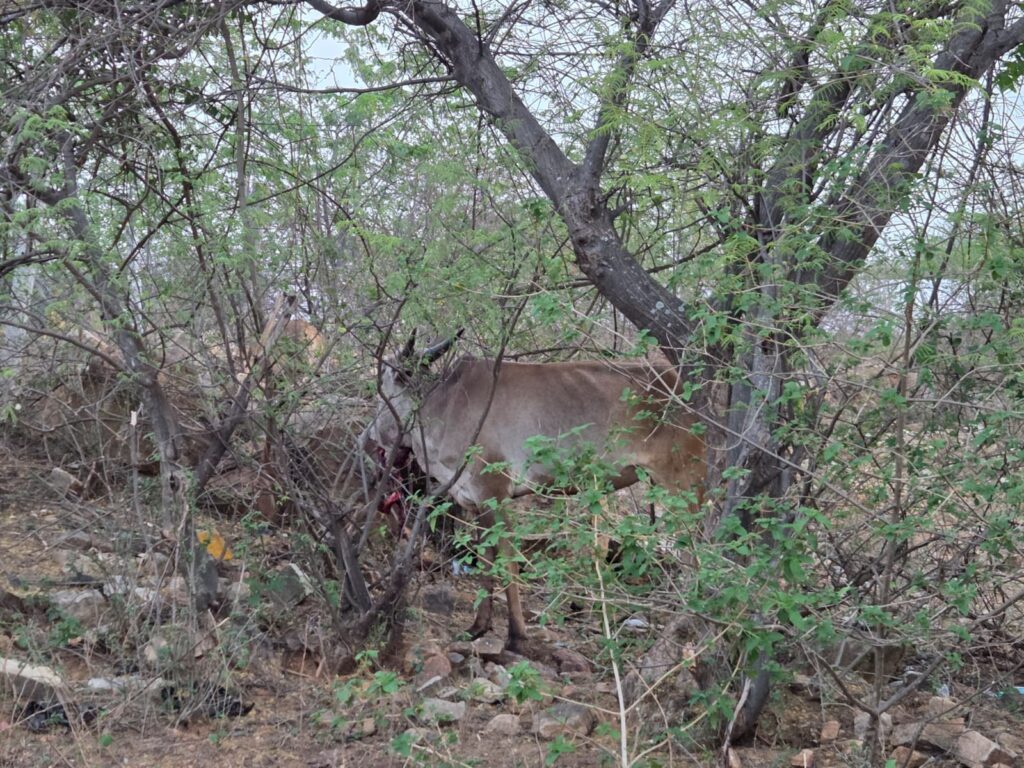
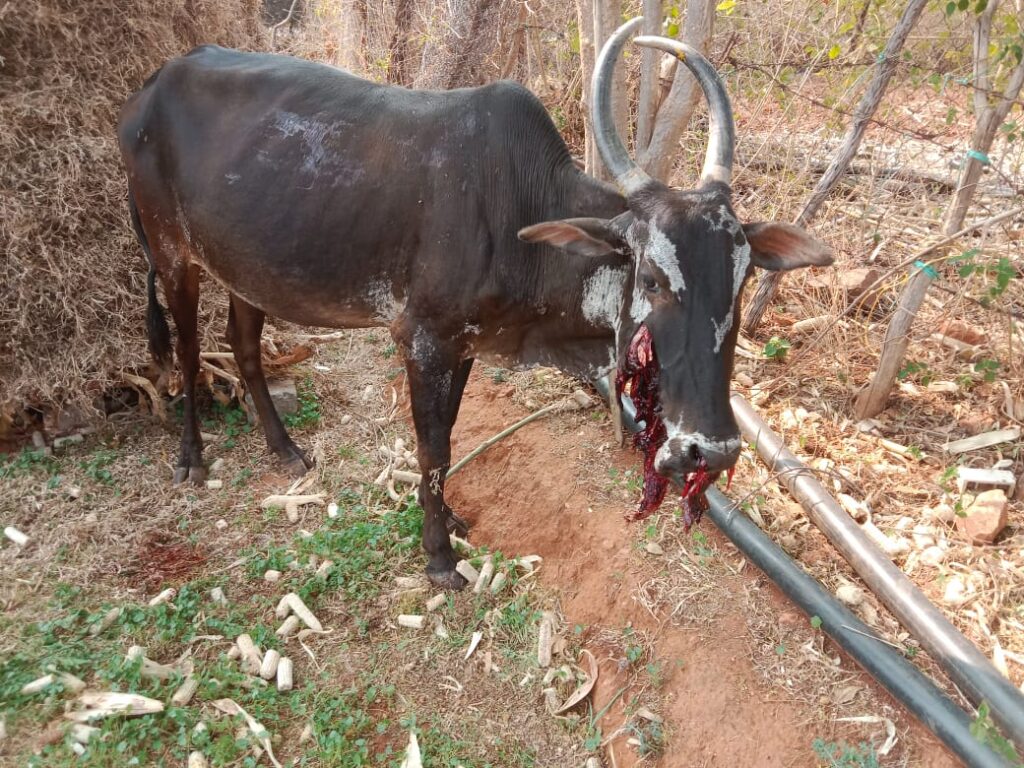
Unattended or poorly handled devices are causing serious injuries and a slow death to the cattle. Milking cows provides additional income to the farmers in both Karnataka and Tamil Nadu, and even some of the farmers are dependent on cattle for farming operations. What began as a crude method to deter wild pigs has now evolved into a pervasive hazard that threatens their livelihood.
Damages caused by these explosives are not limited to livestock; precious human lives are also affected.
- In July 2025, a 55-year-old woman named Kamalamma from Hunsur Taluk, Mysore District, was severely injured when a crude bomb intended for wild boars exploded in her hands.
- In February 2024, a shopkeeper from Shiralakoppa in Shivamogga district sustained minor injuries after a bag containing explosives, left by a couple intending to hunt wild boars, detonated in his shop.
With each passing day, new incidents are added to this grim list of explosive bait killing many wildlife, cattle and humans.
A Dangerous Practice, a near normal
In spite of all these incidents, over time, this dangerous practice has become normal in rural life. No one questions individuals who handle these devices, and most do not even object to petty shops storing and selling them. Rarely do people file police complaints.
In both Tamil Nadu and Karnataka, livestock attacks by carnivores often trigger widespread protests, with the Forest Departments typically providing compensation in such cases. Yet when humans or animals are maimed or killed by homemade explosives, there is no compensation and no public outcry.
Even in Chamarajanagar district, once known for progressive movements, the farming community has largely turned a blind eye to this growing menace.
In August 2023, a butcher from Harohalli in Kanakapura Taluk, Bengaluru South (Ramanagara) district, was severely injured while making explosives.
Following the incident, his family and friends attempted to cover it up as an LPG explosion. Instead of focusing on his survival, the priority was to avoid the consequences of medico-legal cases.
This willingness to conceal illegal and hazardous activity reflects a disturbing shift in mindset, where silence and complicity have become part of the system.
Legal Bans, Enforcement Nightmares
These devices are banned under the Indian Explosives Act of 1884 and the Explosive Substances Act of 1908, and their use against protected wildlife is punishable under Sections 9 and 51 of the Wildlife Protection Act of 1972.
In April 2025, Karnataka’s Forest Minister Eshwar Khandre issued an order calling for strict action against homemade explosives.
Both the Police and Forest Departments face significant challenges to implement this order. Most personnel are not trained to handle fully assembled explosives, which can detonate at the slightest provocation. They lack expertise in confiscating, transporting, and presenting such devices in court.
Only a few Bomb Detection and Disposal Squads exist, and for them, this is not considered a high-priority task.
The most effective solution would be to break the supply chain of raw materials. The pressing question remains whether there is sufficient political and administrative will to confront a thriving illegal trade in which every participant, from maker to buyer, has a vested interest.
(BOTH THE AUTHORS P M MUTHANNA, DIRECTOR-FIELD CONSERVATION AND PAUL BENJAMIN CLEMENT, PROGRAM MANAGER ARE FROM CENTRE FOR WILDLIFE STUDIES (CWS), BENGALURU)