
R S Tejus:
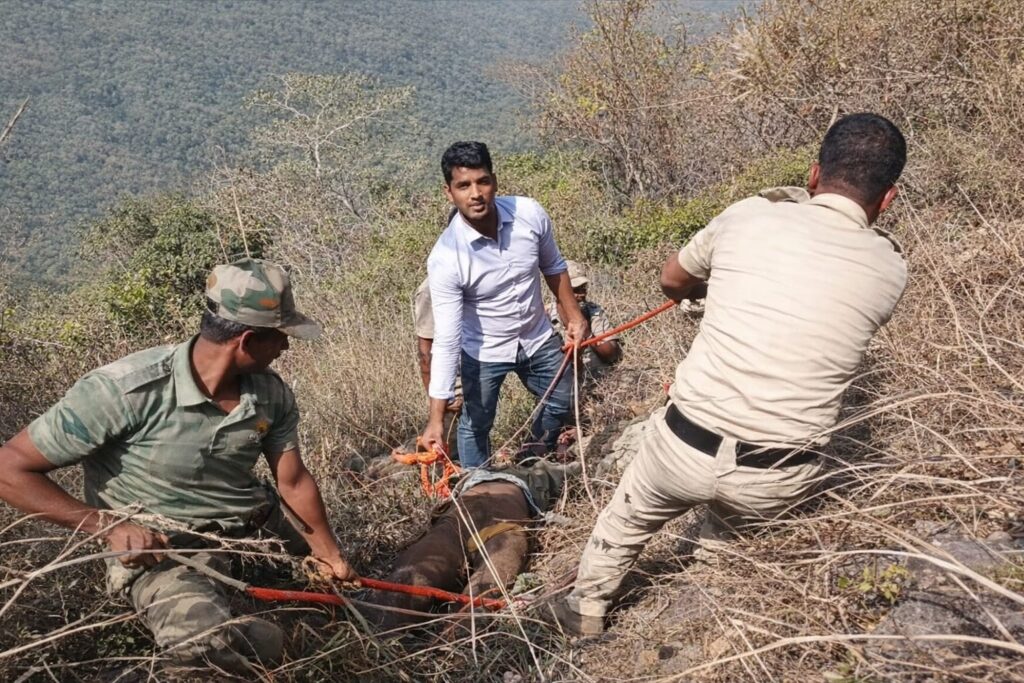
A foolish man died while taking pictures (that too close ups) of a wild leopard at Rangaswamy Oddu, Talabetta in MM Hills Sanctuary, Karnataka. This has once again exposed the growing dangers and perils of unregulated human movement inside a fragile, protected area. Further, it highlights the urgent need for regulation of devotees when visiting Male Mahadeshwara temple. This man-made tragedy shows the clear violation of rules by devotees and disturbing wildlife and its habitat on their visit.
On the morning of 21st January at 5:45 am, Praveen, a resident of Cheeranahalli village in Mandya, lost his life when he disturbed a resting leopard inside a protected area.
He was not a first-time visitor; this was his seventh visit and climb to MM Hills Sanctuary.
Nearly 100 people from Mandya in a group were walking through the sanctuary the last three days to visit the Male Mahadeshwara temple and he had got separated from them.
WHAT WRONG DID THE LEOPARD DO?
According to sources, a leopard was resting along the forest pathway when Praveen went very close to the animal to take photographs. The leopard, startled and acting purely in fear and self-defence, attacked and killed him on the spot. The question that must be asked honestly is simple: what wrong did the leopard do inside its own habitat?
Basic commonsense dictates that approaching Big Wild Cats like leopards or tigers, especially inside a sanctuary, carries a real risk of fatal consequences.
Misplaced protests are now targeting wildlife and the Karnataka Forest Department, and even seeking for ban on safaris in MM Hills Sanctuary instead of addressing the real causes behind such man-made tragedies.
STRICT REGULATORY MEASURES
MM Hills Division DCF Bhaskar termed the incident unfortunate and said the Karnataka Forest Department is working on stricter regulatory measures, including restricting movement after 6 pm and reopening access only after 7 am.
Formal guidelines to regulate human movement inside MM Hills Sanctuary is expected soon.
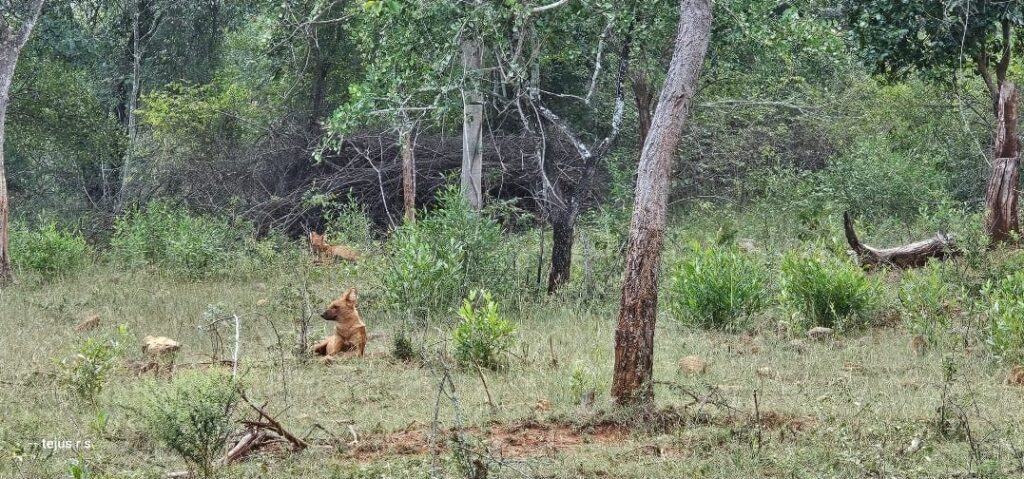
Conservationists point out that this incident cannot be seen in isolation. Drug abuse, Ganja and psychotropic substance use, along with rampant garbage dumping, have become serious problems in MM Hills.
LITTERING BY PEOPLE IN MM HILLS
People come in groups, sit all over the forest, drink and eat, litter plastic and food waste, and leave it scattered across the protected area. Such activities attract wild animals near the temple area and increase human-wildlife conflict. “Why blame wildlife or the Karnataka Forest Department when no fault lies with them?” questions a conservationist.
Official records from the Forest Department reveal deeper, long-standing concerns at Talabetta. Ten acres of protected forest land, handed over for basic facilities for devotees and managed by the Male Mahadeshwar Temple Development Authority, is surrounded by dense natural forest and has historically been a habitat for elephants, leopards, gaur and deer.
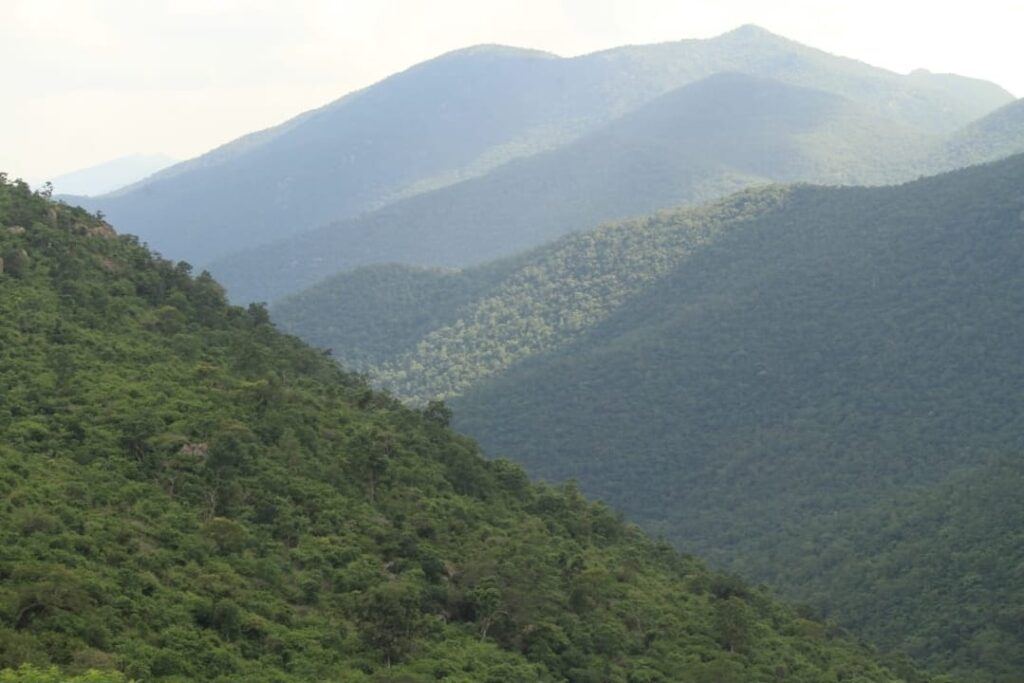
Over the last few years, however, Talabetta has seen intense construction, commercial activity, usage of loudspeakers and heavy decorative lighting running throughout the night. Further, there is open dumping of plastic bottles, plates and food waste into the nearby forest streams, the only water source for wildlife in the area.
Forest officials have repeatedly warned people that such disturbances are pushing wildlife into stress and conflict situations, but these warnings have largely gone unheeded.
The consequences are already visible. In 2024, a devotee was trampled by an elephant near Talabetta. In September 2025, a person was attacked by a gaur on the Talabetta–Konanakere road, leaving him permanently disabled.
Groups of wild boars and even domestic cattle now roam Talabetta due to food waste dumping which are clear signs of ecological imbalance.
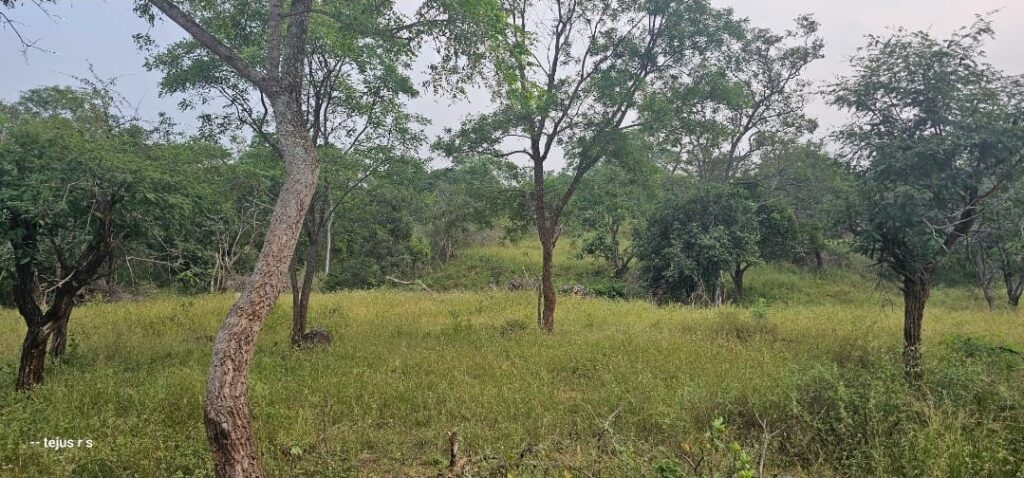
MM Hills Sanctuary has 18 enclosures. The Male Mahadeshwara temple complex alone spans nearly 180 acres, and parts of this area have been excluded from the Eco-Sensitive Zone, without a clearly available exclusion map, adding to administrative confusion and weak enforcement.
Earlier, Padayatras were limited to two occasions a year – Shivaratri and Deepavali. However, nowadays walking through MM Hills has become a daily activity, often driven by social-media reel making rather than any devotion. This unchecked trend is placing both human and wildlife lives at risk.
NATURE IS SACRED
Forests and wildlife are not separate from faith. In MM Hills, the Vahana of Lord Mahadeshwara Swamy is the tiger itself, symbolising that nature is sacred. This tragedy must serve as a wake-up call. The district administration and the Temple Development Authority must come together to strictly regulate human activity, curb unscientific Padayatras, address drugs and waste issues, and restore ecological discipline, while also ensuring the safety of genuine devotees.
If firm action is not taken now, the cost will be borne by both people and the last remaining forests of the Eastern Ghats landscape.