
Manjunath S Nayak:
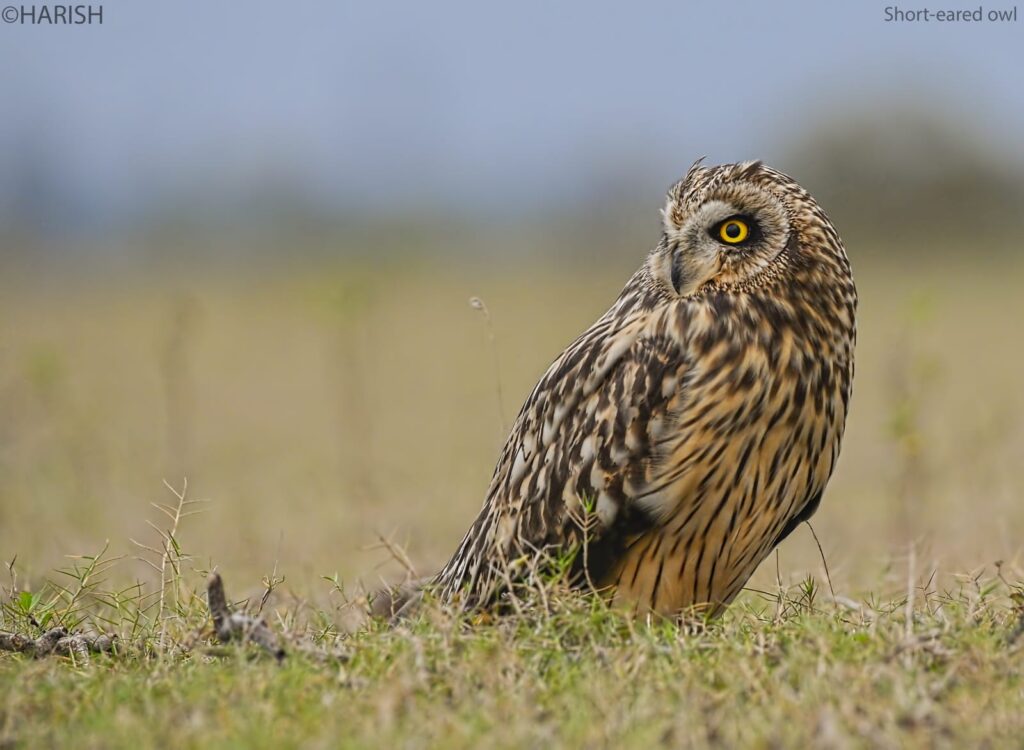
Short-eared owl was recently observed for the first time in Gadag district of Karnataka. This owl species has also been documented in the districts of Hubballi, Shivamogga, Mangaluru, Bengaluru, and Hassan. The species was documented by Sangamesh Kadagad, Harish N (Kanakapura), Raju Menta, Sharanu Goudar during this season atop the grasslands of Gajendragada Hillock, Gadag district, Karnataka.
Long back, the documentation of the short-eared owl has been done in Hessarghatta, Bengaluru but not as a regular sighting in southern parts of India This owl species usually prefers grasslands and lakebeds. The short-eared owls are known for their unique and special behavior be it their flight display or hunting abilities or courtship display.
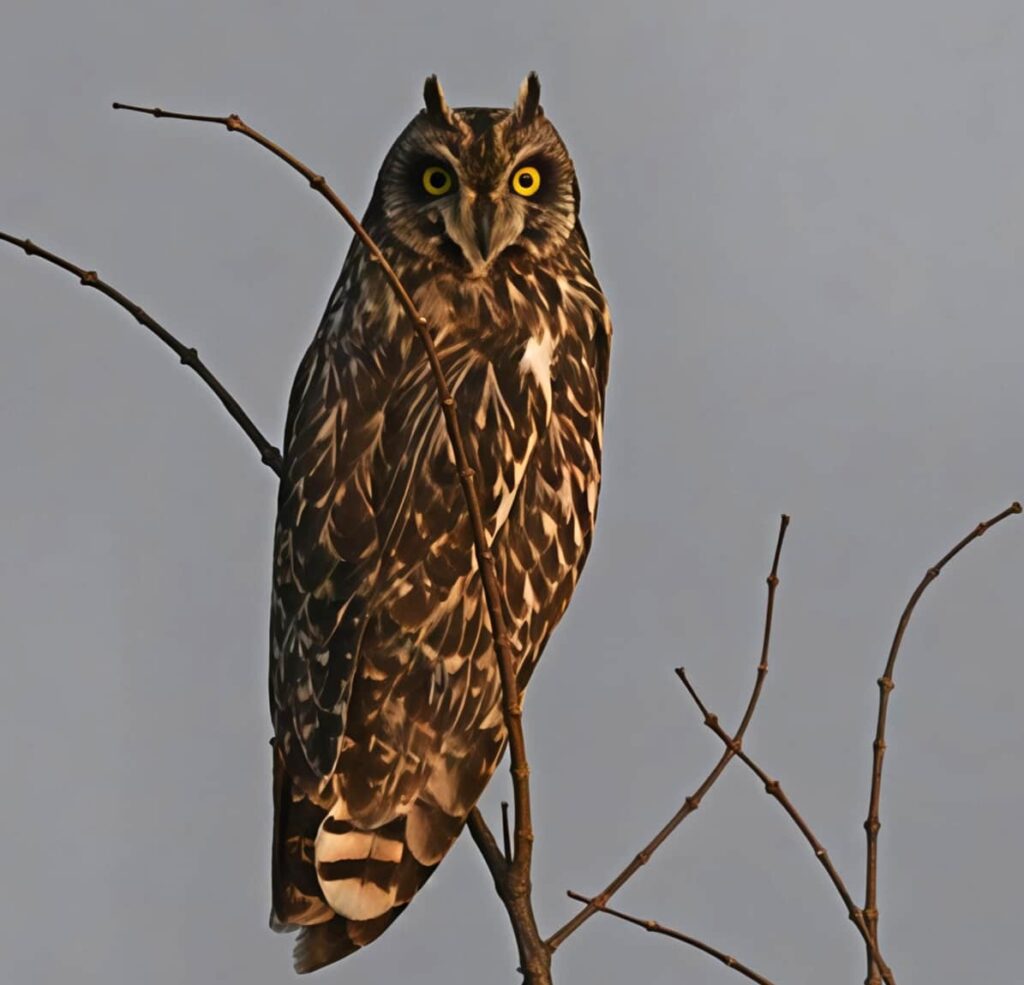
Belonging to family Strigidae, the short-eared owl (Asio flammeus) is a widespread grassland species. Owls belonging to genus Asio are known as the eared owls, as they have tufts of feathers resembling mammalian ears. These “ear” tufts may or may not be visible. The short-eared owl will display its tufts only in a defensive pose, although its very short tufts are usually not visible.
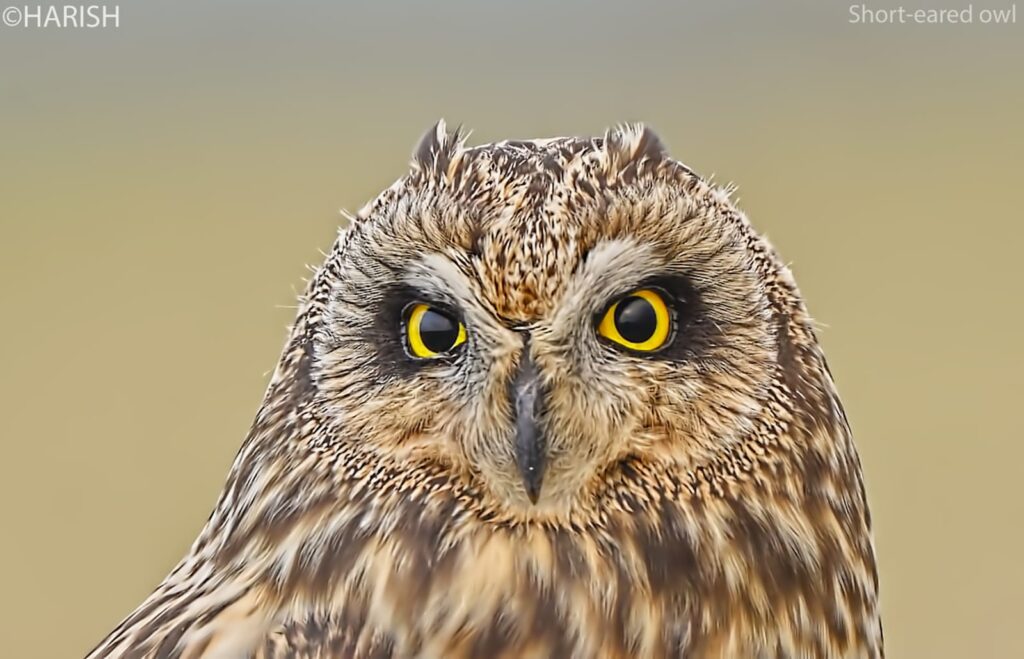
The short-eared owl is a medium-sized owl measuring 34–43 cm in length and weighing 206–475 g. It has large eyes, a big head, a short neck, and broad wings. Its bill is short, strong, hooked and black.
The plumage of this owl species is mottled tawny to brown with a barred tail and wings. The upper breast is significantly streaked. Its flight is characteristically floppy due to its irregular wingbeats.
The short-eared owl is found in all continents except Antarctica and Australia; thus, it has one of the most widespread distributions of any bird. It is partially migratory, moving south in winter from the northern parts of its range.
The short-eared owl is known to relocate to areas of higher rodent populations. It is nomadic in nature, wandering in search of better food supplies during years when the vole (meadow mice which are herbivorous) populations are low.
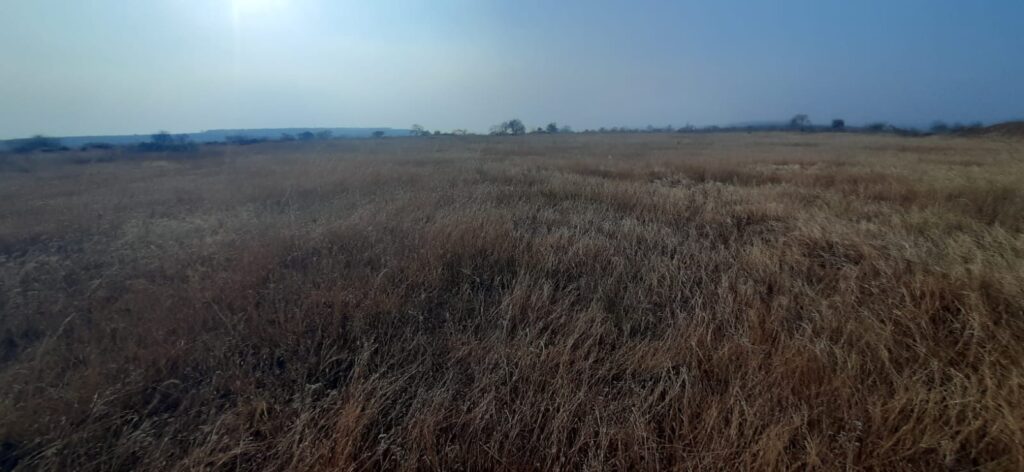
Ecological importance in Grassland Ecosystem
Short-eared owls primarily prey on voles and other small mammals, preventing these populations from exploding and impacting vegetation. Their reliance on vast, healthy grasslands makes them an “umbrella species,” meaning protecting their habitat and also safeguarding many other grassland-dependent species.
By consuming prey and depositing waste, they help by returning the nutrients to the soil, supporting plant growth. Their presence highlights the need for specific grassland management, such as controlled burns or grazing to maintain short vegetation for prey. This species of owl possesses unique style of hunting and are active during the day and dusk. Further, they hunt low over fields, effectively controlling pests in agricultural fields as well as natural grasslands.
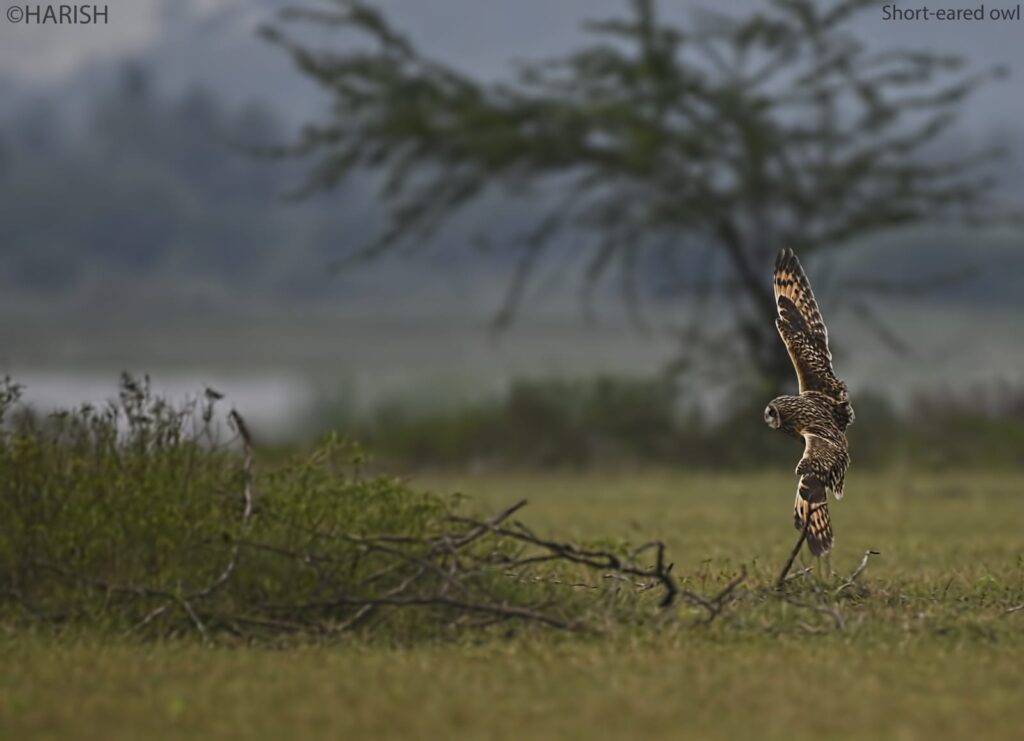
Short-eared owl’s Special Features
Buoyant Motion:
Their flight pattern is unique as if in slow-motion, gliding just a few feet above the ground in open grasslands, marshes, and tundras.
Silent Flight:
Their wings have specialized serrated feathers that break up air turbulence, allowing them to glide silently to surprise their prey.
Agility:
Despite their floppy appearance, they are highly nimble and can quickly change altitude or perform sharp turns during territorial disputes or while evading predators like harriers.
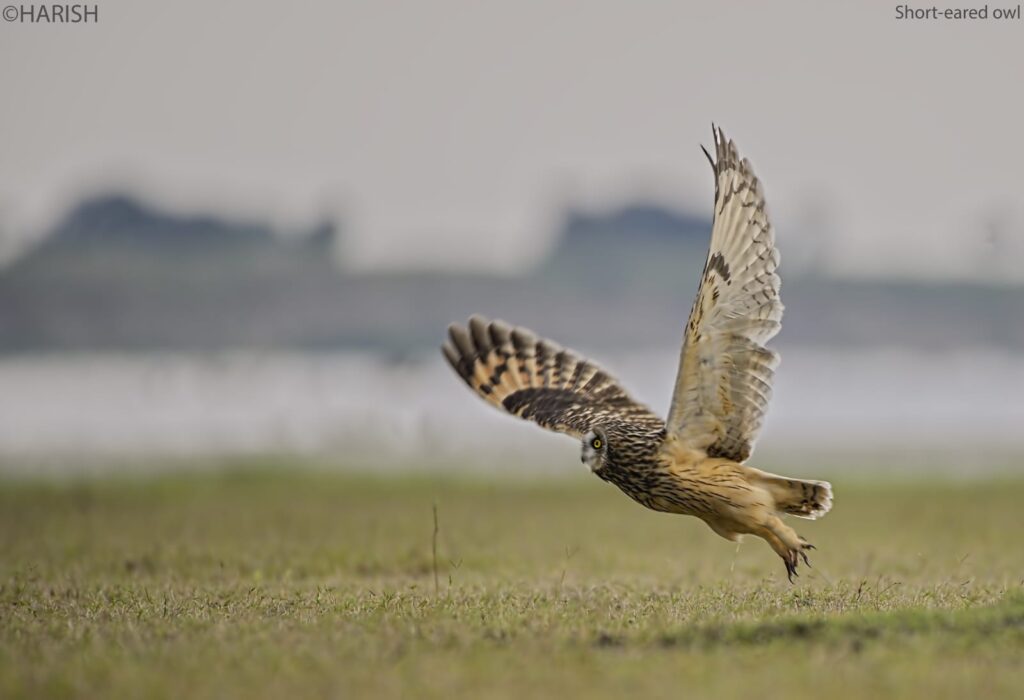
Unique Aerial Behaviors
Sky-Dancing:
During the breeding season, males perform spectacular courtship displays. These include spiralling high into the air and wing-clapping – striking their wingtips together under their bodies to produce a sound like a whip crack.
Distraction Displays:
To protect their ground nests, these owls may feign a crippled wing in flight to lure predators away from their young ones.
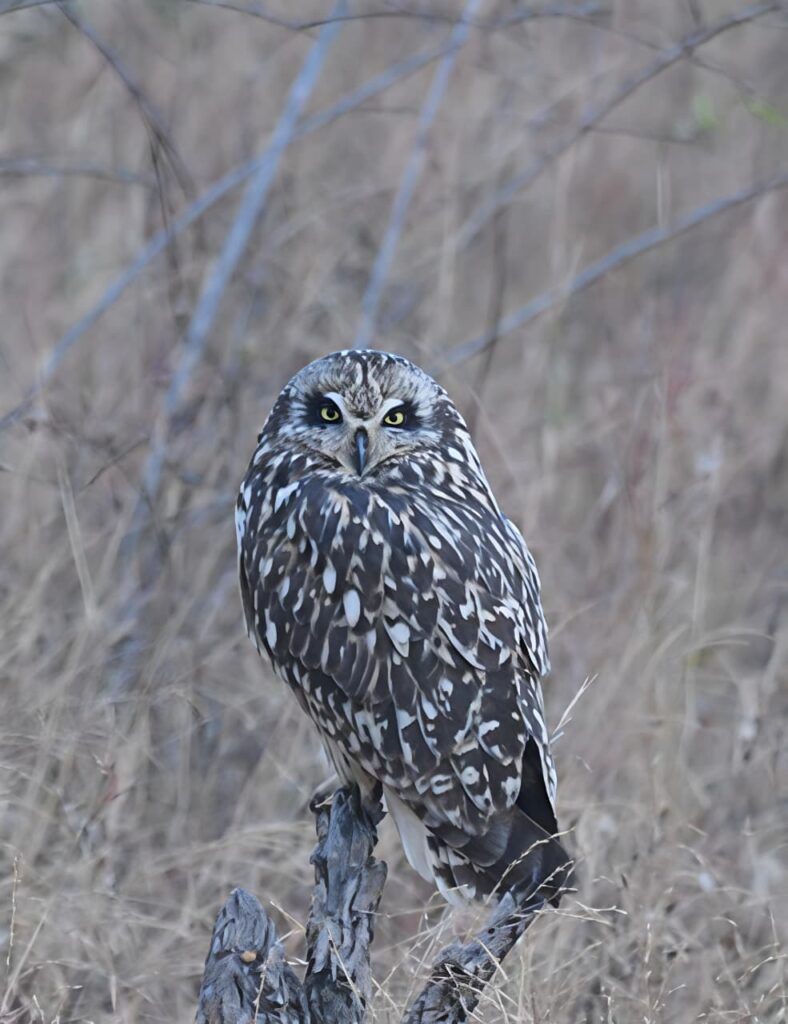
Migration to India
Short-eared Owls migrate to India in winters from their breeding grounds in the Northern Hemisphere especially from Europe and Central Asia and also from Siberia. This is basically to escape harsh winters for warmer grasslands and wetlands. They are usually observed from around November to February. They are often found in western and northwestern India, particularly the deserts and grasslands of Gujarat and Rajasthan.
(PHOTO CREDIT: ALL PICTURES BY HARISH N WHO IS A BIRDER BASED IN KANAKAPURA)
Disclaimer: Images on this website are protected by copyright, prohibiting unauthorized use, or stating that images are for illustrative purposes only.