
R S Tejus:
Illegal wire snares continue to threaten wildlife inside protected forests. These traps are simple but deadly. Made from strong metal wire, they are fixed along animal paths and tighten when an animal steps into them. The suffering is slow and cruel.
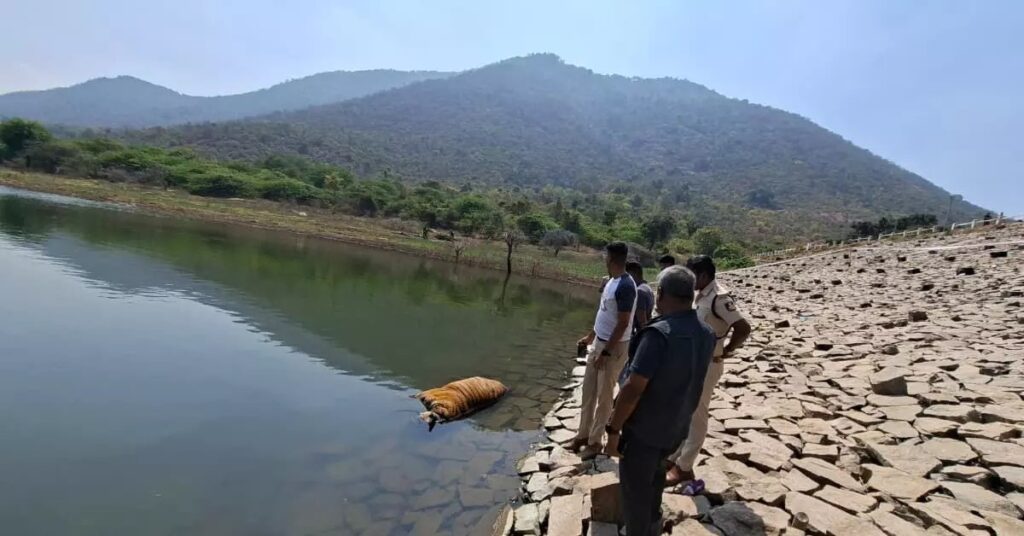
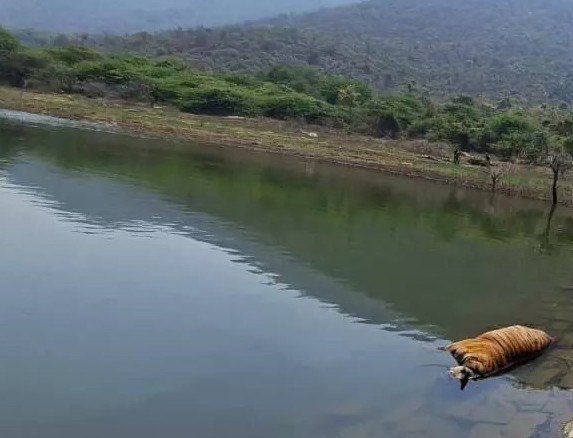
In the recent case inside BRT Tiger Reserve – a carcass of a prime tiger was found on February 15 in Gundal Dam, Kollegal Wildlife Range in Chamarajanagar district. Sources say the snare used was of a two-wheeler clutch wire — strong, flexible and sharp enough to cut deep into flesh. The injury on the tiger was severe that the wound caused by the snare was nearly one inch deep. The animal has struggled intensely before it died. How come this incident went unnoticed for almost five long days?
Officials are now examining the epicentre of where the tiger was first caught in the snare. According to sources, the death could have occurred within a one-kilometre radius from where the body was finally found near Gundal Dam. This means the tiger likely moved in pain before collapsing.
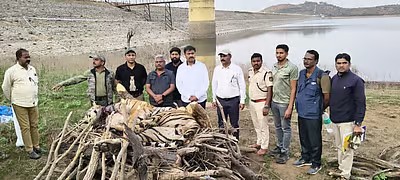
The Karnataka Forest Department conducts routine anti-snare patrols inside BRT Tiger Reserve. Monthly reports are submitted as part of this system. However, this incident clearly shows that routine patrolling is not enough. Patrolling has to be more vigorous, more targeted and more frequent in sensitive zones. If a snare made from a clutch wire can remain undetected, it indicates that gaps and loopholes exist in tiger protection that too inside a tiger reserve.
There is also a concern that snares may be placed not only inside forest limits but also in farmlands bordering the forest. This is a serious matter. Wildlife often moves between forests and agricultural lands. If traps are set in these areas, the risk to tigers, leopards and other animals increases sharply. Such an activity must be dealt with strictly and without delay.
The Karnatak Forest Department has mobile squads meant for rapid response and enforcement. These units must be used more actively in anti-snare operations.
Surprise checks, intelligence gathering, and coordination with local police are necessary. Hunting by snaring is not accidental. It is deliberate and punishable under the Wildlife Protection Act.
Renowned conservationist Praveen Bhargav of Wildlife First has said that this case must be treated as hunting and investigated thoroughly. His concern reflects a wider fear that snaring and poisoning are becoming more common in south interior parts of Karnataka.
The tiger found dead was a prime male. Losing such an animal affects the ecological balance of the reserve. BRT Tiger Reserve is an important tiger habitat. Protection here cannot be symbolic. It must be strict and active.
Several important questions need answers:
- How long had the snare been present in that area?
- Was there prior intelligence about illegal hunting activity near Gundal Dam?
- Are anti-poaching teams adequately staffed and active in that range?
- Is there proper monitoring of vulnerable zones inside BRT Tiger Reserve?
Forest officials are expected to conduct a post-mortem examination to confirm the exact cause of death. A detailed investigation must follow, including tracing the origin of the snare and identifying those responsible for this heinous crime.
This tiger death in BRT tiger reserve should not end with a file closure and routine statement. The source of the clutch wire must be traced. The people responsible must be identified. Monitoring and intelligence measures must be strengthened, especially along forest-farm boundaries.
A tiger dying in a snare inside a tiger reserve is a warning. If enforcement does not become stronger and more aggressive, such incidents will continue. The situation demands seriousness, accountability, and immediate action.