
Manjunath S Nayak:
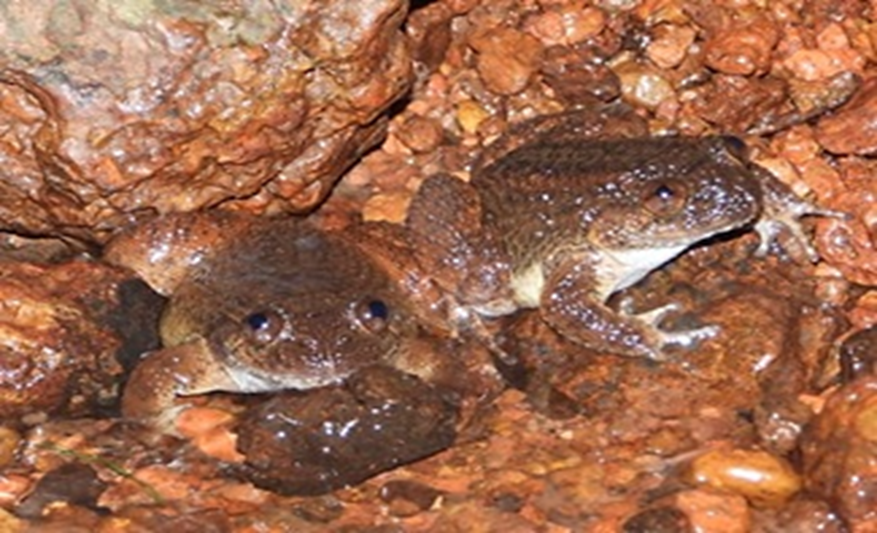
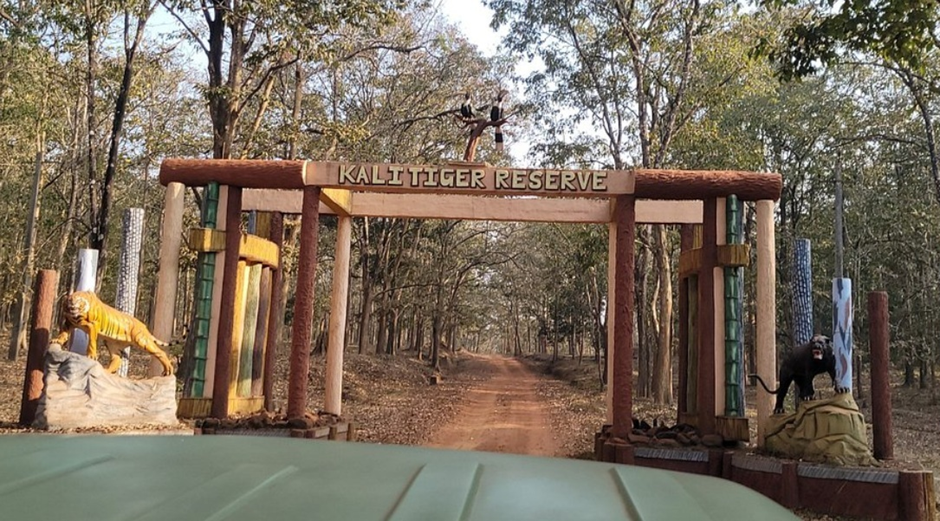
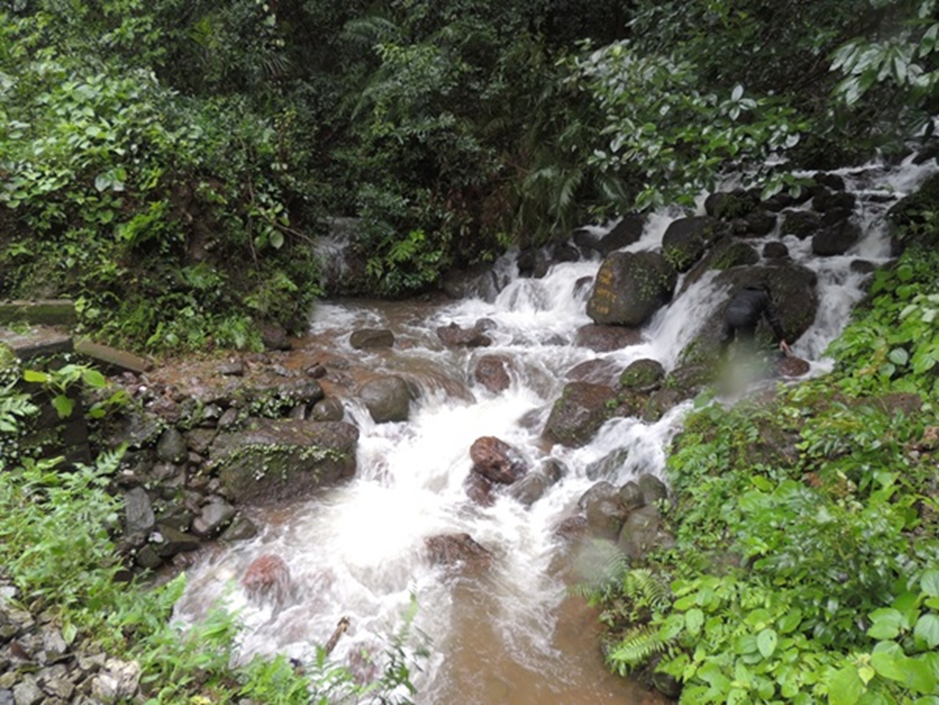
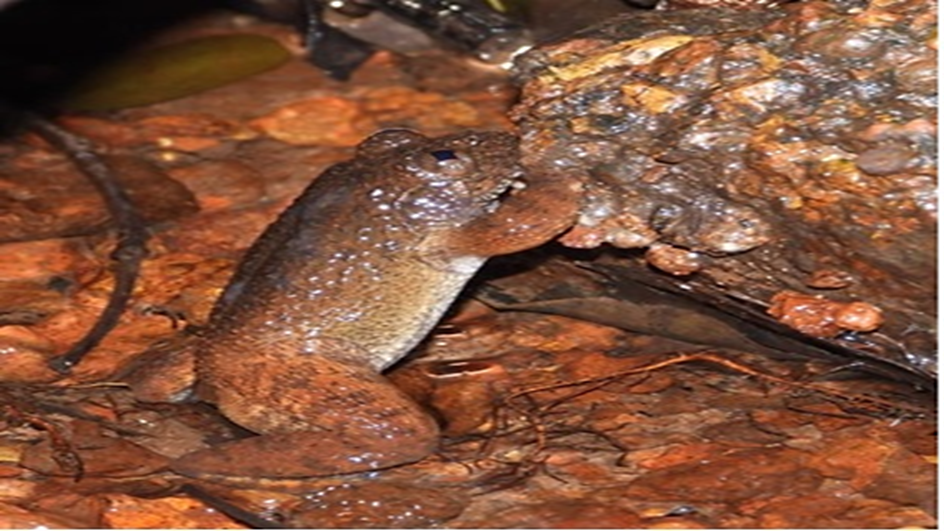
One more new night frog species – the Kali Night Frog has been discovered by primary frontline forest staff of Karnataka Forest Department (KFD) in the Western Ghats which has now garnered global recognition. Nyctibatrachus kali (Kali Night Frog) is a stream dwelling species and has been documented only in Castlerock region of Kali Tiger Reserve, Uttar Kannada district, Karnataka.
Since it was found in the Kali Tiger Reserve, it has been named the ‘Kali Night Frog.’ It is a rare nocturnal species found on the forest floor.” The discovery of Kali Night Frog species has been published in an international peer journal – PeerJ on 27 March, 2026.
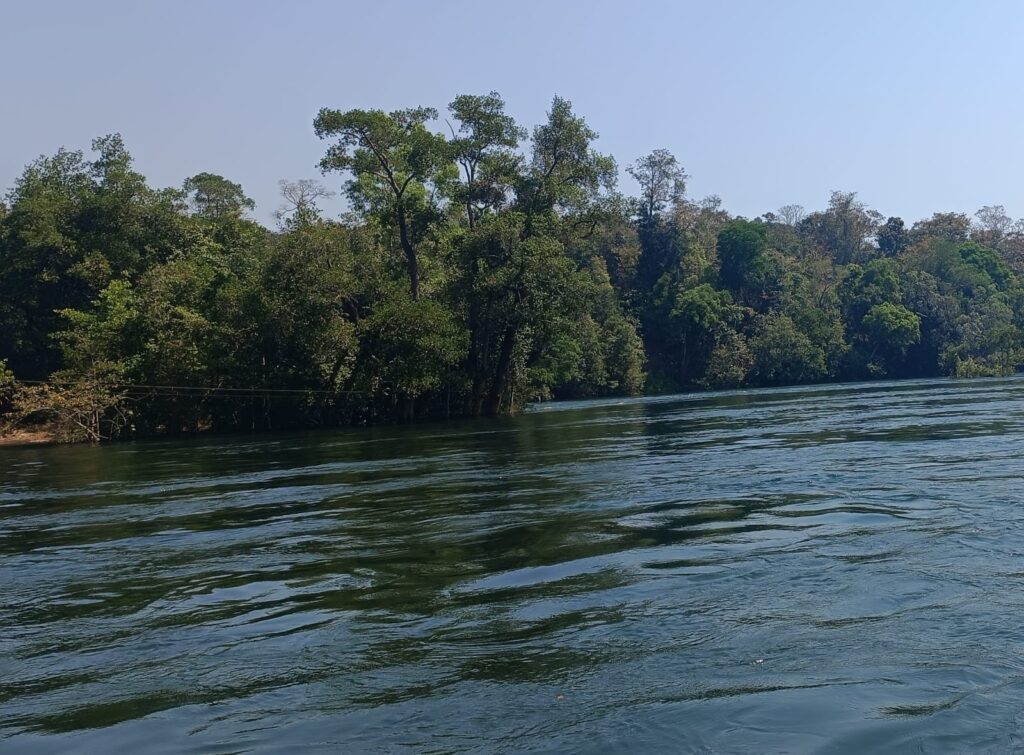
The Kali Night Frog was discovered in the Castle rock forest region. Castle rock is a dense, scenic forest area and is part of the Kali Tiger Reserve and is located in the Western Ghats of Karnataka, India. Falling in the Uttara Kannada district, this region is known for its evergreen and moist deciduous forests, biodiversity, endemic and rare floral and faunal species.
Speaking to Green Minute News, Karnataka Chief Wildlife Warden and PCCF (Wildlife) Kumar Pushkar, said, “The Forest Department staff discovering a new species of frog – Kali Night Frog is a significant achievement. It indicates that the staff possesses a scientific mindset and has great enthusiasm for biodiversity.”
Nilesh Deoba Shinde, DCF and Field Director, Kali Tiger Reserve said “The discovery of a new species of frog in Kali Tiger Reserve highlights the immense biodiversity richness of the Western Ghats, one of the world’s most important ecological hotspots. The contribution of frontline staff, C R Naik and Ramesh Badiger, in this discovery reflects their deep field knowledge, commitment, and growing interest in wildlife research. Such achievements underline the importance of empowering and encouraging frontline staff to actively participate in research and conservation activities. When field experience meets scientific curiosity, it can lead to extraordinary outcomes.”

Beginning their voyage of discovery five years back, C R Naik, Deputy Range Forest Officer, Ankola Range, Karwar Division and Ramesh Badiger, Beat Forester, Yellapur Range, Yellapur division have discovered this new night frog species.
In 2021, while monitoring the habitat and its tiger population in the Kali Tiger Reserve, a frog’s unusual croaking caught the attention of these foresters. Its sound was very different from that of other frogs as it resembled the sound of cutting wood.
This discovery in fact, happened before the Covid period. So, in 2021, Dr K V Gururaja and his research team, who basically study frogs, visited the Castlerock region. Both the forest officers C R Naik and Ramesh Badiger took the researchers to the location where the unusual frog sound was recorded.
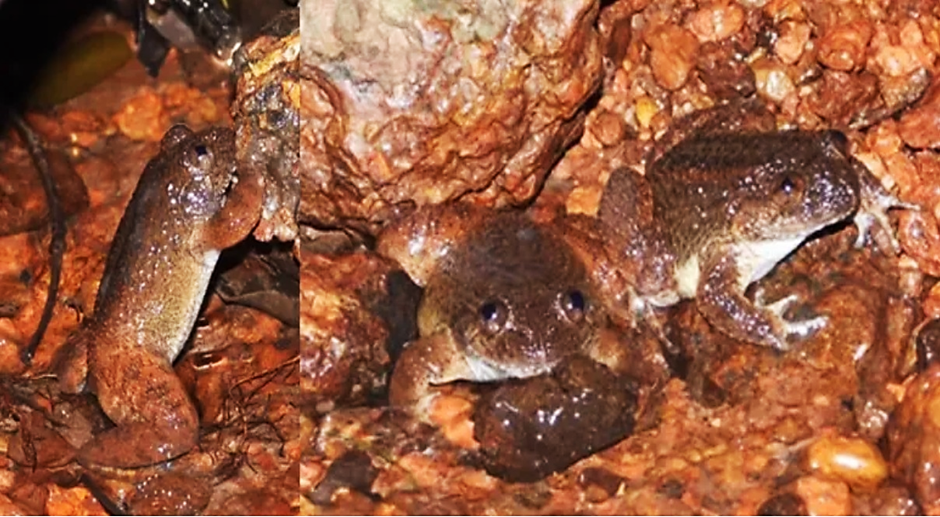
At first glance, the frog looked like a Kumbar frog (potter frog), a unique nocturnal species found in the Western Ghats. These frogs are named as “Kumbar frogs” because they cover their eggs with mud and build nests like a potter. The Kumbar frogs are also known for providing parental care to their eggs which in fact, is very rare among frogs.
Speaking to Green Minute News, Dr Gururaja, Manipal Institute of Technology Bengaluru, MAHE said, “The frog shown by the forest officers had a body structure similar to that of a potter frog, but its call was different. Initially when they showed me the frog, based on my previous observations of Night Frog from Kathalekan, I thought it was Kumbara Night frog. However, acoustic and molecular analysis showed it to be a new species of frog. It is interesting to note that citizen scientists are part of this discovery, and we have a long way to go in this direction as conservation needs collaboration with people, practice and policy.”
When Dr Preeti Hebbar, MAHE, Bengaluru conducted a swab test, a 4 percent difference in their DNA was found. This confirmed it as a new species. And she said, “It is evident that Karnataka’s forests and its streams support the diversity of Nyctibatrachus frogs and more research should be supported and funded to understand on the ecological factors that influence its distribution, how forest streams support the breeding of Kali frog and map the threats to its distribution.”
Aravind C K, PhD Scholar, MIT Bengaluru, MAHE said, “The new species Nyctibatrachus kali is morphologically cryptic but differs in advertisement calls and genetics from all current 34 species. The call resembles the sound of wood chopping and by hearing it is similar to the calls of other species in the N. sanctipalustris group. N. kali also has two distinct advertisement calls, where one is a low frequency call and the other is a high frequency call. Both types of calls differ from other species. Currently this species is only documented from Castle Rock, and it is a stream dwelling species. Conserving N. kali and its habitat have a significance of the conservation of the stream networks and the other species that are associated with the stream”
HOW WAS THIS NEW FROG SPECIES DISCOVERED?
Deputy RFO C R Naik explained, “One day, it was raining heavily. While riding my bike through the forest, I heard an unusual sound. Curious, I turned back and waited for a while. Soon, I heard the same sound again. Despite the rain, I managed to record it on my mobile phone and later sent it to Dr K V Gururaja.”
Initially, the team thought it might be “potter frog”, however, after analysing its DNA, the researchers confirmed it as a new species, which brought great joy and happiness.
Beat Forester Ramesh Badiger added, “Gaining knowledge about biodiversity in the forest where I work is also my responsibility. When Dr Gururaja’s team visited Castle Rock, we took them to the place where the unusual frog calls were heard. The researchers advised us to observe the unusual croaking sound very closely. We later observed these frogs and their breeding in four different locations. When it was confirmed as a new species that is Kali Night Frog, we were very happy.”
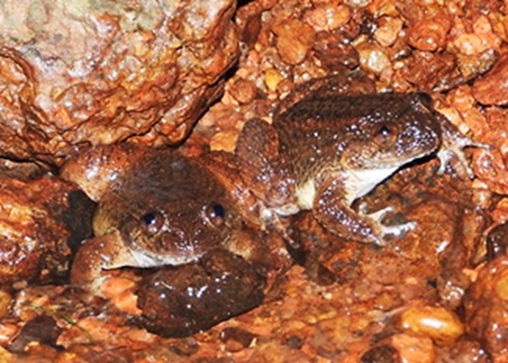
This is the 35th species of Night Frogs, endemic to the Western Ghats. It is named after the river Kali within the Kali Tiger Reserve from where it was described. 30 of these species are endemic to the Western Ghats (not seen anywhere else). A new species finding is considered as natural heritage of a country owing to the evolutionary history of the species and the landscape.
There are 9027 species of amphibians found across the globe (Frost 2026). Of which, 474 species are reported from India, which is nearly 5.3 percent of the global diversity. However, nearly 2 out of every 5 species of amphibians are facing the threat of extinction, both globally as well as in India (Leudtke et al 2023; State of the World’s Amphibians: The Second Global Amphibian Assessment, 2023).
Habitat loss is one of the major threats for the global amphibian decline. In addition, climate-change and diseases are also contributing to the current loss of species. In India, in the last 25 years, 256 new species are being described almost at the rate of 10 species per year. And with central Western Ghats being endemic to many frog species, it becomes imperative to protect this unique habitat from diversion for infrastructure projects.
Title of the published Paper: Hiding in plain sight: Description of a new species of Nyctibatrachus (Amphibia, Anura, Nyctibatrachidae) from the central Western Ghats, India – https://peerj.com/articles/20895/
(PHOTO CREDIT: FROG IMAGES BY RAMESH BADIGER, BEAT FORESTER, KARNATAKA FOREST DEPARTMENT, HABITAT IMAGES BY DR GURURAJA)