
Meera Bhardwaj:
The May 18, 2026 tragic incident at the Dubare Elephant Camp, followed by Elephant Marthanda’s death, which trampled a Chennai tourist, has raised many elephantine questions. There are 14 elephant camps in Karnataka with more than 150 elephants housed in various camps with some of them like Dubare, Sakrebyle having tourist interactions.
As per the report of an expert committee comprising K M Chinnappa, Dr Kalaivanam and Dr NVK Ashraf which was set up by the Karnataka High Court, an elephant camp should house only 15 elephants, however, some camps are overflowing with many tuskers and a few females, sub-adults and calves.
However, the recent Dubare Elephant Camp incident has “sparked multiple queries” on the functioning and management of the elephant camps in Karnataka.
Time and again, captive elephants have suffered wild tusker attacks resulting in their deaths and also faced medical emergencies due to lack of veterinary support.
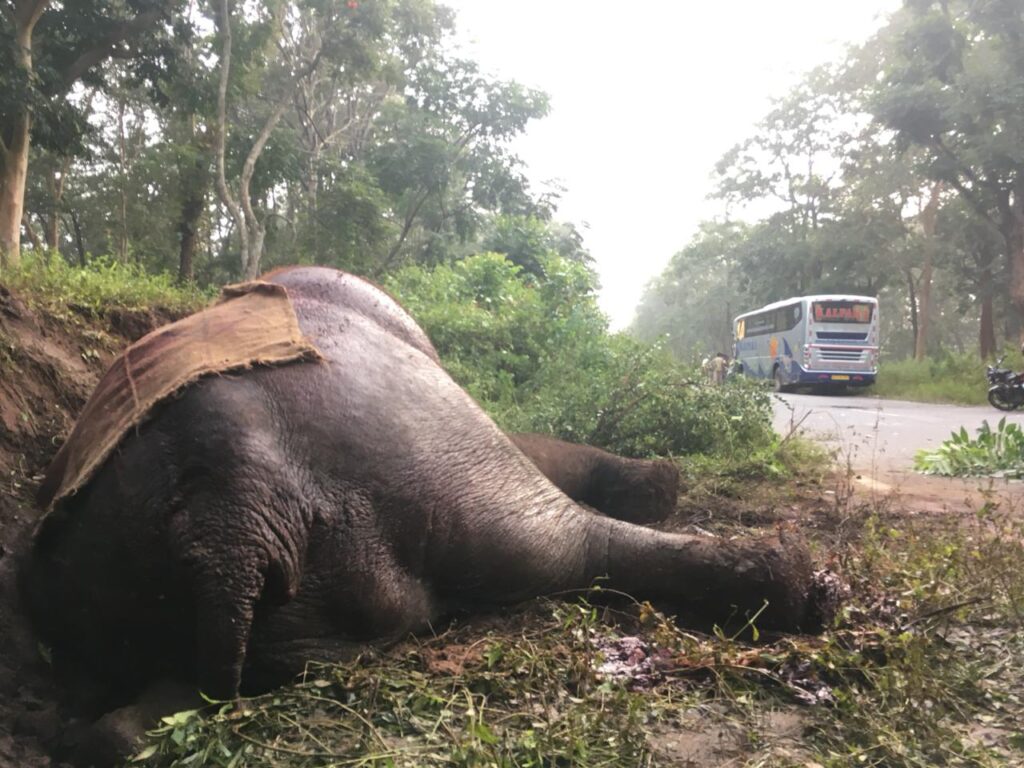
In the last decade, many incidents have happened inside elephant camps in the state wherein captive elephants have been involved in fights as many bull elephants are housed together. They have even died in road accidents. Further, their treatment by inexperienced, contract vets have led to injuries and deaths.
There have been many Incidents of Deaths @ Karnataka Elephant Camps in the last Decade and out of that, some incidents between 2016-2026 have been listed below:
DUBARE ELEPHANT CAMP (4 DEATHS)
- Makhna Marthanda (2026) was gored to death by Kanjan this month.
- Taksha (2025) died due to health issues.
- Tusker Surya (2018) which sustained bullet injuries, suffered knee injury, died after being put in a kraal.
- Cariappa (2018) died due to serious health issues following injuries.
MATHIGODU ELEPHANT CAMP (13 DEATHS)
- Gopalswamy (2026) died due to severe injuries sustained in a fight with a wild tusker.
- Abhi (2026) captive born, collapsed & died due to trauma knee injury despite medical intervention.
- Virat (2024) sustained severe injuries during capture operation & died in the camp.
- Krishna (2024) died due to sickness.
- Karuna (2024 or 23) died due to lack of proper medical care infrastructure.
- Gopalswamy (2023) died when attacked by wild tuskers.
- Subramani (2023) died due to multi-organ failure.
- Balarama (2023) died due to unknown reason, suspected to be TB.
- Rajendra (2020) killed by a wild tusker, died a day later.
- Drona (2019) suddenly collapsed during bathing and died due to cardiac arrest.
- Ranga (2018) captured from Bannerghatta was killed after being hit by a speeding bus.
- Airavata (2018) died due to heart related issues and TB.
- Lakshmeesha (2018) died, reasons unknown.
SAKREBYLE ELEPHANT CAMP (6 DEATHS)
- Balanna (2025) lost one of his ears permanently in a botched up medical treatment.
- Captive born tusker Ranga (2020) died when attacked by wild tuskers while resting behind the camp.
- Balaji, Bharathi & Sharada (2019) – three elephant orphans died due to starvation & various health issues.
- Naganna (2019) who was captured and trained, died due to injuries and health reasons.
BALLE ELEPHANT CAMP (4 DEATHS)
- Kumaraswamy (2024), a tusker died due to sickness.
- Arjuna (2024), the famous Dasara tusker died when he was attacked by a wild tusker during a capture operation at Sakleshpur.
- Durgaparmeshwari (2023) died due to intestinal infection.
- Ramani (2016) died due to a brief illness.
PHANSOLI ELEPHANT CAMP (2 DEATHS)
- Gowri (2025), a female elephant died due to health issues.
- Rajesh (2018) died when wild tuskers attacked him in the Dandeli forest as he was tied to a tree.
RAMPURA ELEPHANT CAMP (5 DEATHS)
- Thaneer Komban (2024) collapsed, died after it was relocated from Kerala on its arrival.
- Ashwathama (2024), a captive born, died due to accidental electrocution.
- Vinayaka (2023) died due to health complications after being kept in a kraal.
- Karna (2023) collapsed during a training session and died five months after its capture.
- Ganesha (2022) which was being trained for Dasara, died due to discomfort and illness.
WHY WERE CAMPS SET UP?
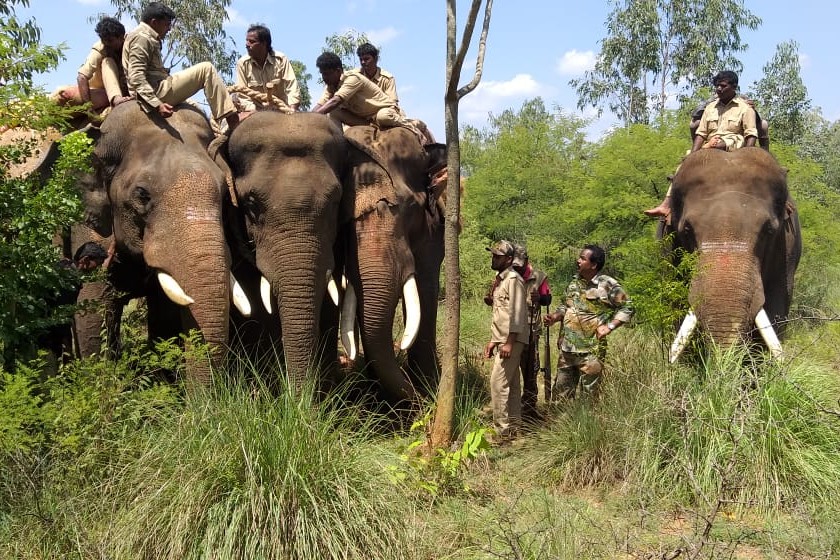
Earlier, the elephant camps in Karnataka were set up for a reason – to house and re-train working elephants but logging operations were completely stopped. Now they are used as Kumkis during capture operations, for Dasara festival and temple purposes. The state has various camps serving multiple purposes with major camps located at Dubare (Kodagu), Mathigodu (Kodagu) and Sakrebyle (Shivamogga).
These camps were basically set up for captured and relocated elephants to mitigate human-elephant conflicts. Mathigodu (Kodagu), Harangi (Kodagu), Doddaharve (Mysuru), Phansoli (Dandeli), Rampura (Chamarajanagar), Balle (Mysuru) and the rest were set up for the rehabilitation and care of conflict, rescued, ageing & captured wild elephants. Further, the Kumkis (trained elephants) are used for capture operations in conflict zones by the Karnataka Forest Department.
CAPTURE OPERATIONS CONTINUE
Elephant camps like Dubare, Sakrebyle are supposed to house 18 elephants or only 15 as per Expert Committee Report, however, they are overflowing with elephants being captured at regular intervals in the state.
Let’s take a look at Dubare Elephant Camp which houses more than 30 elephants with a staff of about 60 working in different positions as mahouts, kavadis, helpers, etc under the supervision of the Karnataka Forest Department.
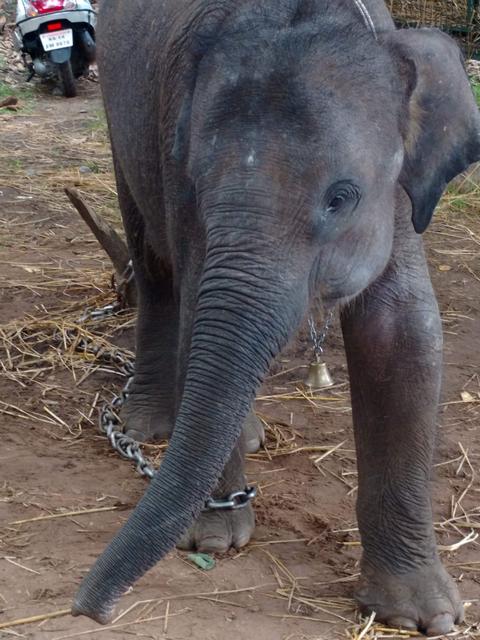
It is not just Dubare Elephant Camp but even other elephant camps of Karnataka, the captive elephants are facing a plethora of problems. Violations are committed dime and dozen in these camps but they never come to limelight, says a vet who has extensively worked in the field.
WHAT ABOUT CAMP MANAGEMENT?
Sources at Dubare allege, “The management of the elephant camps are so shoddy that the mahouts and kavadis are running the show with forest officials not taking an active part in the day-to-day running.
“Are elephants’ domestic animals to be left to them? Once in two weeks, the RFO in-charge turns up at the camp,” questions a concerned expert.
All the elephant camps in Karnataka be Dubare or Sakrebyle – are currently overflowing with big bulls.
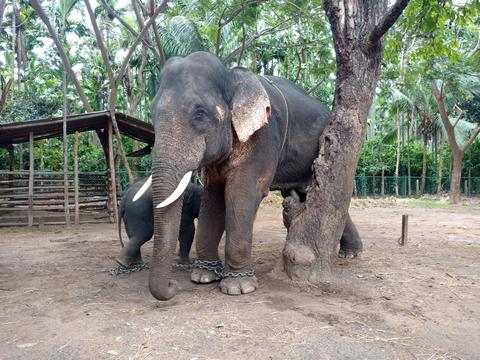
Wildlife experts say, “At all camps, there are only big bulls while in the wild, only the smaller bulls are left. With so many big bulls together, the weaker bulls like Marthanda are bullied and gored to death by the stronger bulls like Kanjan. In nature, the dominant, stronger ones pick on the weaker ones and this happened at Dubare as their wild instincts will never go despite any amount of taming or training.”
COMPREHENSIVE SOP FOR CAMPS
According to Forest, Ecology and Environment Minister Eshwar Khandre, Karnataka will be coming out with a comprehensive SOP soon that uses the best practices from India and abroad. These management practices for both the elephants and tourists will be implemented in a few important elephant camps as it has been done in neighbouring Tamil Nadu especially for tourist viewing from a safe distance.
PROBLEMS GALORE @ KARNATAKA ELEPHANT CAMPS
Camp or captive elephants in Karnataka face severe physical, social and psychological issues, say veterinary doctors.
| Problem Category | Specific Issues |
| Physical Health | Foot-related ailments from standing on stone/concrete floors for hours; arthritis; foot abscesses; TB; chronic injuries from heavy loads |
| Confinement | Chained for average 14.9 hours/day; none allowed to range free even at night |
| Social Deprivation | Living solitary lives; deprived of natural family/social bonds |
| Medical Care | Only 17 of 30 elephants have regular veterinary access |
| Forced Activities | Made to stand exposed in sun blessing people (trunk strain); begging; processions; weddings; cultural events |
| Nutrition | Starvation incidents during lockdowns; many temples cannot afford nutritious diet |
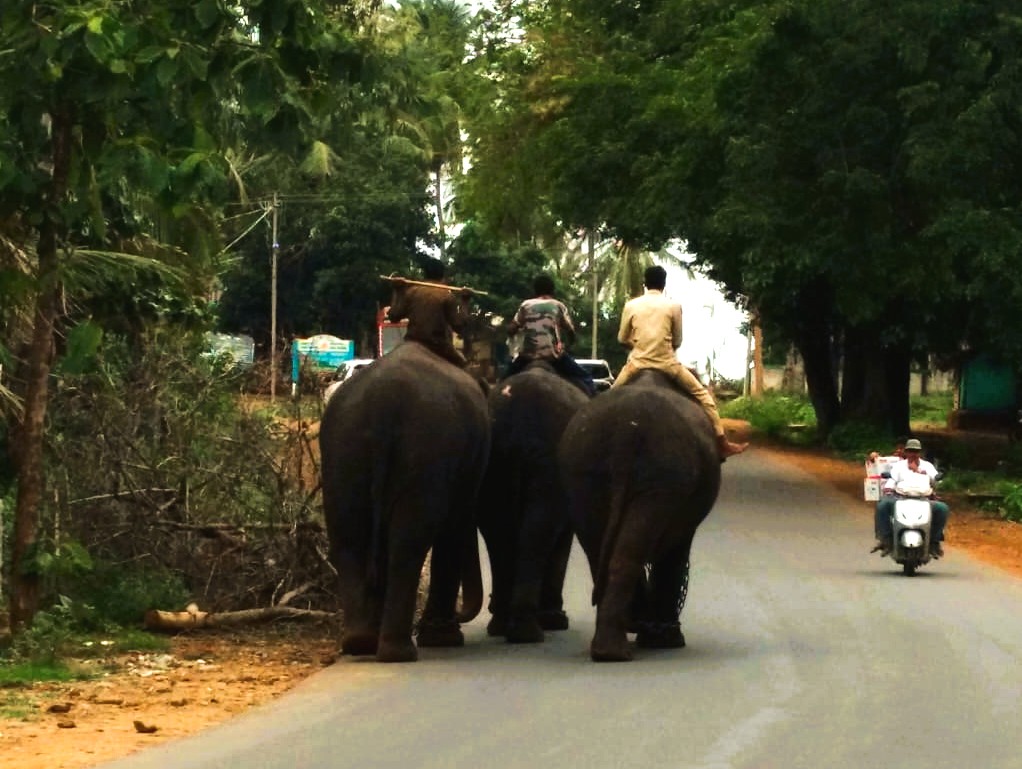
Present conditions at Karnataka Elephant Camps are not conducive for their well-being.
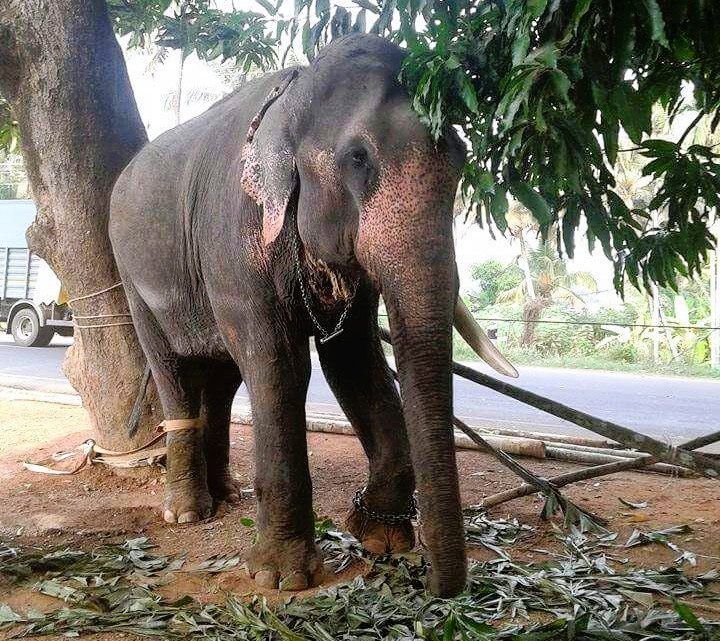
A 2023 study by Wildlife Rescue and Rehabilitation Centre (WRRC) found elephants living in “unnatural and unsuitable work conditions” with “painful” lives under harsh conditions in the camps.
KEY FINDINGS OF THE WRRC STUDY
● Most leading solitary lives
● Limited healthcare access
● No micro-chipping (mandatory by law) in most temples
● Used for purposes beyond religious events like begging, cultural events that is against the law
VIOLATION IN ELEPHANT CAMPS
| Types of Violations | Details |
| Legal Violations | Using elephants for cultural/personal events beyond permitted religious duties |
| Registration | Many elephants without proper ownership certificates; temples operating without Forest Department knowledge |
| Micro-chipping | Mandatory micro-chipping not followed by most temples |
| Cruelty Acts | Violating Captive Elephant Guidelines: excessive chaining, no rest periods, overwork during processions |
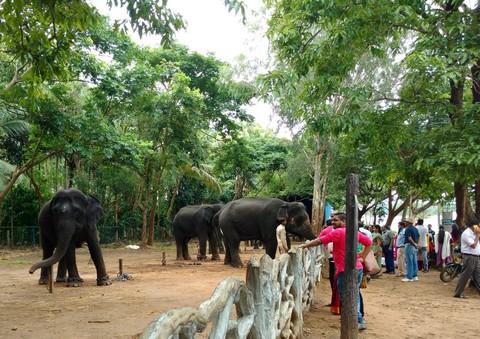
| Safety Violations | Close interaction (feeding, bathing, selfies) – only recently banned after tourist death |
CHANGES NEEDED FOR ELEPHANTS IN CAPTIVITY
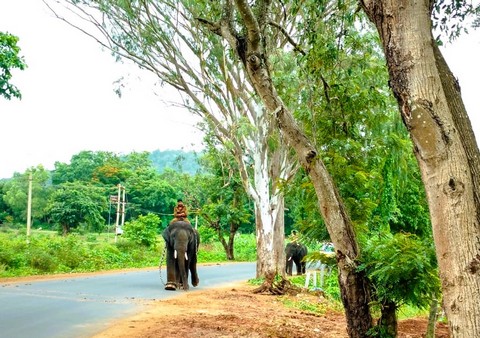
● Phase out captivity or move elephants to suitable natural environments.
● Regular veterinary access for all elephants (currently only 57% have it).
● Proper flooring – remove concrete/stone; provide natural ground in all the camps.
● Social grouping – allow elephant companionship, end their solitary confinement.
● Enforce micro-chipping for health monitoring
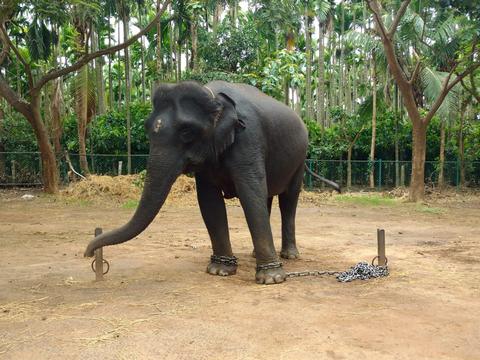
● End chaining – average 14.9 hours/day is unacceptable
● Ban entertainment use – stop rides, processions, events, performances, etc.
● Camps should be real Rehabilitation Centers for elephants & should live unchained with other elephants.
ELEPHANT DISPLAY SHOULD BE BANNED
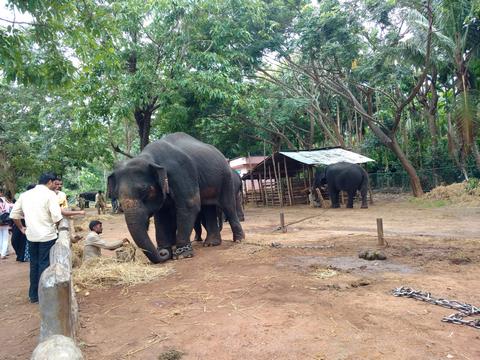
Camp elephants are neither meant for display nor for entertaining people. These elephants are housed for rehabilitation due to many reasons. In fact, the prevailing evidence supports ending entertainment displays by elephants at the camps:
● Violations of animal welfare laws – Dasara processions every year violate “Captive Elephant Guidelines” and Prevention of Cruelty to Animals Act.
● Human safety risk – 2026 tourist death, multiple injuries in 2021, mahout deaths.
● Elephant welfare – 750 kg golden howdah + loud crowds + fireworks + 5 km walk = extreme stress.
● Not part of natural behaviour -for tricks/performances, they are beaten into submission, not natural.
● 73 captive elephants died in Kerala since 2016; over 3,500 captive elephants in India today live in “abysmal conditions”
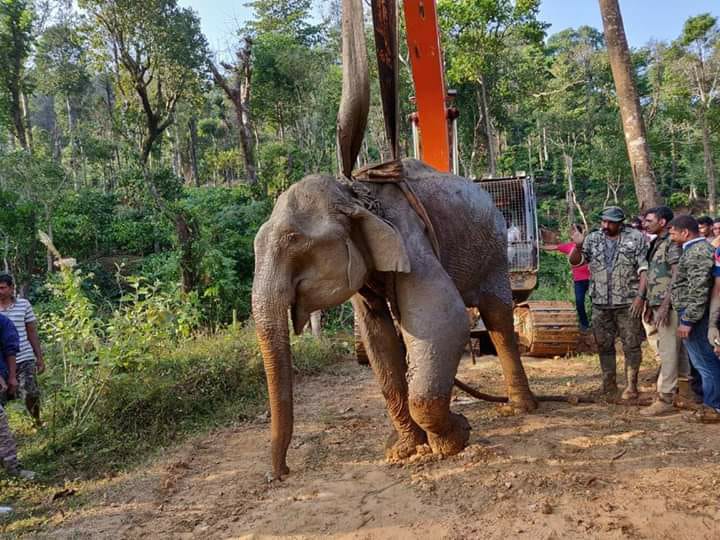
In the wake of these revelations, wildlife experts, former forest officials and wildlife vets who have worked closely in the camps call for immediate overhauling of the elephant camps and make the life of these gentle giants of the wild “happy and peaceful” in the elephant camps.