

Meera Bhardwaj:
Island states and nations are critically dependent on mangrove forest ecosystem for their very survival. If Andaman & Nicobar Islands, India including the Middle Andaman is a global hotspot for mangrove diversity, the highest diversity of mangrove species is found in the south Andaman Islands.
The Andaman Islands hold higher diversity (35 species) compared to the Nicobar Islands (21 species) and 86 percent of India’s total mangrove species.
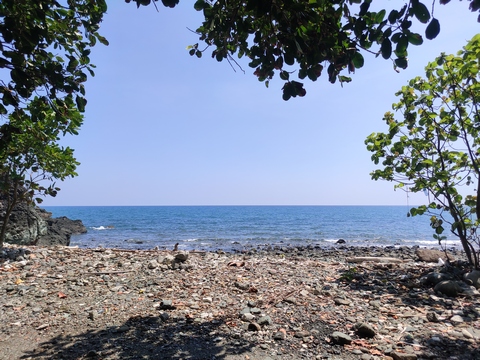
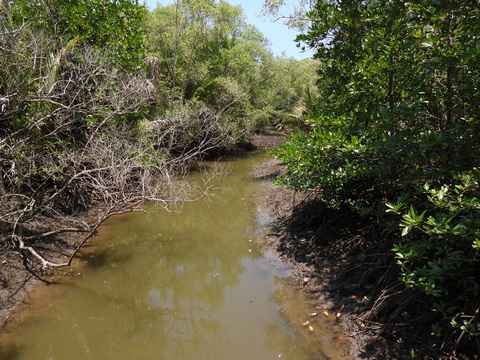
However, the Middle Andaman is a major biodiversity hub with 33 true mangrove species, and a high mangrove density (greater than 2100 per hectare) and species richness . This is notably found in areas like Dhani Nallah near Rangat.
In view of natural calamities and rapid clearances of mangroves for agriculture & developmental activities in Andaman and Nicobar Islands, it becomes imperative not only to conserve this unique, diverse forest ecosystem but also provide the highest form of protection on par with tigers.
IUCN RED LIST OF ECOSYSTEMS
On the IUCN Red List of Ecosystems, the Andaman mangroves are threatened widely by wood extraction, encroachment, conversion for agriculture or aquaculture, and by coastal infrastructure projects in some more specific locations. It also faces threats from climate change, mainly in the form of sea level rise, especially along the northwest coast of Sumatra.
Functioning as a fundamental, inexpensive barrier against climate-induced disasters, mangroves are a primary source of food security and a critical economic driver. In many small island states, mangroves are not merely environmental assets but they are also the “first line of defence” against sea-level rise and extreme weather events like tsunamis, states IUCN.
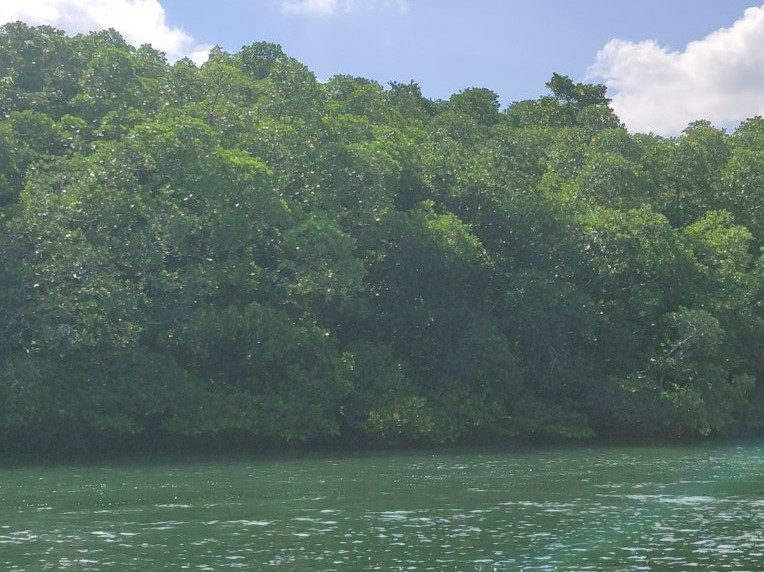
The total area of mangrove forests in Andaman & Nicobar Islands (A & N) is 617 sq kms – out of which 46 percent (283 sq km) is very dense, 42 percent (261 sq km) is moderately dense and the rest 12 percent (73 sq km) is open mangroves.
Further, the special adaptations of mangroves are remarkable:
- Lot of Salt Tolerance
- Salt partially excluded by roots
- Many Species have glands excreting salt
- Stomata in leaves do not open during the day, reducing water loss rate
Diversity of Mangroves in A & N Islands
The A & N Islands host some of India’s most diverse and dense mangrove ecosystems – covering 12 percent of the nation’s total mangrove area. And 99 percent of mangrove diversity is located in the Andamans.
The Andaman Islands feature 38 to 48 mangrove species which in fact, represents 50 percent of global mangrove diversity. Further, this includes 33 true mangrove species with the highest density in the Middle Andaman.
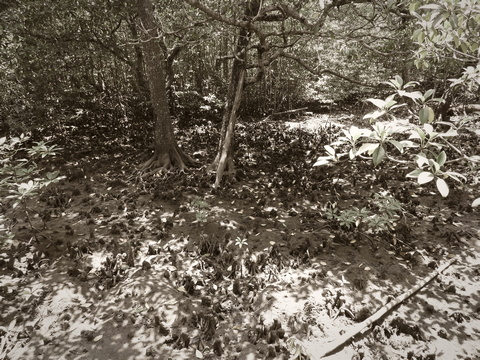
As per IUCN, the mangroves of the Andaman support a diverse biota that includes 43 true mangroves and many other key plant species. There are three mangrove species classified as threatened according to the IUCN Red List of Threatened Species:
- Sonneratia griffithii,
- Bruguiera hainesii and
- Heritiera fomes.
Betapur Range, Middle Andaman Division, A & N Islands Deptt of Environment & Forests
Green Minute News visited a reserve forest in the Betapur Range, Middle Andaman Division. The Dhani Nallah Mangrove Creek is an astonishing wonderland for the vast diversity of mangrove species in the Middle Andaman Islands. Different species are found in the proximal, distal and middle zones of this mangrove forests.
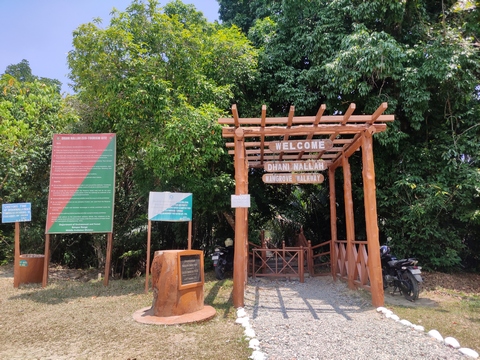
A Key Ecological Site, the Dhani Nallah mangrove creek starts from the Andaman Trunk Road at Betapur and is about 20 kms from Rangat town towards Mayabunder in north Andaman.
Further, the Dhani Nalla Mangrove Creek has a wooden walkway facility which gives an easy access to see the diverse mangrove forest ecosystem which finally leads to the turtle nesting site of Dhani Nallah beach.
Hosting a high density of mangrove species, I have listed a few of the species found in Dhani Nallah Mangrove Creek:
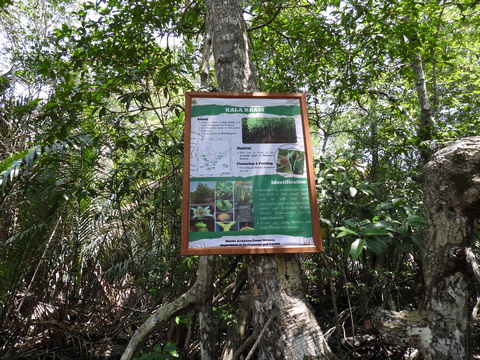
Rhizophora mucronate (Red Mangrove): Known as Kala Khadi, they are found throughout the A & N Islands. Found in proximal (seaward) zone of mangrove forests, they flower and fruit throughout the year. This is a moderate sized tree with rough bark, stilt root with mucronate apex on the leathery leaves and yellowish-white flowers.

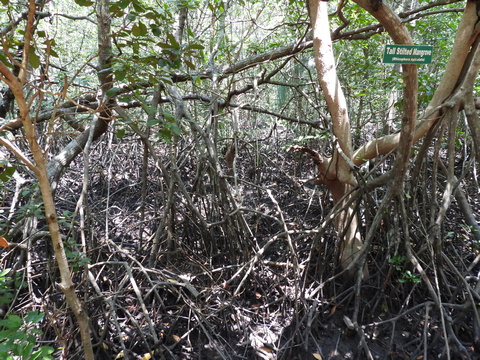
Rhizophora apiculata (Tall-stilted mangrove or Black Mangrove): Luxuriant growth of this species can be found here. It is found in proximal zone while adapting to high salinity and waterlogged conditions with its characteristic stilt roots. Fruits are dark brown and viviparous in nature.
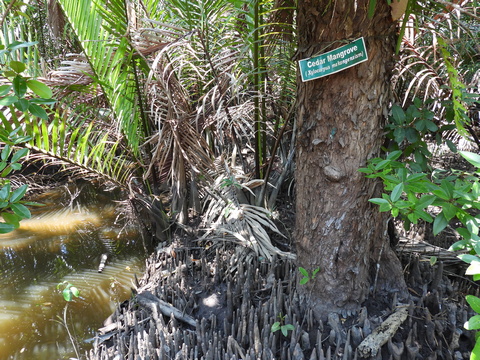
Xylocarpus moluccensis (Cedar mangrove): Found in dense and diverse forests of Middle Andaman. They are noted for their high-quality timber and are locally related to the “Sundari” tree type, which thrives in these habitats.
Phoenix kajur (Mangrove date-palm or sea date): Locally known as Khari Kajur, it thrives in inter-tidal (where fresh water mixes with sea water) zone. In the Andamans, this species is known for producing distinct bright red fruits.
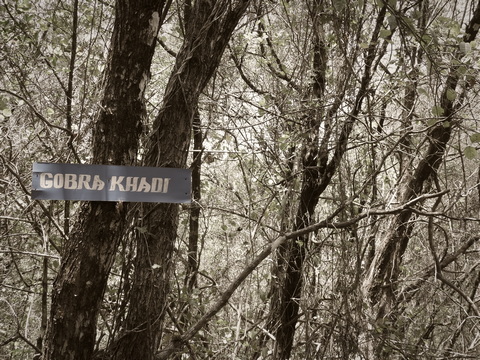
Lumnilzera littorea (Red-flowered black mangrove): Also, locally known as Gobra Khadi, they are found throughout A & N Islands.
Found in the distal zone of mangrove forests, they flower in October and fruit in January. Tall tree with dark coloured, rough, fissured bark, fleshy leaf, scarlet bright flowers and elliptical wood berry fruit.
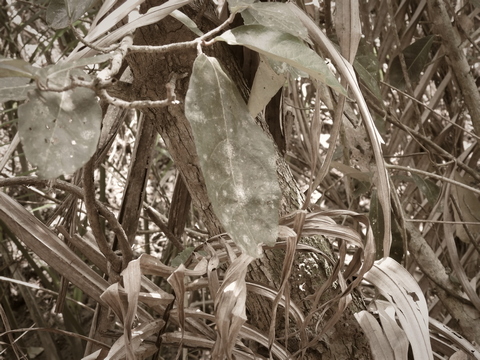
Heritiera littoralis (Looking-glass Mangrove or Sundari): This is a significant buttressed-root mangrove tree species & thrives in landward edge of mangrove forests.
The species has dark-green leaves which are distinctive as they are silvery-white underneath – giving it a mirror-like appearance.

Avicennia marina (grey mangrove): A prominent species in this ecosystem, it thrives in tidal creeks. It possesses specialized, complex roots, including pneumatophores (breathing roots) to absorb oxygen.
This mangrove species, along with others in the area, serves as an essential habitat for fauna, including various bird species, crabs, and fish.
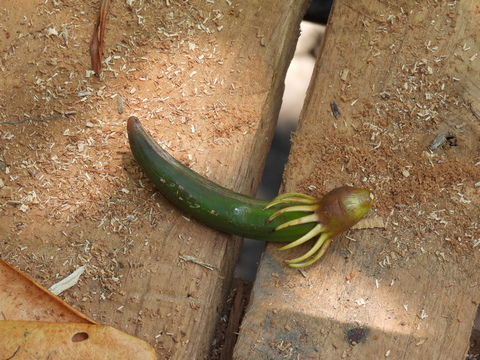
Ceriops tagal (Yellow Mangrove): Commonly known as Lal Khadi – it is found throughout the islands and is seen in the middle zone of mangrove forests at Dhani Nallah.
They are characterized by dark brown fruits and obtuse leaves. It is typically found in the inter-tidal zone which is usually submerged by high tides. They are part of dense mangrove along with Rhizophora.
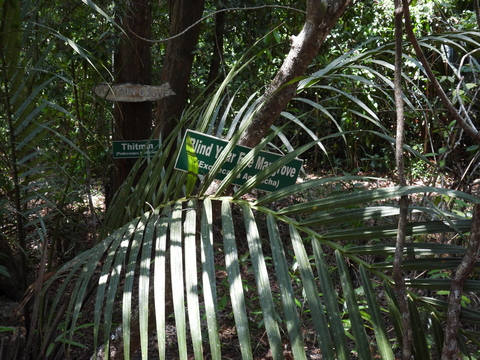
Excoecaria agallocha (Blind-your-eye Mangrove): Blinding tree, Buta-buta tree, Milky mangrove, Poison-fish tree, and River poison tree are some of the common names given to this species. Highly toxic tree with milky white latex, it causes severe irritation, blistering, and temporary blindness if one comes into contact with the eyes.
Now how do Mangroves Survive in such hostile conditions?
Specialized root adaptations make it possible for them to live in the oxygen poor sediments & unstable soil conditions.
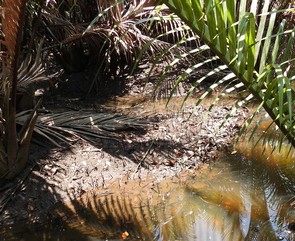
Pencil-shaped erect roots are extension of underground root systems, profusely seen in Avicennia spp and Sonneratia spp.
They are specialized vertical aerial roots which grows upward from the mud so as to breathe in oxygen-poor water-logged soils, thereby, enabling gas exchange for the plant.
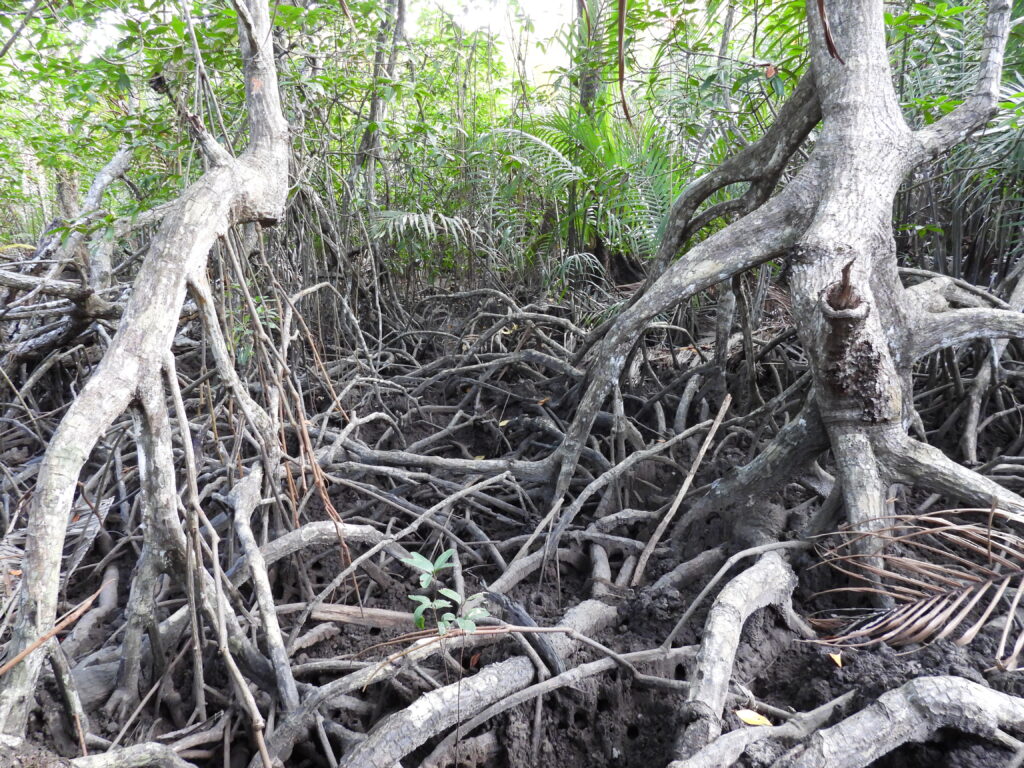
Prop & Stilt Roots are roots from their trunks and branches which arch down to the ground for extra support and air absorption like Rhizophora.
They are aerial roots providing crucial support anchoring trees against strong winds and high tides.
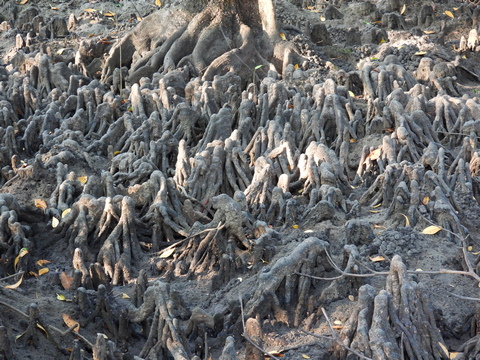
Knee Roots – certain mangroves provide air to its root system via knee-like structure. They are periodically exposed to air which facilitates gas exchange, eg Ceriops tagal.
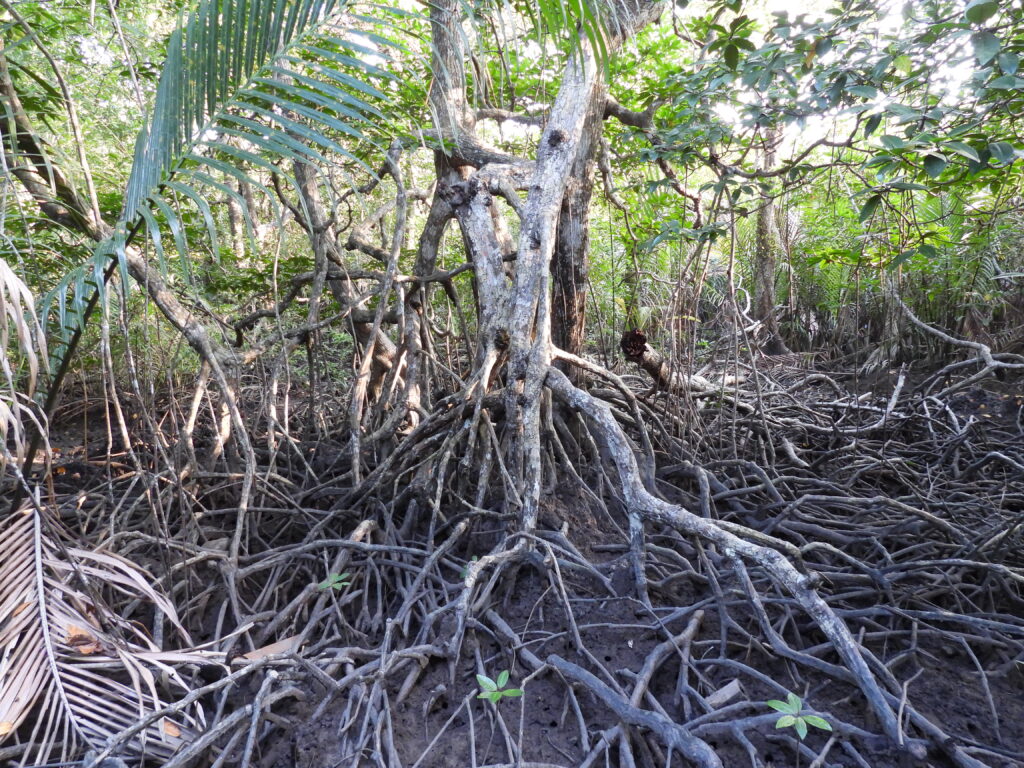
Plank Roots – Horizontal roots grow vertically on the upper side for entire length. They also curve in a snake-like fashion, wavy, plant-like structure. They radiate upwards from the trunk base which help in aeration, improve anchorage in unstable mud. Eg Xylocarpus granatum.
Coastal Protection & Disaster Reduction
- Buffer Against Extreme Weather: Mangroves protect coastal communities by acting as a natural shield against cyclonic winds, storm surges, and waves. An 80-meter-wide strip of mangroves can reduce wave heights by up to 80%.
- Cost-Effective Infrastructure: They are five times more cost-effective than artificial sea walls in protecting communities from disasters.
- Erosion Prevention: The complex root systems trap sediment, stabilize the shoreline, and prevent land from being washed away.
- Tsunami Defence: During events like the 2004 Indian Ocean tsunami, areas with healthy mangrove buffers experienced significantly less damage.
In the coming future, the Andaman mangrove forest ecosystem will be threatened by sea level rise. Under a mid-high sea level rise scenario (IPCC RCP6), approximately 21 percent of Andaman mangroves would be submerged by 2070, and even under a more extreme sea level rise scenario, the area is projected to be submerged by 2070, is below the 30 percent extent of decline threshold.
The mangroves of the Andaman have lost almost 16 percent of its mangrove area over the past 50 years (1970-2020). The largest decline in mangrove area occurred between 1996 and 2010, however, since then, there has been a deceleration in net area loss.
“Unfortunately, there are no reliable data on the mangrove extent for the entire eco-region since 1750, and therefore, the Andaman mangroves ecosystem is considered Data Deficient,” states IUCN Red List of Ecosystems and so, declares it as of Least Concern.