

GREEN MINUTE NEWS:
In a significant step toward mitigation of conflict between humans and tigers in the Sundarbans, West Bengal, the Wildlife Trust of India (WTI) has introduced the Animal Intrusion Detection and Repellent System (ANIDERS) in the Raidighi Range, 24 Parganas (South) Forest Division of West Bengal.
The Sundarbans, a UNESCO World Heritage Site spanning India and Bangladesh, is the world’s largest, unique mangrove ecosystem inhabited by the Royal Bengal tiger. Human-tiger conflict in the Sundarbans is a critical issue driven by habitat loss, rising sea levels, and the resource dependence of 4.5 million people on the mangrove ecosystem. Over 100 people are reported to be killed annually by tigers, which are known for being exceptionally aggressive in this unique but fragmented habitat.
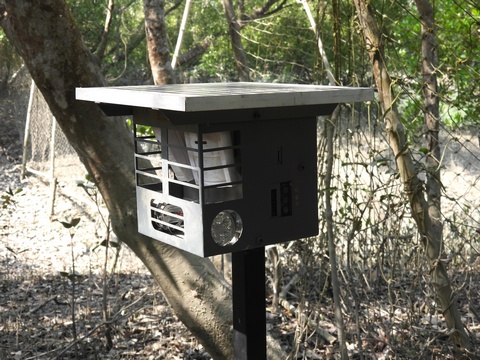
This pilot initiative aims to address the challenges posed by human-wildlife interactions, particularly involving the two flagship species such as tigers and leopards. Many villages of the Kultali block share their boundaries with the nearby tiger habitat and often face tiger ingressions throughout the year, especially in the winter.
In a significant step towards strengthening and tackling human-tiger conflict (HTC) in the Sundarbans, WTI and 24 Parganas (South) Forest Division have been installing ANIDERS (Animal Intrusion Detection and Repellent System) along with camera traps in selected vulnerable areas in Herobhanga-09 forest compartment under Raidighi Range.
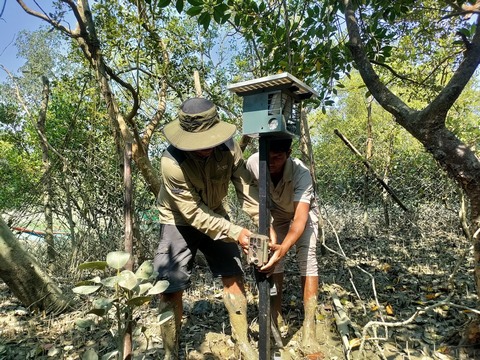
ANIDERS (Animal Intrusion Detection and Repellent System) is a non-lethal technology-based tool which has been used widely to prevent wildlife intrusion into human-dominated landscapes. This initiative aims to enhance the early-warning mechanisms and support the West Bengal Forest Department in handling ingressions before the animal enters the nearby village.
Each device covers a minimum of 25 to 30 metres in a 180-degree angle from its central point, and each is powered by a non-renewable energy source which is a solar power panel. This pilot initiative is currently being implemented on a limited scale for a defined period of time to assess the technical feasibility, operational reliability, detection accuracy and the effectiveness of the devices in reducing tiger ingressions.
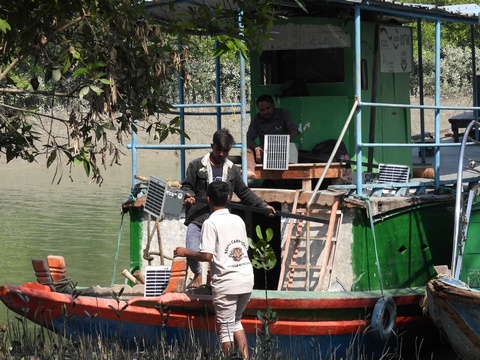
Samrat Paul, Field Officer, Sundarbans Tiger Project, WTI, said, “So far, we have installed 4 ANIDERS. These devices use advanced motion-sensing technology to detect animals at entry points. The initiative will support monitoring animal movement around these locations and help identify the most vulnerable entry points, enabling more effective management and mitigation strategies.”
Dr Abhishek Ghoshal, Division Head, Conflict Mitigation Division, said, “We piloted it in Pilibhit and Katerniaghat in Uttar Pradesh last year, and now we are introducing it in Sundarbans for the first time. It will help us understand if ANIDERS can function effectively in a mangrove ecosystem in deterring tigers from entering villages from creeks or forests”.
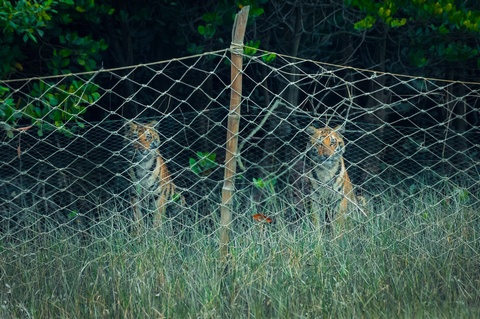
In the long run, the incorporation of these devices in human-tiger conflict (HTC) mitigation policy and budgetary planning would support sustainable and cost-effective non-lethal approaches towards mitigation in human-tiger conflict (HTC) incidents in the Sundarbans area.
Under the pilot phase of this project, four ANIDERS devices have been strategically installed in the Herobhanga 09 forest compartment of 24 Parganas (South) Forest Division, and the remaining will be installed in nearby forest fringe villages like Gurguria, Nagenabad, and Ambikanagar of Kultali block.
Such and other tools like net fencing are part of an ongoing, integrated approach to protect both the local communities and the endangered Royal Bengal tiger in the Sundarbans from rising human-tiger conflict.