
R S Tejus:
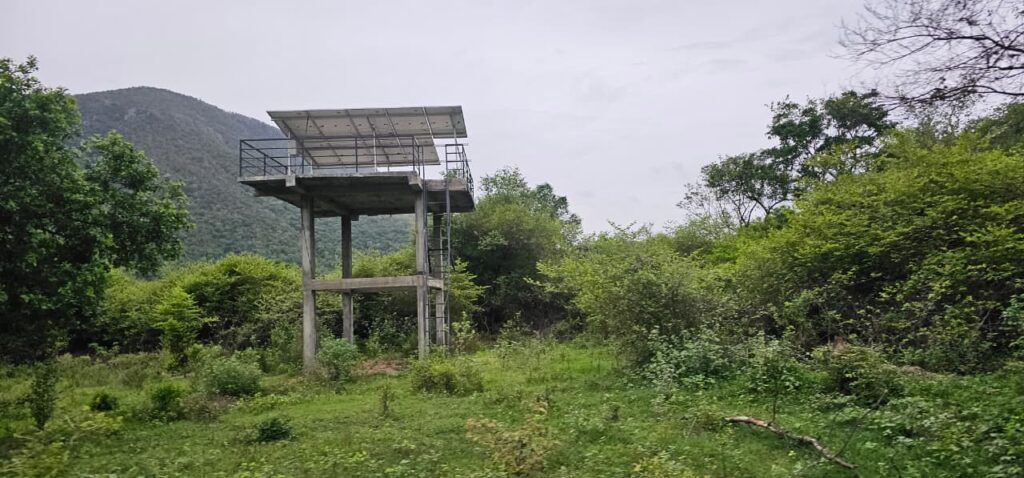
The usage of CSR funds for implementing civil works inside the Cauvery Sanctuary under the guise of wildlife protection & conservation – grabbed eyeballs and rapid attention of the Karnataka Forest Department (KFD).
On January 16, 2026, a news report by Green Minute News on the civil works inside the Cauvery Sanctuary did more than highlight such a shocking issue.
CAUVERY SANCTUARY HAS BECOME AN ENGG PROJECT RATHER THAN CONSERVING IT – Green Minute
This was happening not just inside Cauvery Sanctuary but is true for other tiger reserves, national parks and sanctuaries across the state, wildlife conservationists stress.
This news report brought attention to a larger problem that has been prevailing and quietly growing inside many Protected Areas across Karnataka.
- Forests are increasingly being subjected to expensive civil works in the name of conservation.
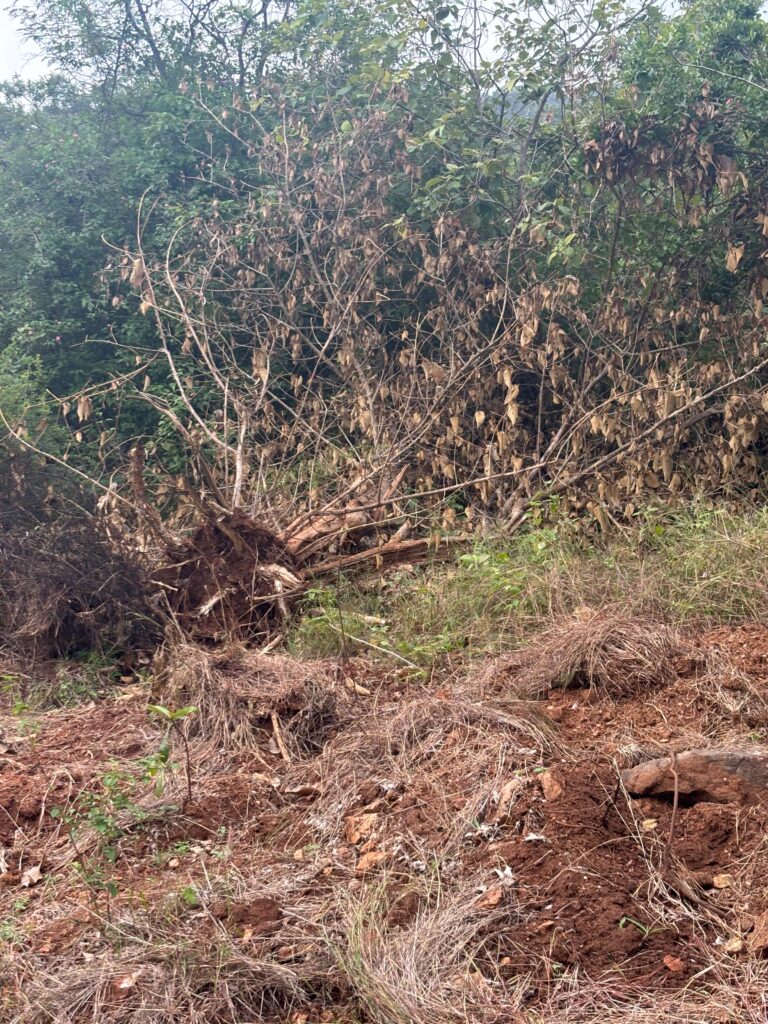
- In Cauvery sanctuary, the issue became highly visible after queries were raised over civil works being carried out inside the forest & causing damage in the process.
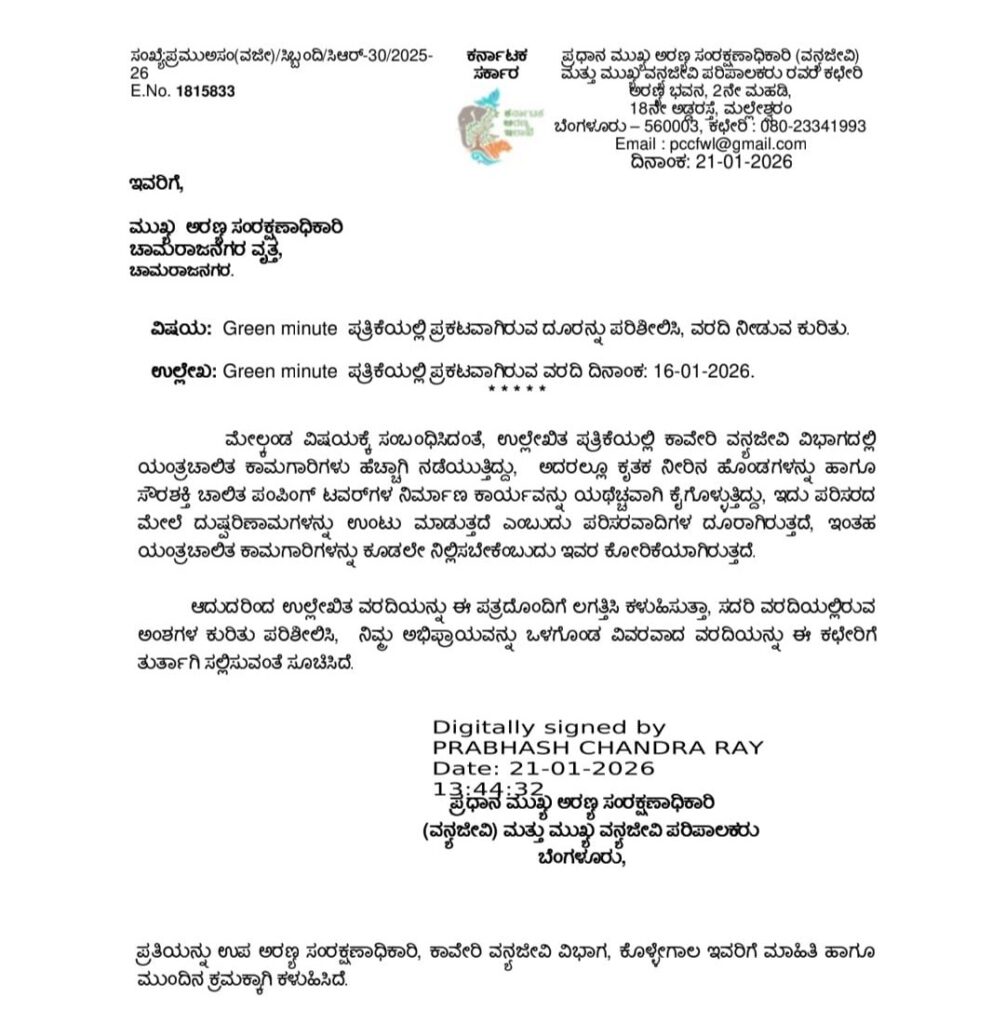
On January 21, 2026, a notice was served to the concerned DCF of Cauvery sanctuary. The notice detailed the damage caused by the civil works and an explanation was sought from the officer concerned.
Green Minute News did not publish an impact story immediately after that. We waited because the real question was not whether a notice had been issued, but whether the damaging works had actually stopped on the ground. Only after confirming with sources from the Karnataka Forest Department that these civil works had come to a standstill – we are reporting now and highlighting this issue.
What makes this matter even more important is that the civil works in Cauvery sanctuary were carried out under the CSR funds of a listed public sector enterprise company. This raises a very serious question about how CSR money is being used inside forests.
Instead of keeping aside such precious funds for:
- real conservation issues such as voluntary relocation of people,
- buying of land parcels which are crucial for movement of wildlife in the PA,
- strengthening the frontline staff,
- strengthening the APCs with technology and other critical conservation issues,
- CSR funds are being used largely for civil works using heavy machinery.
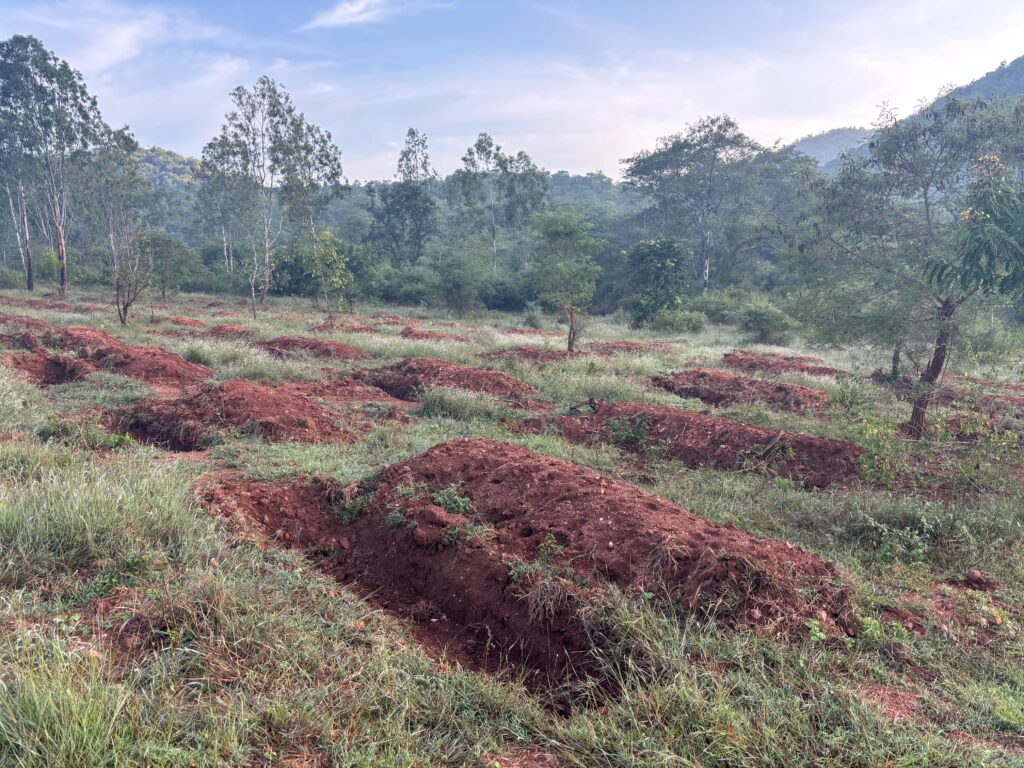
This is where the big problem lies. When CSR money enters forests through a civil works approach, conservation takes a backseat. Cement structures, artificial installations and engineering-style interventions begin to take the place of ecological thinking. Forest habitat then risk being altered in the name of helping them, thereby, affecting the wildlife.
The Cauvery Sanctuary issue is important not only because a notice was served by the Karnataka Forest Department, but because it has exposed a wider pattern on the utilization of funds. The difference is that such issues in Cauvery Sanctuary came to light.
In many other protected areas across Karnataka which are remote and inaccessible, and far away from capital city of Bengaluru, such shocking interventions in forests – remain buried and away from public attention.
And that is why a “broader review” is now necessary by the KFD:
- There must be a full audit of civil works being taken up inside Protected Areas,
- Audit especially those funded through CSR,
- The audit should examine how much money has been spent,
- What kind of structures have been created,
- Who approved the civil works,
- Whether they were scientifically justified, &
- Could these funds have been better used for actual conservation needs?
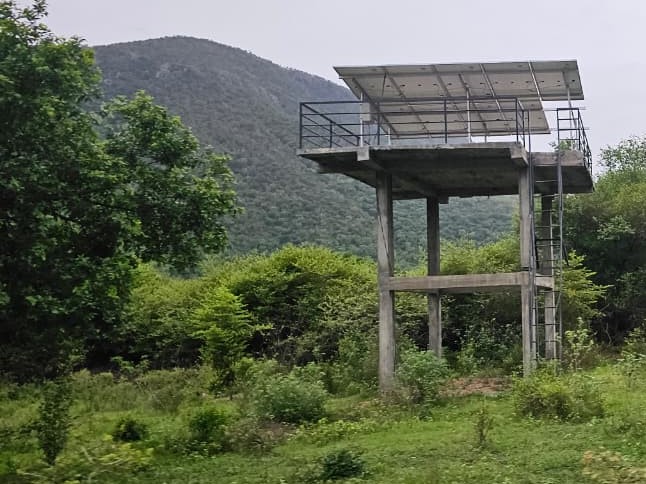
Senior forest officials of KFD have assured that a “circular” will be issued to all Protected Areas, with Cauvery Sanctuary being treated as an example of how not to “set up cement structures and solar towers” inside a PA. That assurance is important, but it is still something that must be followed through in writing and in practice.
For now, Cauvery Sanctuary has shown that public scrutiny can have an effect. But this should not stop with one notice or one site. The larger issue is about the direction in which forest management is moving.
If money meant to support conservation is mainly going into civil works, then the system needs correction. Forests and that too protected areas cannot be protected by slowly turning them into construction spaces.