
Meera Bhardwaj:
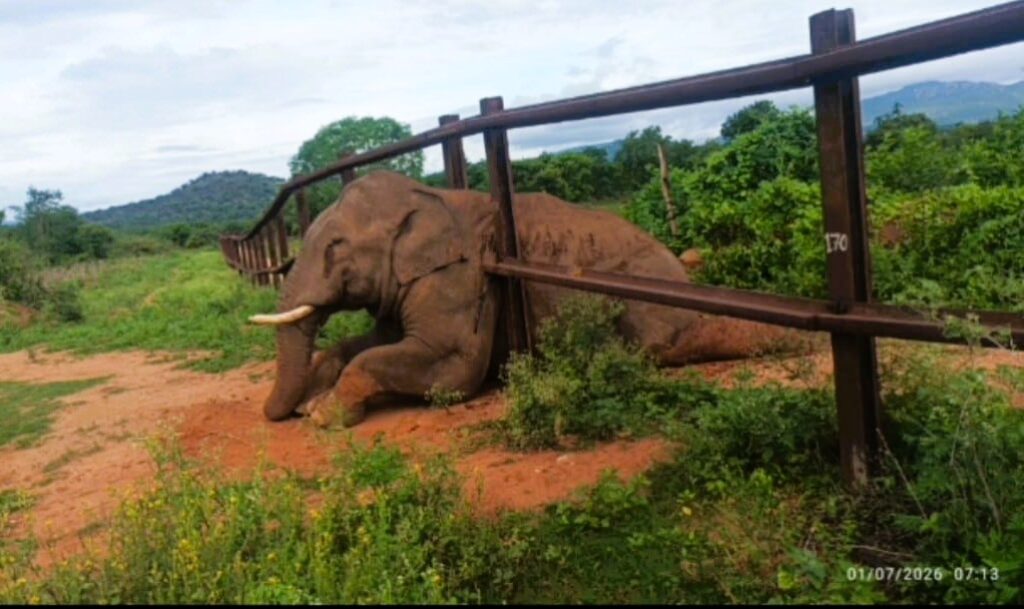
A young and healthy wild tusker that was trapped in a railway barricade was rescued in an hour-long operation in Kanakapura taluk, Bengaluru South district, Karnataka. The wild tusker had reportedly come from Boni Hekkalu forest area, Basavanna Waade Beat in Mugguru Range, Cauvery Sanctuary.
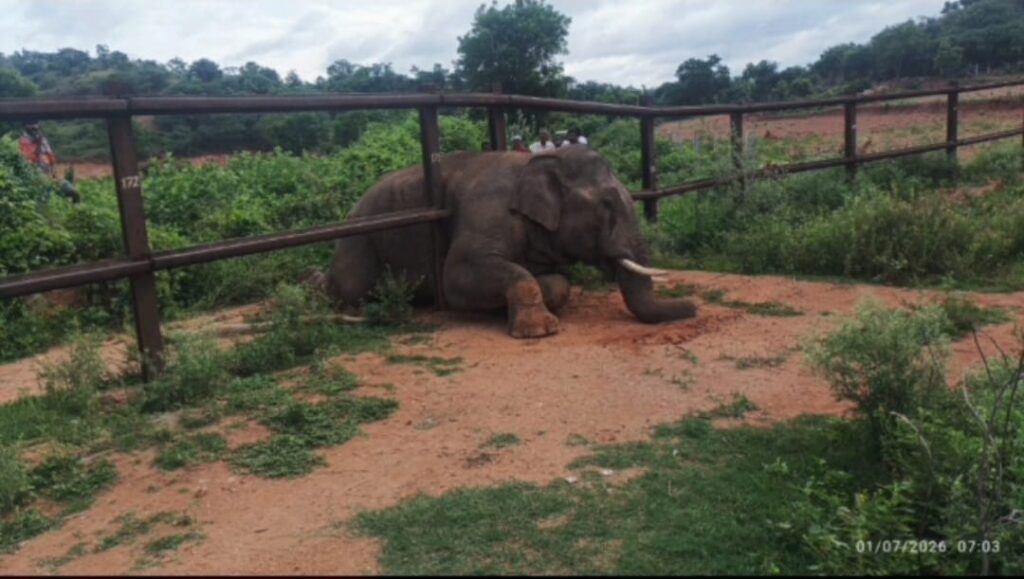
Early morning, on July 1st, the wild tusker had traversed some distance from the Cauvery Sanctuary to mulberry fields in Arekoppa village. Unfortunately, it got stuck in an iron fencing along the protected area. It was only due to timely intervention by both forest officials, forest staff and veterinary doctors that the life of the tusker was saved as any delay in the operations would have endangered the life of the young tusker.
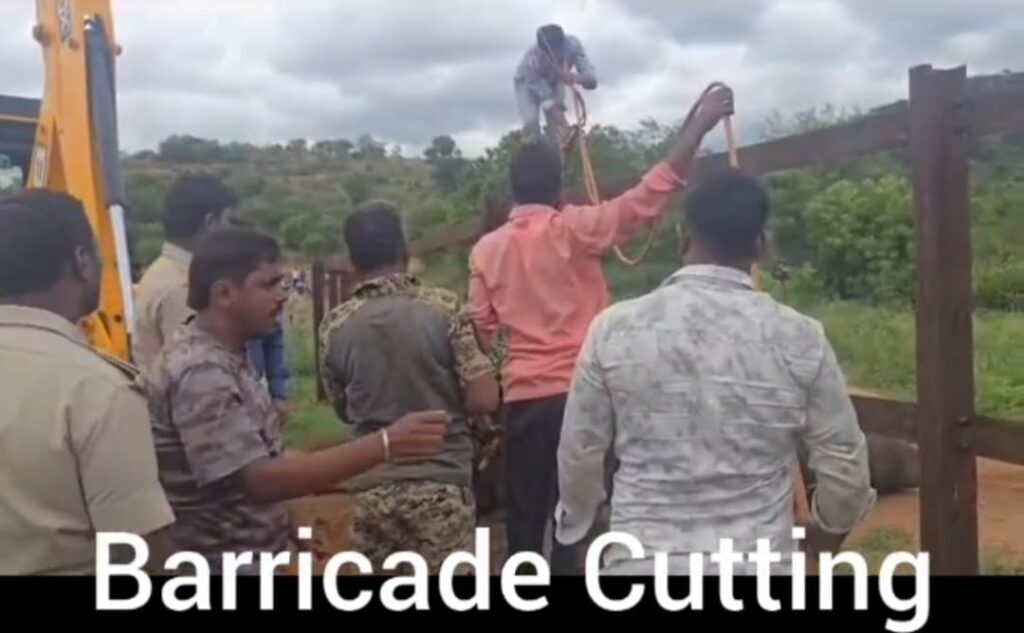
Hats of to the yeoman efforts of the forest officials right from the DCF of Cauvery Sanctuary to ACF Nagendra Prasad and the RFOs of Mugguru, Sangam & Halaguru ranges, and a large force of frontline forest staff who worked tirelessly to save the tusker. Apart from this, Dr Kiran Kumar, BNP and Dr Girish continuously monitored and provided all medical treatment to save the tusker.
This is not the first time elephants have been trapped in railway barricades in Karnataka as many such incidents have happened since the installation of the iron fencing to mitigate human-elephant conflict in Karnataka.
RESCUE OPERATIONS
On July 1, 2026, farmers informed the forest officials that an elephant had been trapped in a farm field of Arekoppa village of Kanakapura taluk.
Local farmers said, “Unable to move out from the railway barricade for hours together, the tusker had been bellowing and trumpeting in pain and was completely exhausted. Early, in the morning when we arrived at the field, we found this tusker trapped and immediately informed the forest officials.”
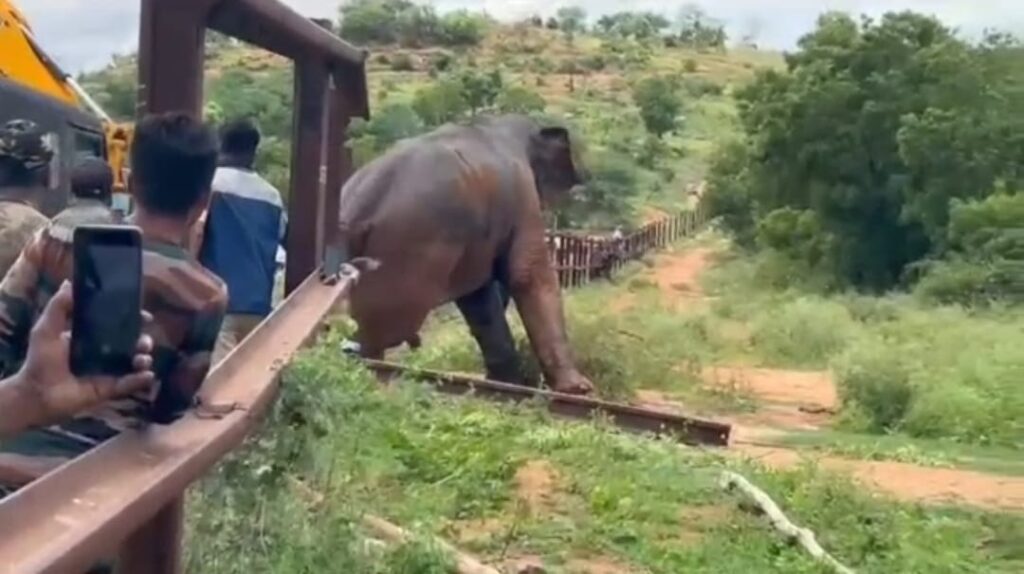
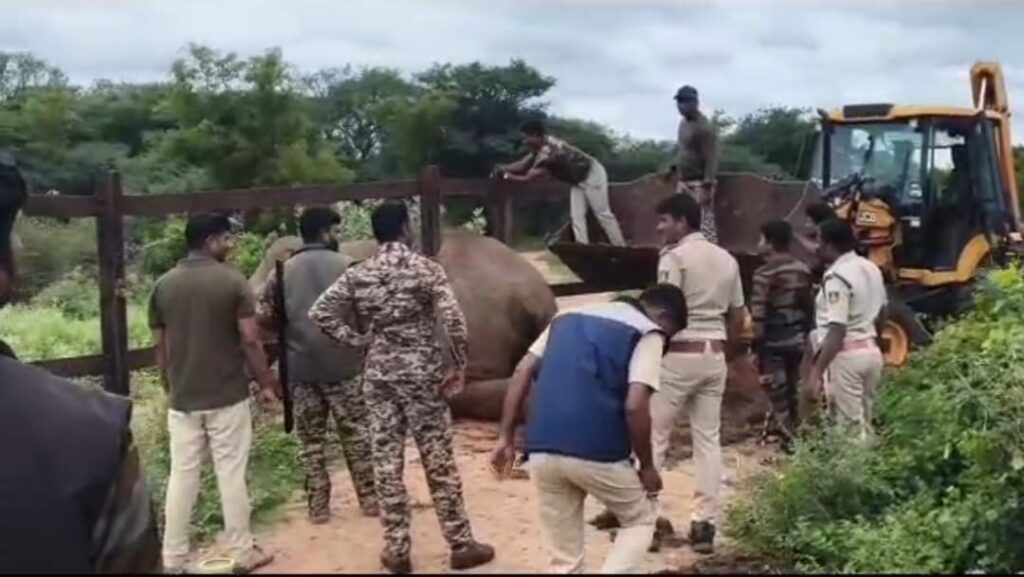
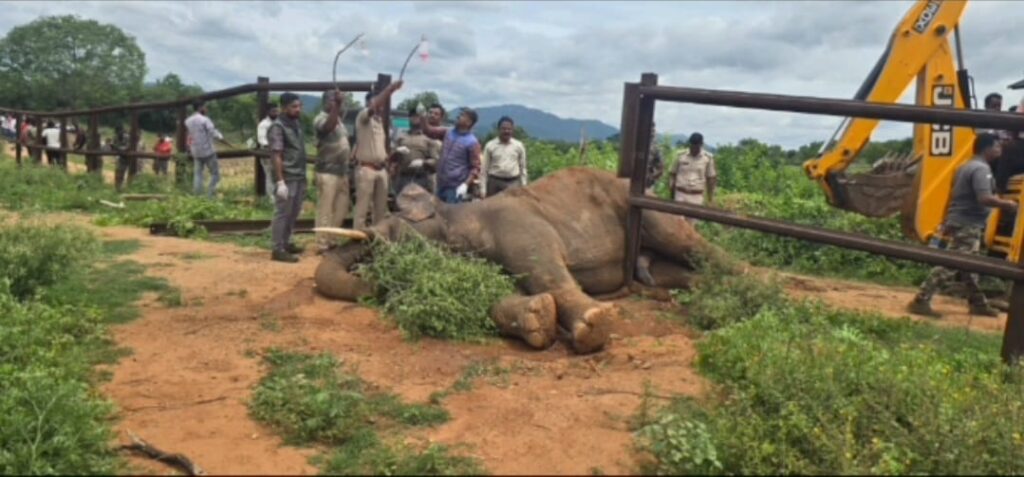
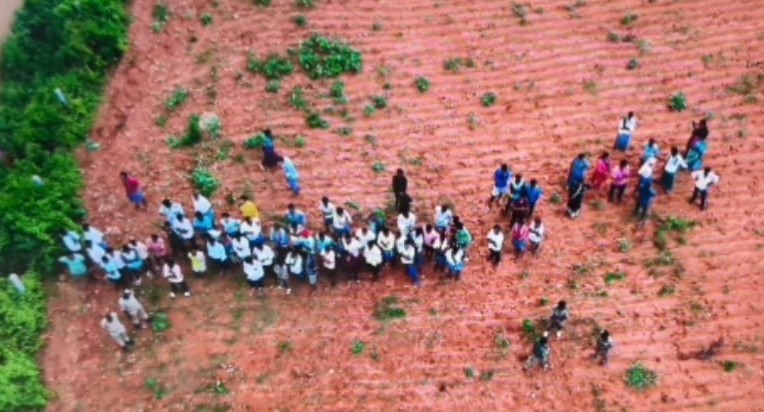
A team of 150 members comprising forest officials, forest field staff and veterinary doctors (and police to manage the crowd) were involved in the rescue operations by mildly sedating the tusker and cutting the railway barricade poles.
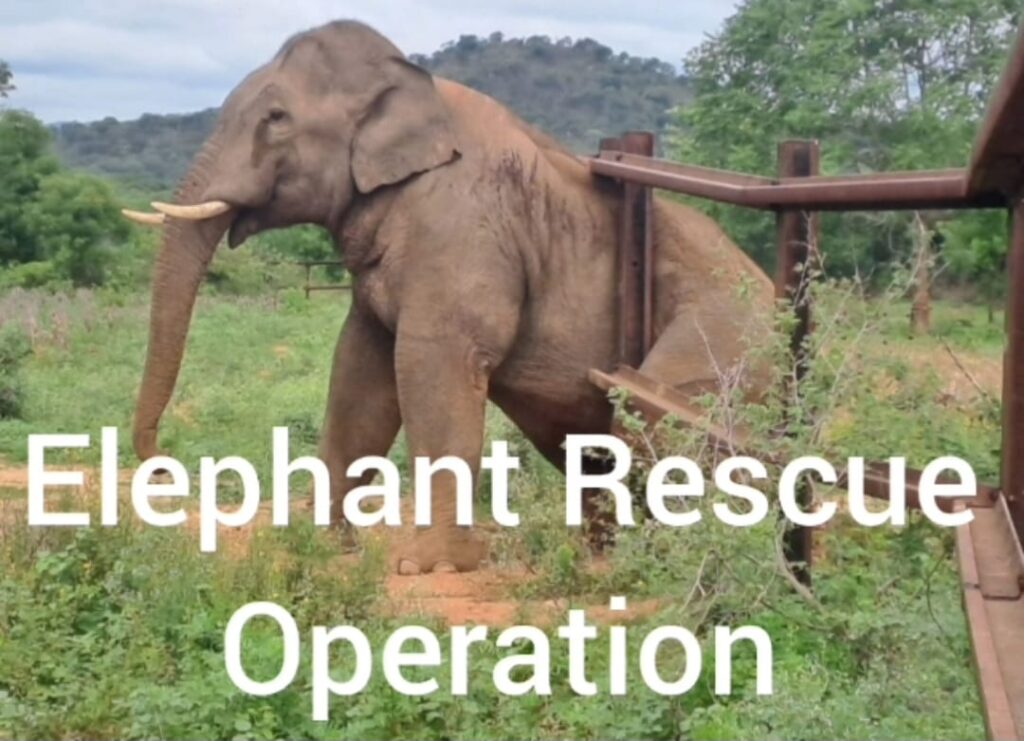
The jumbo was stuck midway for almost six hours in the iron fencing since 6.45 am on July 1st morning. The 22-23-year-old tusker was safely brought out and allowed to go back to the forest while being monitored and tracked till July 2, 2026.
TUSKER TRAPPED MIDWAY
Speaking to Green Minute News, Cauvery Sanctuary DCF Jagannath N H said, “In the morning hours, maybe, disturbed by people’s presence in the fields, the tusker has tried to push through the barricade and got stuck midway. This is a mulberry field with grasses growing on the bundhs for cattle grazing. If not disturbed, it could have easily walked away as there was a gate 250 metres away.”
Swinging into action, the forest officials mobilized staff from across the ranges of Cauvery Sanctuary. DCF Jagannath added, “The tusker was sedated lightly so as to cut through the iron fencing and a gap of two and a half metres was provided by removing two iron poles. The doctors monitored the condition of the tusker throughout and it was put on drips as it was exhausted.”
HOW FAST WAS THE RESCUE?
According to Dr Kiran Kumar K, Senior Veterinary Officer, Bannerghatta National Park, the tusker was squeezed between the two iron bars. Somehow, it had pushed its front leg and subsequently, due to people’s presence, it was frightened and had further, pushed with its elbow crossed and had got stuck in the barricade midway.
Since it was in a dog sitting position, giving anaesthesia was a big risk. As the weight was entirely on the chest – proper respiration could not be monitored while its abdomen had compressed, he added.
The Senior Veterinary Officer, Bannerghatta National Park said, “However, a minimal dose of Xylazine was injected and it slept off. Since it was under forceful respiration, we had only a time limit of 40 minutes to remove the impeding iron bars.”
Fortunately, within 20 minutes, two iron bars were removed using a gas cutter machine. There was a vertical bar above the elephant body and every action had to be done carefully as this would have created a big problem for the disturbed animal.
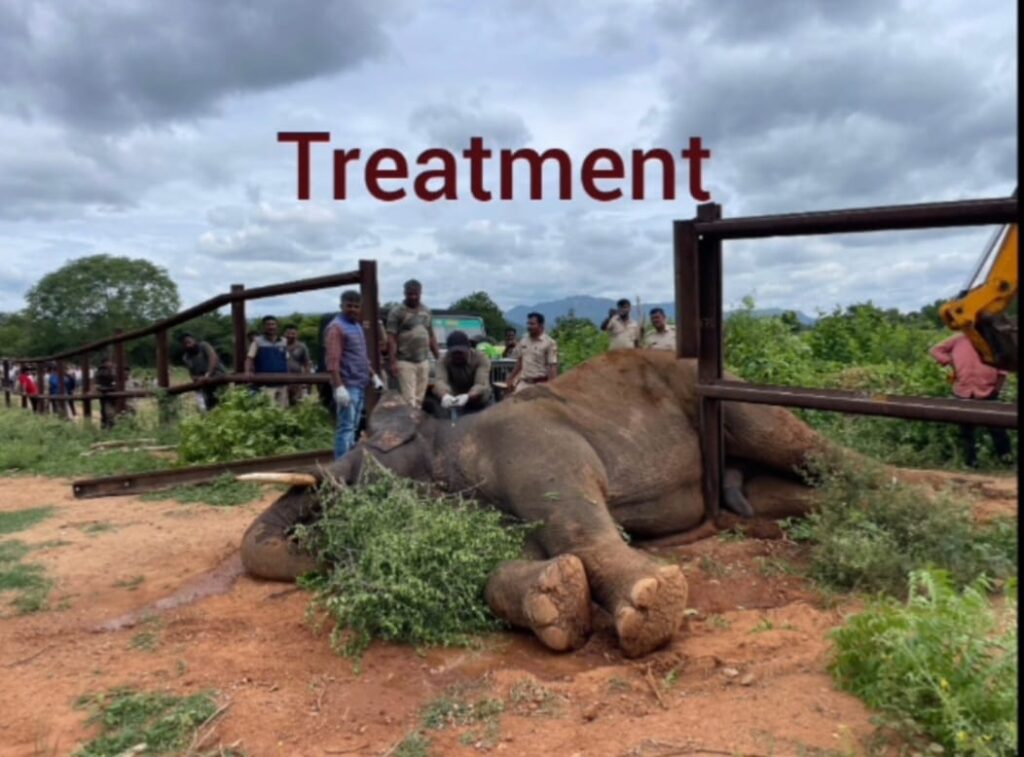
Apart from a few scratches on its back, the tusker was very tired as it struggled for hours together. It was found panicking and highly disturbed as a large number of people were in close vicinity despite the imposition of Section 163 of BNSS.
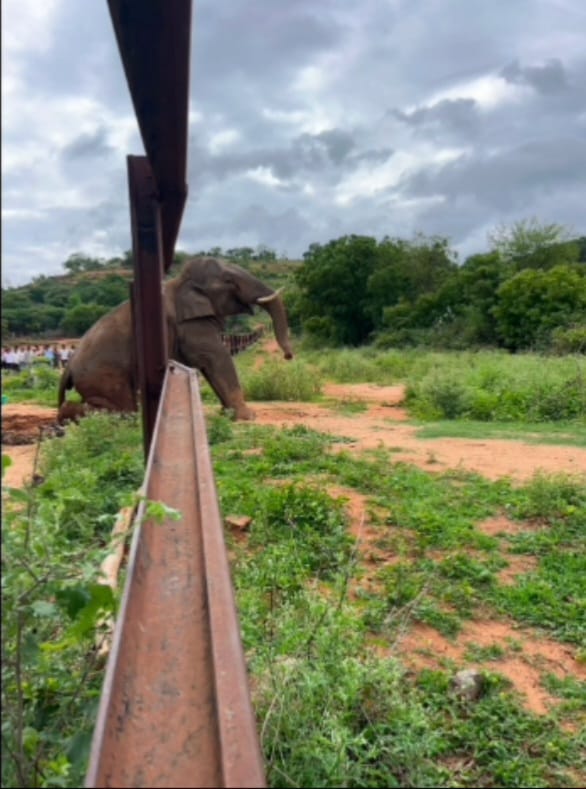
“Since there were signs of dehydration, we administered both dextrose and B-Complex injections and further painkillers to revive it. We monitored both its temperature and respiration for almost 40 minutes. Once it was alert with no signs of pain, it went on its regular path towards the forest,” added Dr Kiran Kumar, BNP.
TRACKING THE TUSKER
The entire team who had come from different faraway places, started the rescue operations at 11.15 am and freed the jumbo from the barricade by 12.20 noon. It was a sight to behold as the young tusker ambled its way towards the forest. The prime, healthy tusker had not sustained any injuries only some scratches on its body.
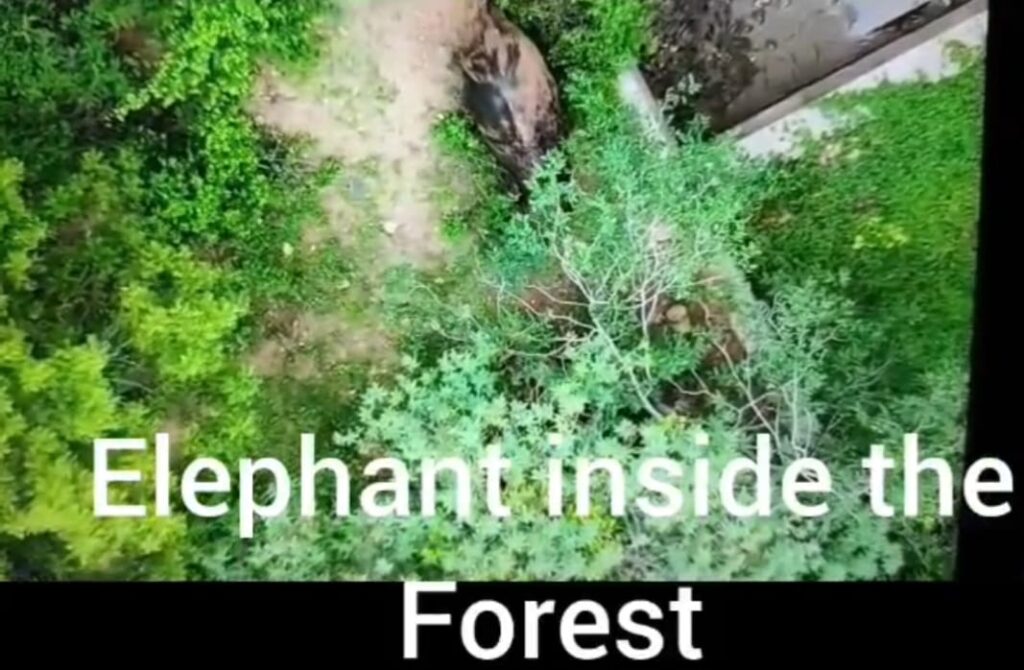
According to DCF, Cauvery Sanctuary Jagannath, “Our field staff from all the three ranges of the Cauvery Sanctuary tracked it till late evening and it was observed to be healthy and the follow up was done through drone operations. Even the next morning it was tracked and found to be safe.”
LONG ELEPHANT CORRIDOR
One can’t blame the elephants for traversing this region as these gentle giants have been walking the 100 percent corridor area for generations. The DCF adds, “This was once a continuous forest but now unfortunately, their corridor has been interrupted by linear structures, dams, highways, rail networks, agricultural fields and what not.”
This particular tusker came from Munneshwara Betta area as this is a linking forest area from Ramadevara Betta to Cauvery Sanctuary to Bannerghatta National Park. This is one of the oldest corridors in Karnataka that provides link to Goa and finally to Maharashtra.
But with so many interruptions in the forest corridor, the elephants are now forced to traverse the gaps in the forest. So, unknowingly, this tusker came to Arekoppa village for no fault of its. One should remember, the elephants and other wildlife are not deviating from the corridor but it is humans who have interrupted their corridor path all along the way to Maharashtra.
INSTALLATION OF RAILWAY BARRICADES
To mitigate the rising human-elephant conflict, the first pilot project of installing railway barricade in Karnataka was done in 2015. This 33-kilometre-long- railway barricade was installed by the Karnataka Forest Department in the Veeranahosahalli Range of the Nagarhole Tiger Reserve.
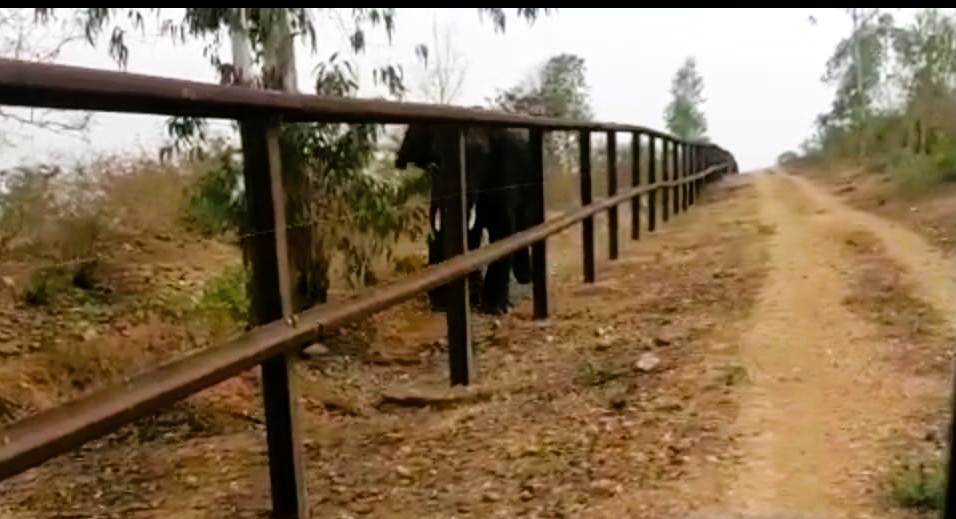
However, elephants have proved to be very smart or aggressive and they have either tried to push the railway barricade or climbed over it. One elephant even died in Bandipur while trying to cross the iron fencing. Over the years, some tuskers have sustained injuries while some have been rescued.
GAP IN THE BARRICADE
A wildlife activist from Kanakapura taluk who visited the spot near Mugguru Range said there was a gap in the railway barricade and that was big enough for the tusker to poke its head through it. But its huge body got stuck midway and it could not pass through the fencing. This railway barricade was installed two years ago to mitigate the human-elephant conflict in this region.”
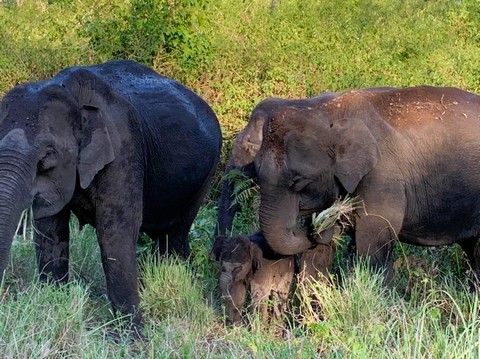
There have been instances of elephants getting trapped in railway barricades in Bandipur, Nagarhole and other regions, so, wildlife authorities need to take more action – corrective measures and precautions so that such mitigation measures do not endanger the life of an endangered species.
(PHOTO CREDIT: ALL IMAGES COURTESY – KARNATAKA FOREST DEPARTMENT)