
Meera Bhardwaj & R S Tejus:
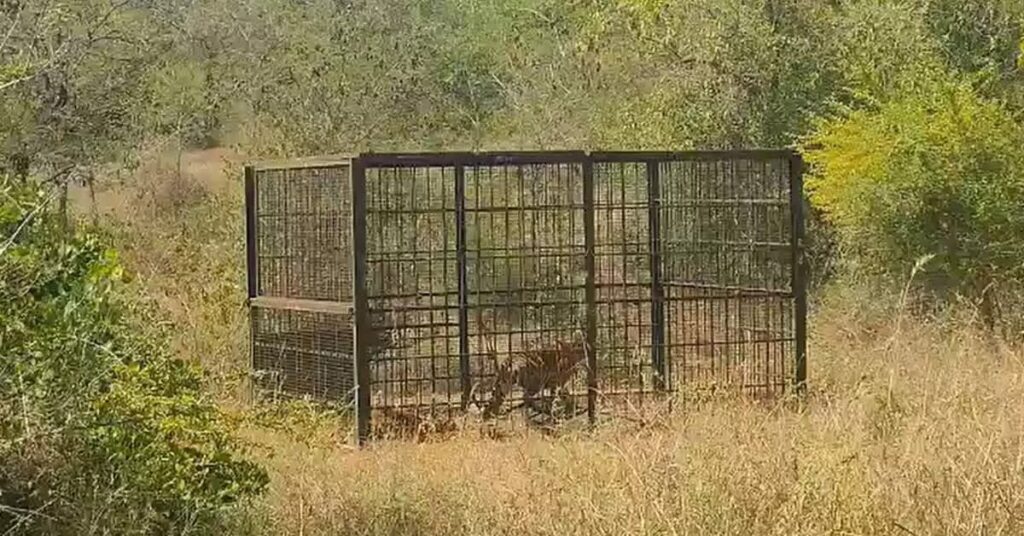
The recent incident of capturing a tiger in Bandipur using “Tumkur Cage” has shocked many wildlife experts as these cages are meant for capturing leopards only. It was on Thursday (December 25, 2025) that a tigress was caged using the Tumkur Cage at Depapura village, Gundlupet buffer area, Bandipur Tiger Reserve. This 4-5 years old female tiger was reported to have turned into a regular cattle lifter in the villages abutting the Bandipur Tiger Reserve.
The Tumkur Cage is a large, camouflaged trap about 15 x12x10 feet (length x width x height) and is used to safely capture conflict leopards.
However, the NTCA guidelines and related protocol advise a trap cage that is approximately 10 x 4 x 4 feet (length x width x height) for capturing tigers. The cage should be robust, often made of Mild Steel angle frames and covered with thick iron sheets and/or strong wire mesh. The primary goal of the cage design, as per the NTCA guidelines, is to ensure the safety and welfare of the tigers during capture.
For transportation, NTCA specifies inner dimensions for tiger transport cages as 195 cm length x 75 cm width x 105 cm height (that is 6.40 ft x 2.46 ft x 3.44 feet) to ensure the animal can stand comfortably with 10 cm clearance but not turn around fully.

TUMKUR CAGE MEANT FOR LEOPARDS
After a detailed study of leopard behaviour for almost one year, the Tumkur Cage was specially designed in 2019-20 to address the human-leopard conflict in the Tumakuru region. Within 14 days of installation of the Tumkur Cage, the first leopard was captured safely in December, 2020.
This cage was developed by two dedicated beat foresters of Kunigal Range – Mohan Kumar and Sharanappa under the leadership of the then Tumakuru DCF. The Tumkur cage proved to be very effective as it was disguised with creepers and natural materials, tricking leopards into entering the cage. The use of Tumkur Cage has resulted in the safe capture of conflict leopards in Mysuru, Tumakuru and Bengaluru.
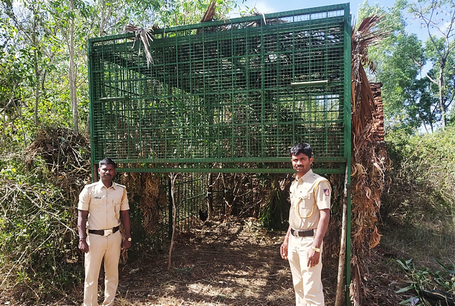
CAN THIS CAGE BE USED FOR TIGER CAPTURE?
However, using this cage for capturing tigers is very risky, say wildlife experts. They add, “This may cause injury to tiger’s teeth and nails due to widely spaced bars. Further, the bars can cut into the animal during its attempts to escape when it is scared and is panicking. So, this is a crucial problem observed in tiger trappings wherein heavier, crude designs harm both animals as well as handlers.”
For tigers, the National Tiger Conservation Authority (NTCA) protocol clearly emphasizes the need for camera-trap ID confirmation before capture and cage specification.
A wildlife veterinary expert from Delhi adds, “In this background, how could Bandipur authorities use the Tumkur Cage for capturing a tiger? This seems to be a very hurried operation without understanding the fact that a specific species requires species specific cage design as given in NTCA protocol. If the protocol for tiger capture is not followed, it may lead to nails or teeth or fatal injuries resulting in a healthy tiger being sent to rescue centres that are already overflowing with captured predators”.
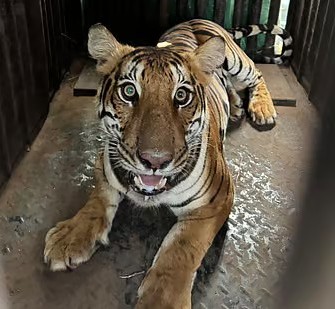
Cage Capture (Physical Restraint) is often used for older/injured/orphaned tigers that requires baiting and careful setup, says NTCA. But in this case, the capture dealt with a healthy, four year old female tiger.
NTCA protocol for capturing tigers involves a multi-stage process focusing on safety and scientific methods, starting with identifying the specific tiger (using camera traps/photos) causing conflict or needing intervention, cordoning off the area, creating pressure pads to track movement, and then using either physical traps (cages) or chemical restraint by skilled teams (vets, biologists) for old/injured/problem tigers, ensuring all actions follow Standard Operating Procedures for humane handling, minimal stress, and data collection for potential rewilding or management.
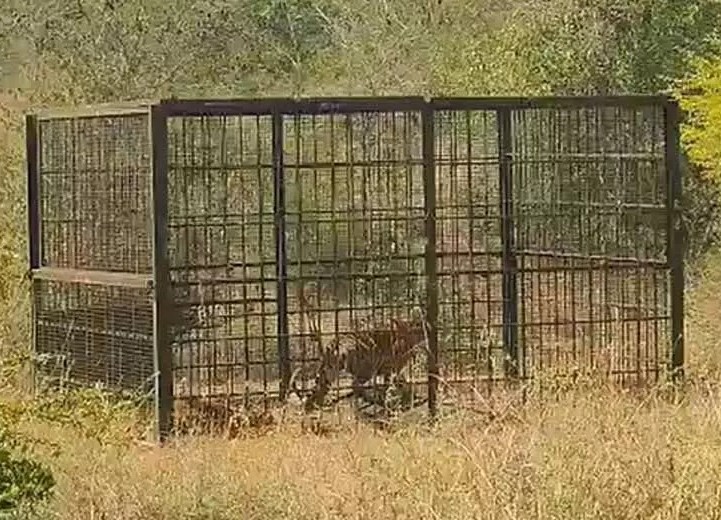
NO SIGNS OF ANY INJURY
According to Bandipur authorities, field-level verification and veterinary examination indicated that this tigress was healthy, with no signs of injury, debilitation, or illness and this tigress had no cubs. Officials admitted that Tumkur Cage was used for capturing this tigress. Action was taken to prevent further escalation, safeguard local communities, and ensure the animal’s own safety – following standard operating procedures rather than as a response to panic or mis-identification.
The tigress had developed a pattern of lifting cattle, which eventually led to a conflict situation in the surrounding villages of Gundlupet taluk. Repeated livestock depredation, combined with proximity to human habitations, necessitated her capture as a conflict-mitigation measure, forest officials said.