
R S Tejus:
Karnataka Forest Minister’s public statement on 8 April, 2026 about controlling the population of wild elephants and leopards in view of their growing numbers and rising conflicts in the state is indeed shocking. Further, he immediately stated the matter is still under discussion and that no final decision has been taken yet.
This is not a small issue. It is not possible for a forest minister to speak about population management of wild elephants and leopards without taking into consideration – scientific management first. Human-wildlife conflict is real, especially in places like Chamarajanagar, Hassan, Kodagu and Chikkamagaluru. But reducing the entire problem to control of animal population is misleading and dangerous.
DR ULLAS KARANTH SAY ON THIS ISSUE
Dr Ullas Karanth, independent wildlife biologist, says elephants and big cats have very different ecologies and population dynamics. So, they cannot be put together under one broad political idea of “population control.”
On elephants, Dr Karanth says there is no sound data on elephant numbers, population densities or turnover rates. “This is because of poor population monitoring system that was designed years ago and has since been poorly implemented on the ground. Because of this, there is no scientific basis to claim that elephants are overpopulated.”
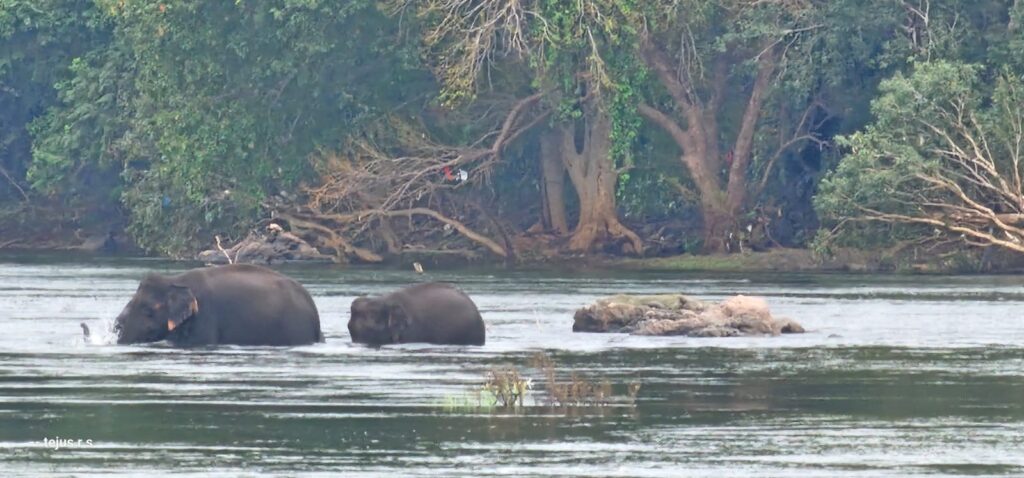
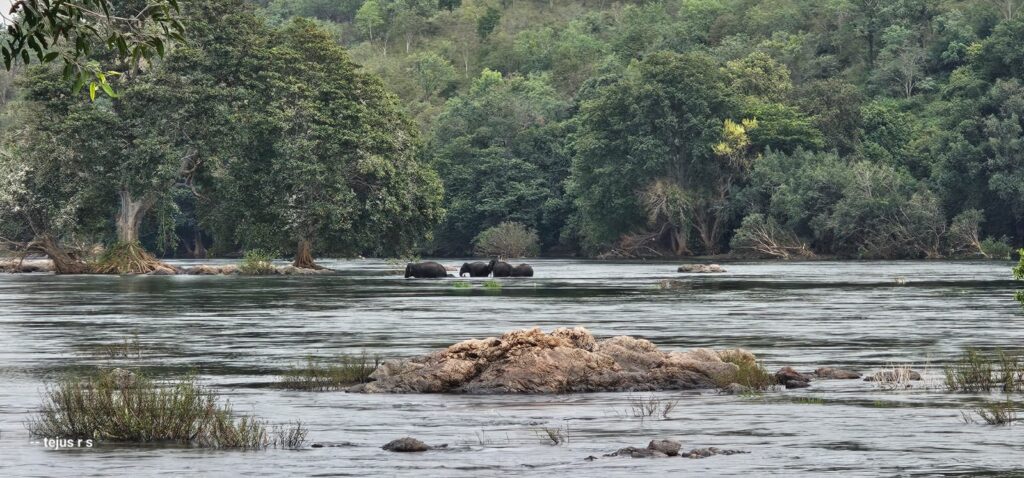
Dr Karanth adds elephants coming into conflict with people has many reasons. One major reason is that crops attract elephants to go outside forests. So, conflict is not simply because there are more elephants. It is also because the landscape itself is pulling them out.
He also says, “The trench system, railway beam barriers and electrical fencing put up by the Karnataka government at huge public cost are dysfunctional in many places. If these systems are not working, then blaming wildlife alone is dishonest.”
Dr. Karanth further says that if the government really thinks elephant populations should be reduced, then it should first stop manipulating habitats in ways that help keep elephant densities high. He points to practices such as creating grasslands in place of forests and massively augmenting water resources in expensive artificial ways.
According to Ullas Karanth, forests should be left in as natural a condition as possible so that elephant densities remain at natural levels.
He adds that natural pressures are more meaningful in the long run. In his view, driving up calf mortalities in drought years is more effective in bringing down future elephant densities than trying to contracept adult animals.
His conclusion is clear: contraception is not practical to implement at the scale needed to change elephant population size, and it costs far too much.
On tigers and other big cats, Dr Karanth says the issue is different, but again the answer is not simple political talk of population control.
The independent wildlife biologist stresses that in a few hotspots, prey densities have been increased to twice what is natural through artificial habitat manipulations such as:
- grassland creation,
- exotic eradication and
- increased water supplies.
This, he says, has pushed tiger numbers above their natural densities. Cub survival to adulthood has also increased. The result is dense packing of tigers, more fights among tigers themselves, and periodic spillover into human-use landscapes.
According to Karanth, it is not practical or cost-effective to keep capturing these animals and holding them in captivity for years. He points out that in the last one year, around 30 tigers were captured or killed in the Bandipur–Nagarhole–BRT belt.
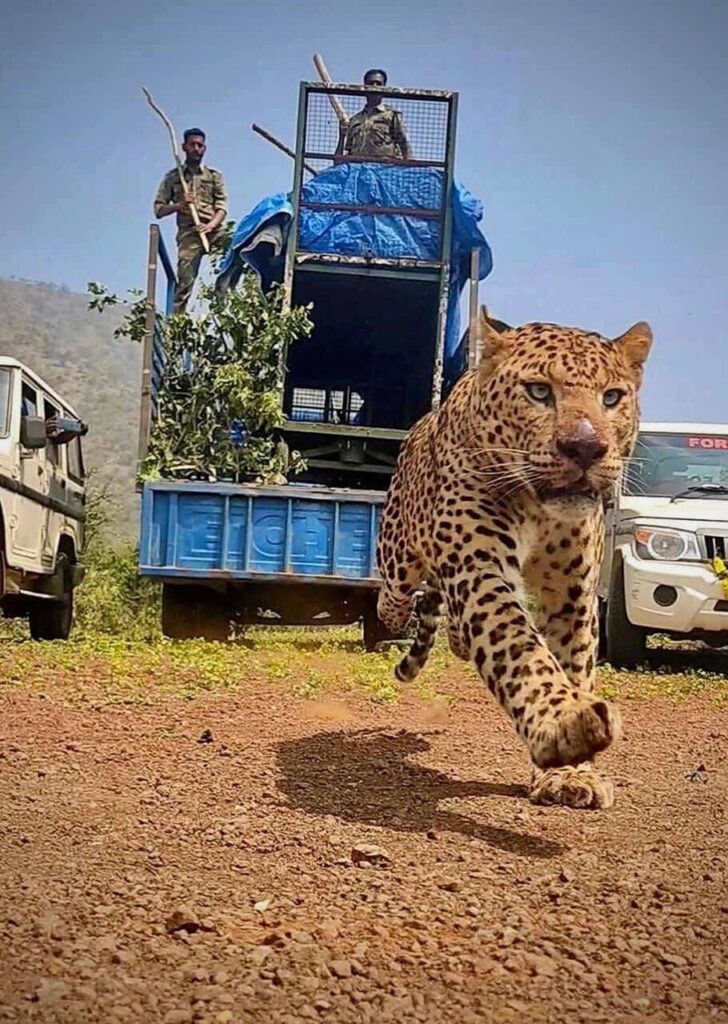
He asks whether this can be continued endlessly, and where so many captive tigers can be properly cared for. He also points to the situation in Maharashtra, where hundreds of captive leopards are being kept in cages. His point is that this is not a real solution. It only creates another problem.
As for darting and tranquilising big cats in free-ranging conditions, Dr. Karanth says that too is impossible at the scale required to reduce tiger populations and densities.
Instead, he says habitats should be brought back to natural conditions by stopping the present unnecessary manipulations and the artificial increase of water supply. Such measures, the biologist says, are needed only when prey densities are low or when a reserve is still in the early stage of recovery, not fifty years later after tigers have already reached their maximum natural densities.
He says that if tiger populations ever have to be brought down to reduce conflict, then that can only be discussed on the basis of sound data on tiger numbers, density changes and survival rates. But he says such refined data is not available because states continue to follow flawed tiger counting methods despite crores of rupees being spent on them over the last two decades.
ISSUE OF STERILIZING LEOPARDS
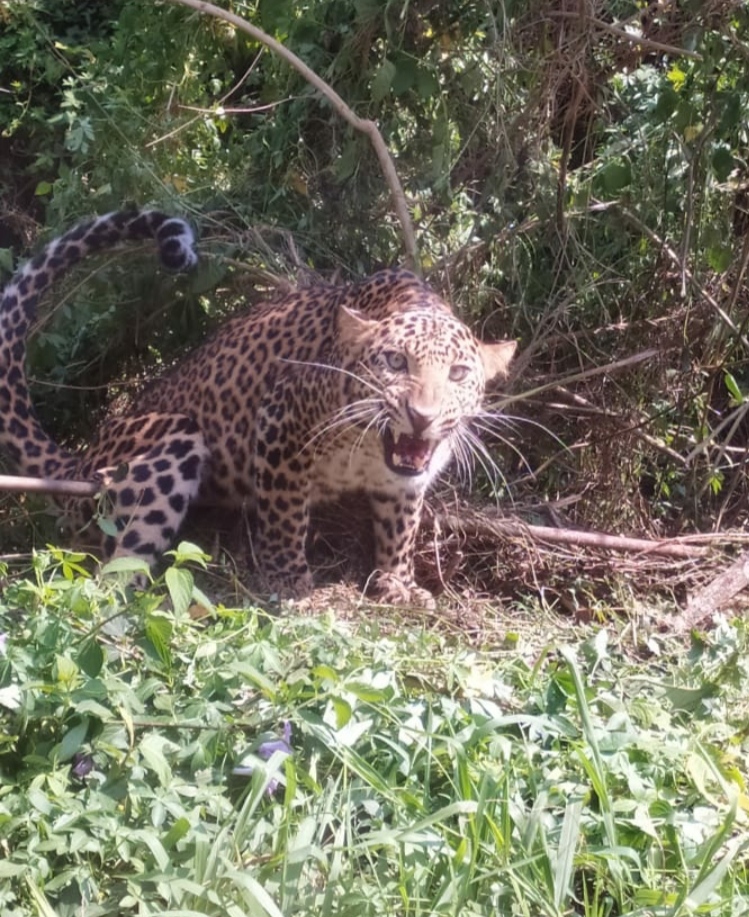
On leopards, Dr. Karanth says the problem is becoming widespread across a much larger landscape. But again, contraception is not the solution. In fact, he argues that if one is seriously discussing population reduction in leopards, the case for removal of some animals through hunting, based on good data, is even stronger. But he repeats the same warning here too: we do not collect that kind of good data.
Dr Karanth is also strongly critical of urban animal advocacy groups. He says these groups often value the life of an individual animal more than the long-term survival and management of the species as a whole. According to him, these groups are driving contraception-based solutions in wildlife too.
He says the same kind of thinking is already seen in Bengaluru with dog population control, where it is not really working. He argues that forest department staff and veterinary doctors simply cater to these animal welfare groups and continue to waste public money on needless habitat manipulations, removals, reintroductions, contraception and other such exercises on which lakhs of rupees are spent.
He also says politicians do not have the time or patience for serious wildlife science. Instead, they listen to whoever is around them – pressure groups, interest groups and so-called experts.
His larger warning is blunt: these problems will not be solved unless this serious science deficiency in wildlife conservation is addressed intelligently.
PRAVEEN BHARGAV ON WILDLIFE STERILIZATION ISSUE
Praveen Bhargav, former member of the National Board for Wildlife, says, “There is no one-size-fits-all solution for conflict mitigation. He says there should be no civil works inside forests.”
This is especially important in the Malnad region, including Kodagu and Chikkamagaluru, where forests are broken into small patches and the landscape is highly fragmented. In such places, conflict is not just a wildlife issue. It is also a land-use issue, a governance issue and a planning issue, Bhargav adds.
HUMAN NEGLIGENCE
Many field observers also point out that the majority of conflicts are due to human negligence. People go alone at night in known conflict areas. People go out to click photos and videos. People ignore warnings. In many recent elephant attack incidents, including in Kodagu, human mistake has clearly played a role. So, it is wrong to make wildlife alone the villain.
That is why many believe the focus should instead be on voluntary relocation from the worst-hit conflict areas.
RELOCATION IS A SOLUTION
Even the forest minister has admitted that relocation is one of the solutions under consideration. In repeatedly affected pockets of Malnad, this is a far more serious discussion than flashy talk of immuno-contraceptives. There is also growing anger over the attitude of politicians in these regions.
Many conservation watchers say that almost all politicians in the Malnad belt are not really for conservation. Their main worry is somehow winning in the next election. And the easiest way to do that is:
- by blaming wildlife,
- asking for culling,
- speaking of population control and
- sounding aggressive in public.
Very few politicians either talk about science or have any knowledge about such serious matters like:
- habitat fragmentation,
- failed barriers,
- voluntary relocation or
- better technology.
According to Green Minute News sources, one MLA from one of the highest conflict areas in Malnad privately admitted that he is not at all bothered about elephants or any wild animals and that his work is only for people. But that is a false choice.
A politician who is not interested in science-based conservation is not acting in the long-term interest of people either.
Bad conservation politics will hurt both wildlife and human communities.
A more serious approach would include the use of high-end technology to reduce conflict to some extent. Better early warning systems, thermal drones, sensor-based alerts, stronger communication systems, real-time monitoring in selected areas and faster local response can all help. These may not solve everything, but they are far more sensible than pretending that population control is a magic answer.
Green Minute News tried contacting a few scientists from Wildlife Institute of India (WII) but did not receive or elicit any response.
The deeper issue is: the usage of immuno-contraceptives to control wildlife population is an old concept.
Presenting them as a serious answer to Karnataka’s human-wildlife conflict problem is misleading.
The real issues are weak science, dysfunctional barriers, artificial habitat manipulation, fragmented forests, political convenience and repeated human negligence.
- If barriers are failing, fix them.
- If forests are being unnaturally manipulated, stop it.
- If conflict areas are repeatedly dangerous, discuss voluntary relocation seriously.
- If technology can help, use it.
- If science is weak, improve it.
But reducing the issue to “wildlife populations have increased, so control them” is not science. It is politics. And Karnataka’s wildlife human-conflict crisis cannot be solved through politics alone.
EVER GROWING HUMAN POPULATION
The larger and more uncomfortable truth is that the main long-term pressure is the ever-growing human population. Forests are shrinking, habitats are breaking into smaller and smaller fragment, and the carrying capacity of the land is steadily coming down due to human pressure.
India cannot keep on expanding human pressure everywhere and then act shocked when wildlife conflict rises. There is only so much land, water and space that this ecosystem of ours can sustain. If this reality is not accepted honestly, blaming elephants, leopards or tigers will not solve the problem. In the end, the crisis is not just about wildlife population. It is also about human expansion pushing natural systems beyond their limits.