
Meera Bhardwaj:
The Udanti Sitanadi Tiger Reserve (USTR) in Chhattisgarh is facing the horrendous problem of “Tree Girdling” for nearly four decades. In view of this, the Chhattisgarh Forest Department has launched a unique scientific initiative for saving 3500 girdled forest trees (that had been deliberately stripped of its bark, phloem and cambium) in USTR.
More than 100,000 trees have been girdled in the last 10 years in Udanti Sitanadi Tiger Reserve.
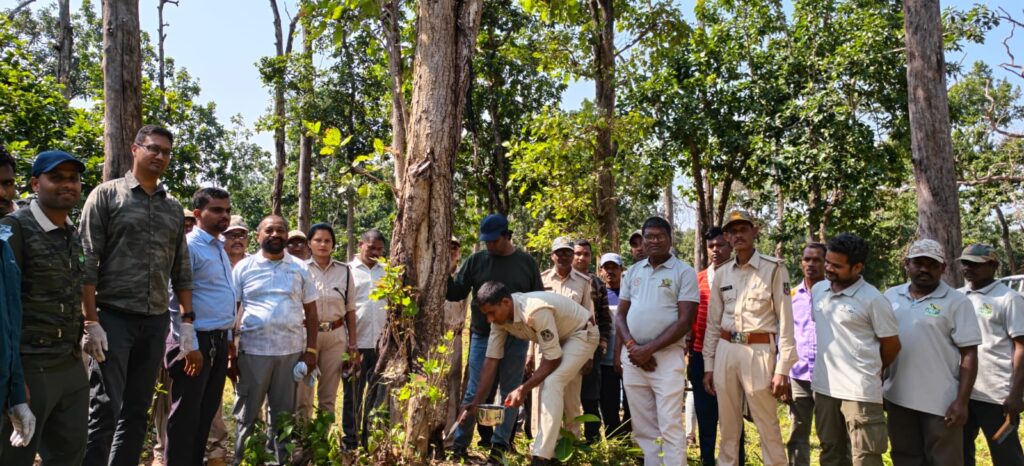
The Chhattisgarh Forest Department has launched this specific scientific tree restoration initiative that commenced on October 24, 2026 in the encroached Karka forest area of Udanti-Sitanadi Tiger Reserve.
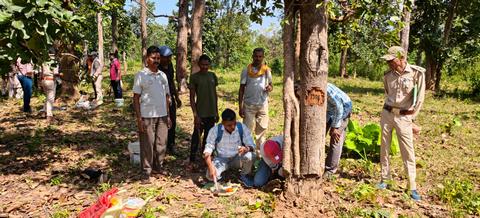
Renowned tree conservation expert Vijay Nishanth, popularly known as Tree Doctor and associated with Project Vruksha Foundation, has arrived in USTR from Karnataka to guide the treatment and restoration of these trees in this tiger reserve.
And the tree doctor says, “It is my privilege to come to Chhattisgarh and assist the Forest Department in saving many a tree species that has suffered such deliberate injuries. This initiative is not merely about treating injured trees; it is about restoring life, protecting the unique forest biodiversity of this tiger reserve in Chhattisgarh.”
TREE GIRDLING RAMPANT IN CENTRAL INDIA
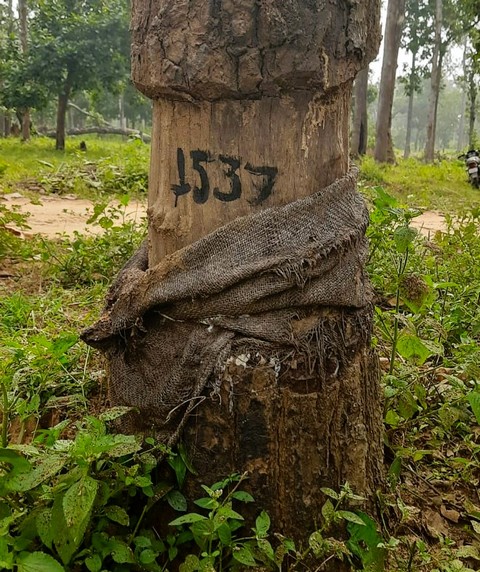
In fact, tree girdling is rampant in central India and this brutal method to debark a tree around the tree circumference is basically to encroach these protected forests and later, take up agriculture activities in the aftermath of illegally felling these trees after its death, say Chhattisgarh forest officials.
Girdling is very common in the forests of central Indian states like Chhattisgarh, Madhya Pradesh, Jharkhand, Odisha, Maharashtra, etc. Shockingly, this problem has been prevalent for many decades albeit any action. Unfortunately, both the core and buffer zones of USTR are facing the problem of tree girdling.
RAMPANT ENCROACHMENT IN USTR
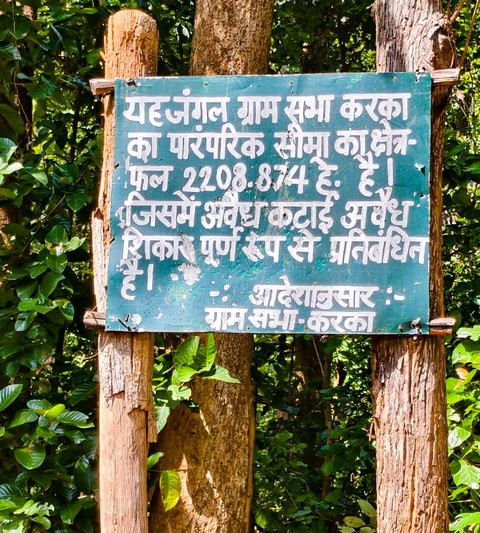
Tree girdling is done by the local population for encroachment, illegal felling in the aftermath of tree death and collection of fuel wood says Varun Jain, USTR deputy director.
Encroachers girdle the trees, with the result, the trees die in 1-2 years, then they cut it – citing it as a dead tree. Further, they burn the tree stumps to remove evidence while the area is made to appear as an open forest/scrubland.
The Deputy Director adds, “USTR has been facing problems of encroachment due to left wing extremism (LWE). During dominance of LWE, action on encroachers, smugglers were not proportionate, however, our forest team had freed 1000 hectares of forest land.”
He further informs, “About 500 encroachers, poachers, and smugglers have been arrested in the last four years. Action has been taken even after threats from LWE – five deadly attacks occurred on our team during eviction proceedings.”
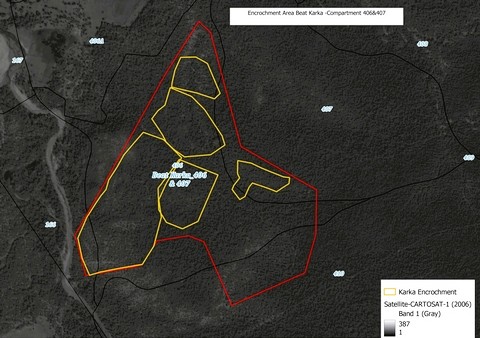
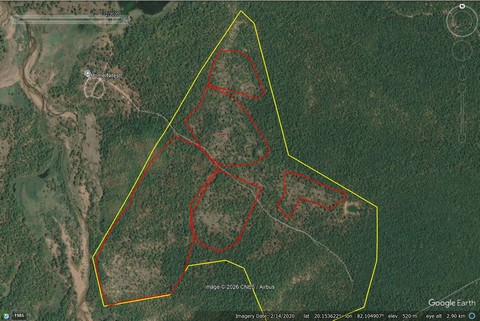
SATELLITE IMAGES SHOW TREE COVER CHANGES FROM 2016-2026
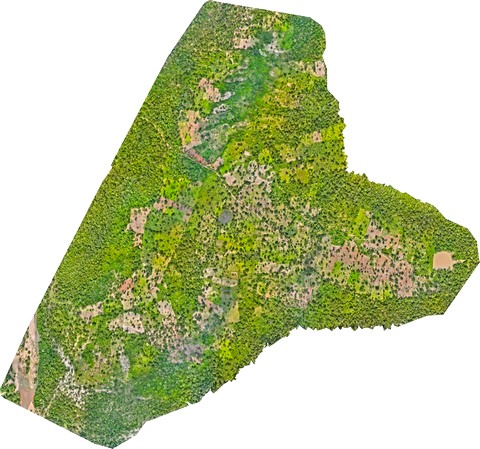
The initiative follows findings from drone surveys and comparative satellite imagery indicating that more than 1.25 lakh trees are estimated to have been cleared in the Karka landscape over the last decade.
Satellite imageries and DGPS-Drone Surveys have also highlighted the expansion of encroachment in the tiger reserve area from approximately 22 hectares in 2016 to 102.47 hectares in 2026.
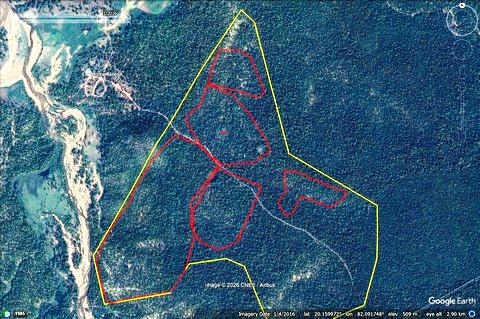
Speaking to Green Minute News, USTR deputy director Varun Jain informs, “This is what was happening in USTR. We took help of ISRO imageries to detect the forest cover changes in the last 10 years and are also using DGPS Drones (an unmanned aerial vehicle (UAV) equipped with a Differential Global Positioning System receiver) for accurate mapping of the encroached areas in this tiger reserve.”
It was recently that senior forest officials found that 3500 trees – mostly Sal, Beeja and Tendu that had been mercilessly girdled in the Karka forest area of USTR. The bark and cambium around the trees had been removed to cut off the supply of nutrients across the tree for slowly allowing the tree to die.
MORE ENCROACHMENTS NEAR CHHATTISGARH-ODISHA BORDER
USTR shares 125-km-long boundary with Odisha (and districts that are infamous for encroachment, poaching, and narcotics smuggling – Nuapada, Kalahandi, Nabarangpur). The majority encroachments have happened near the Odisha border.
In fact, the forests have vanished on the Odisha side and since last 20 years, there have been attempts to clear forests on the Chhattisgarh side. But forest teams have taken prompt and timely action to subvert this threat. Poachers with explosives, illegal firearms and narcotics have been arrested in Odisha – jointly operating with WCCB and DRI.
TRAINING FOR FOREST STAFF
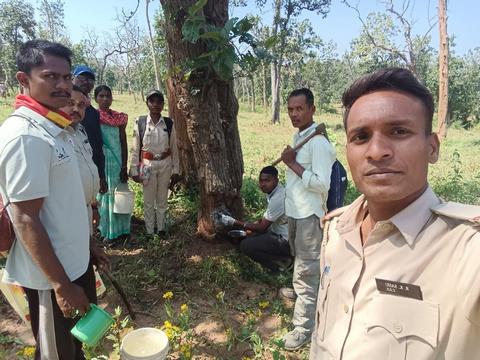
The Deputy Director, USTR states, “The frontline forest staff will be trained to treat the girdled trees and tree doctor Vijay Nishanth is guiding them. We have also forest staff from three other districts of Chhattisgarh – Gariaband, Dhamtari and Kawardha attending this training.
“As I said the girdling problem is prevalent in Chhattisgarh, but nothing had been done to save the dying trees. We were earlier using bridge grafting with cow dung paste but this method was 10 percent effective only,” Jain adds.
KARKA – SIGNIFICANT CATCHMENT AREA
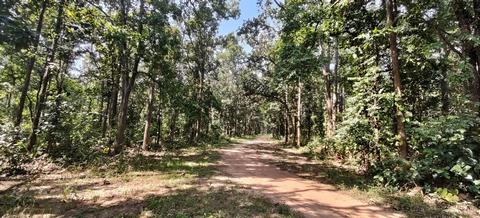
The Karka forest area forms part of the ecologically important upper catchment of the Pairi River, which originates in the Udanti Wildlife Sanctuary. The Pairi and Sondhur rivers subsequently merge at Rajim to form the Mahanadi, a major river system of Chhattisgarh and Odisha.
The loss of forest cover in this landscape has serious implications for biodiversity, habitat integrity, soil conservation and watershed protection. Saving the surviving trees is therefore, an important component of the broader effort to restore the affected forest ecosystem. The restoration initiative also highlights that tree treatment must go hand in hand with the prevention of further encroachment, protection of remaining forest cover and sustained ecological monitoring.
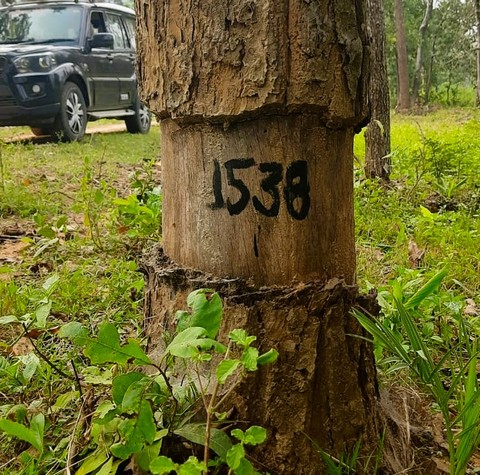
WE will bring more details about how restoration of girdled trees is being done in the Udanti Sitanadi Tiger Reserve in our next part.
(PHOTO CREDIT: COURTESY CHHATTISAGARH FOREST DEPARTMENT & VIJAY NISHANTH)