
R S Tejus:
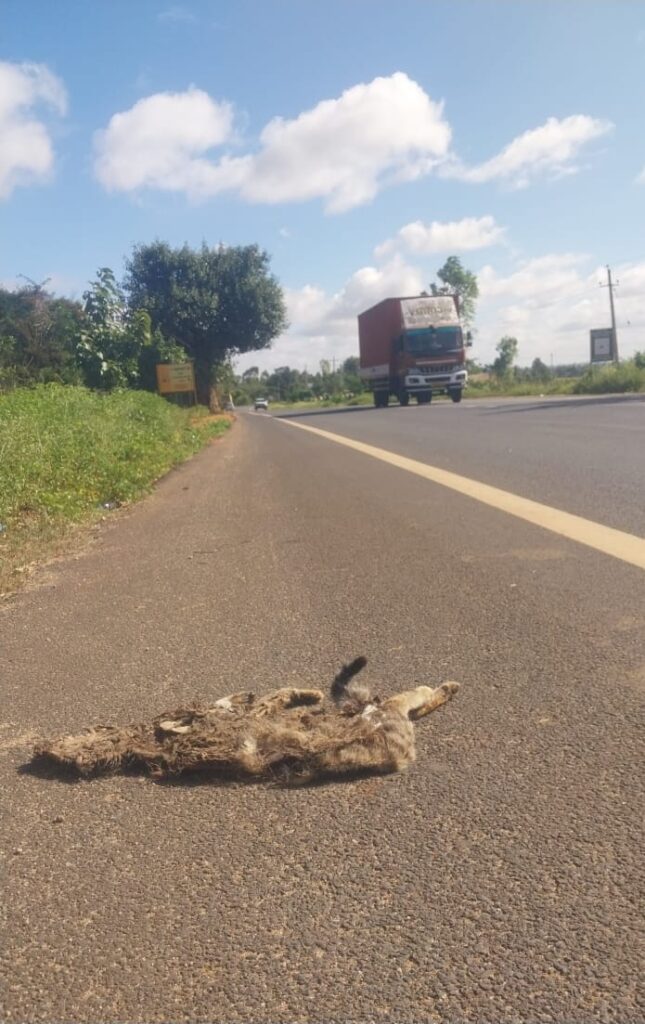
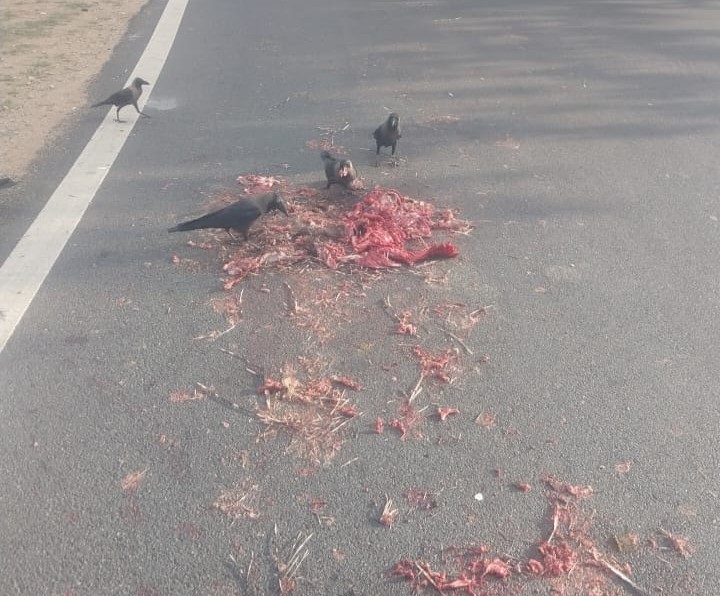
Wildlife deaths along National Highway-181 (NH-181), the Mysuru-Ooty highway have been reported frequently. This is happening near the Melukamanahalli entrance of Bandipur Tiger Reserve and have raised concerns among local wildlife activists.
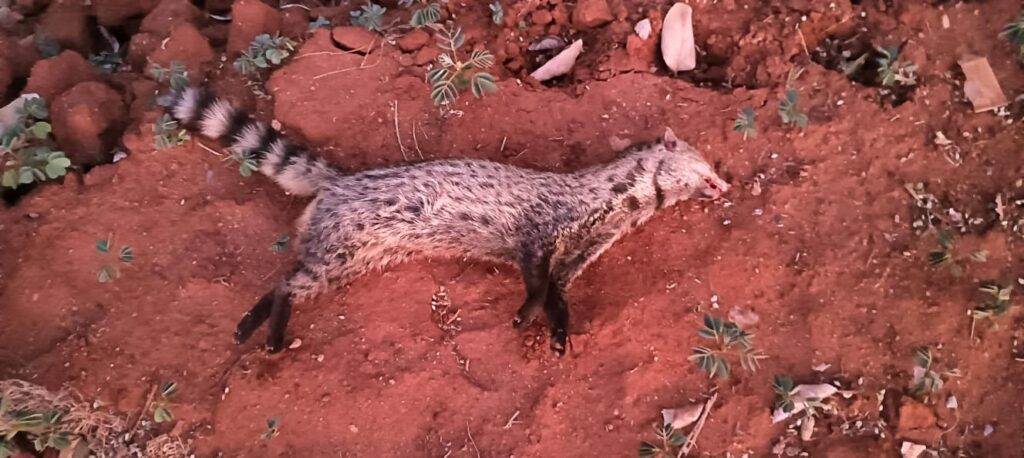
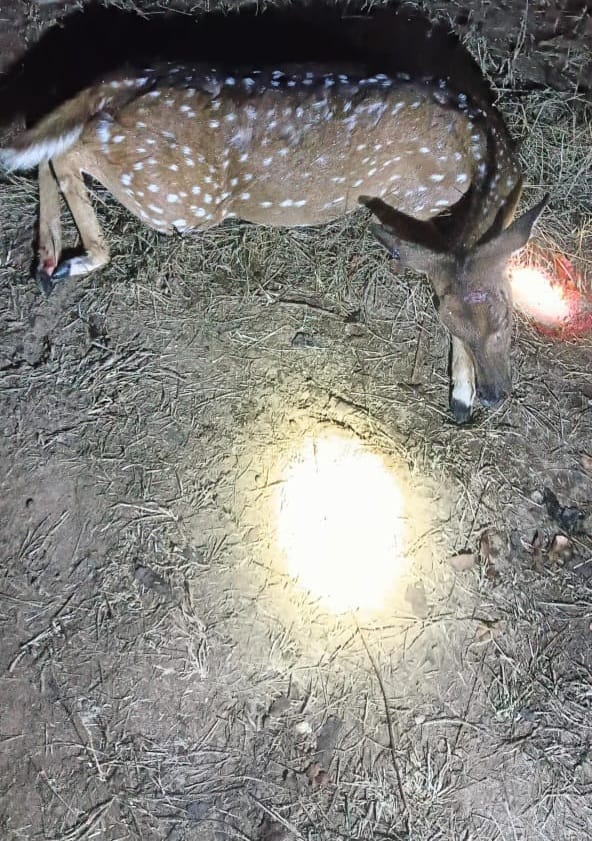
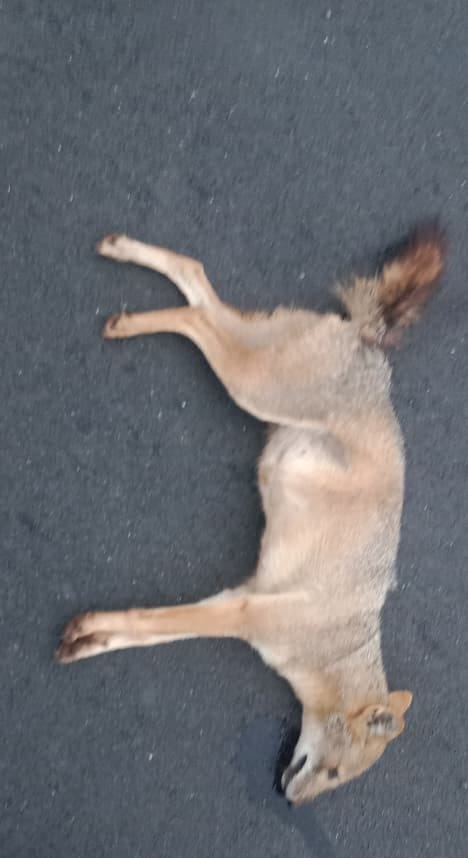
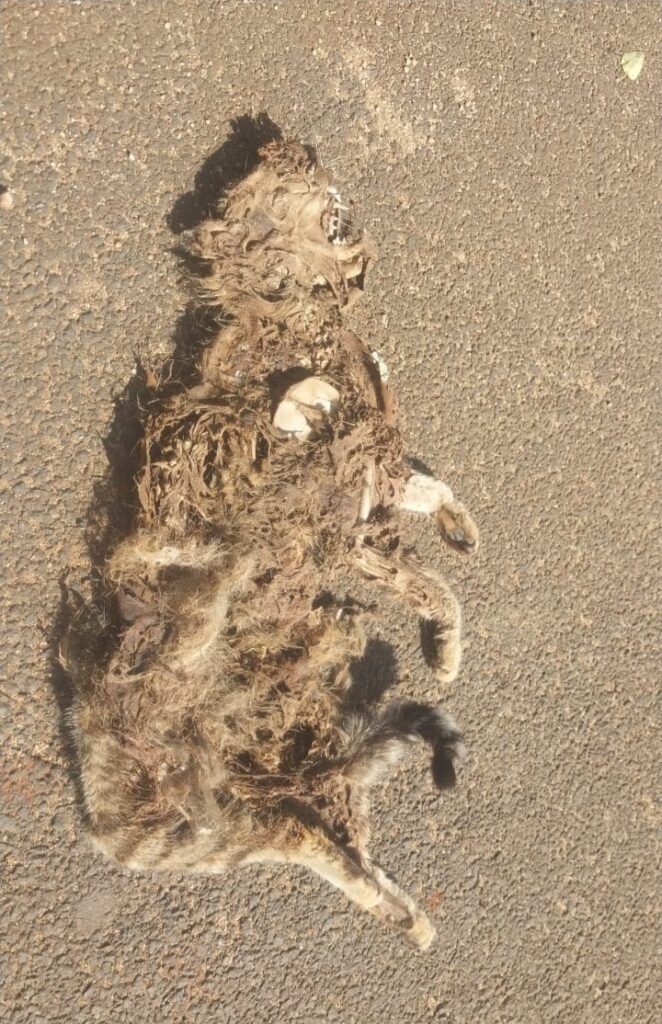
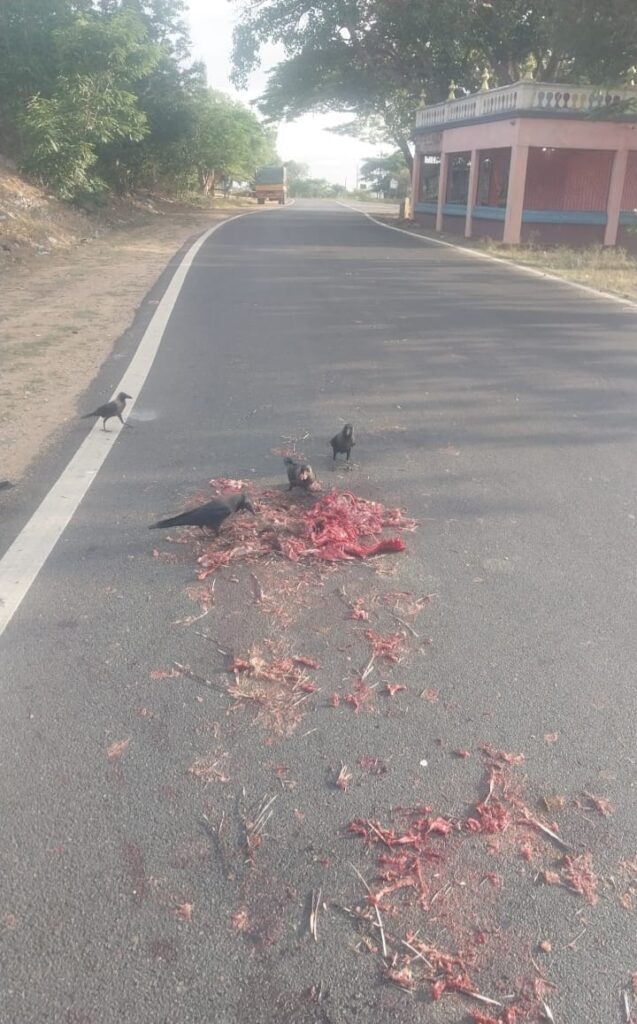
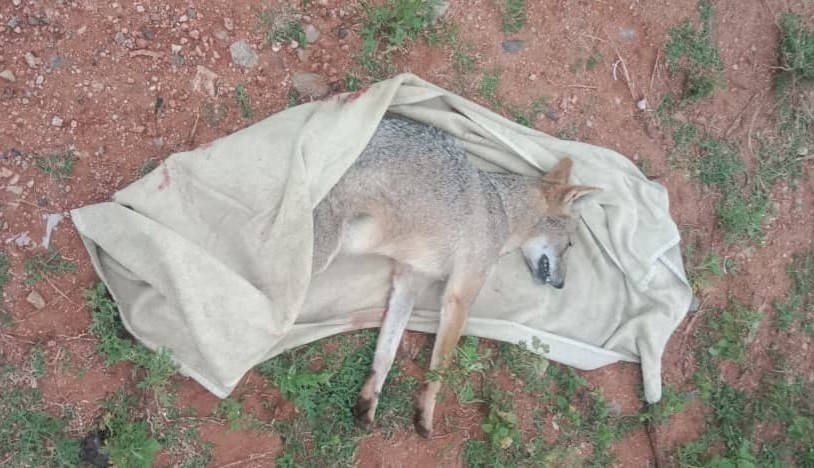
The affected wildlife includes jackals, wild cats, porcupines, deer and several other wild species. They have been killed by vehicles, prompting demands for immediate measures to control speeding on NH-181.
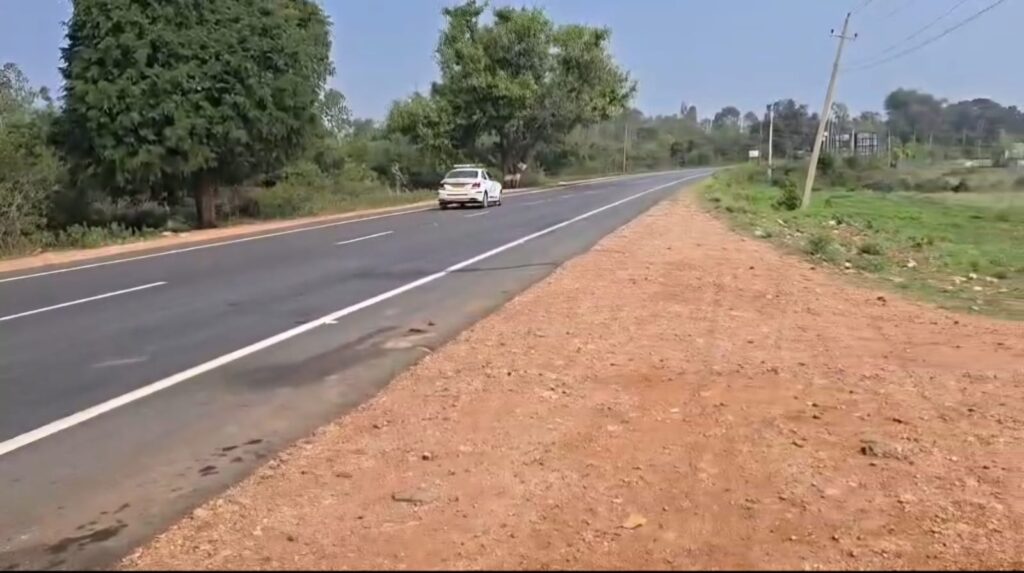
The affected stretch is located outside the entrance to Bandipur Tiger Reserve, near the safari point and Jungle Lodges and Resorts (JLR), with forested areas along the highway. Although the road is outside the Bandipur Tiger Reserve’s entrance, wild animals continue to use the surrounding landscape and cross the highway especially during the day time.
SPEEDING VEHICLES POSE A PROBLEM
According to local activists, several incidents have occurred during the night and early morning, while roadkills are also reported during the daytime. They say the absence of speed breakers at vulnerable locations, combined with speeding vehicles, poses a continuing threat to wildlife. They have also called for frequent wildlife warning signboards – asking motorists to slow down and remain alert.
Activists have identified three locations where speed-control measures are urgently needed:
- Near the Bandipur safari point,
- The Hanuman temple and
- Jungle Lodges and Resorts (JLR).
Why roadkills remain a concern?
Roads do not have to pass directly through a Protected Area as it affects wildlife. Even roads outside tiger reserve boundaries can pose risks when they run alongside forests or other habitats used by wild animals.
Many of the species affected are nocturnal or crepuscular, meaning they are active mainly at night, dawn or dusk. Porcupines are predominantly nocturnal, while jackals and smaller wild cats may be active during low-light hours. At higher vehicle speeds, motorists have less time to detect animals and avoid collisions.
What are the Ecological consequences?
Roadkills also have wider ecological consequences. Smaller carnivores help regulate prey populations, while scavenging animals play an important role in removing animal remains. Repeated deaths can affect local wildlife populations, particularly where roads intersect areas of regular animal movement.
Reptiles and amphibians are especially vulnerable because of their slow movement and their tendency to use road surfaces. However, these smaller animals often receive little attention compared with larger mammals.
Earlier Research highlights the problem
The impact of highways on wildlife in Bandipur has been documented in earlier scientific research. A study published in the Journal of Ecology and the Natural Environment in 2012 recorded 423 roadkills involving 29 species during surveys conducted between January and June 2007.
The study was carried out on stretches of the then NH-67 and NH-212 passing through Bandipur’s protected forest landscape. Reptiles accounted for 37.59 per cent of the recorded deaths, followed by amphibians at 29.55 per cent, mammals at 19.39 per cent and birds at 13.48 per cent.
The Need for Fresh Scientific Studies
However, these findings relate to surveys conducted nearly two decades ago, before the Night-Traffic Ban came into effect. They concern highways passing through Bandipur and cannot be used to estimate present wildlife mortality on the road outside the Melukamanahalli entrance.
A fresh scientific study is therefore necessary to understand the present situation. Such an assessment should cover the identity of species being killed, record collision locations and examine vehicle speeds and wildlife movement during different hours of the day.
The findings could help authorities identify roadkill hotspots and introduce suitable measures based on field evidence rather than assumptions.
Night-Traffic Ban has helped
Bandipur has had night-time restrictions on designated highway stretches passing through the tiger reserve since 2009, prohibiting regular vehicular movement between 9 pm and 6 am. Although the restriction has helped reduce wildlife mortality within the reserve, collisions remain a concern during permitted traffic hours and on roads near the forest.
Dr Sanjay Gubbi, wildlife biologist and conservationist, said that additional measures are necessary to address wildlife deaths caused by vehicles. “Following the night-time closure of highways through Bandipur, wildlife mortality from vehicular traffic has certainly declined. However, we continue to see occasional wildlife deaths during the day due to speeding and irresponsible driving.”
It is therefore, essential that effective speed-calming measures – including rumble strips, chicanes and other appropriate interventions are implemented on all roads passing through the Bandipur Tiger Reserve,” stressed Dr Sanjay Gubbi.
His observations underline the importance of controlling vehicle speeds, apart from restricting traffic during certain hours. While the night ban protects designated forest stretches, wildlife crossing roads near the reserve’s entrance remains exposed to moving vehicles.
Karnataka Forest Department assures Action
Responding to concerns over the continuing roadkills, the Director of Bandipur Tiger Reserve said that the necessary speed breakers would be installed within a few days.
“We will do whatever it takes to arrest roadkills,” the Bandipur Director said.
The proposed measures would require coordination with the national highway authorities to ensure that suitable speed-control structures are installed in accordance with road safety standards.
Need for other Traffic Measures
Apart from speed breakers, rumble strips, warning signs and other appropriate traffic-calming measures could help reduce vehicle speeds at vulnerable locations. Regular enforcement and clear road markings would further encourage motorists to drive cautiously.
The Melukamanahalli stretch serves as an important approach to Bandipur Tiger Reserve and carries regular tourist and highway traffic. At the same time, the surrounding forests remain part of a landscape used by numerous wild animals.
(PHOTO CREDIT: COURTESY LOCAL RESIDENTS)