
Green Minute News:
In its 25 years of conservation, Assam’s Centre for Wildlife Rehabilitation and Conservation (CWRC) has rescued thousands of wildlife and released them back in the wild after treatment. It is located in the serene surroundings of Panbari near Kaziranga National Park & Tiger Reserve.
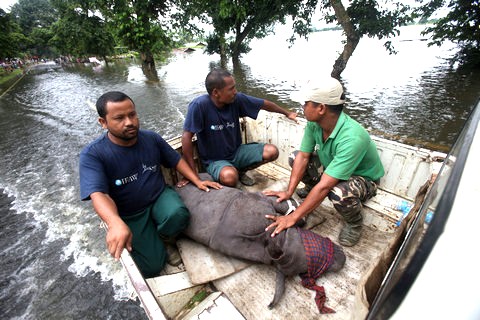
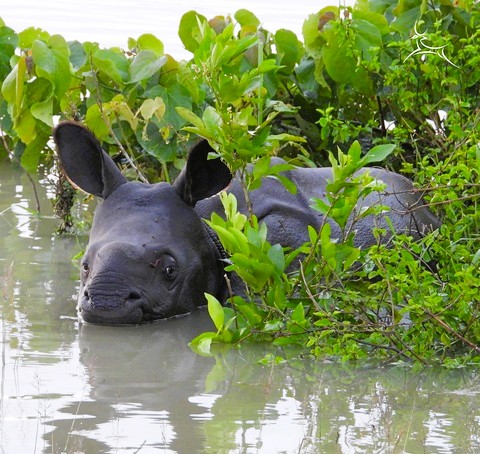
In the above picture, one can see a rhino calf being rescued from the flood waters by the staff of Centre for Wildlife Rehabilitation and Conservation in Kaziranga National Park & Tiger Reserve.
It is India’s first dedicated facility to hand-raise, treat, and release orphaned and injured wildlife, subsequently returning them to the wild. Established on August 28, 2002, the CWRC has grown into a cornerstone of scientific wildlife conservation.
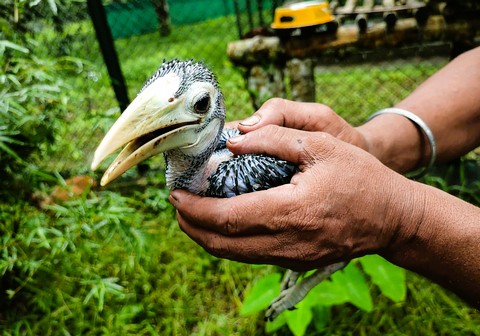
ASSAM WILDLIFE CONSERVATION
The Centre for Wildlife Rehabilitation & Conservation is jointly run by the Assam Forest Department and Wildlife Trust of India (WTI) in partnership with International Fund for Animal Welfare (IFAW).
Since its inception in 2002, CWRC and its allied Mobile Veterinary Service (MVS) units have responded to over 10,000 wildlife rescue cases. The most heartening aspec is nearly 68 percent have been successfully treated and released back into the wild.
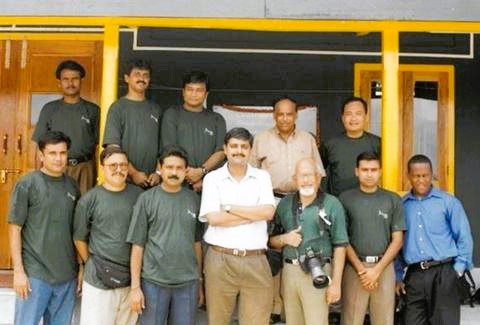
Dr C Ramesh, IFS, Kaziranga Field Director said, “As CWRC enters 25 years, its contribution to the rescue, rehabilitation and conservation of Assam’s wildlife, especially in responding swiftly to animals in distress, has been truly invaluable.”
Over the years, CWRC has not only saved countless wild animals but has also deepened our understanding and strengthened our capacity to manage human-wildlife interactions across the state, he adds.
MOBILE VETERINARY SERVICE UNITS
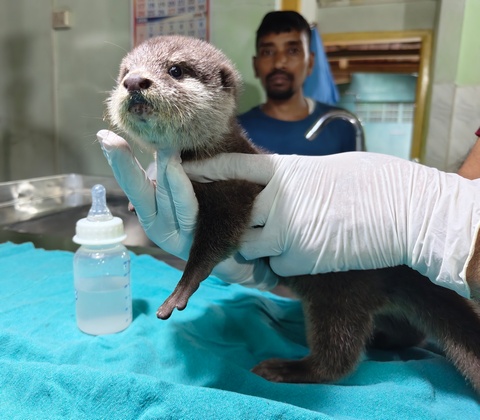
Alongside two Mobile Veterinary Service units, the CWRC’s reach extends across both Eastern and Western parts of Assam.
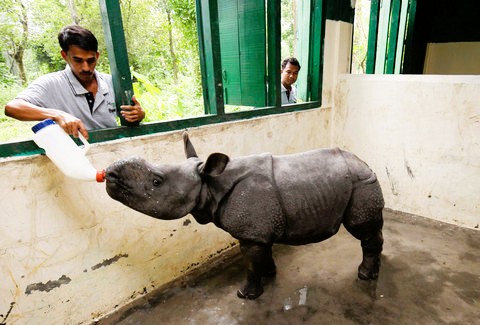
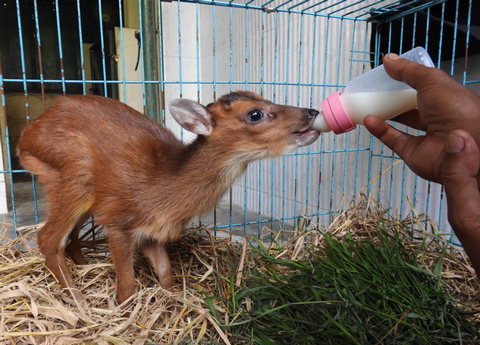
They not only deliver emergency veterinary care, hand-raise orphaned animals when required but also prepare them to be totally fit for release into the wild through scientifically established protocols.
FLOOD RESCUE
Flood rescue is also a key part of CWRC’s work. Their teams work alongside the Assam Forest Department to rescue animals that are stranded, injured or displaced during floods.
They provide veterinary care, and further, reunite young animals with their mothers whenever and wherever possible.
REDUCING HUMAN-WILDLIFE CONFLICT
The Kaziranga Field Director adds, “This journey reflects the foresight of its founders, the unwavering dedication of its field and veterinary teams, and the sustained commitment of the Assam Forest Department and its partners. The 25th year, therefore, is not just a milestone – it is a celebration of a conservation institution that has become an inseparable part of Assam’s wildlife story.”
Beyond emergency response, CWRC also works closely with communities specially in conflict zones. They are also conducting outreach to reduce human-wildlife conflicts and strengthen community-led conservation efforts. In the past 25 years, CWRC’s work has translated into landmark conservation achievements.
RETURN TO THE WILD
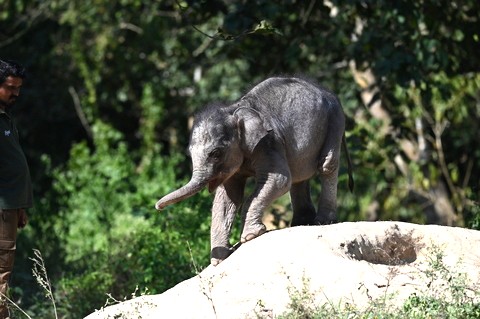
Since 2006, CWRC has played a pivotal role in re-introducing rhinos to Manas National Park through the rehabilitation of many rescued individuals.
Rathin Barman, Joint Director, WTI, said, “25 years of CWRC represents a remarkable journey of compassion, science and partnership. From responding to wildlife emergencies to giving thousands of wild animals a second chance to return to the wild, CWRC has shown what is possible when conservation organizations and governments work together.
DIFFERENT SPECIES RESCUED
Other notable rescue and rehabilitation efforts include the rehabilitation of Asiatic black bear cubs in Manas and Dihing Patkai National Park. Stretching along the Indo-Bhutan border, the Manas National Park is home to rare and endangered species like the pygmy hog, golden langur, hispid hare, Asian elephant and Royal Bengal tiger. While Patkai National Park located in Upper Assam, known as the Amazon of the East, is home to seven different species of wild cats and many other species.
Apart from this, rehabilitation of rescued wild water buffaloes in Dibru-Saikhowa National Park and Laokhowa and Burachapori Sanctuary has been done. The park supports a notable resident population of wild water buffaloes alongside other iconic species like feral horses and Gangetic River dolphins. Further, rehabilitation of rescued hoolock gibbons and numerous other key wildlife in the region has been carried out by them.
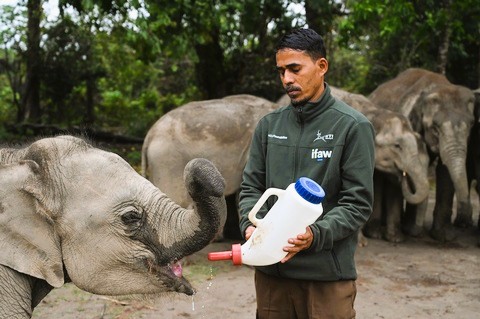
VET TRAINING CENTER
The CWRC has now not only helped in rescue and release of wildlife but it also serves as a training facility for wildlife rescue veterinarians, biologists and conservation practitioners.
“As we celebrate this milestone, our commitment remains to protect wildlife, support communities and ensure that every rescued animal has the best possible chance to return to its natural home,” Rathin Barman adds.
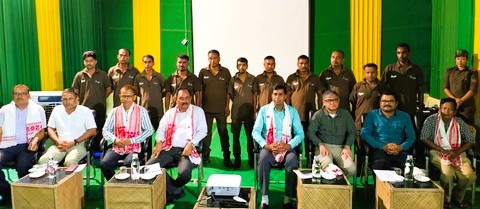
“From our first wildlife rescue to today, it has been a long learning curve, rooted in compassion, robust science and community participation,” says Dr Bhaskar Choudhury, CWRC Centre Manager and the lead veterinarian of WTI. Many govt organizations and the College of Veterinary Science, Guwahati, and of course, the local communities have supported us throughout this 25-year-journey.
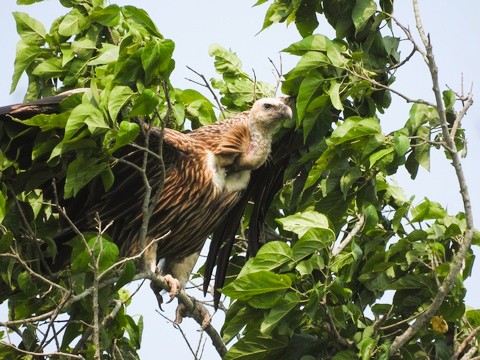
In the aftermath of two and half decade of service, the CWRC is all set to transform itself as one of the finest institutes and Centres of Excellence in the field of wildlife Rescue and rehabilitation in India.
(PHOTO CREDIT: COURTESY WILDLIFE TRUST OF INDIA, WTI)