
Meera Bhardwaj:
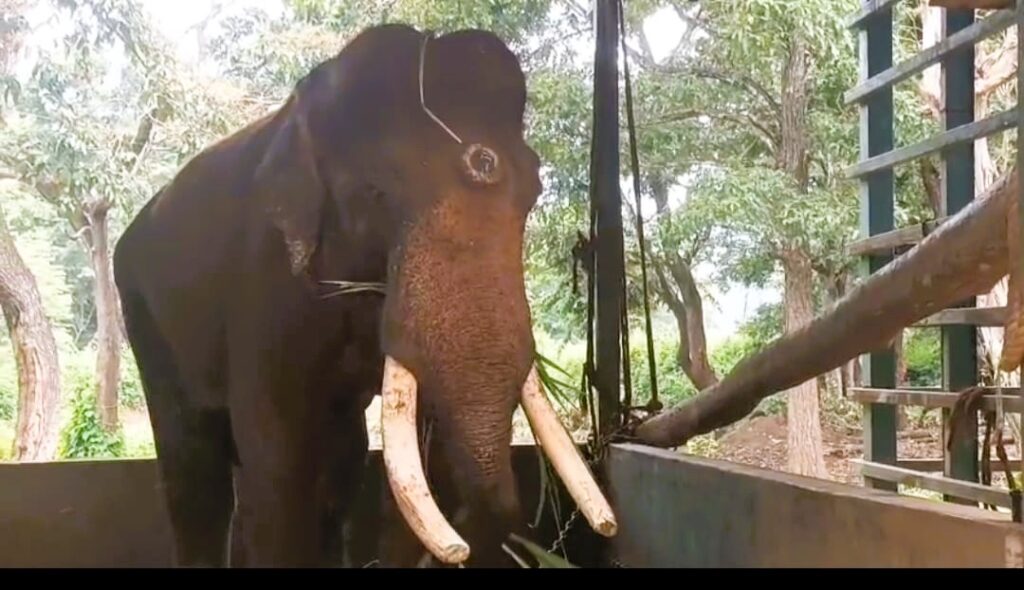
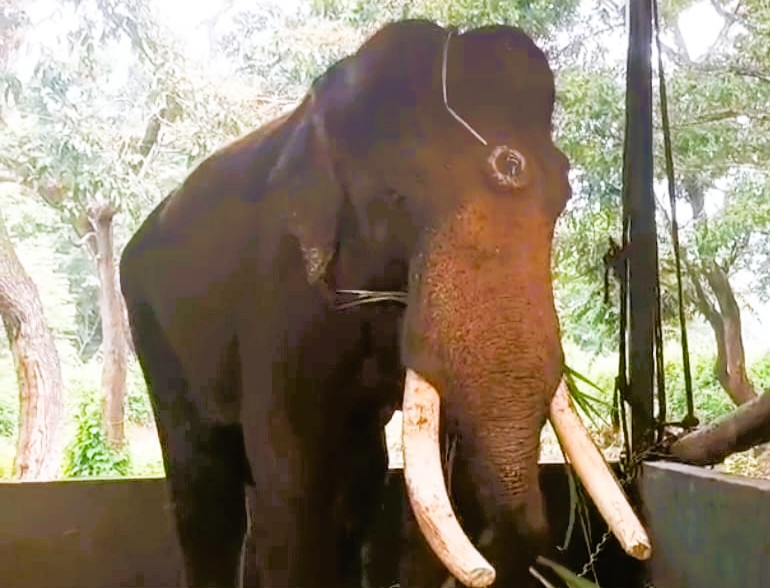
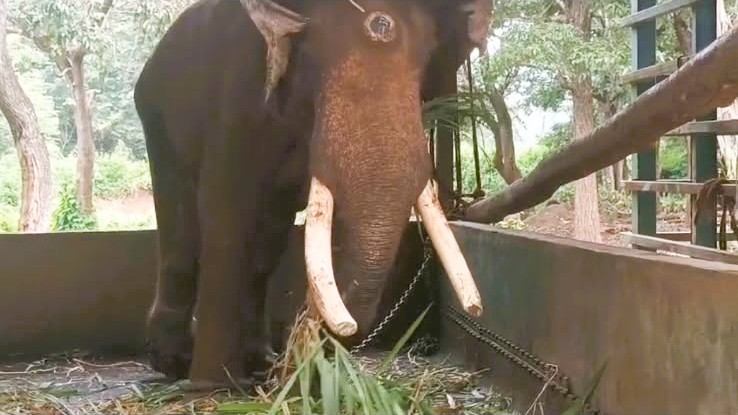
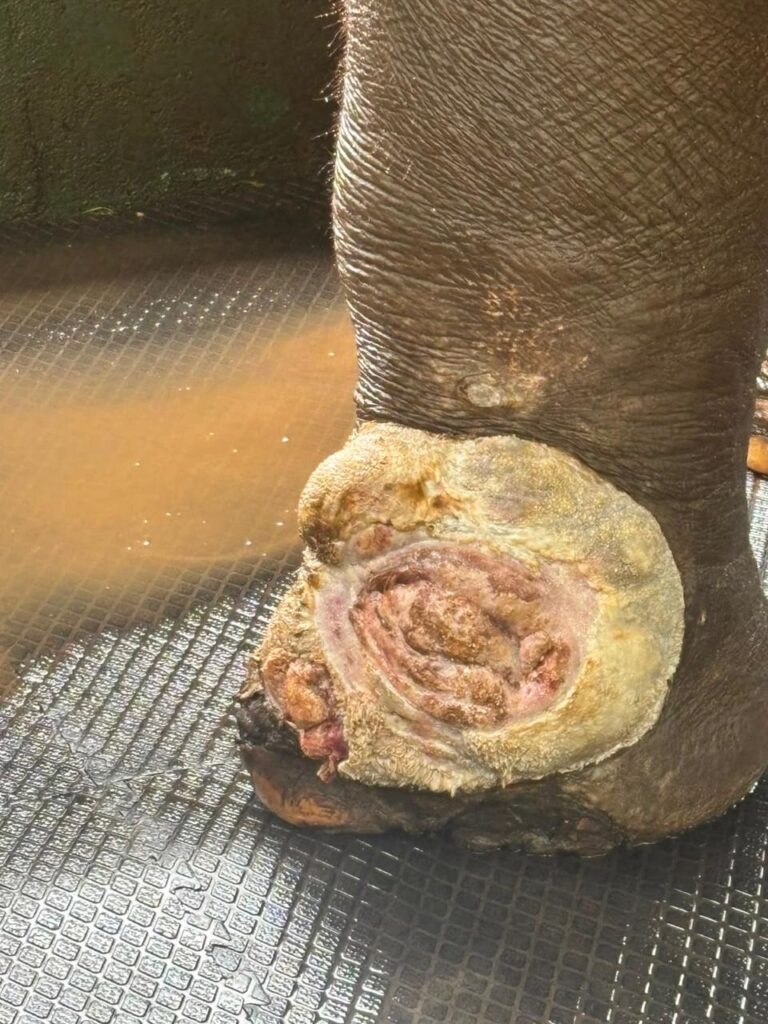
Shaurya, a prime tusker @ Sakrebyle Elephant Camp died on October 1, 2026 due to unascertained reasons. He was suffering from a festering wound in one of its hind limbs which was actually healing. The controversy over Shaurya’s death rages with wildlife activists claiming foul play amidst conflicting reports. Further, they are demanding from the Karnataka Government a HIGH-LEVEL-INQUIRY into his death.
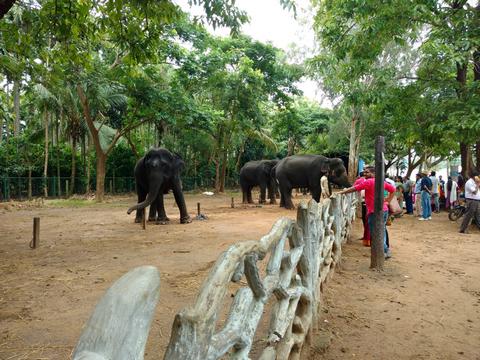
Wildlife activists allege that Shaurya did not receive proper care from the vet and its caretakers with his health condition worsening over the days. The over-crowded Sakrebyle Elephant Camp lacks both medical facilities, medicines and a cohesive and coordinated management for the upkeep of its 25 captive elephants, they said.
Shaurya was lodged inside a Kraal (a large, sturdy wooden enclosure built to confine and tame wild elephants) in the Sakrebyle Elephant Camp, Shivamogga Wildlife Division in the aftermath of its capture on 22 February 2026 near Balehonnur, Chikkamagaluru district, Karnataka for killing two people.
ISSUES OF SHAURYA IN KRAAL
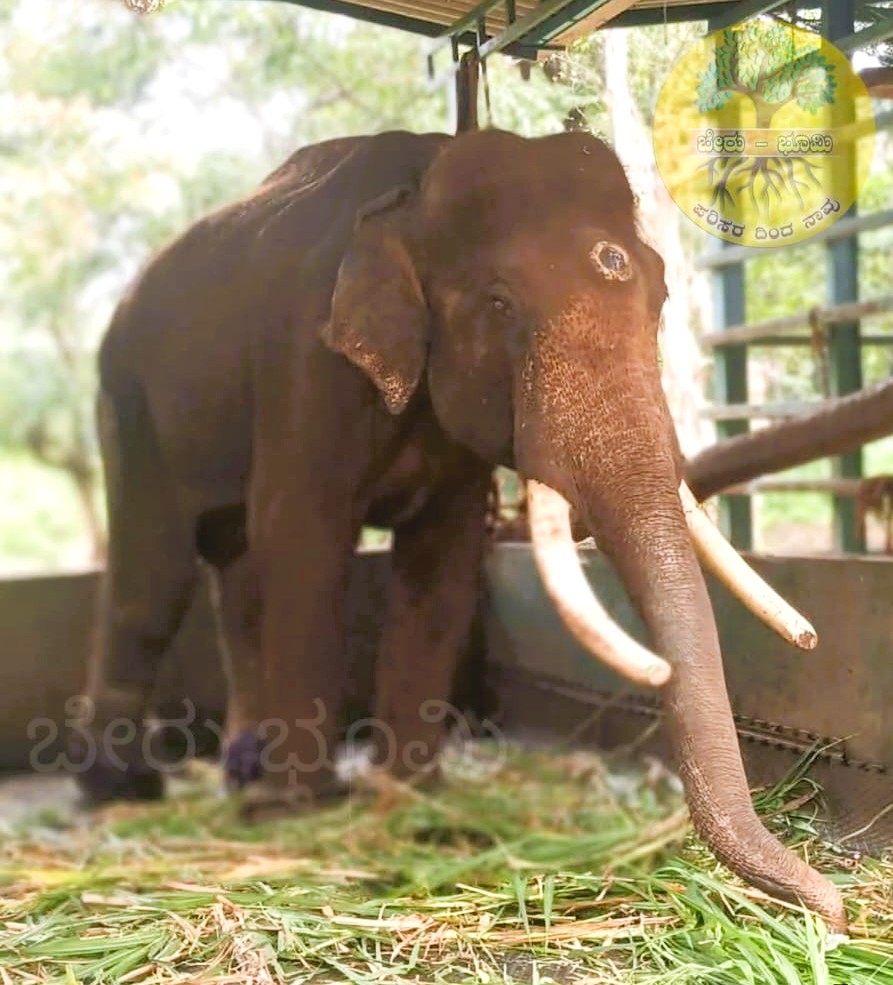
Shaurya had also sustained an injury in the forehead during the capture operations. But this head injury had healed completely, say vets when the tusker was examined by visiting vets on September 21. According to forest officials, upon being placed in the Kraal, it exhibited highly agitated behaviour; while attempting to break the kraal poles and escape, and further, it sustained injuries to its body and legs.
Shaurya was kept inside a Kraal for more than two months and later, he was removed from the Kraal in May this year for taming and training the prime tusker. Activists alleged that Shaurya was repeatedly jabbed with Ankusha or metal bull hooks to control him and this may have exacerbated his health issues.
CONTINUOUS TREATMENT
Shivamogga Wildlife Division in a press statement said, “Continuous treatment was provided for these injuries. Dr. Ravindra B.G. from the Veterinary College, Shivamogga, examined the elephant’s health.”
Subsequently, on 16.06.2026, a team of expert wildlife veterinarians from the organization ‘Wildlife SOS’ was invited to conduct a joint health assessment. Digital X-ray and thermal imaging tests revealed internal injuries in the elephant’s hind leg, and necessary treatment was administered for these injuries.
EXPERT CONSULTATION
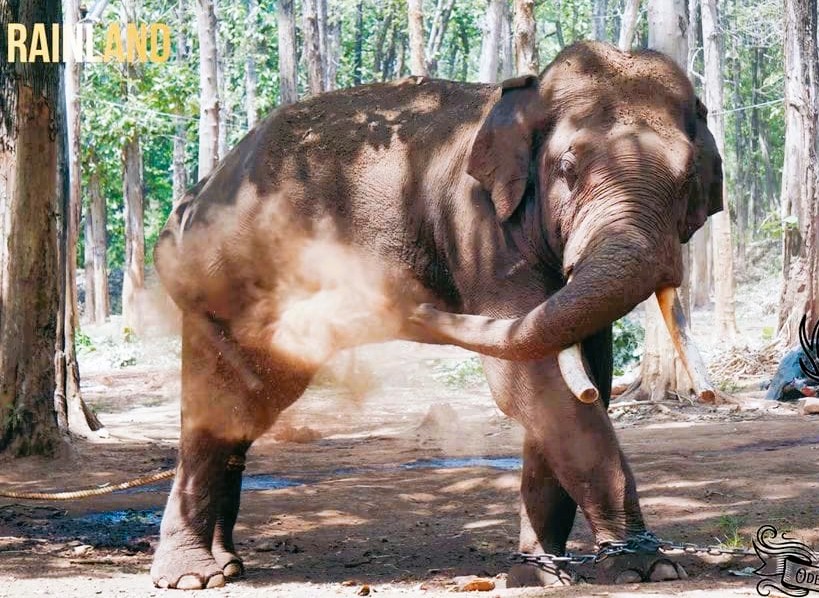
On September 21, experienced veterinarians Dr. Mujeeb and Dr Kiran came to Sakrebyle to take a look at Shaurya’s chronic wound and they suggested the best line of treatment. They examined the injuries on the elephant’s leg and opined that the current health issues stemmed from injuries sustained during its training and advised continuing the ongoing treatment.
According to the forest officials, while advanced treatments were being administered based on the expert’s advice, it was later discovered that an internal injury on the inner side of the elephant’s left hind thigh had developed into a pus-filled abscess. Diagnosed as deep necrosis, the condition was treated in the treatment shed using a sling to ensure no weight is placed on the affected leg.
SHAURYA’S COLLAPSE
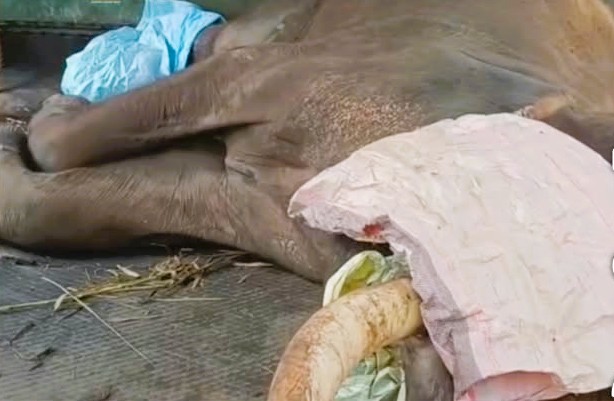
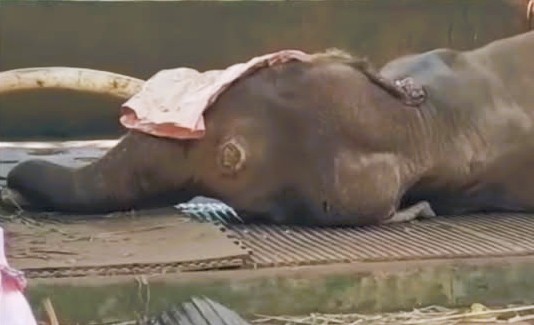
Forest officials stated, “Despite responding to treatment and being under intensive care until yesterday, the elephant suddenly collapsed at 11:00 PM on September 30, 2026. Although medical attention continued, it failed to respond to treatment and succumbed at 8:00 AM the following morning that is October 1, 2026 due to a severe infection.”
However, wildlife sources told Green Minute News, an operation was conducted three days back on its infected hind limb. This was against the advice of the experts and this may have triggered and deteriorated Shaurya’s condition and finally its death.
Sources say, “Shaurya was doing well and was in a good condition and the abscess in one of its hind limbs was healing and he was able to stand on his legs. Even his head injury sustained during capture had healed. All blood tests were done and samples were taken to check for any other problems but nothing was found. However, it was shocking to hear about Shaurya’s death and for what reason, it is totally baffling.”
REASONS FOR DEATH OF SHAURYA
Local wildlife activists further alleged, “Now why did Shaurya die if he was on way to recovery when examined by experts? In fact, tusker’s health condition should have been properly monitored in the last eight days by adhering to the expert opinion. We have lost a prime tusker in our camp. There is need for a thorough inquiry and pin the responsibility for Shaurya’s death.”
A post-mortem examination is being conducted to ascertain the exact cause of death, as well as the nature of the internal injuries and infection. Preliminary veterinary reports suggest that the elephant likely died due to prolonged, chronic illness and systemic exhaustion, the press statement by Shivamogga Wildlife Division says.
WHY DEMAND FOR A HIGH LEVEL INQUIRY?
Former Karnataka State Board for Wildlife member Joseph Hoover adds, “It is the responsibility of the state government to hold a thorough inquiry into this case. Because of improper management, Shaurya sustained a severe open wound after coming out of the Kraal for training. The state govt is only bothered about capturing elephants and training them for Dasara festival and are least worried about the health of these jumbos. Does Sakrebyle have proper medical facilities for housing so many tuskers in a single camp that does not even have a permanent vet?”
The following observations noted about Shaurya are:
- No major external injuries reported. If there were, the same would have been brought to the notice of the public and conservationists.
- Shaurya was a healthy, well-built wild elephant. The elephant was inside the kraal from February 2026 to May 2026 for taming.
- The leg injury reportedly started only AFTER it was released outside the kraal in May 2026.
- After release, it is the basic duty of the camp Vet, with the help of mahouts and kavadis, to treat such wounds in close approach with daily injections, wound dressing, along with adequate protein-rich ration, cut branches and green fodder.
- Good nutrition is essential for wound healing. However, Shaurya was allegedly under treatment for the last 3-4 months for a chronic open wound without recovery, leading to its death on Thursday.
- The present body condition shows it was severely debilitated, weak, with a tucked-up stomach and loss of musculature – indicating prolonged nutritional deficiency and improper treatment protocol.
- Elephants do not die easily just because of an external wound. Wound cases can be managed with proper line of treatment.
- A previous example – captured elephant Ashwathama was badly injured with profuse bleeding inside the kraal itself.
- It was successfully treated with great risk by administering injections from outside the kraal every day.
- Regular dressing and balanced ration/roughage was given. That elephant recovered and is doing well today after release.
- Shaurya’s injury occurred when it was OUTSIDE the kraal, where treatment should have been much easier.
- It could have been cured in 15-20 days with effective management. Why was this not done?
WILDLIFE EXPERTS, CONSERVATIONISTS DEMAND
- A transparent post-mortem by a panel of independent wildlife vets from outside Shivamogga Circle, with videography.
- A high-level inquiry into the line of treatment, ration and fodder provided to Shaurya from May to till death.
- Immediate appointment of a permanent, experienced wildlife veterinarian for Sakrebyle Camp and Tyavarekoppa Safari.
- Fixing responsibility on the concerned RFO, DCF, CCF and the outsourced vet for this tragic loss.
This is not just about one elephant, but about the systemic failure in protecting our national animal.
WHAT AILS SAKREBYLE ELEPHANT CAMP?
The last year, Sakrebyle Elephant Camp has been riddled by problems with back-to-back health issues of four elephants. It is a tragic situation with Shaurya’s death who was just 35-years-old and such cases are becoming common with conflict elephants dying in various camps after their captures. “It clearly shows how negligent the forest department is and have not tried to overhaul the management at Sakrebyle Camp even after the botched-up case of Balanna whose one ear had to be amputated, thereby reducing its lifespan.”
Usually elephants can withstand pain, chronic wounds naturally and they will not die just because of an external injury over the body, says a senior wildlife vet from Delhi. “But looking at the case here, there seems to be no proper line of treatment and management of Shaurya. If timely diagnosis and treatment had been provided, the tusker would have survived. We need to know the reason behind his death so that it does not happen in the future.”
NEED FOR PERMANENT VETS
Further, activists add that there is no permanent vet stationed at the Sakrebyle Elephant Camp which has about 25 camp elephants. There are no daily vet visits from 8 in the morning till the evening. This is the scenario since last April 2025 and that too in a wildlife division. “Senior forest officials who have been posted here the last five years are just running the camp without realizing the importance of wildlife health management,” complain activists.
The Sakrebyle Elephant Camp is rife with many such cases where captured elephants have not received proper health care due to lack of facilities, medicines and a permanent wildlife vet.
SAKREBYLE SAGA OF CHRONIC WOUNDS
Another two captured elephants which came to Sakrebyle – Adkabadka, and Vikrant. They too suffered from chronic wounds – unable to bear the weight on their limbs, exhibiting total pain and limping. One of them has recovered while the other one is healing.
This clearly shows how necessary is best health practices & management by vets including proper care by mahouts and kavadis of captive elephants at the Sakrebyle elephant camp. In the absence of best health measures and practices, only God can save captive elephants in Karnataka.