
Meera Bhardwaj:
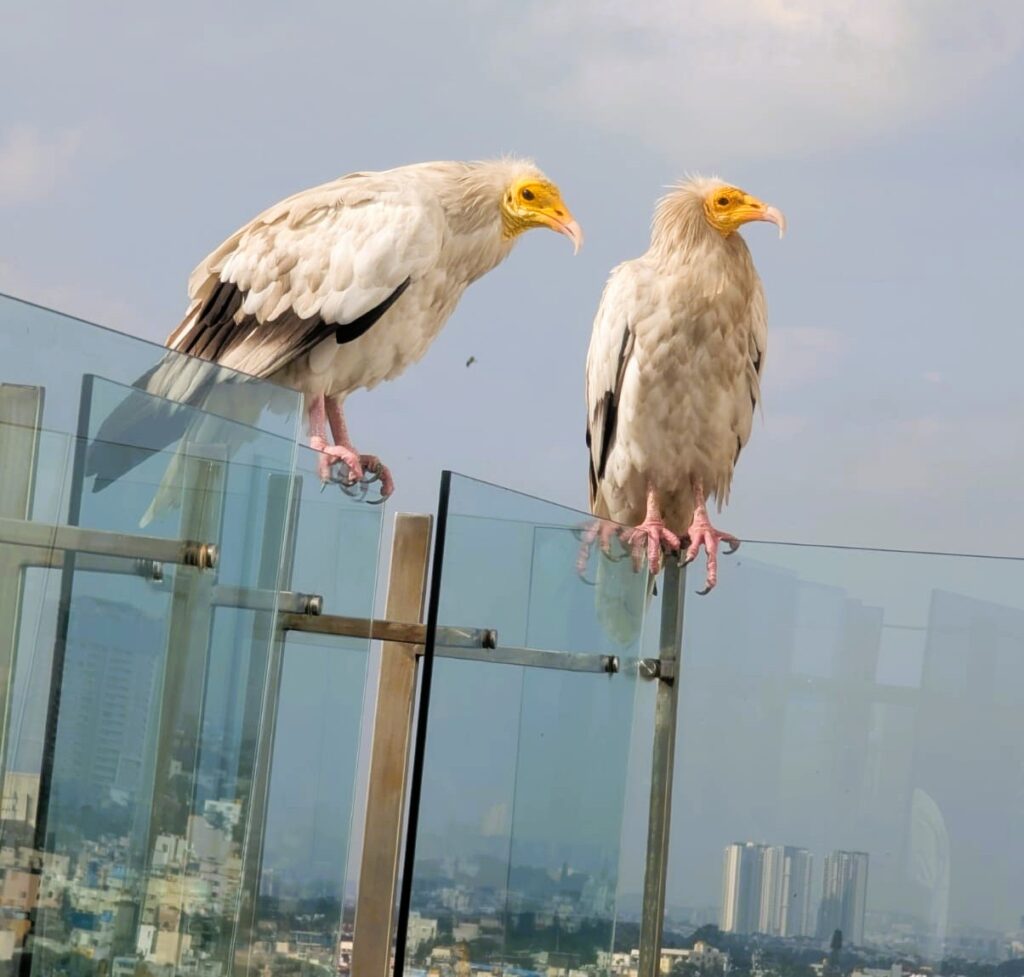
Egyptian Vultures were sighted on September 27, 2026 in the central business district (CBD) area of Bengaluru. The Egyptian vultures whose global population is on the decline are cited as “Endangered” on the IUCN Red List.
In Karnataka, they have been sighted especially in some urban and rural spots and often recorded in the districts of Bengaluru, Mysuru, and of course, in India’s first vulture sanctuary – the Ramdevarabetta Vulture Sanctuary located in Ramanagara Division, Bengaluru South district.
Unless easy food or prey is not available in and around Bengaluru, these raptors wouldn’t have come to the CBD area. Further, in vacant sites, dumping of dead chickens and mutton waste in dump yards attracts these vultures.
CBD AREA HOSTS EGYPTIAN VULTURES
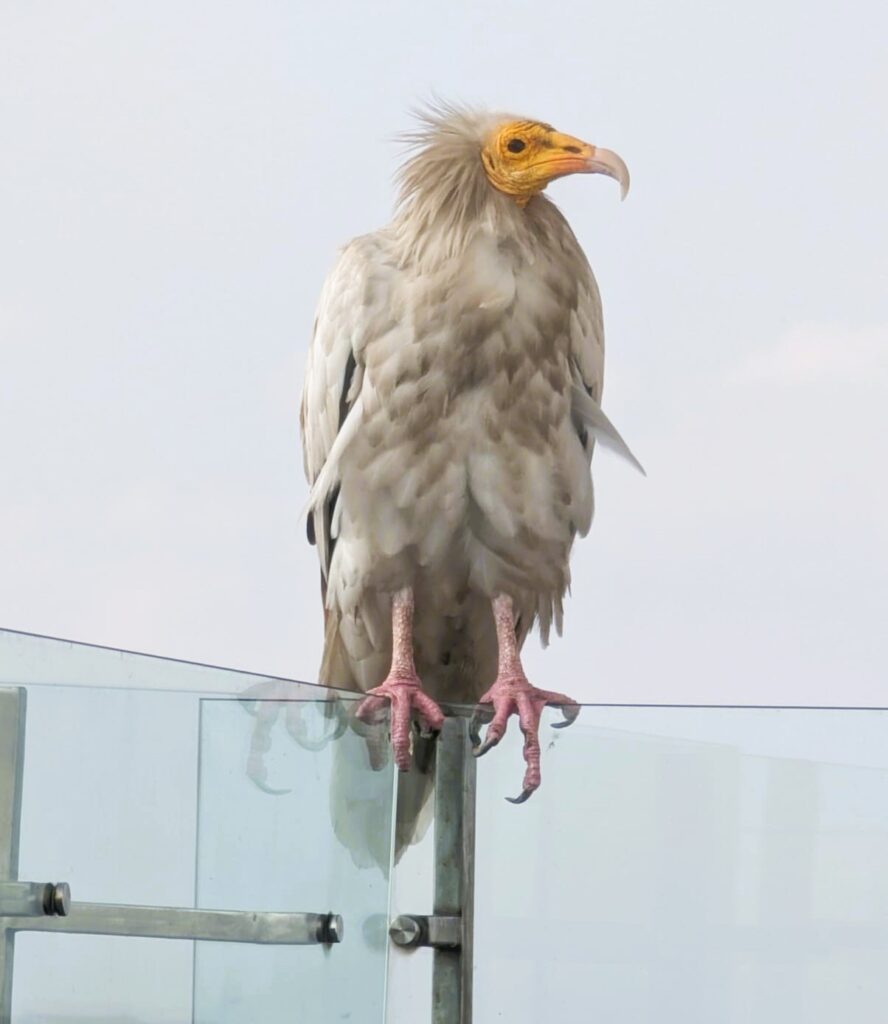
The 13Th Floor Restaurant at Barton Centre, M G Road in the CBD area played host to these endangered raptors this week on September 27 when a group of people suddenly sighted them sitting on glass barricades in the rooftop space of this bar and restaurant.
They said, “We were so excited to see these Egyptian Vultures at one pm in the afternoon. First one came and sat on the rooftop, then another joined. Everyone was shouting so loudly and we scared them away. But they sat for a while and that enabled us to take pictures.”
Speaking to Green Minute News, Chris Bowden, Programme Manager, Saving Asia’s Vulture from Extinction (SAVE) said, “This is a positive happening, it may be nesting somewhere else. However, the population of Egyptian Vultures are still declining. Many years ago, there used to be a breeding pair in the IISc Campus but they may have abandoned that site. There is one more pair in the Whitefield area. With this, there are two breeding pairs, it is a positive trend. However, sighting them in mid-city is misleading.”
SUCCESSFUL HATCHING OF EGGS @ RAMDEVARABETTA SANCTUARY
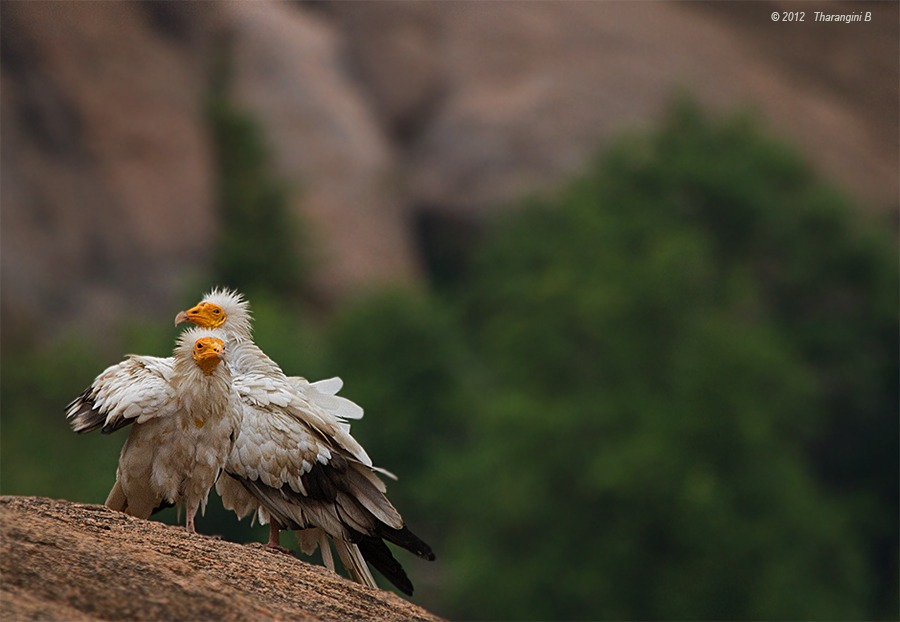
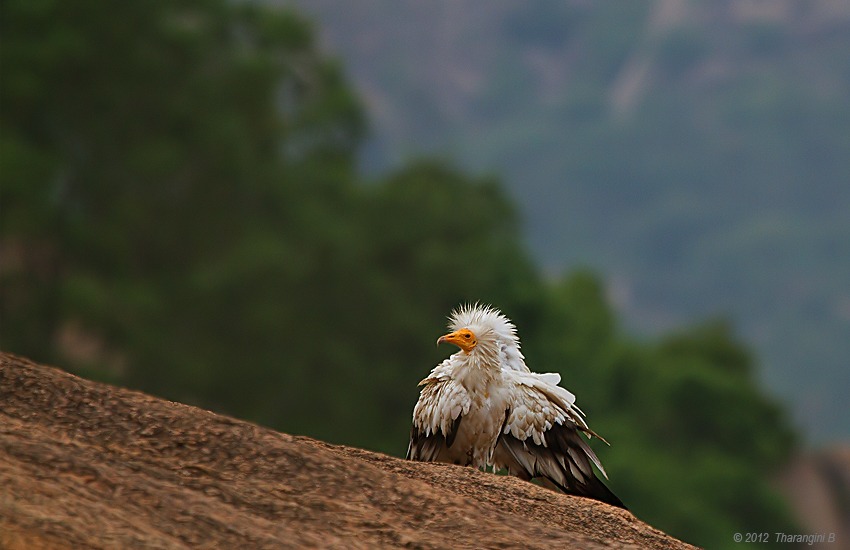
Since 2021, successful hatching of eggs of Egyptian vultures has been observed by the forest staff at the Ramdevarabetta Vulture Sanctuary. But later the adult pair flew away with their chicks to other rocky and hilly destinations in Karnataka.
Speaking to Green Minute News, Ramakrishna, DCF Ramanagara Division added, “The Sanctuary has become a breeding centre for these vultures but after that the adult raptors take away their chicks to other places. We have observed pairs coming here often for breeding but later they fly away with their chicks.”
Chris Bowden adds, “There was a pair of breeding Egyptian Vultures in the Sanctuary and there are more than 10 pairs breeding in and around the rocky hillocks of Ramanagara. Usually, they do not nest in the same place. Research and regular monitoring is necessary to ascertain their behaviour, nesting habitat and movement.”
SIGHTINGS IN DIFFERENT HILLS
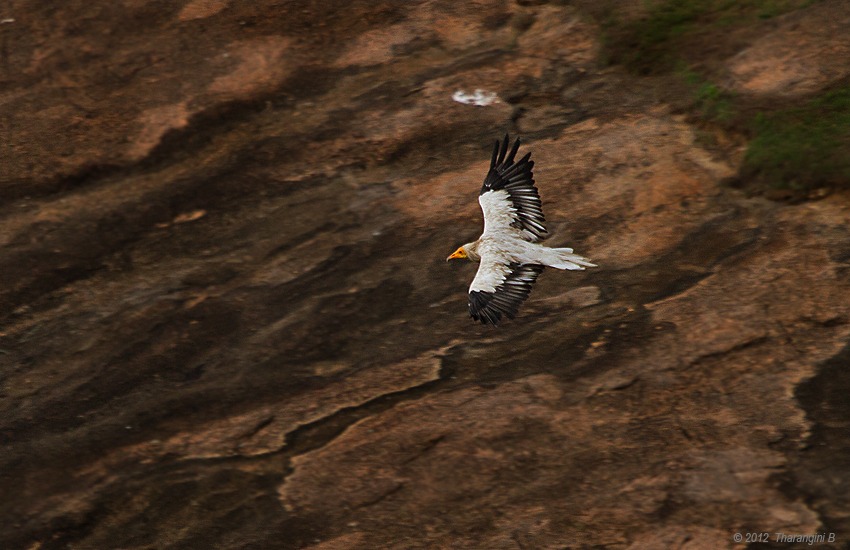
There have been reports of sightings of Egyptian Vultures in and around the hills of Ramanagara division and even in Savandurga hills. In Bandipur too, some 8-10 Egyptian Vultures have been sighted in a group in recent times.
DCF Ramakrishna adds, “There is need for centrally sponsored research studies and observations on Egyptian vultures for a period of 10 years. We need to tag the birds to see whether they are breeding at one place and residing in another place. We need to study their behaviour and how far do they fly away from Ramdevarabetta, say 100 kms away and for food where do they go usually.”
NEED FOR RESEARCH STUDIES
For this, ad hoc staff has to be hired who can carry on with their observations and sightings and also tag the birds, the DCF adds. Till date, there is neither any data nor any records available about how many Egyptian Vultures come to Ramdevarabetta and breed here as there seems to be no resident population in this Sanctuary.
According to raptor experts, there is currently no proper data available on the number of Egyptian Vulture population in India and even local monitoring in Karnataka is pretty dismal.
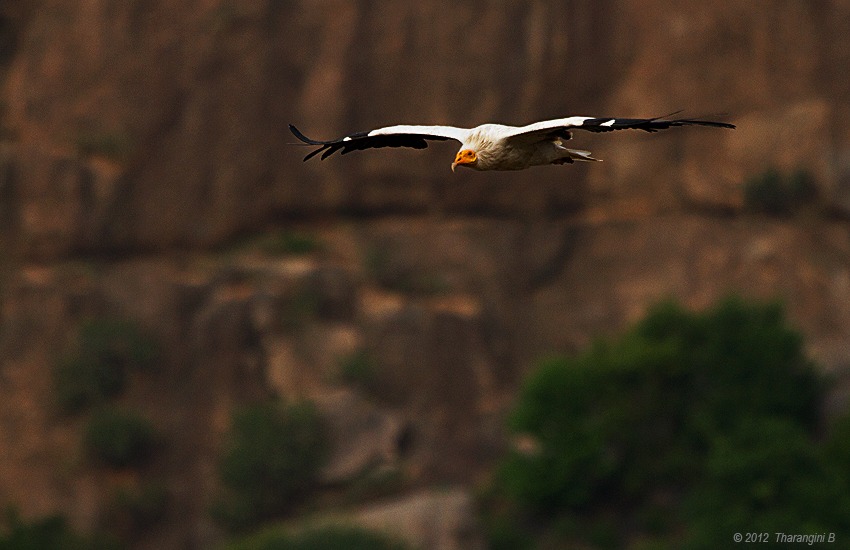
However, according to Raptor Rescue & Rehabilitation Organization, there is rapid decline in population of more than 80 percent. Although, the Egyptian Vultures have been declared as a Schedule-1 species under the Wildlife Protection Act, the central government needs to follow it up with wide ranging research studies across Karnataka, Tamil Nadu, Rajasthan and other states in the country.
(PHOTO CREDIT: IMAGES OF EGYPTIAN VULTURES AT RAMDEVARABETTA VULTURE SANCTUARY BY THARANGINI)