
GREEN MINUTE NEWS:
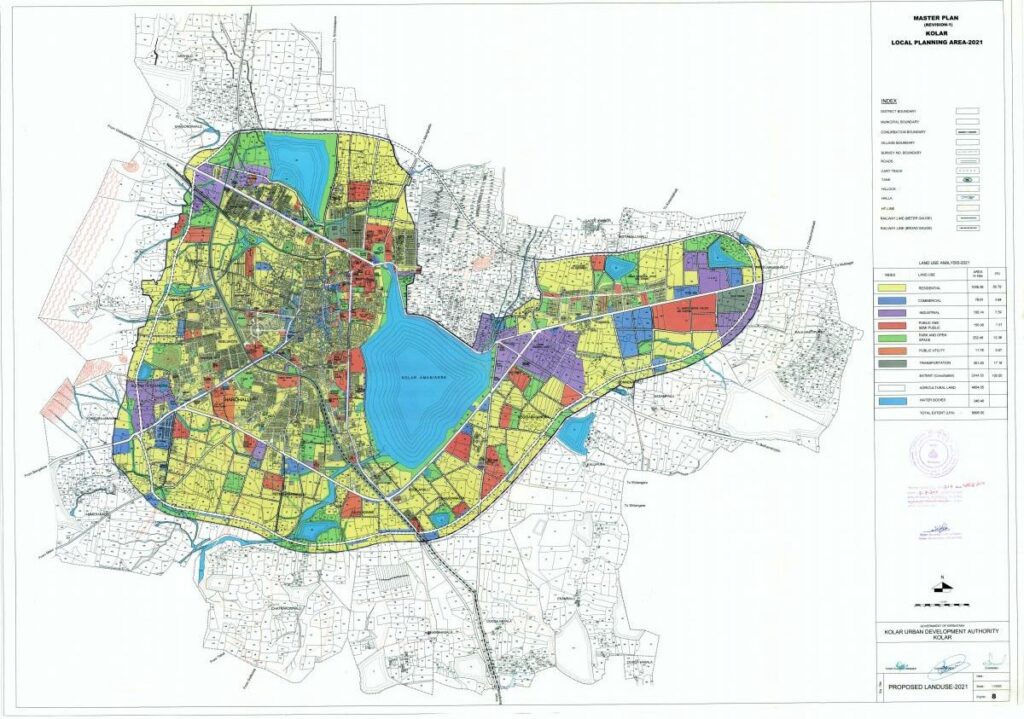
Environmentalists and lake activists across the state have raised their complete objections to the proposed reduction of lake and stormwater drain buffers across Karnataka. This is in response to the Draft Notification No. UDD 24 TTP 2025(E), dated 9 October 2026 issued by the Urban Development Department, Karnataka government. They have urged the govt to republish the draft notification with adequate publicity, provide accessible channels for submitting objections, and allow a fresh 30-day period for public consultation.
It was in October last year that the exact same buffer reductions were notified for all Local Planning Areas in the Bengaluru Metropolitan Region (BMR). In a shocking proposing, the State Government has now extended these reductions to the Local Planning Areas (LPAs) across Karnataka outside the BMR.
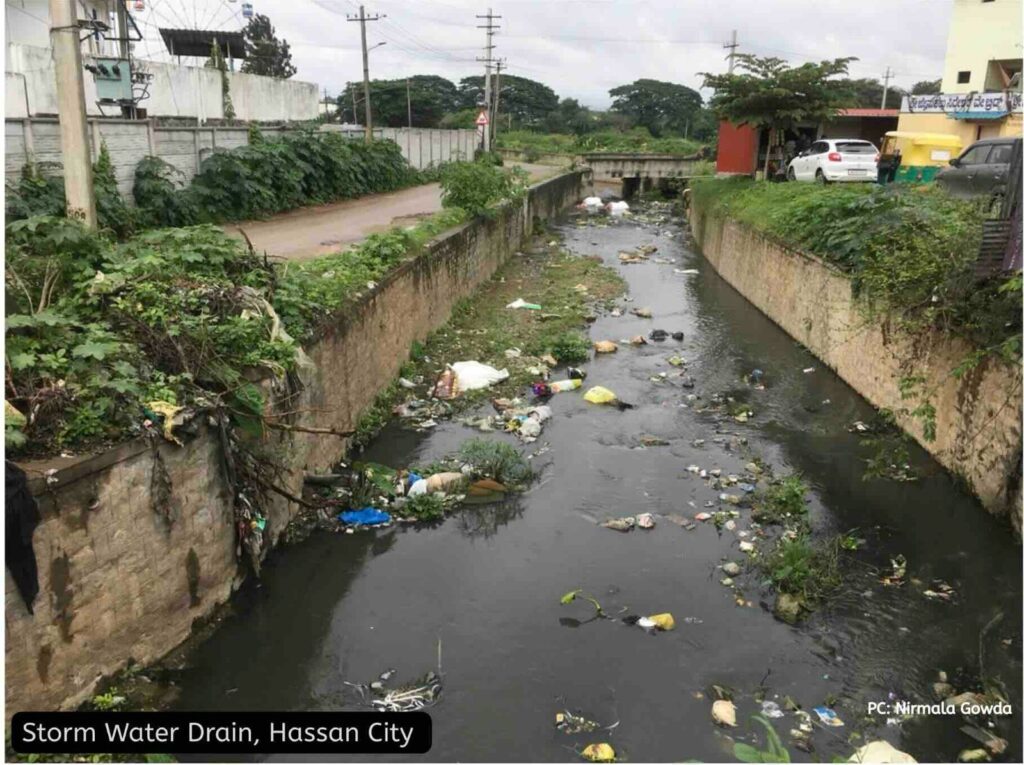
Karnataka’s revised and proposed buffer zone regulations replace uniform set-backs with tiered, size-based distances for lakes and reduced fixed-distance strips for stormwater drains (Rajkaluves).
- Primary Drains: Reduced from 30 metres (or up to 50 metres in legacy rules) down to 15 metres on either side.
- Secondary Drains: Reduced from 15 metres (or up to 25–35 metres previously) down to 10 metres on either side.
- Tertiary Drains: Reduced from 10–25 metres down to 5 metres on either side.
- Drains feeding into tertiary drains: Maintained as per revenue records without insisting on a separate mandatory buffer
Submitting a memorandum to the Secretary, Urban Development Department, Karnataka government on 9 November, Nirmala Gowda, Mapping Malnad has stated, “The proposed reductions are driven by real estate interests, disregarding Central Public Health and Environmental Engineering Organisation’s (CPHEEO) technical guidelines on drainage planning and existing judicial directions on lakes. As climate change intensifies floods and droughts, and pollution and encroachment overwhelm what remains of lakes and drains, these reductions dismantle the very protections needed to confront these rapidly rising threats of drought, floods & landslides. We have drawn the state govt’s attention on grounds of 8 objections.”
Failure to Ensure Public Notice and Meaningful Consultation
Despite its far-reaching implications for Karnataka’s lakes, stormwater drains, water security and public safety, the draft notification was not publicised through prominent newspapers or readily accessible government websites, nor did it provide an email address for submitting objections. This failure to ensure meaningful public notice and participation deprived concerned citizens of a reasonable opportunity to respond within the stipulated 30-day period.
2. Driven by Real Estate Interests
RTI documents obtained from the Department of Law and Parliamentary Affairs reveal that the then Deputy Chief Minister, D. K. Shivakumar, directed reductions in lake and drain buffers at a real estate sector meeting on 31 August 2024 1. The lake buffer reductions were subsequently notified in February 2026 through amendments to the Karnataka Tank Conservation and Development Authority Act, 2014.
The five corporations under the Greater Bengaluru Authority (GBA) have since unveiled plans for new roads and road widening, with alignments cutting across lakes, drains, their buffers and green spaces. These roads pave the way for unsustainable real estate development at the cost of Bengaluru’s defences against floods and water scarcity. The same is expected to happen across Karnataka.
Nirmala Gowda further stresses, “These decisions place real estate interests above public interest, undermining Karnataka’s water security and disaster resilience in disregard of the constitutional protections under Articles 21 and 48A, the Public Trust Doctrine, the Precautionary Principle and Intergenerational Equity.”
3. Disregarding Current Realities & CPHEEO Guidelines
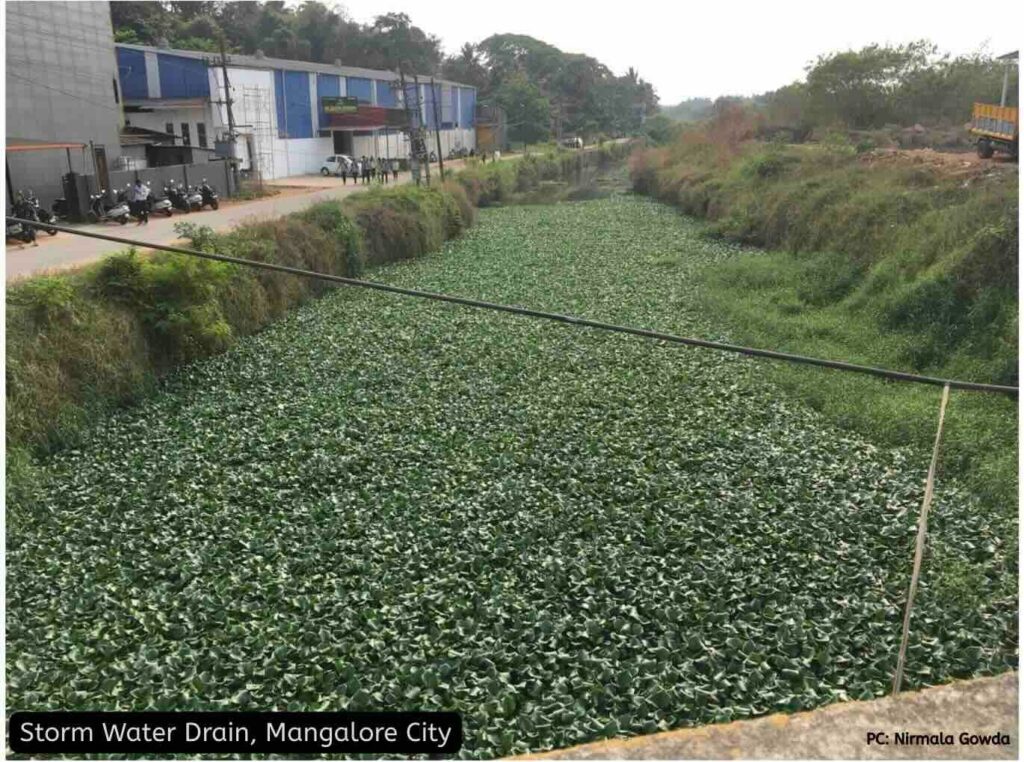
Rapid urbanisation, pollution, encroachment and waste dumping have compromised lakes and drain networks. Accelerating atmospheric CO₂ concentrations are driving global warming, irreversibly altering monsoon patterns & intensifying rainfall variability. So, these pressures reduce rainwater infiltration and exacerbates flooding and deepens water scarcity.
Recognising these challenges, CPHEEO’s Manual on Storm Water Drainage Systems, 2019 prescribes drainage planning guidelines encompassing hydrological, hydraulic and ecological considerations. The guidelines recommend comprehensive City Drainage Master Plans aligned with City Master Plans. However, these have not been prepared, as confirmed by our review of Approved Master Plans (AMPs) on the Department of Town & Country Planning (DTCP) website and enquiries with local planning offices.
Furthermore, the AMPs neither classify drains as primary, secondary or tertiary nor demarcate their buffers. Classification and buffer determination are instead left to authorities at the approval stage, relying on revenue maps dating back to the 1960s. This creates scope for inconsistent or arbitrary decisions, resulting in reduced buffers or none at all, further compromising lakes and drains.
Such inconsistencies and arbitrariness have already been documented by CAG in its 2021 audit of Bengaluru’s stormwater management. The CAG found that drains classified as primary and secondary in BBMP maps were reclassified and downgraded to secondary and tertiary in BDA’s draft RMP-2031.
Unless drains are classified and their buffers demarcated in statutory Master Plans, the buffer regulations cannot be properly enforced. Despite these fundamental planning gaps, the government has notified arbitrary buffer widths, disregarding CPHEEO’s technical guidelines and rapidly changing climatic and local realities.
4. Contrary to Binding Judicial Orders
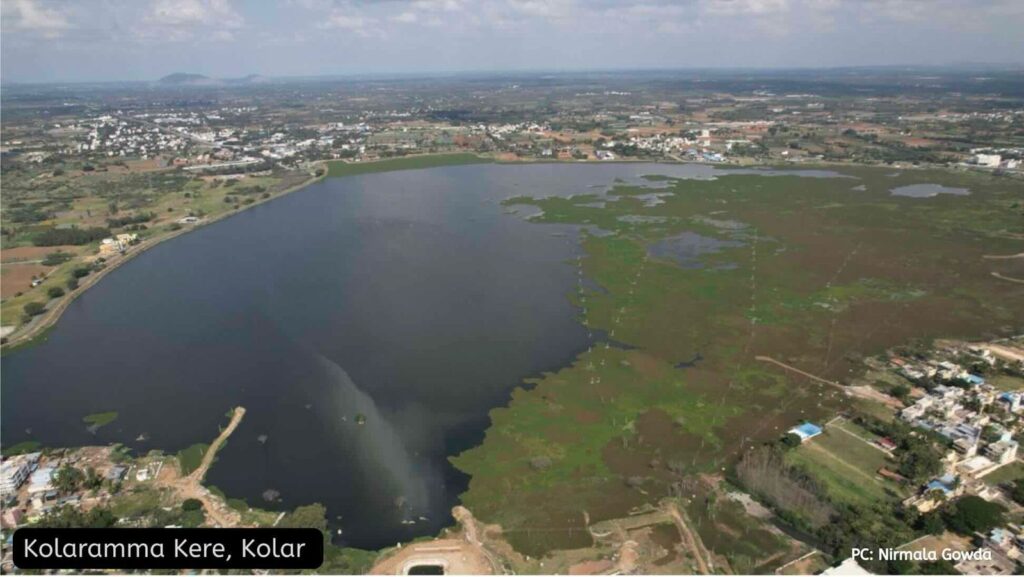
On 11 April 2012, the Karnataka High Court accepted the Justice N.K. Patil Committee’s report, Preservation of Lakes in the City of Bangalore. The Committee considered the existing 30-metre lake buffer essential, recommended increasing it by 2 metres for every additional 5 hectares beyond 40 hectares of lake area, and called for rigorous enforcement of drain buffers in zonal regulations. The reductions disregard these judicial directions. More troublingly, this judgment was overlooked even when the government sought legal advice on amending the law itself.
For the Karnataka Tank Conservation and Development Authority (Amendment) Act, 2025, notified in February 2026, which reduced lake buffers and permitted construction within lakebeds and buffers, the government sought the legal opinion of Advocate General Shashi Kiran Shetty. Our review of the documents obtained through RTI reveal that the Karnataka High Court’s judgment in W.P. No. 817/2008 was conspicuously omitted from the legal opinion given by Advocate General Shashi Kiran Shetty.
5. Undermines Karnataka’s Water Security
Karnataka is among India’s most drought-vulnerable states, second only to Rajasthan. The severe drought of 2023–24 exposed the state’s lack of water reserves and resilience to withstand such crises. Scientific projections indicate that climate change will further intensify these challenges. Under these circumstances, protecting existing water sources should be a priority.
Instead, the State Government is weakening their protections while pursuing costly and ecologically destructive projects, including Mekedatu, Yettinahole, Bedthi–Varada and Kalasa–Banduri, in the name of water security.
6. Exacerbating Flood Risk
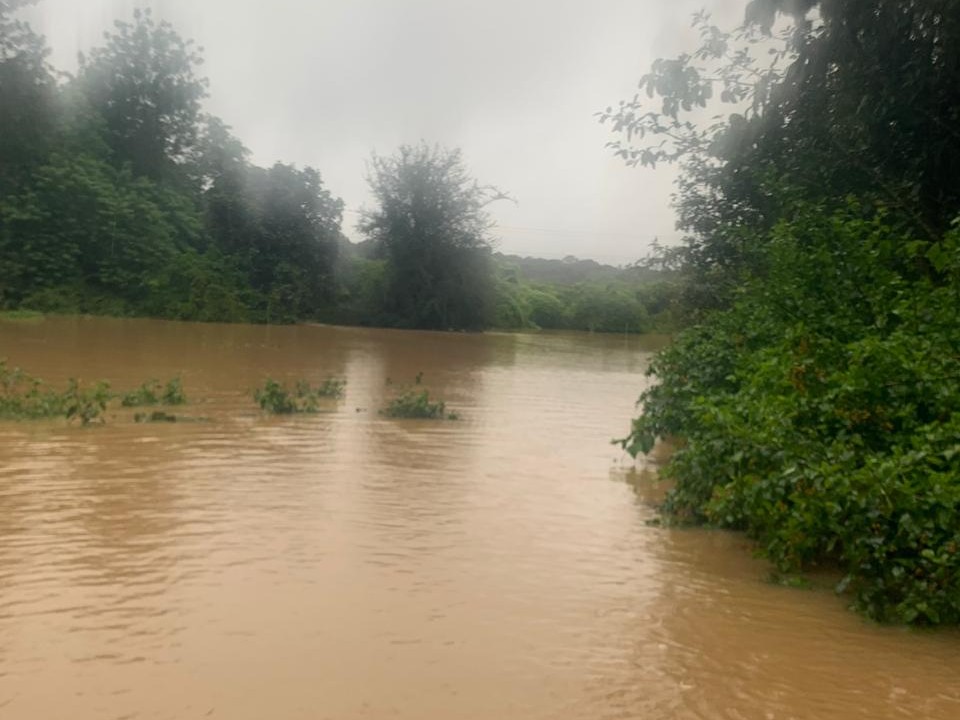
Despite being drought-prone, Karnataka has also experienced extreme floods and landslides over the past decade. Bengaluru offers a stark warning. Decades of paving over lakes, drains and buffers have left neighbourhoods vulnerable to annual flooding. The September 2022 floods drew international attention, exposing the consequences of this development model.
Rather than learning from Bengaluru’s experience, the proposed reductions replicate the same destructive model across Karnataka’s LPAs, exposing more people, property, and infrastructure to flooding. Even Kodagu, devastated by floods and landslides, is not spared. The State Government has rolled back restrictions on converting agricultural land, particularly paddy fields that act as natural sponges, to non-agricultural uses. Together, these rollbacks heighten flood and landslide risks.
7. Exacerbates Water Pollution and Public Health Risks
Vegetated buffers are a last line of defence against water pollution, intercepting sediments, nutrients and pollutants in surface runoff before they enter lakes and drains. These natural protective systems are recognised as nature-based solutions.
With untreated sewage, industrial effluents and solid waste already overwhelming rivers, lakes and drains, reducing buffers compounds pollution, potentially causing irreversible ecological damage and worsening public health risks.
8. Encourages Encroachment
Reducing buffers opens up currently undeveloped areas to encroachment while effectively legalising existing ones. Encroachment has been repeatedly documented by the A.T. Ramaswamy Joint Legislative Committee (2007), the V. Balasubramanian Task Force (2011) and the Koliwad House Committee (2017). The latter identified several government agencies among major lake encroachers. Instead of deterring encroachment, the reductions encourage more of it.