
Dr. Prayag H S:
The continuing human-elephant conflict in the Hassan landscape with the recent fatal attacks on two persons has opened the Pandora’s box as the Karnataka Forest Department has given permission for capture of conflict jumbos in this district even as anger and fear grip this Western Ghat bound district.
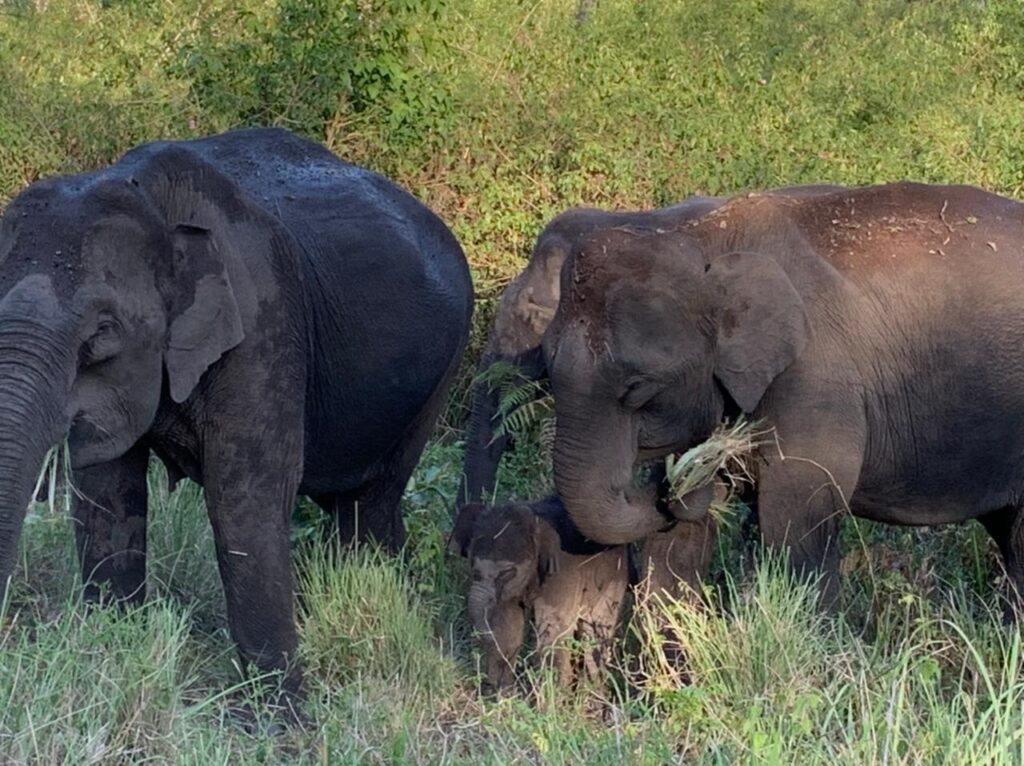
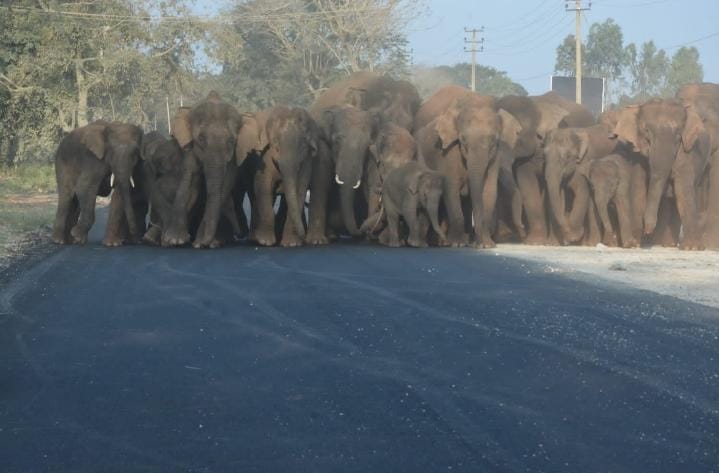
Hassan’s conflict is concentrated in a small area (chiefly Alur, Arkalgud, Belur and Sakleshpur taluks) where a few dozen to perhaps 60-odd elephants live among coffee estates, paddy fields and villages, with almost no contiguous forest.
The 2012 report of the High Court-appointed Karnataka Elephant Task Force (KETF) found fewer than 5% forest cover in Alur and recommended removing the roughly 25 elephants there to captivity. 14 years and several capture drives later, the same taluks are again facing the centre of capture orders.
Peer-reviewed monitoring (Krishnan et al. 2019) shows elephants using monoculture refuges and abandoned estates by day and farmland by night, and found that barriers and tree-felling shifted, rather than removed, the conflict.
Capture and translocation have a long, documented record of elephants returning or being replaced by new arrivals. An SMS, voice-call and LED early-warning system introduced in 2017 coincided with a reported fall in deaths, but no controlled evaluation has been published.
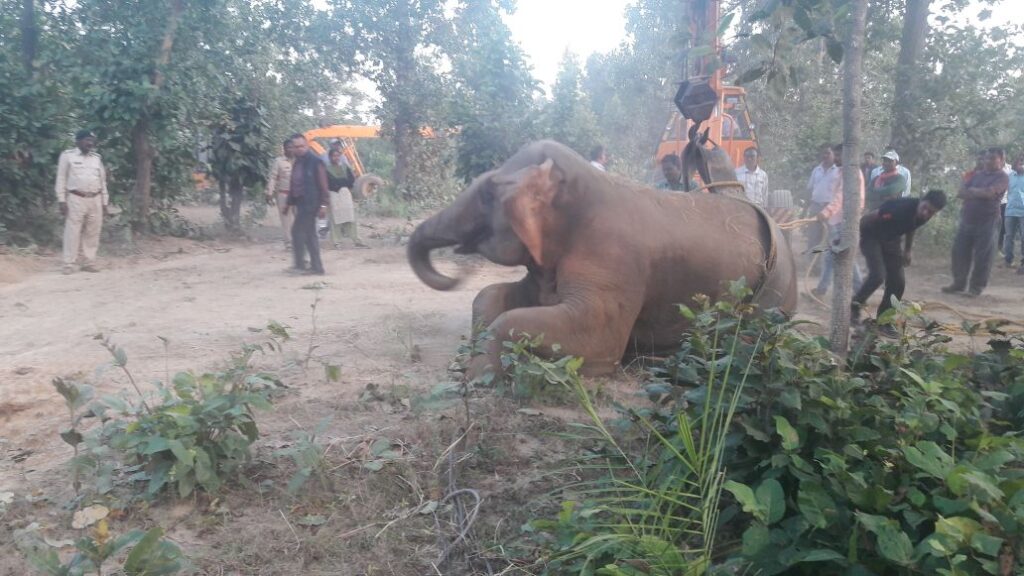
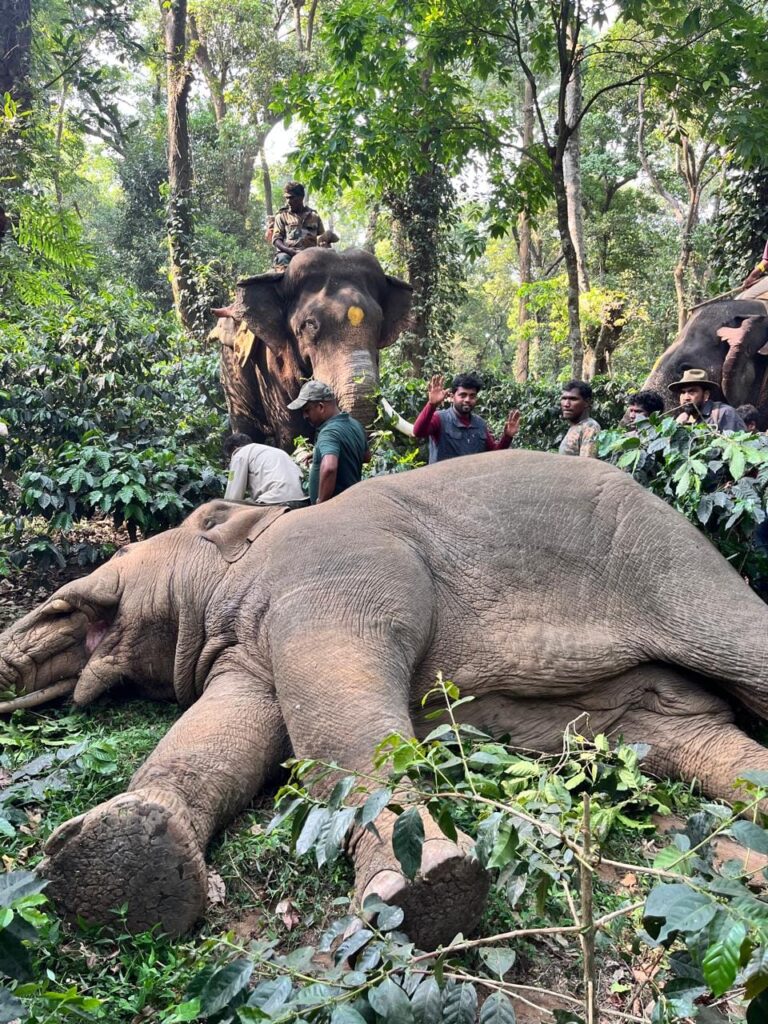
On 17 November 2026, after two people died in two days in Belur taluk, the state permitted the capture of 10 male elephants. It is reported that two wild tuskers have been captured on November 19 – responsible for the fatal attacks on two people – Jayamma and Rahman.
The setting: a Coffee–Paddy Mosaic, and not a Forest Edge
Most people when they think about human–elephant conflict (HEC), they picture a forest boundary. Hassan’s worst-affected zone has hardly any forest to have a boundary with. Krishnan and colleagues (2019) studied 205 villages covering roughly 610 km² in the Alur–Sakleshpur–Kodlipet region, contiguous with the Coorg coffee belt.
Coffee covered 39.9% of the area (24,526 ha), paddy filled the valleys, and the surviving forest fragments were only 150–300 ha each, interspersed with acacia, teak and eucalyptus plantations and some abandoned estates.
The region supported about 30 elephants and over 100,000 people dependent on plantations and farming. This matters because elephants are not intruding across a line; they are ranging through a farmed landscape that forms part of their home range.
Karnataka as a whole holds India’s largest elephant population (6,013 in the DNA-based SAIEE 2021–25; 6,395 in the Forest Department’s 2023 estimate), and the KETF noted that in Hassan and Kodagu, even small increases in elephant numbers worsen conflict because remnant habitat is so fragmented.
How many elephants, and which ones?
The KETF distinguished two groups in the district.
- In the west (Sakleshpur, with the Bisle–Pushpagiri forests beyond), conflict is real but less intense.
- In the east (Alur–Arkalgud, with the Kattepura and Doddabetta reserved forests on the Hemavathi backwaters) a small group lives among farmland.
- The KETF found no evidence of movement between the two, concluding they are separate and that a connecting corridor would be superfluous.
Numbers have been Uncertain and have changed
* The 2010 synchronised census estimated 67 elephants (95% interval 27–107) in Hassan Division on about 250 km² of habitat.
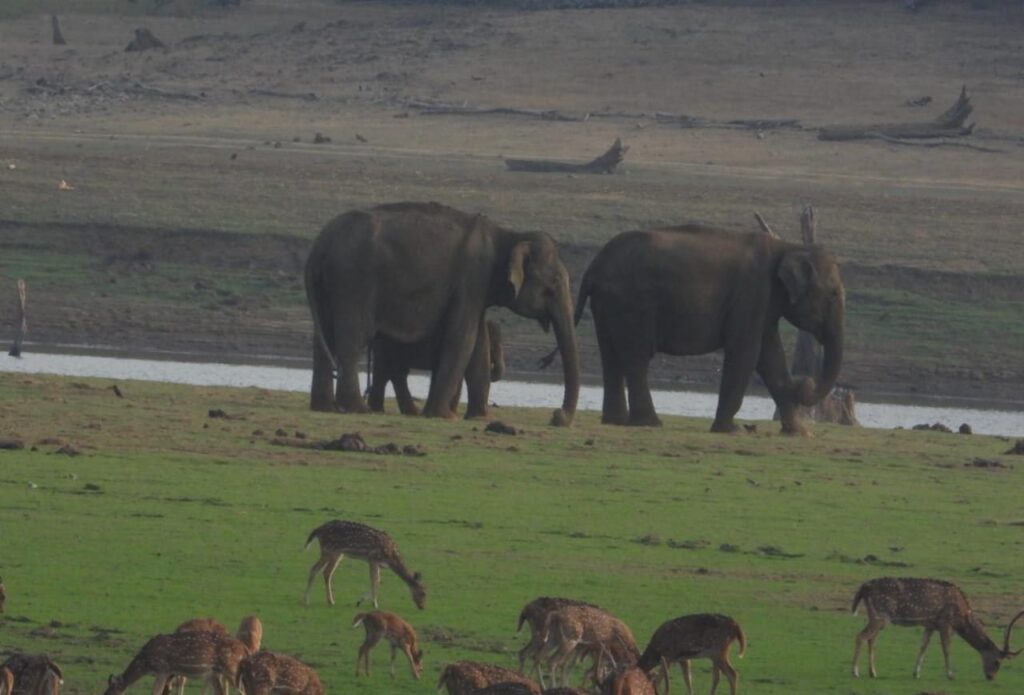
* A three-week survey in May 2012 recorded 25 elephants (6 adult males, 8 adult females, 1 sub-adult male, 3 sub-adult females and 7 juveniles or calves), with a minimum of 26 across the Alur–Arkalgud–Kattepura area. A radio-collared bull ranged over about 30,000 hectares.
* In January 2023, the APCCF (Wildlife) said 65 resident elephants had been identified in the Belur–Alur–Yeslur–Sakleshpur landscape, including a family led by a matriarch with more than 20 members, small herds of three or four, and all-male groups.
*A 2024 commentary put the figure at over 50.
These figures use different areas and methods, so they are not a trend line. They do indicate that the number of animals now in conflict is larger than the 25 the KETF planned to remove.
How did elephants come to live here?
Two accounts exist and the evidence supports parts of both.
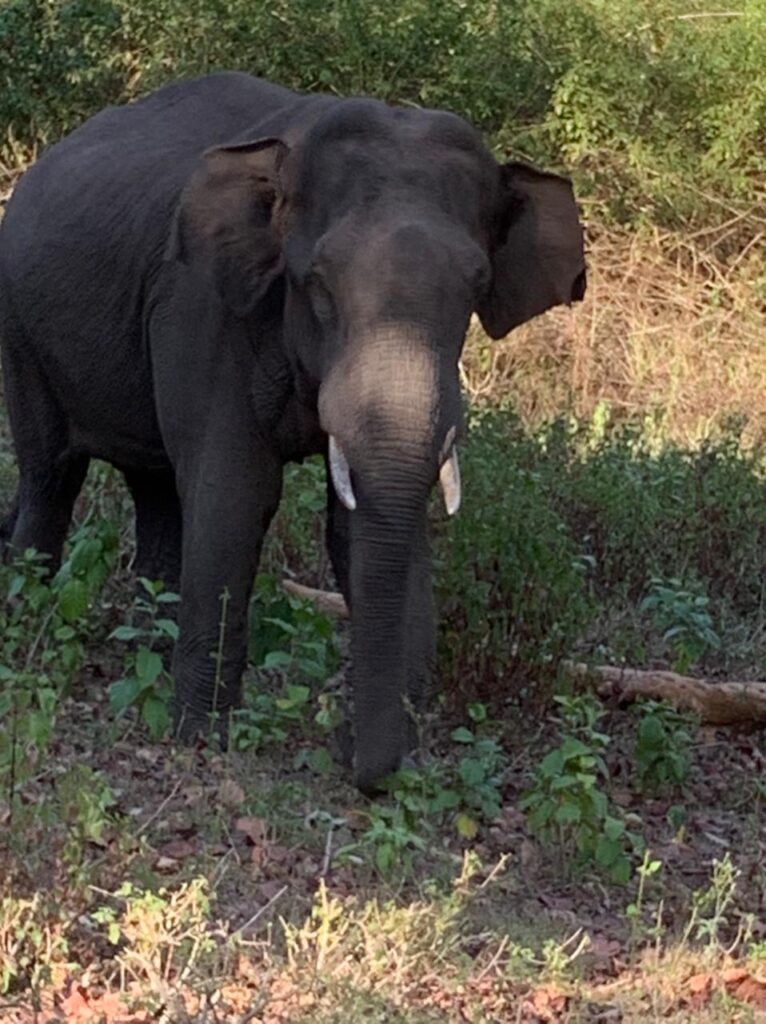
The reservoir narrative holds that conflict was rare until the 1960s, when the Hemavathi reservoir submerged more than 22,000 acres, and that displaced villagers were resettled on land that was a reserve forest, changing land use and crop patterns. Forest Department-linked accounts date intensifying elephant–human interaction in Hassan to the late 1980s.
The KETF’s satellite comparison complicates this. Imagery from 1973 and 2006 showed that the area later submerged by the Hemavathi reservoir held no forest even in 1973, and Alur retained less than 5% forest cover in small, disconnected patches.
The task force’s emphasis was therefore on a farmland landscape that elephants now occupy permanently. Forest officials in 2023 also said groups move back and forth between Hassan and neighbouring Mudigere and Kodagu, so removal from the district does not close the source.
The deeper history is older
The KETF quotes an 1870 gazetteer account that in 1822, the Raja of Kodagu, after farmers complained of crop destruction, had 233 elephants killed in 38 days while his soldiers captured 181. Elephants were historically removed by killing or capture whenever land was cleared.
After the Wildlife (Protection) Act, 1972 ended that, the animal was protected while much of its habitat was not, which the KETF argues set the stage for chronic conflict and for management of symptoms.
The elephantine burden, in numbers
Hassan’s published tallies come from different sources and areas, so they are best read separately.
* 1986–2006: Forest Department data record 276 occasions of elephant attack; a 2007 departmental report listed 38 villages in four ranges (Yeslur, Alur, Sakleshpur, Arkalgud). Rs 63.8 lakh was paid in crop-damage compensation over 1986–2006 and 4,650 compensation applications were filed between 2006 and 2009.
* 2007–09: three deaths in 2007–08; four deaths and 22 injuries in 2008–09.
* 2002–2011: 18 elephant deaths in Alur and nearby taluks, seven by electrocution, including three calves in January 2011, and about 11 people killed in the decade.
* 2001–2016: Forest Department data recorded 26 human deaths in the region.
* 2010–2016: An average of about five deaths a year in districts around Hassan.
* 2025–2026: Four people died in two months in early 2025 and the Elephant Task Force captured a tusker at Belur on 16 March.
The KETF described the human cost beyond the death toll, noting the persistent fear among villagers and the way farmers can work only during certain hours when elephants are around. Krishnan and colleagues found most confrontations occurred between 6–10 AM and 4–8 PM, when plantation and paddy workers are active.
What does the ecology say?
The KETF’s general diagnosis is that conflict arises from habitat loss and fragmentation, the high palatability of crops, the greater tendency of adult males to raid, and dispersal triggered by weeds, fire, overabundance or drought. It distinguished opportunistic raiders, which can become habitual and learn to defeat barriers, from obligatory raiders, which raid because their reduced home range cannot feed them.
Krishnan et al. (2019) tested this on the ground. Over 2015–2017, they monitored elephant movements, crop damage and human casualties daily and obtained 1,117 GPS locations across six habitats. During the day elephants preferred monoculture refuges (acacia, eucalyptus) and forest fragments and avoided coffee, roads, reservoirs and habitation; at night they used agricultural land more, especially when moving between refuges.
The implication, which the authors state, is that where forest is absent, retaining monoculture refuges and enabling free movement through open habitat may reduce conflict better than exclusion alone.
6. A 20-year management record
2006–2012: removal is proposed. A 2006 committee led by wildlife scientist Ajay Desai and a former chief conservator recommended removing about 25 elephants. The state sought and obtained central consent in 2011. The High Court declined a proposal to translocate 25 Alur elephants to Cauvery Sanctuary, and the state formed the KETF, chaired by Raman Sukumar, which reported in September 2012.
The KETF’s zone approach
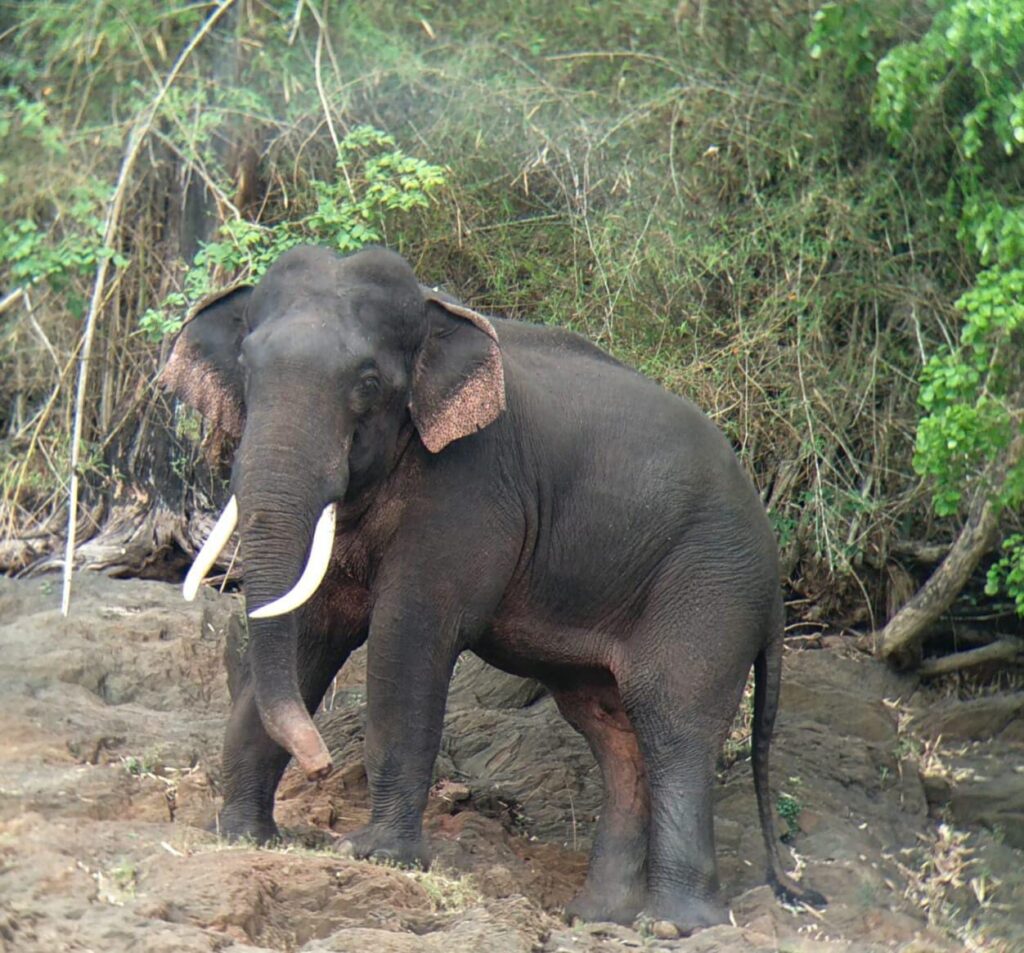
The task force proposed three zones: Conservation (large intact habitat such as Bandipur–Nagarhole), Coexistence (including western Sakleshpur) and Removal (Alur–Arkalgud and the Savandurga region of Tumkur). For Alur–Arkalgud, the majority recommended capturing the roughly 25 elephants and keeping them in captivity, because adult-male translocations in Karnataka since the mid-1980s had generally failed, with animals returning to the capture site.
Four members dissented, arguing for resettling people rather than removing elephants. The KETF also advised against buying private land for a corridor in Sakleshpur, warned that barriers in dissected landscapes can aggravate conflict, and urged taller power lines (above 20 feet), a Karnataka Elephant Expert Group, and faster ex-gratia.
2013–2014: capture. About 22 elephants were captured in the Alur–Sakleshpur region in 2014 -roughly 18 were taken into captivity. Krishnan et al. report that the area was recolonised by elephants within a year, with crop damage and loss of life continuing.
A MoEFCC reply in Parliament, cited by Green Minute News in 2023, listed 74 elephants captured and relocated in Hassan between 2000 and 2022. Two bulls released about 250 km away in the Bandipur–Mudumalai area returned to Alur.
2023–2024: a larger plan. In January 2023, the state announced capture of 65 resident elephants, with eight in Sakleshpur–Belur on priority, alongside a planned 34 km rail-track barricade to stop entry from Kodagu (about 20 km nearly ready on the Hemavathi side).
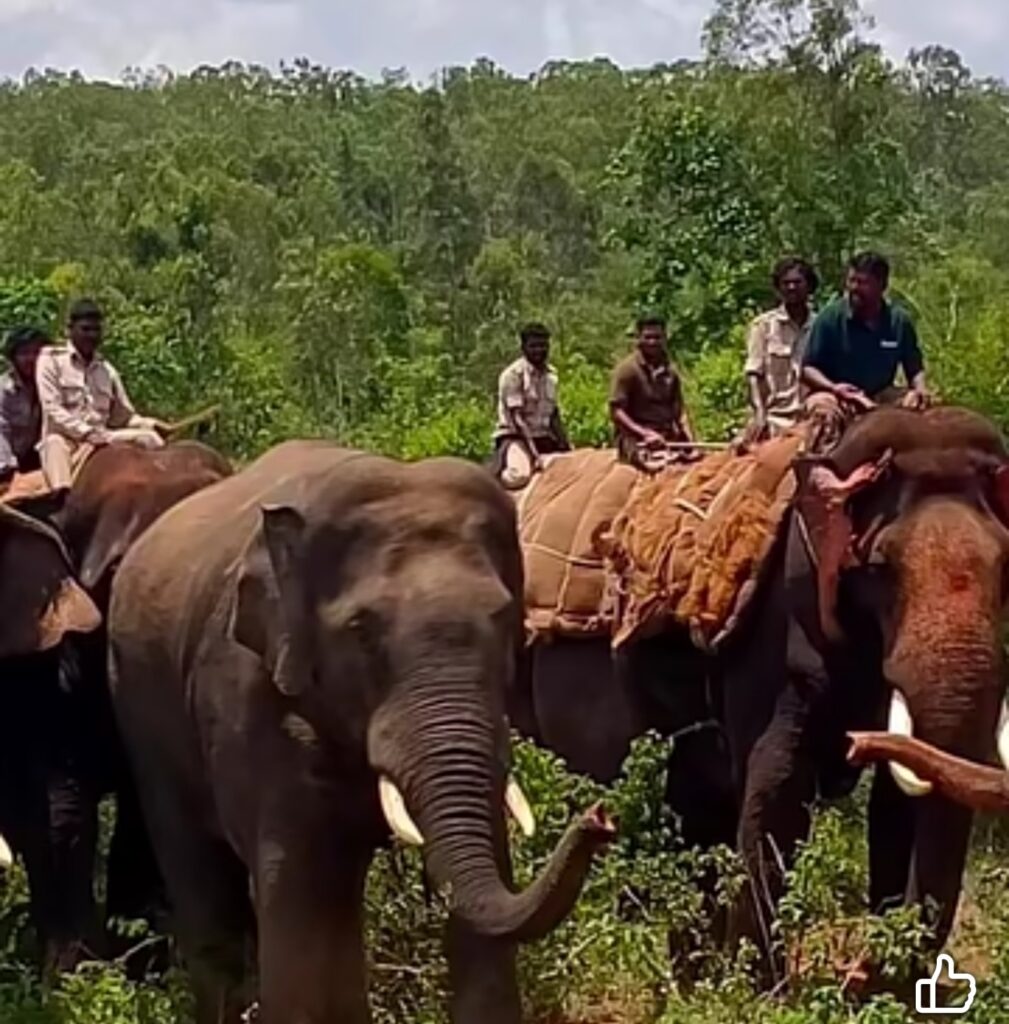
Operation Jumbo, which captures and radio-collars conflict elephants, resumed in January 2024 with eight kumki elephants based at Belur. A commentary noted that plans to capture elephants in Alur–Arkalgud had been announced in both 2012 and 2024.
November 2026. The PCCF and Chief Wildlife Warden permitted capture of 10 male elephants after specific identification, citing an oral request on 15 November from the Hassan Circle Conservator, following the deaths of a 50-year-old woman at Chikkadahalli village in Belur taluk and a 64-year-old man.
As reported, the operation is using Kumki Teams A and C, follow the Standard Operating Procedure dated 1 October 2024, and be reported on afterward. Two elephants had earlier been cleared under Section 11(1)(a) of the Wildlife (Protection) Act, 1972.
Early Warning and Telemetry
In October 2017, the Forest Department, working with the Nature Conservation Foundation, introduced a combined system in Hassan adapted from the Elephant Information Network in Valparai, Tamil Nadu: SMS alerts and automated voice call in Kannada, plus LED flash-lights at public places, backed by watchers and an Elephant Task Force of about 150 staff.
The system was described as covering roughly 700 km² and 300,000 residents, of whom about 50,000 live or move where elephants occur. Practitioners reported fatalities falling to nearly zero, and the Chief Conservator said the two deaths of 2018 occurred when victims ignored alerts. Small, individually owned holdings are harder to cover than Valparai’s company estates, as the project’s lead noted.
Satellite Collars add a Second layer
The Forest Department and the Wildlife Institute of India deployed 25 satellite collars on conflict-prone elephants across Karnataka between 2019 and 2022, 11 of them in Kodagu. In Kodagu, the programme allowed daily tracking of over 90 elephants and generated about 104,764 location points over 4,516 days, and communities that had wanted removal came to support collaring (Muliya et al. 2026).
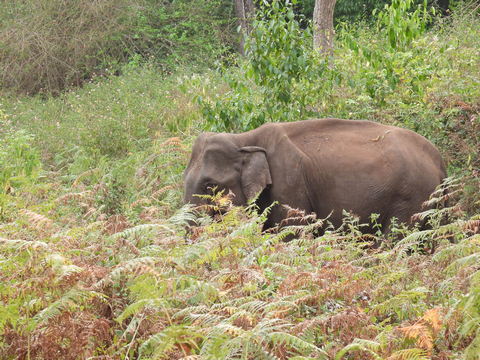
Hassan had 8 of the state’s 23 radio-collared elephants in January 2023.
The authors of the 2026 paper state that a quantitative assessment of effectiveness is pending and that capture for collaring is invasive and requires skilled veterinary and kumki support.
Two cautions are warranted
The fall in deaths after 2017 is practitioner-reported, not a controlled before-and-after analysis, and fatalities have continued in 2025–2026. Whether the early-warning system was extended, maintained or strained as elephant numbers and ranging changed is not documented in the sources reviewed.
An appraisal of the Measures
The following is the author’s synthesis of the record above, not a statement from any one source.
What the Hassan record shows?
Confidence
Translocation
Returns to the capture site
recolonisation
conflict transferred
Strong (negative)
Capture to captivity
Removes individuals
New arrivals refill the landscape
Moderate
Rail and solar barriers
Can displace conflict where the landscape is broken; mixed
Moderate
Early warning (SMS, voice, LED)
Deaths reported near zero after 2017; not independently evaluated
Moderate
Satellite telemetry and rapid response
Safer staff and community support reported; quantification pending
Limited to moderate
Compensation and ex-gratia
Necessary; KETF calls for faster, streamlined payment
Strong (necessary, not sufficient)
Evaluation is the Missing Ingredient Everywhere
A 20-year-analysis in Sonitpur, Assam (Sekar et al. 2026) found that organised crop-guarding squads were followed by two to three times more elephant deaths, mostly accidental, a reminder that even well-intended measures can have hidden costs when they are not rigorously evaluated. No equivalent before-and-after analysis was found for Hassan’s measures.
What the evidence supports?
1. Reassess the zones with current data. The KETF’s zonation rested on 2010–2012 numbers. Fresh population, movement and land-use data should decide which parts of the district are treated as removal, coexistence or conservation areas.
2. Pair any capture with prevention of refilling. Removals without completed barriers, monitoring and attention to the Kodagu and Mudigere source areas have repeatedly been followed by new arrivals. Placement and welfare of captured animals need veterinary capacity planned in advance.
3. Evaluate early warning and telemetry. A formal before-and-after analysis of Hassan’s deaths, injuries and crop claims against alert coverage would show what drove the post-2017 decline and why deaths recur.
4. Make the landscape safer for both species. Raise power lines above 20 feet, act on live-wire fences, and, following Krishnan et al., keep refuge patches and open movement paths in forest-poor areas rather than relying only on barriers.
5. Work with planters and smallholders. Estates and abandoned coffee land are where elephants spend their days. Co-management, timely ex-gratia and predictable alerts are the practical levers.
6. Publish a district data series. A taluk-wise record of deaths, injuries, claims and elephant mortality from 2012 to 2026 would let managers and researchers test claims that currently rest on scattered reports.
Limits of this Review
The KETF report (2012) and the open-access papers were read directly. Several figures come from different news reports, especially for 2023–2026, and the November 2026 capture order and the 2024 SOP are cited as reported by various news agencies; the originals were not retrieved. Figures differ between sources because areas, periods and definitions differ, as flagged in the text. The WII’s 2026 state report on Karnataka was consulted only through its summary.
THE VIEWS EXPRESSED BY THE AUTHOR ARE HIS OWN & DO NOT REPRESENT THE OFFICIAL POSITION OF THE BBP OR THE KARNATAKA FOREST DEPARTMENT. THE AUTHOR WAS A VETERINARY MEMBER OF THE 2013-14 ELEPHANT CAPTURE OPERATIONS IN ALUR, HASSAN DISTRICT.)