
Manjunath Nayak:
For the first time, a Fungoid frog has been spotted during November this year in an area which is not falling in the Western Ghats.
The Fungoid frog, an endemic species of the Western Ghats – is usually found in dense moist forests, edges of wetlands and forest floors. However, due to mining, urbanization and diversion of forests for linear structures, their population has been affected in the Western Ghats.
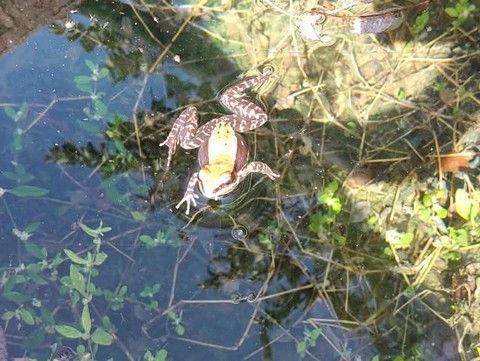
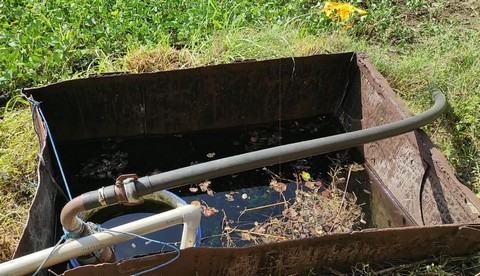
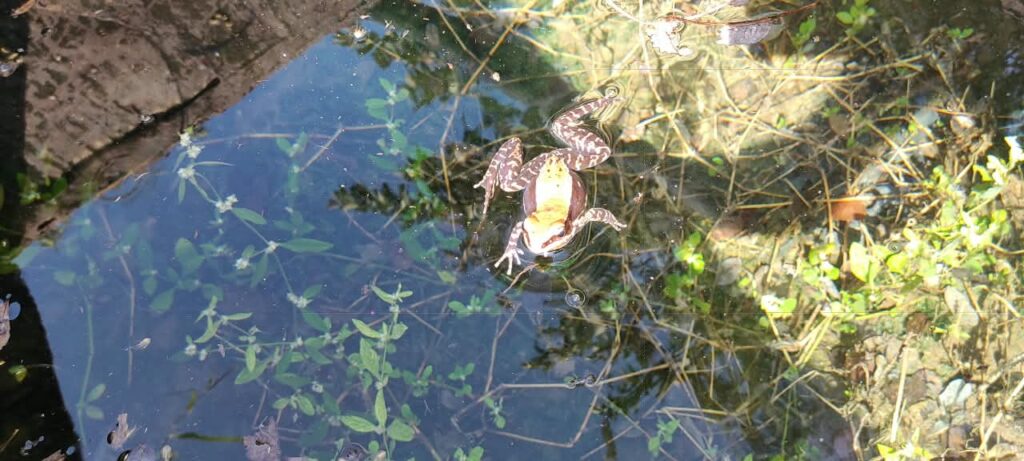
Fungoid frog was observed and captured on camera in Hirebagewadi, Belagavi district, Karnataka. The fungoid frog, which is normally a resident of Western Ghats, was spotted in the agricultural pond of Shankargouda Hadimani, an organic farmer of Hirebagewadi Siddanbavi village of Belagavi District.
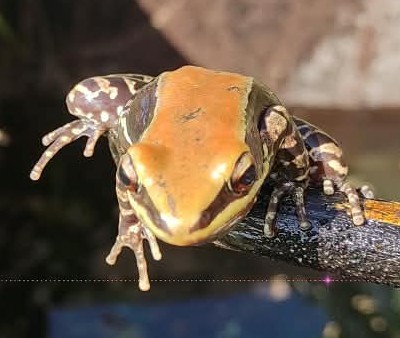
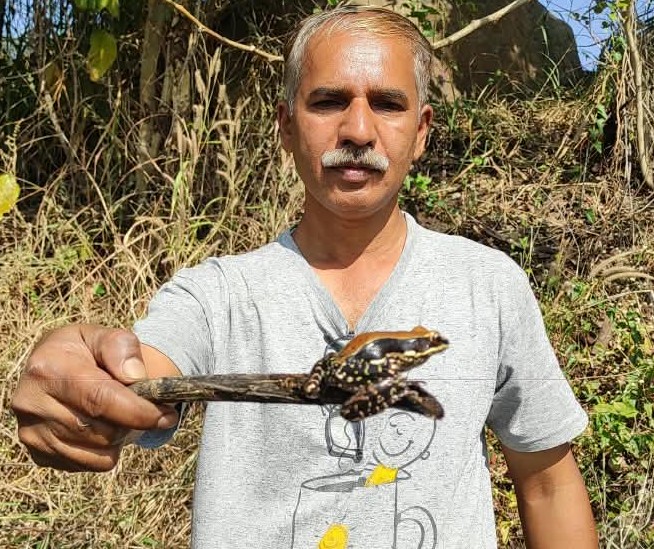
This is a species that is restricted in its range in the Peninsular parts of the country, the Fungoid frog or the Malabar Hills frog has blackish brown limbs with spots and that make its distinctive compared to other frogs found in these regions.
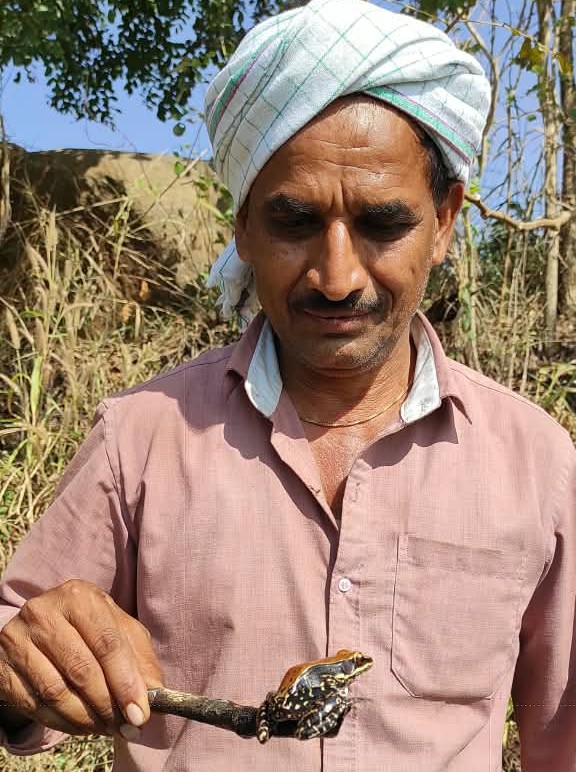
While watering the crops in his field, Shankargouda Hadimani saw a frog in his agricultural pond in the last week of November and noticed that the frog had an unusual and different appearance. He informed Shivakumar Patil, a nature lover who visited Shivakumar’s farm and captured photos of the frog on his camera.
Unique and Colourful Species
The Malabar Hills Frog (Bugutu Kappe in Kannada) is a very colourful and unique amphibian found in the Western Ghats of India. Its scientific name is Hydrophylax malabaricus and this species is also known as the ‘Malabar Hills Frog’. On the IUCN Red List, it is categorized as of Least Concern but the fungoid frog has not been evaluated globally.
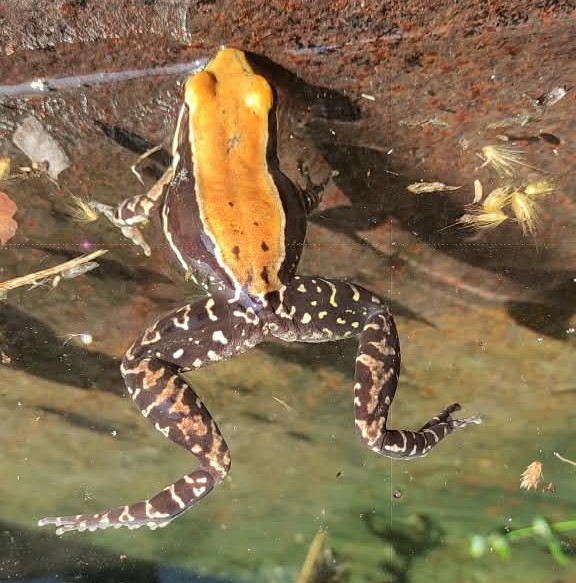
The upper body of this frog is brownish-red to dark red. It has white spots on the sides of its body and on its upper back. Its skin is smooth, with glandular folds from below the eyes to the shoulders. It is called the ‘fungoid frog’ because of its fungus-like appearance.
Resident of the Western Ghats
This frog is found in the Western Ghats of southwest India from Mumbai to Kerala and in the Malnad and coastal parts of Karnataka. It usually lives on the floor of dense forests, in moist rock crevices, and on small shrubs. Fungoid frogs are mainly active at night.
During the day, they hide under rocks or in tree hollows. They feed on small insects, spiders, worms, and other small invertebrates of the animal world. They breed during the rainy season. They lay their eggs near streams or rainwater ponds.
Role in Environment and Food Chain
The Fungoid frog plays a very important role in maintaining the health of mother nature. They control the population of insects and mosquitoes that harm agriculture and the environment by eating them.
Living in both water and land, the presence of these frogs indicates that the environment as well as water in that particular area is healthy and free from pollution.
Expansion of its Area
Hirebagewadi in Belagavi district does not fall in the Western Ghats region but in fact, in an arid region. And this place is about 50 kilometres distance from the Bhimgad Wildlife Sanctuary. According to experts, it may be possible that the tadpoles of Fungoid frog may have migrated with the flow of water from the Western Ghats to non-Western Ghats area and therefore, expanded their distribution.
Hirebagewadi was once part of Western Ghats earlier. But now it receives less rain otherwise these endemic frogs – both the Malabar Gliding Frog and Fungoid Frog could not have survived.
Further, experts add that before the construction of this village, this area may have been the habitat of these Fungoid frogs. It may be recalled that the Malabar Gliding Frog was also found and observed in Hirebagewadi in the past.
(PHOTO CREDIT: ALL IMAGES BY SHIVAKUMAR PATIL)