
Meera Bhardwaj:
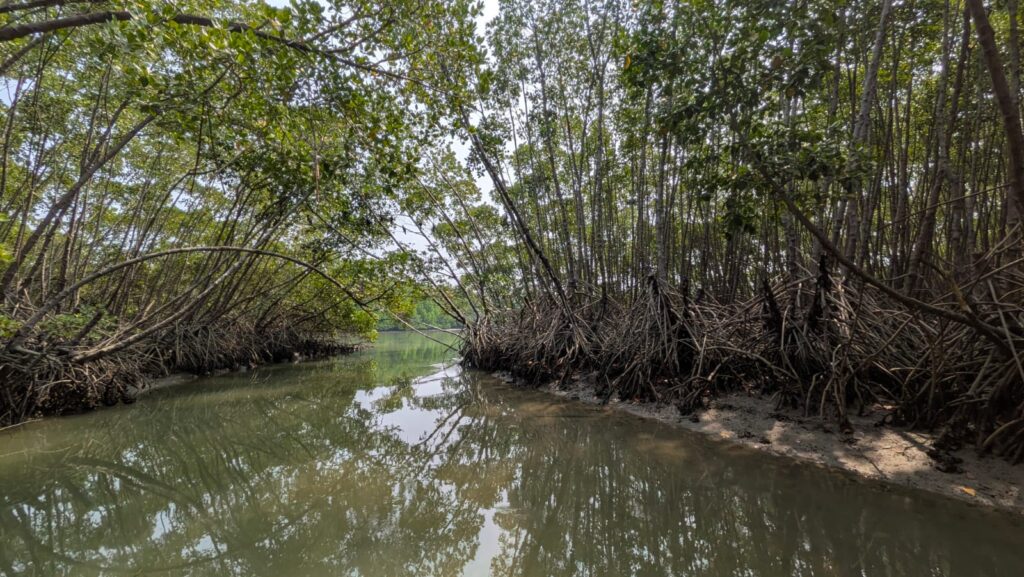
The Kundapura Forest Division in Karnataka state has currently a mangrove forest cover of 250-hectare area (HA) in the aftermath of extensive afforestation between 2018-2023. Concerted efforts by the Karnataka Forest Department have led to rise in mangrove forest cover in the state with Udupi district contributing significantly to this increase followed by Dakshin Kannada and Uttar Kannada.
As per Indian State of Forest Report (ISFR), 2023, the mangrove forest cover in Karnataka has actually increased. The report says that the mangrove forest cover has risen to 14.20 square km, which is an increase of 2.54 square km compared to 2021. Comapred to other states, Karnataka has a small, yet growing mangrove forest cover.
The total mangrove forest cover in India is about 5000 square kms. West Bengal leads with the largest share of mangrove forests in India, accounting for roughly 42.45 percent of the total, primarily due to the vast Sundarbans delta. Following West Bengal, Gujarat has the second-largest mangrove coverage, accounting for over 23 percent of the country’s total while Andaman & Nicobar islands accounts for 13 percent.
Karnataka’s mangrove forest cover especially in the estuaries of the Kali, Sharavathi, and Nethravathi rivers, are lifelines for the state’s coastal regions. Their conservation is crucial for the state’s biodiversity, climate resilience, and sustainable development.
MANGROVE AFFORESTATION SCHEME
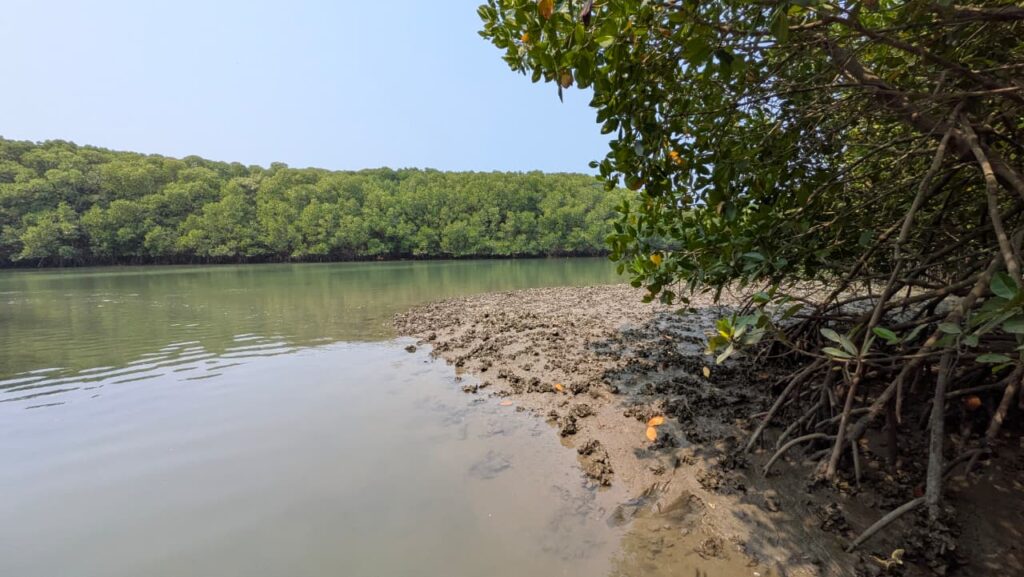
According to DCF Ruthren P, the mangrove afforestation program started in the year 2018-19 in the Kundapura forest division. The afforestation scheme was done up to year 2022-23. Between 2018-23, around 250-hectare area was taken up for mangrove afforestation. Further, funds were allocated under the CSS Mangrove budget head.”
According to KFD, mangrove-related projects are frequently classified under the CSS (Centrally Sponsored Scheme) “Development of Wildlife Habitats” or specifically under Coastal Shelterbelt Plantation programmes. The KFD is currently involved in active mangrove restoration in coastal districts of Uttara Kannada, Udupi, Dakshina Kannada under various plantation, afforestation, and biodiversity conservation schemes.
KODI DELT POINT AFFORESTATION
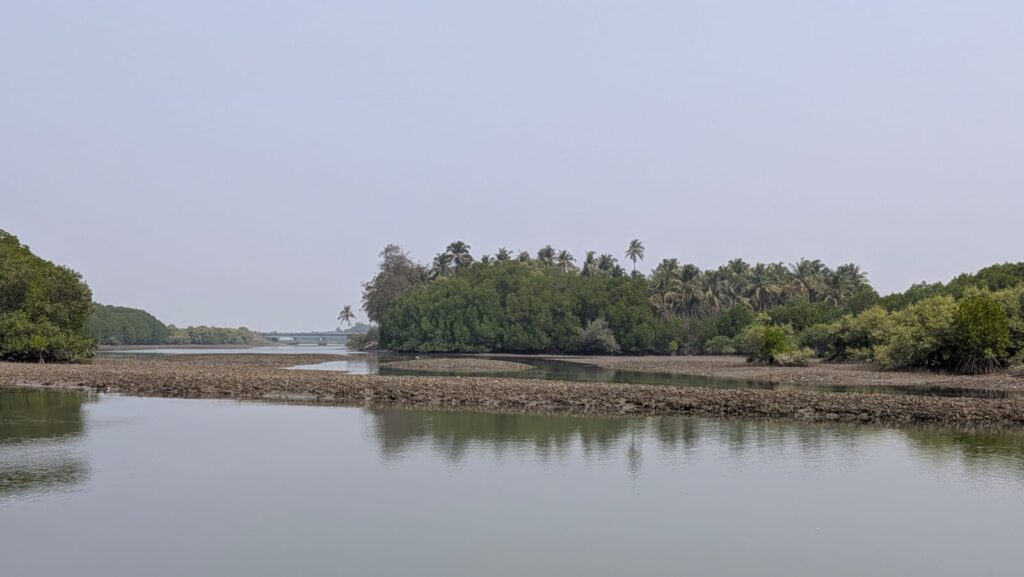
Further, the Kundapura DCF added, “Planting has been taken up in Kodi Delta Point. We have proposed more mangrove afforestation programs in and around Kodi delta, Anagalli, Talluru, Someshwara, Brahmavar and other sites in this forest division.”
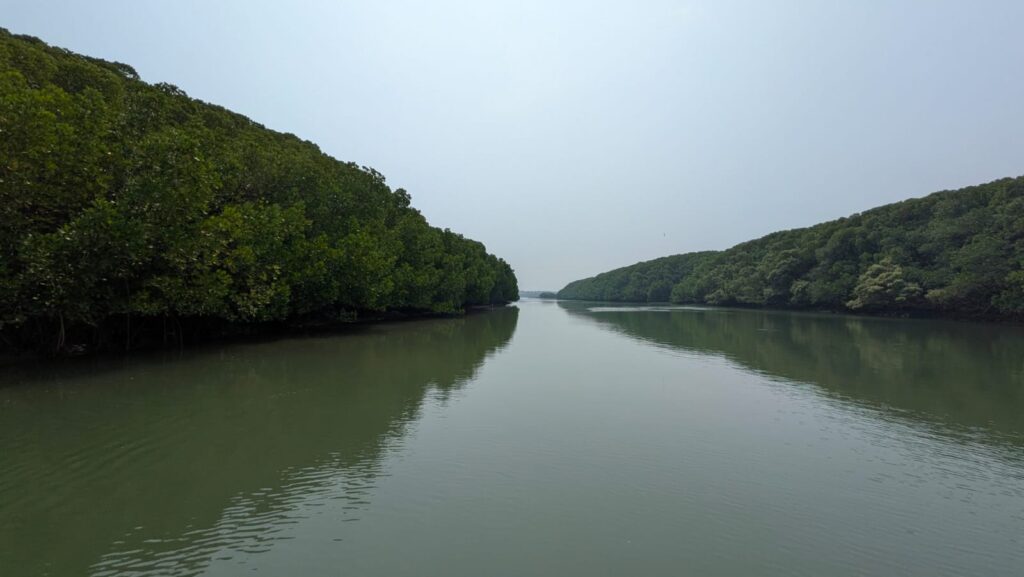
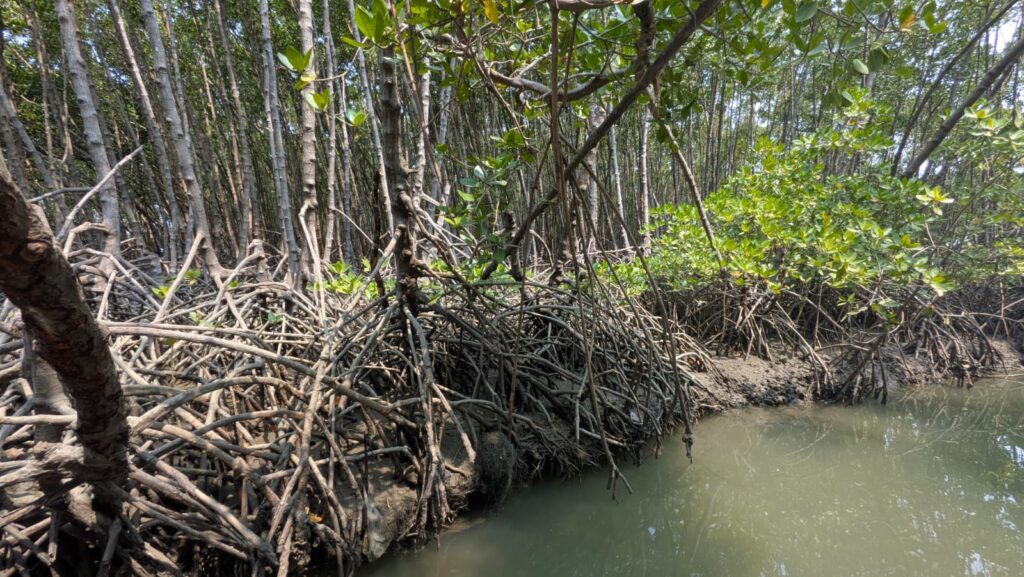
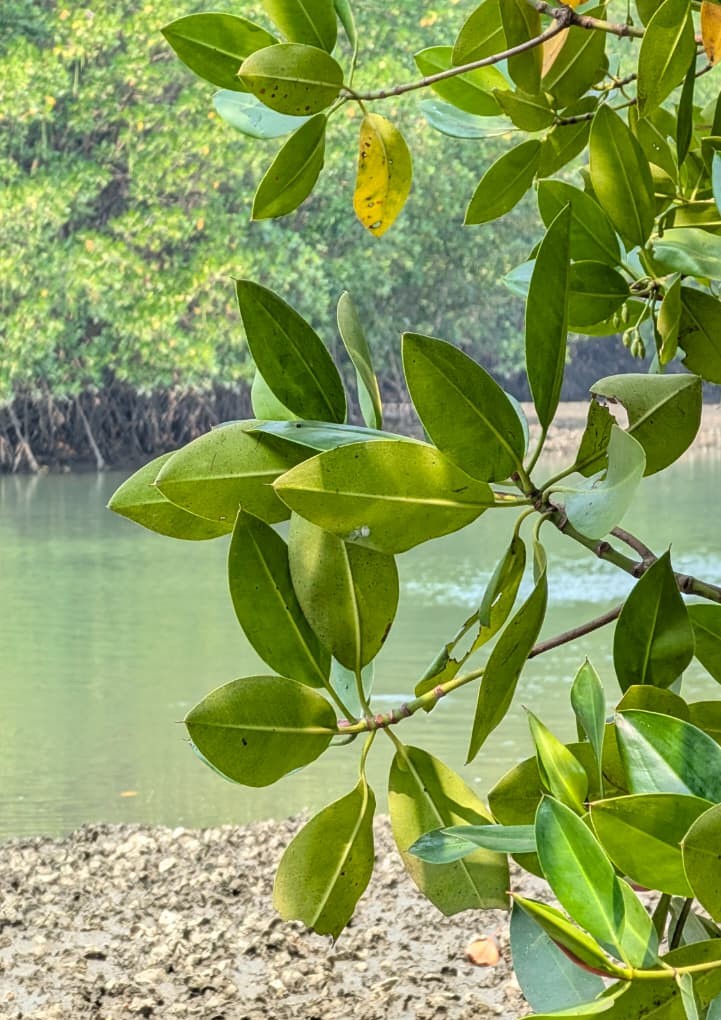
Further, the Kodi Delta Point in Kundapura has turned into a haven for marine species like dolphins, fishes and bird species. In the last decade, the restoration of coastal ecosystem in the Kodi backwaters has created a verdant forest canopy with 9-10 species of mangroves forming part of the sea cover in Udupi district of Karnataka.
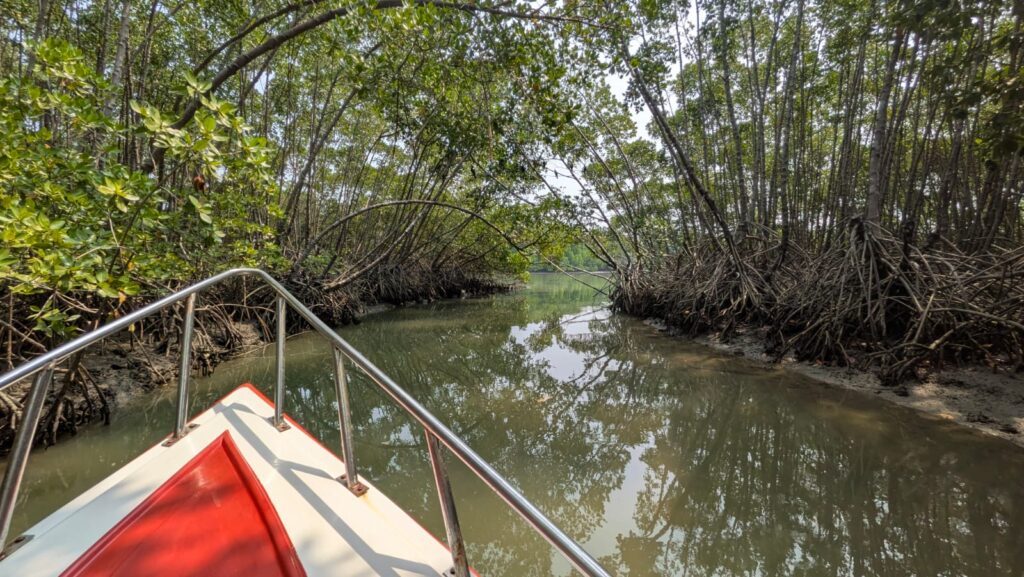
Naturalist Shiv Kumar who recently visited this point and captured it on camera says it was an exciting boat ride in the Kodi Delta Point at Gangolli estuary and backwaters.
It was an exhilirating ride in the boat as many bird species, fishes and marine mammals can be sighted once it opens to the sea.
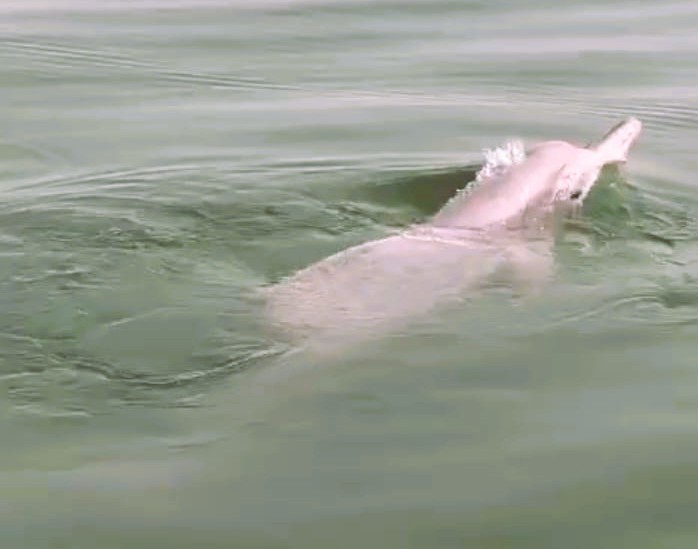
Shiv Kumar adds, “Even as we traversed various parts of the Kodi Delta Point amidst the dense mangrove cover, we sighted marine mammals and reptiles. However, we spotted a dolphin in the estuary near the Kodi beach and it was the Indo-Pacific Humpback Dolphin or more specifically, the Indian Ocean Humpback dolphin. Amidst the dense mangrove cover, it was like wading through a forest and the bird life was amazing here.”
A BIRDING DESTINATION
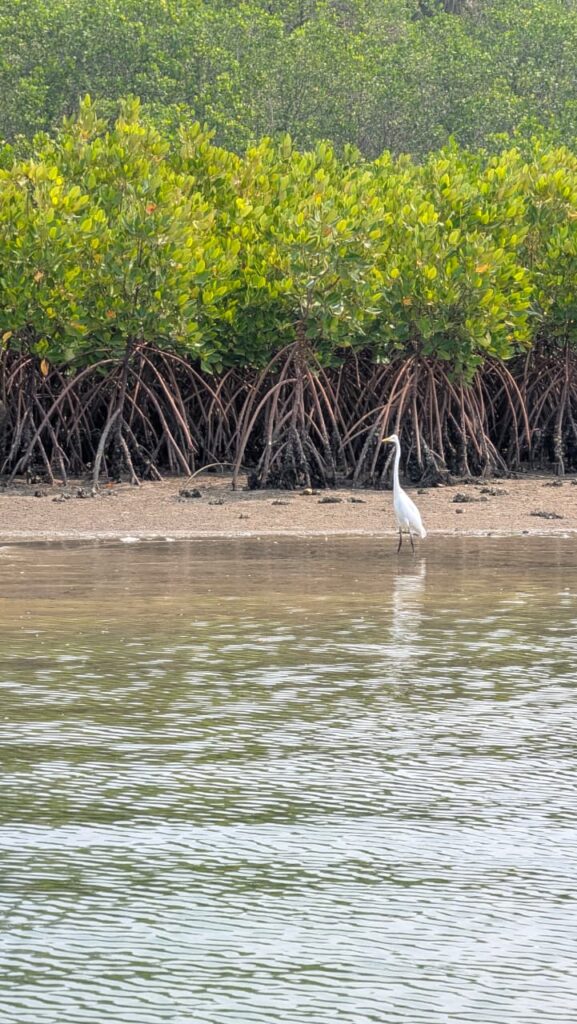
The Kodi Delta Point is a hotspot for many resident and migratory species. Migratory birds like Crab-Plover, Great Knot, Bar-tailed Godwits, Eurasian Whimbrel, Black-tailed Godwit, and Pacific Golden-Plovers have been documented here by birders.
The dense mangrove forests all along the backwaters serve as a breeding, feeding and sheltering hotspots for various species of birds.
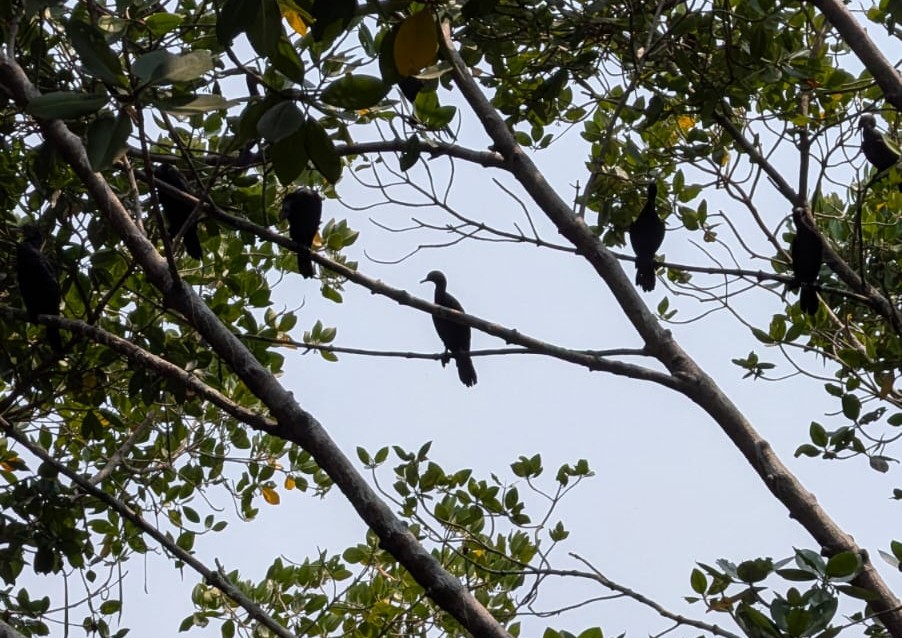
If one takes a boat all along the delta point, one can see lot of shore birds, waders, terns, herons, kingfishers, egrets, lapwings, and raptors feeding at the point where the river meets the sea.
Further, in the early morning boat rides, one can not only sight various mangrove species but also the open-water dolphin species in the open sea which is widely seen in the Konkan coast.
RESEARCH STUDIES IN KUNDAPURA REGION
A research study titled “Diversity of True Mangroves and their associates in Kundapura region” was conducted by K M Vijaya Kumar, Bhandarkars’ Art & Science College and Vijaya Kumara, Kuvempu University at four selected sites. The study aimed to documenting mangrove floral diversity across the sites of Herikudru, Uppinakudru, Jaladi, and Hemmadi along the backwaters of the Haladi River in Kundapura to aid in conservation efforts.
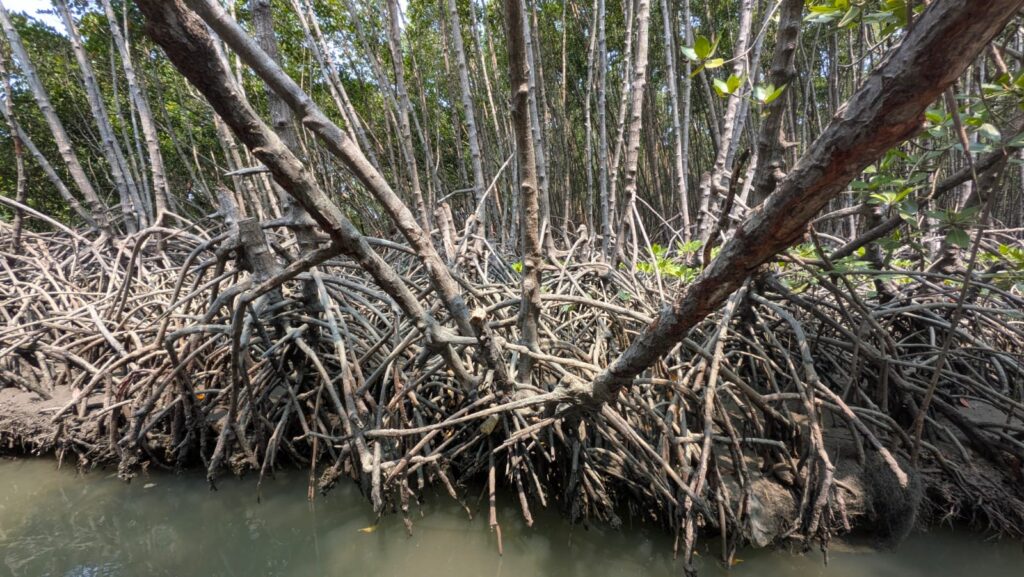
According to the research studies, nine true mangrove floral species belonging to six families and 10 associated floral species belonging to nine families were identified along the inundated and the adjacent regions at the four study sites in Kundapura.
Further, these sites are far from one another and the mangrove species diversity varies from one place to another, due to factors such as climate, tidal factors and anthropogenic pressures, the study concludes.
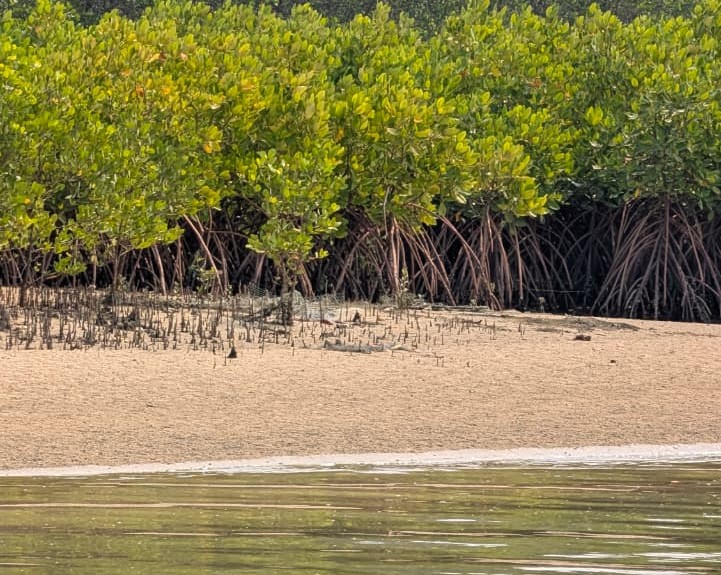
DIVERSITY OF MANGROVE SPECIES IN KUNDAPURA
- Avicennia officinalis, Avicenniaceae
- Rhizophora mucronate, Rhizophoraceae
- Rhizophora apiculata, Rhizophoraceae
- Bruguiera gymnorrhiza, Rhizophoraceae
- Kandelia candel, Rhizophoraceae
- Sonneratia alba, Sonneratiaceae
- Aegicerus corniculatum, Myrsinaceae
- Acantus ilicifolius, Acanthaceae
- Excocaria agallocha, Euphorbiaceae
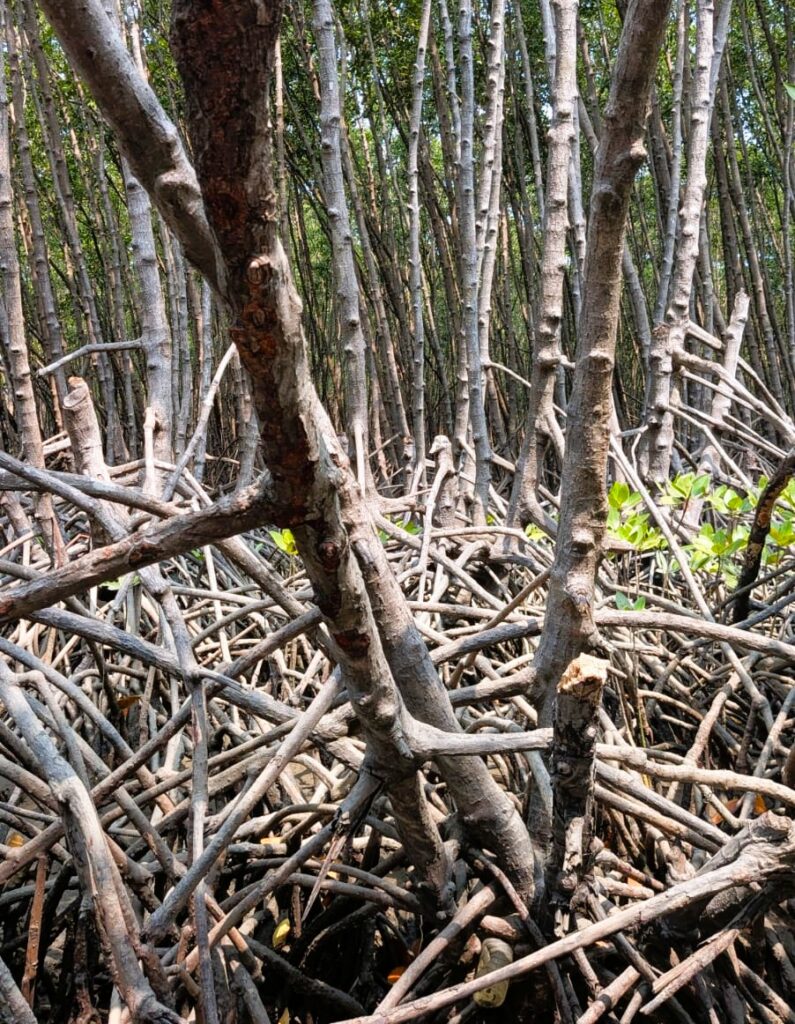
MULTIPLE & VARIED HABITAT
This region is blessed with an annual rainfall of 4848 mm normal and actual of 4182 mm. The Kundapura forest division is a site that has multiple habitats be it – sandy beach, mangrove forests or a lagoon. Kundapura forest division falls both in Udupi and Dakshina Kannada districts. There are two sub-divisions and eight ranges in the Kundapura division.
However, out of this, only four ranges of this division are touching coastal areas and they are home to mangrove forests. They are Byndoor, Kundapura, Udupi and Moodabidri. It has about 105 km long coastal stretches, starting from Shiroor in Kundapura Taluk to Mulki in Mangalore Taluk.
(PHOTO CREDIT: ALL PHOTOS BY SHIV KUMAR AT KODI DELTA POINT, KUNDAPURA, KARNATAKA)