
Meera Bhardwaj:
The Karnataka govt’s firm decision to shift the Bengaluru Turf Club (BTC) to Kunigal Stud Farm, Tumakuru district without conducting any Environmental Impact Assessment (EIA) studies or holding any Public Consultations has raised many environmental concerns & ecological queries, thereby, resulting in Karnataka High Court’s intervention on 29.6.2026. The matter is due for hearing soon.
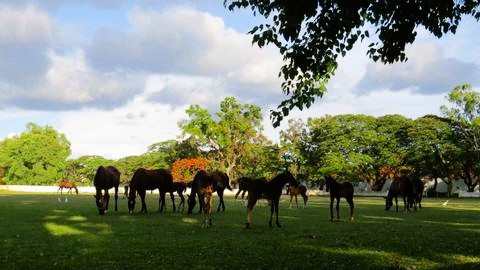
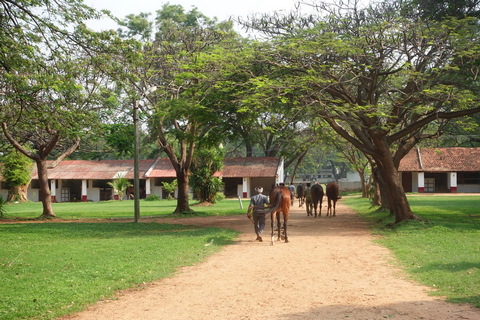
The Kunigal Stud Farm is unique in being the only stud farm in India where horses including champion horses are bred and maintained under natural tree shade, thereby, creating a rare co-existence between animal husbandry, wildlife, avians and native ecology.
AN ECOLOGICAL-LEGACY
As per Karnataka Cabinet’s decision in February 2026 (and govt order dated 6.3.2026), 110.20 acres in the pristine, verdant and historic Kunigal Stud Farm was allocated for horse racing, betting and other commercial activities. Provided a 29-year-lease period, the BTC is expected to set up its activities within two years.
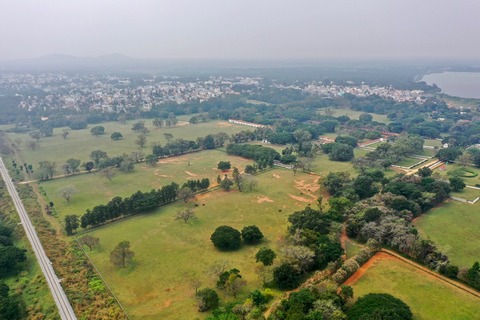
Without considering the ecological, social, historical or environmental factors into account, the Karnataka govt hurriedly issued a govt order that has sparked off a major controversy. The allocated 110.20 acres of pristine land out of the total 499 acres of the sprawling Kunigal Stud Farm is a “biodiversity rich ecosystem” which in fact, plays a vital role in sustaining the ecosystem of the adjoining Kunigal Lake.
IMPACTING KUNIGAL LAKE
The Kunigal Stud Farm and the adjoining Kunigal Lake have a symbiotic relationship with the farm’s vast meadows and tree cover providing food, shelter and nesting facilities for many wildlife and birds including water birds residing in these surroundings. Further, the Kunigal Lake plays a crucial role in the local ecosystem, supporting various forms of wildlife and contributing to the agricultural landscape of the region.
The Kunigal Lake, locally known as Kunigal Dodda Kere, is a massive two-km-long water body in Tumakuru district, Karnataka. Fed by the Hemavathi River, it is the second-largest lake in the state. Built by Magadi chieftain Kempegowda, the area features a two- km-long stone bund and houses the ancient Someswara Temple at one end. The Kunigal Lake serves as an important irrigation source and is a very popular sanctuary for resident and migratory birds.
IMPACTING UNIQUE BIODIVERSITY
Spread over 400 acres of area, this stud farm is pretty unique with a diverse habitat. Apart from its natural habitat, it has vast range of flora and fauna. The unique blend of equestrian habitat for breeding of horses has in fact, created a significant and self-sustaining habitat in the last 250 years of its existence.
Here, horses are not bred under artificial conditions as they are nurtured, sheltered and cared for under natural conditions. Since the Kunigal Lake just adjoins the stud farm, it has formed an interconnected and natural, ecological corridor for all types of living species. This is 300-year-old heritage ecosystem in a rural space that cannot be lost for the whims and fancies of both the government and the BTC.
IMPACTING ANCIENT TREE COVER
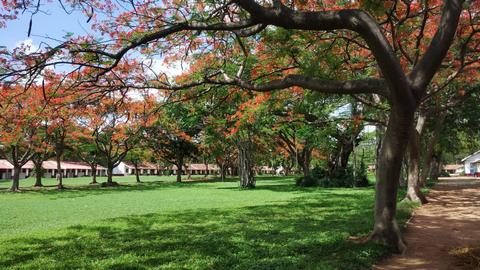
The Kunigal Stud Farm that adjoins the Kunigal Lake, is a self-sustaining ecosystem with an ancient tree cover. This is a living heritage landscape that is home to a vast tree cover that are estimated to be between 100-250 years old. Till date, no scientific studies have been done to document the number of tree species, therefore, there is an urgent need for “tree census” in this biodiversity rich stud farm.
The Kunigal Stud Farm is home to an estimated 6000-6500 trees as over a period of 250-300 years, many trees, shrubs and other plants have been planted in the country’s oldest stud farm. This is an invaluable green asset that cannot be lost for a commercial and betting venture.
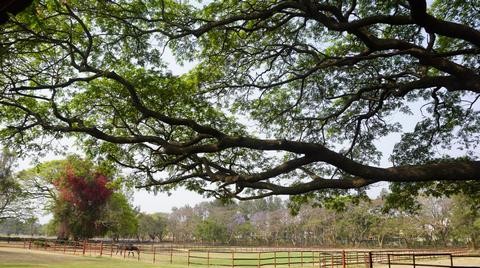
The list of Tree Species including fruit and timber trees is:
- Peepul
- Sandalwood
- Banyan
- Tamarind
- Raintree
- Pongamia
- Teak
- Mango
- Jackfruit
- Java Plum
IMPACTING FAUNAL HERITAGE
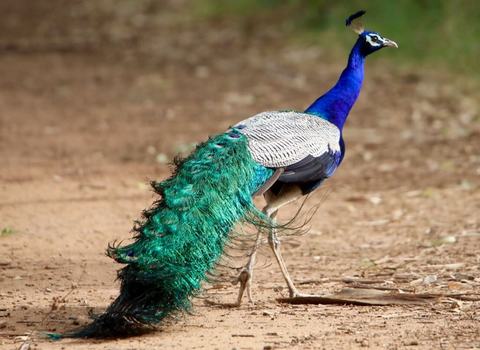
Not just these, the Kunigal Stud Farm’s vast green meadows interspersed with a variety of tree species is home to a vast number of bird species. Our national bird and Schedule-1 species – the peacock is a resident bird in this farm and many groups of peacocks and peahens are sighted here every day. Ecologically, the area is extremely significant. It supports not only peacocks but also Slender Loris, a Schedule I protected species.
Now what are the types of birds that inhabit this ancient stud farm. Apart from groups of peacocks and peahens, many bird species have been recorded across the farm that are not only resident birds but also breed on the diverse ecological habitat. During the winter season, many winter birds have been recorded.
IMPACTING BIRD SPECIES
Nearly 75-80 bird species including woodland species, water birds, waders, migratory birds have been found here as per eBird Hotspot count done in 2018.
Many birds with its young ones can be seen sheltering and feeding in the holes of mature old trees.
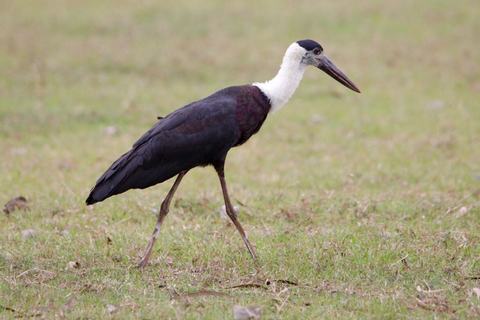
Let’s us list a few bird species:
- Indian Peafowl
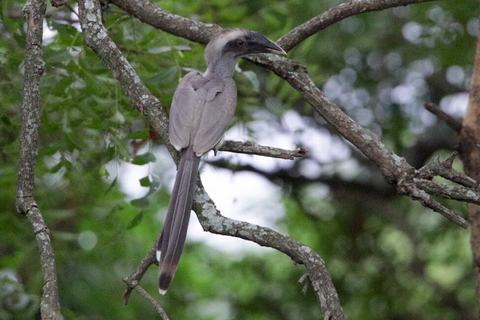
- Indian grey hornbills
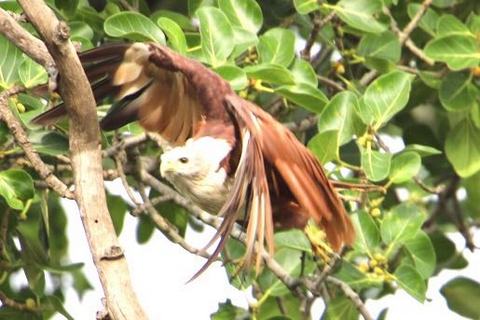
- Brahminy Kites
- Rose-ringed Parakeets
- Spotted Doves
- Asian Woolly necked storks
- Herons, Ibises
- Bar headed geese
- Chestnut tailed Starlings
- White rumped munias
- Barred Buttonquails
- Gray wagtails
- Gray Francolin
- Greater Coucal
- Blue faced Malkoha
- River Terns
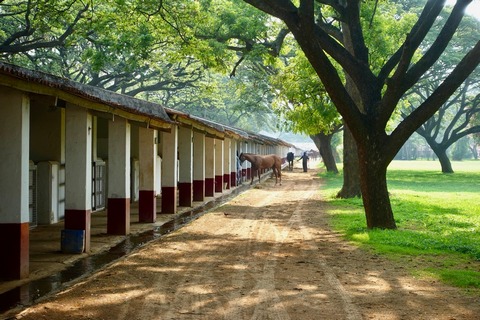
Recently, when experts visited the Kunigal Stud Farm, many of the above floral, faunal including many listed and documented bird species were also observed in 2026.
IMPACTING OTHER SPECIES
Field observation studies and camera trappings have further revealed that this unique farm ecosystem is also home to amphibians, reptiles and mammals and these group of species have been residents here for hundreds of years. Snakes and different types of lizards have been observed in the thick ground vegetation. Further, a number of frog and toad species have been sighted in the verdent, moist habitat as it is next to Kunigal Lake.
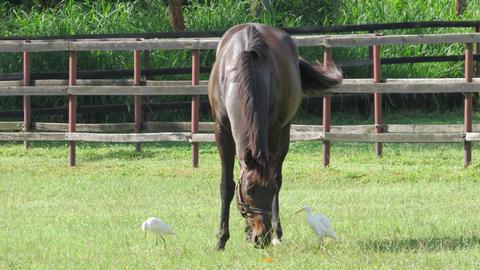
Now can this “unique biodiversity rich ecosystem” that not only nurtures horses but also supports a diverse number of floral and faunal species become a slave to the state govt’s foolish and thoughtless exercise of building a racing & betting track along with a plethora of commercial structures be allowed?
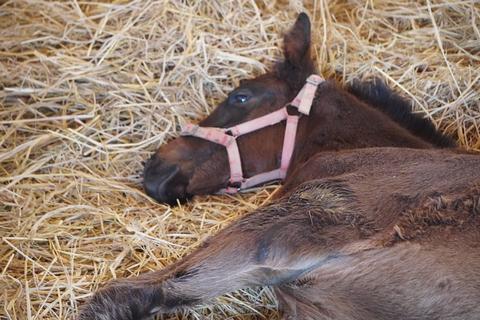
On June 29, 2026, the High Court directed notices to be served on both Centre and state govts & other respondents Bengaluru Turf Club and United Racing & Bloodstock Breeders, however, the matter did not come up for hearing on July 15, 2026. The next date for hearing will be notified soon.