
Meera Bhardwaj:
The controversial death of a pregnant Indian Gaur @ Bannerghatta Zoo has resulted in a spate of complaints to Karnataka Veterinary Council, Chief Wildlife Warden to Police to Lok Ayuktha. Wildlife activists and conservationists opine that such a “horrifying incident of total negligence” demonstrates the urgent need for “dedicated experienced wildlife vets” at both zoological parks and protected areas in Karnataka who can train the newbies .
Speaking to Green Minute News, Dr Indresh, President, Karnataka Veterinary Council said, “Complaint has been lodged with us and inquiry is presently going on from our side and further, there is a vigilance committee within the Bengaluru (Urban) department which is also looking into the matter. The report will be submitted in the next three days after all the submissions are made.”
DARTING OF A PREGNANT INDIAN GAUR
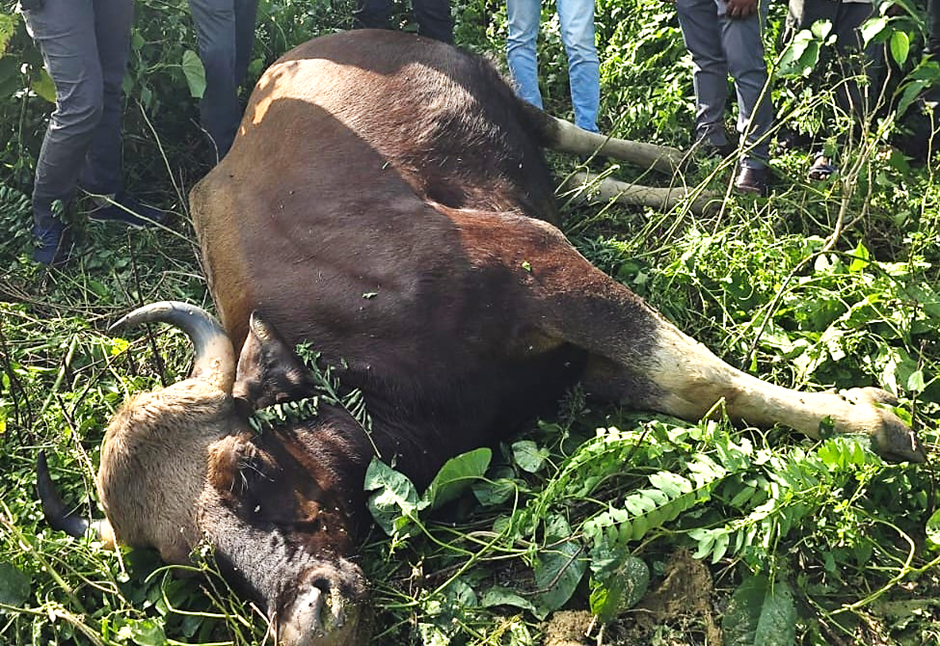
It was on October 31st that Bannerghatta Biological Park (BBP) (also known as Bannerghatta Zoo), Bengaluru took up the darting of a female Indian Gaur albeit pregnant (in its last trimester) under an animal exchange program with the Nehru Zoological Park, Hyderabad. However, without ascertaining the health and condition of the Indian Gaur, darting was taken up which collapsed and died in the Safari area of the Bannerghatta Zoo.
D S Kiran Kumar of Green Army Force has not only lodged a complaint with PCCF, Wildlife, Bannerghatta police station but also with the Karnataka Lokayukta on 7.11.2025. To the Lokayukta, he has lodged a formal complaint against Dr Anand, Vet and also Bannerghatta Zoo Director.
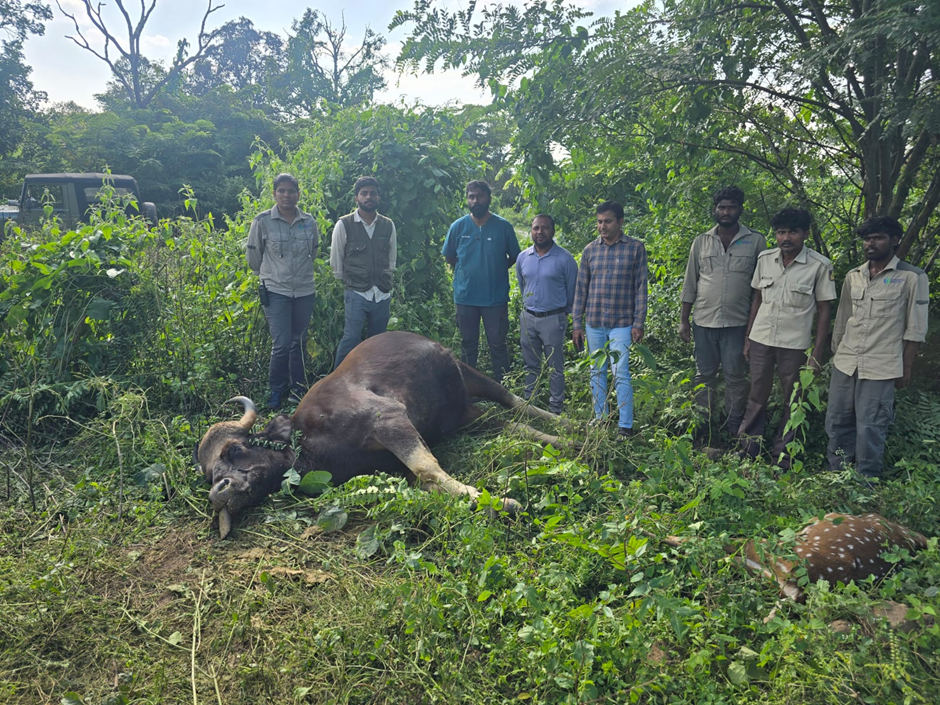
Apart from this, he has lodged a complaint against Dr Anand who is the Zoo Vet on deputation from Animal Husbandry Department. This vet does not have any experience handling wildlife prior joining Bannerghatta Zoo even though his probationary period is not declared with the Karnataka Veterinary Council, Veterinary College, Hebbal. Citing negligent darting of a pregnant Indian Gaur with heavy dose of drugs, this led to the death of the Schedule-I species (as per Wildlife Protection Act, 1972) at Bannerghatta Zoo.
In the complaint dated 7.11.2025, Kiran Kumar states, “The incident raises grave concerns of negligence, violation of Indian Animal Welfare laws, wildlife protection statutes, and professional veterinary ethics. Under various acts and laws of India for protection of wildlife, many legal provisions have been violated. Unauthorized or negligent handling of animals which causes death of a protected species is punishable with heavy fines and legal action. I request for immediate action, a thorough and impartial investigation as per Karnataka Veterinary Council Act & Guidelines.”
POWERS VESTED WITH KARNATAKA VETERINARY COUNCIL
Meanwhile, a retired veterinary officer said, “The key sections of the Indian Veterinary Council Act, 1984 that apply to veterinary negligence cases are Section: 17, 41-45, and 59. All these sections collectively empower the Veterinary Council of India and State Veterinary Councils and the Karnataka Veterinary Council to investigate, conduct disciplinary inquiry, and impose penalties such as suspension or removal from the veterinary register for negligence or professional misconduct, including causing harm or death through veterinary negligence.”
CHRONIC SHORTAGE OF QUALIFIED WILDLIFE VETS
There is a chronic shortage of qualified wildlife vets in Karnataka Wildlife division. Although the Forest Minister has announced the formation of a separate Wildlife Veterinary Cadre but this has been gathering dust and no effort has been made in this direction. Every darting operation is risky and it may result either in death of the wildlife or humans in the absence of a qualified wildlife vet.
Thus, the Bannerghatta darting case of a pregnant gaur should become a precedent for formation of a separate cadre and posting of experienced wildlife vets in the protected areas of the state.
USAGE OF PROVISIONS OF IVC ACT
Further, the provisions of the Indian Veterinary Council Act can be used against the veterinary practitioner for professional negligence as also ethical violations. There is an urgent need for the Karnataka government to post experienced wildlife vets to both zoological parks and protected areas in Karnataka like Madhya Pradesh who can train new vets joining the cadre , otherwise such incidents of negligence will continue in the years to come.