
GREEN MINUTE NEWS:
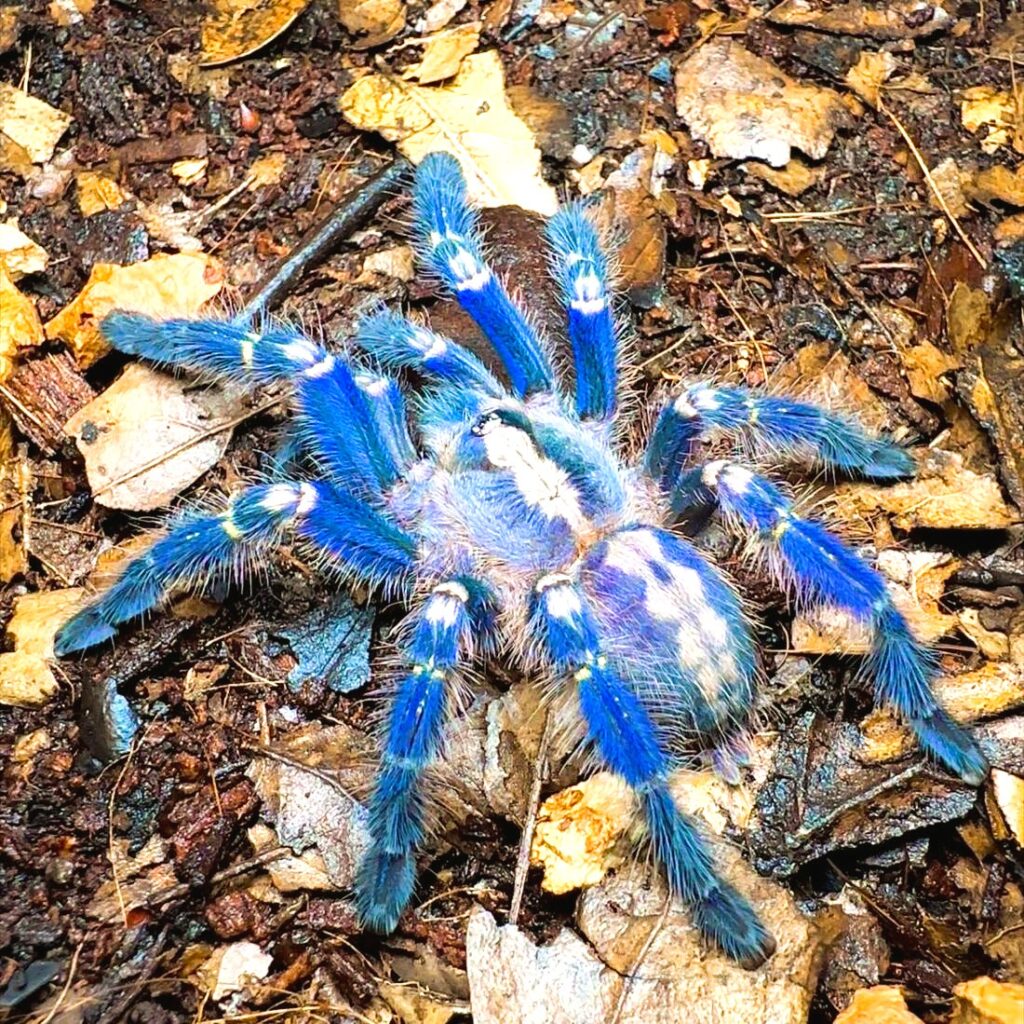
The Peacock Tarantula – one of the rarest species, listed as critically endangered on the IUCN Red List, was first discovered at Gooty in Andhra Pradesh in 1899. With attention now shifting from iconic species to other lesser-known species, the Andhra Pradesh Forest Department has initiated a conservation status survey of Peacock Tarantula inside the Nagarjunasagar Srisailam Tiger Reserve (NSTR).
This is the first of its kind – conservation survey project taken up in India on tarantulas by the Andhra Pradesh Forest Department in collaboration with the Eastern Ghats Wildlife Society. With launching of a conservation status survey on the Gooty Ornamental Sapphire Tarantula which is endemic to India, it upholds the importance of spiders in bolstering the ecosystem stability.
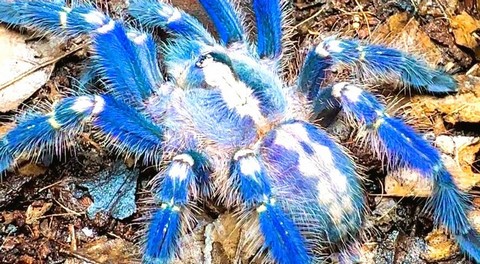
GOOTY ORNAMENTAL SAPPHIRE TARANTULA
In fact, the Peacock Tarantula is also popularly known as the Gooty Ornamental Sapphire Tarantula. It is found only in a small, restricted forest region in Andhra Pradesh, specifically between Nandyal and Giddalur in the Eastern Ghats, making it highly localized.
Peacock Tarantula is the only blue species of the Genus Poecilotheria and is very small in size. Further, it is found only on trees that is – an arboreal species living in the tree crevices. With brilliant metallic blue hair covering its legs and other parts of the body, it is easily visible inside the crevices of trees where it is usually found.

SURVEY IN NAGARJUNASAGAR SRISAILAM TIGER RESERVE
The Andhra Pradesh Forest Department, in collaboration with the Eastern Ghats Wildlife Society, has started a comprehensive conservation status survey of the Peacock Tarantula (Poecilotheria metallica) within the NSTR which is one of the largest tiger reserves of India.
The Peacock Tarantula is classified as Critically Endangered and is endemic to a very restricted geographic range within Andhra Pradesh. Its limited distribution, coupled with habitat pressures, makes it one of the most vulnerable arachnid species in the country.
Speaking to Green Minute News, Andhra Pradesh Forest Department PCCF & HoFF, Dr P V Chalapathi Rao said, “Under the Wildlife Protection Act, 1972, the Peacock Tarantula is listed under Schedule II (Part-G). This status prohibits hunting, collection, trade, or any form of exploitation, and violations can attract stringent penalties. Ecologically, the Peacock Tarantula plays an important role as a predator of insects and small invertebrates, helping regulate pest populations and maintain ecological balance within its forest habitat.”

CRUCIAL ROLE FOR CONSERVATION
The present survey aims to systematically assess the species’ distribution, population status, and habitat conditions within NSTR. The findings will play a crucial role in informing long-term conservation strategies, habitat management plans, and policy interventions for the protection of this unique species.
Eastern Ghats Wildlife Society Executive Director Murthy Kantimahanti said, “We are carrying out this project in joint collaboration with the AP Forest Department. Endemic, critically endangered, and often underappreciated underdogs of our fragile ecosystems—the Peacock Tarantula is a symbol of why conservation in Andhra Pradesh must go beyond the obvious and protect the extraordinary.”
The AP Forest Department PCCF & HoFF adds, “As an arboreal species, the Peacock Tarantula depends on mature trees and undisturbed forest patches, making it a valuable indicator of forest health. It’s conservation also contributes to protecting the unique biodiversity of the Eastern Ghats, where many endemic and lesser-known species coexist. However, the species faces threats from habitat loss, fragmentation, and illegal collection for the pet trade, highlighting the need for continued conservation efforts and habitat protection.”
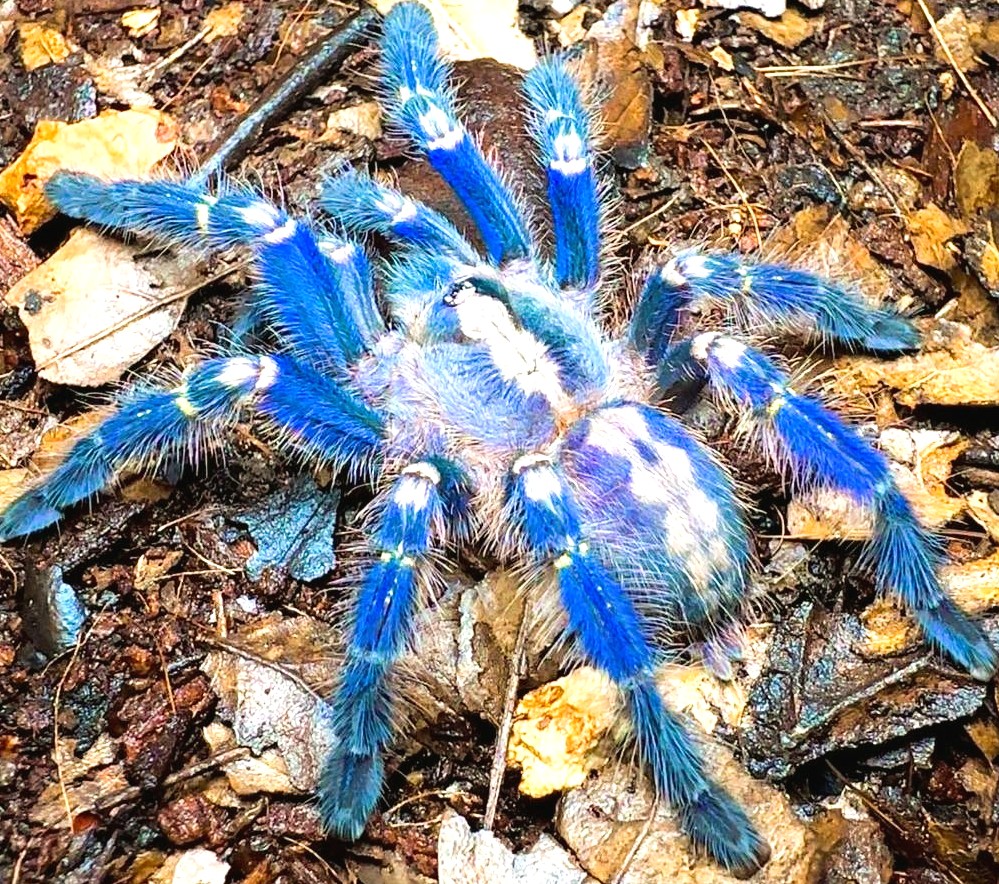
ONLINE TRADING OF PEACOCK TARANTULAS
Vibrantly coloured, unfortunately, it attracts the attention of wildlife pet traders and therefore, its population has decreased with high demand as a pet species. Posing minimal health risks to humans, this species is kept as pets at home. Online trading sites like Urban Tarantulas, Tarantula tales, etc sell these critically endangered species that are collected from Andhra Pradesh and are also bred in captivity by these unscrupulous traders.
Biodiversity Researcher Manjunath Nayak says, “Tarantulas and Trapdoors are strictly nocturnal. Usually, Trapdoor and Tarantula Spiders are explored during night to observe their hunting behaviour as they are excellent hunters. The Peacock Tarantula is very beautiful because of its vibrant metallic blue colour. Unfortunately, spider and other insect groups have hardly received any attention and are the most underscored and neglected organism. Therefore, much importance should be given for its study and survey.”
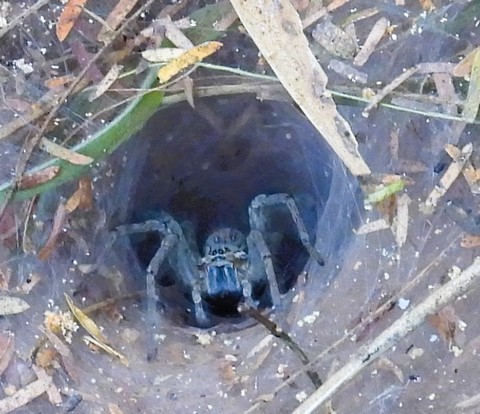
WEAVING FUNNEL WEBS
Like the Funnel Web spiders which weave webs on the ground, the Peacock Tarantula too creates funnel webs but in the hollows of trees and not on the ground. Wingham Wildlife Park based in the UK is the knowledge and technical partner for this survey project.
This initiative reflects a growing recognition of the importance of conserving lesser-known yet ecologically significant species, alongside flagship wildlife, within protected landscapes. The Andhra Pradesh Forest Department and the Eastern Ghats Wildlife Society reaffirm their commitment to strengthening biodiversity conservation efforts in the Eastern Ghats through science-based research, field interventions, and collaborative action.