
Manjunath S Nayak:
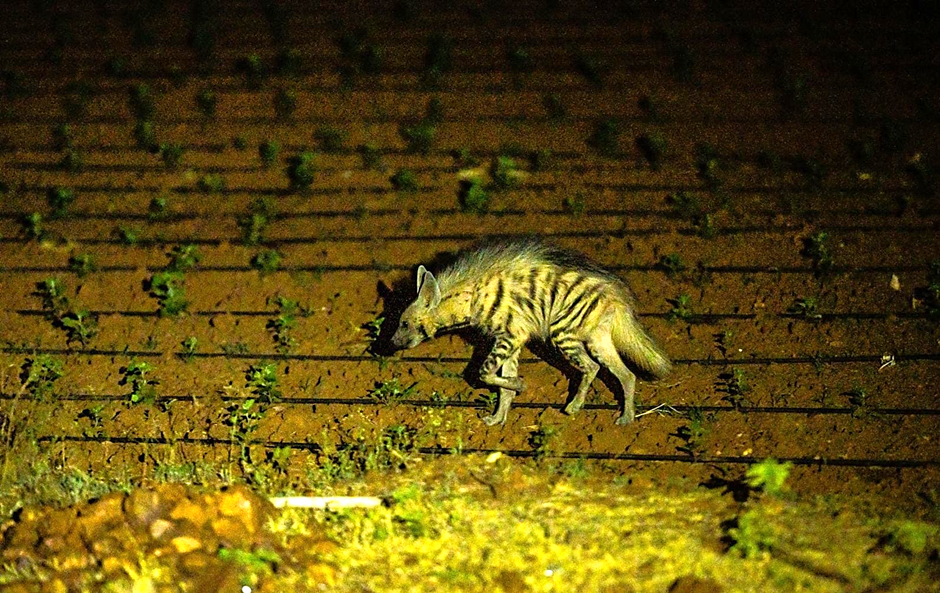
A striped hyena with two cubs was sighted at Kallapur village, Nargund taluk in Gadag district of Karnataka. The striped hyena is a very shy, solitary, and elusive mammal and often avoids human contact and is therefore, rarely sighted. This species is found in the dry and rocky arid lands of Deccan Plateau in Karnataka.
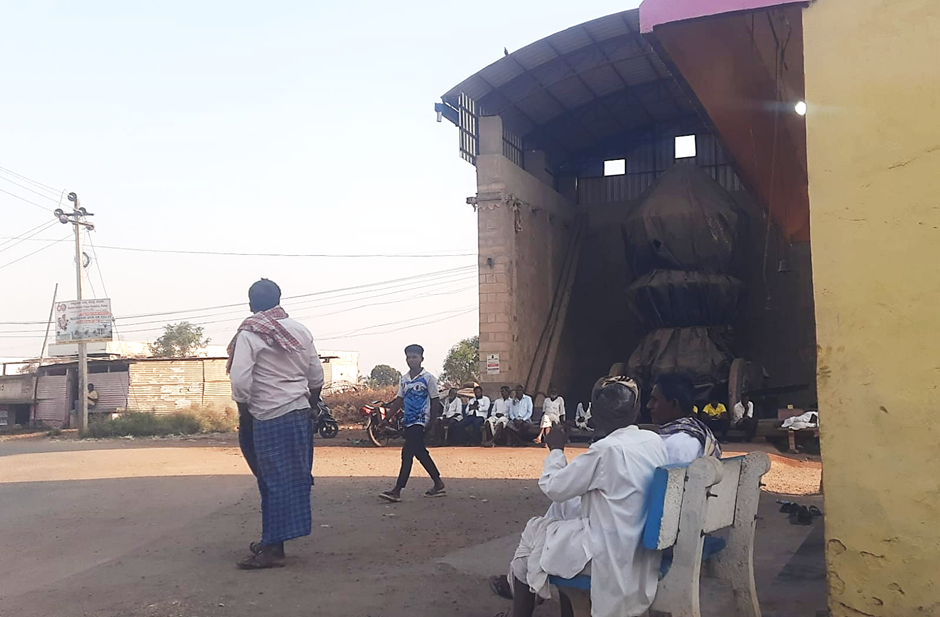
The mother striped hyena with its cubs were spotted by local farmers in the month of January, 2026 with the cubs lying in a burrow on the roadside. In the aftermath of this sighting, a survey was done by this author and the Karnataka Forest Department in areas surrounding this village. Further, an awareness programme was held in the village giving information about this elusive species. The program was attended by students, public and other residents.
Recently, there has been no further sightings as the striped hyena with its cubs seems to have moved towards Kulageri village, Badami taluk, Bagalkot district which is about 11 kms from Kallapur village where they were found breeding.

Awareness Programme for Villagers
The frontline forest staff of the Karnataka Forest Department are presently monitoring the movement of this species on a regular basis.
Speaking to Green Minute News, CCF Dharwad Circle Vasanth Reddy said, “Sufficient awareness programmes are being conducted in the villages of Gadag district where they have been sighted. We will do our best to protect this elusive species of striped hyena in Gadag district. The public need not panic as our forest department will take all action to prevent any conflict situation.”

No Proper Population Estimates
The population of the striped hyena (Hyaena hyaena) in India is estimated to be between 1,000-3,000 individuals due to lack of studies. They are usually found in the arid and semi-arid regions of Rajasthan, Gujarat, Uttar Pradesh, Karnataka and Maharashtra. Some higher estimates say India has a population ranging from 5000-10,000 animals.
The highest density of 8.96 individuals per 100 square kilometre is found in the arid zones of Rajasthan. However, unfortunately they are facing extinction in some areas of the state due to local problems like habitat loss, poisoning and revenge killings for cattle predation.
Highly Misunderstood Species
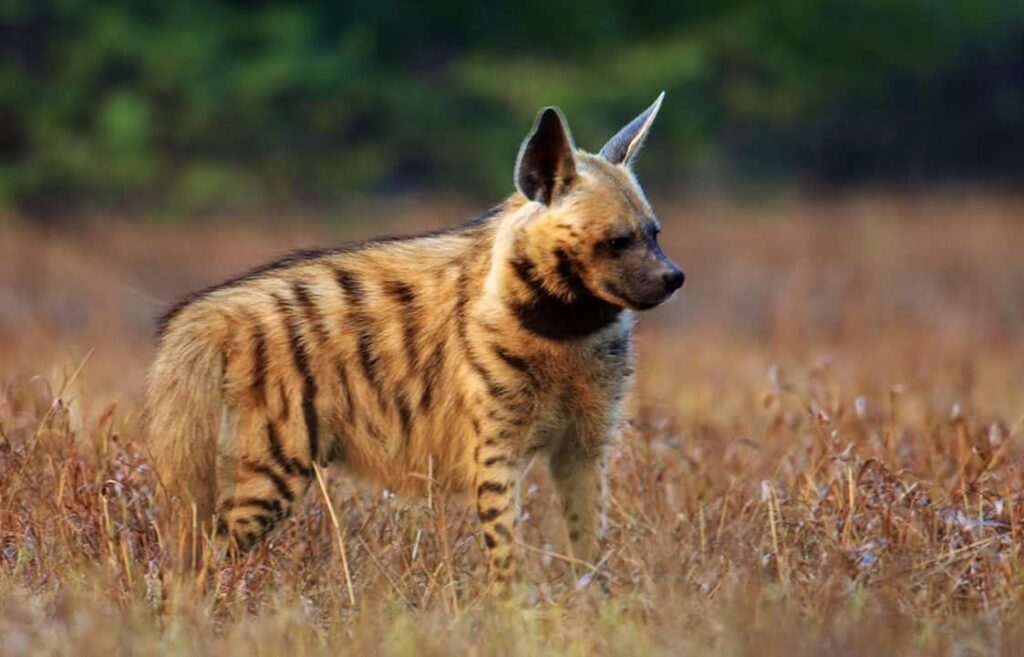
While they are sometimes considered shy, they are also highly adaptable and are capable of living in diverse, often challenging, environments. Now why are the striped hyenas so elusive? Scientific studies states that these species are silent, solitary, and one of the world’s most elusive carnivores. They are often “shrouded in myth” and are difficult to spot them in the wild.
They have been misunderstood all these years due to their nocturnal nature and therefore, they have been tagged with being “elusive” or “sneaky”. Apart from this, there have been many prevailing myths about striped hyenas. And, in some cases, there have been trumped up stories about this species and unfortunately painted as villains by ill-informed locals. The most persistent myth has been that this species digs out buried bodies from graveyards. However, studies have shown that they never attack humans being very shy unless they are suffering from the deadly rabies disease.

Conservation Status
Over the decades, it has been very difficult to estimate their exact population in India due to their elusive behaviour and the continuing habitat loss. Therefore, this almost makes them a “near-threatened” or ” most misunderstood” species.
Their behaviour may be elusive or shy, but definitely they are not “evil” or “demonic” as some myths suggest. In reality, they are intelligent, social, and this species being a scavenger plays a vital and significant role in our ecosystem.

Adaptations for Survival of the Species
Hyenas are very capable of making their own dens, although they frequently pick up spots to occupy, enlarge, and remodel the holes dug by other animals which maybe, wolves, aardvarks or warthogs.
For hyenas which are clannish in nature, the dens serve as a central hub for one specific clan. These dens provide a feeling of security, and of course, a protected environment for raising their cubs and a shelter for resting and feeding. Usually, they dig their own dens but hyenas are often opportunistic, taking over abandoned burrows or using natural features like rocky outcrops and caves.
What are the Adaptations?
As per researchers, when it comes to striped hyenas, they may dig tunnels which are 4-5 meters long and sometimes, as long as 27 metres (in Israel) and they are known to hide the bones in the tunnels they dig.
The den area is selected for a secure living and safety from other predators and so, they are often found in termite mounds, rocky outcrops, or even beneath linear structures like roads, highways, etc.
Although, they receive the highest level of protection and have been declared as a Schedule-I species ( serial number: 89) and hunting and harming them has been made a punishable offense under the Wildlife Protection Act, much needs to be done if we have to save this species in India.
(PHOTO CREDIT: IMAGE OF STRIPED HYENA CUBS BY LOCAL FARMERS)