
Meera Bhardwaj @ BRT:
Come summer, monsoons or winter, the K Gudi Range of BRT Tiger Reserve is a wonderful habitat for a varied wildlife compared to other four ranges in this tiger reserve.
Unlike other ranges, K Gudi even in summer is a cool and happy home range for wild elephants, Indian Gaur, Malabar Giant Squirrel, barking deer, sambar and various bird species ranging from honey buzzards to peregrine falcons to the crested serpent eagles. Due to its terrain, it is very difficult to sight predators like tigers and leopards.
What makes the K Gudi range different from say Kollegal or Bailur range in the BRT Tiger Reserve in the Chamarajanagar district of Karnataka?
Ranges like Kollegal, Bailur, etc are very dry at low altitudes and one can see scrub forests profusely which are prone to deliberate or accidental fires in the dry season each year. K Gudi’s elevation and forest habitat makes it lot different from other ranges.
Although over a period of time, the number of tigers has drastically reduced in this tiger reserve, the other faunal species have flourished especially in the moist deciduous and semi-evergreen patches of the K Gudi Range.
This is the only range in BRT Tiger Reserve where one can go on a forest department safari of 22 kilometres, both in the morning and evening hours.
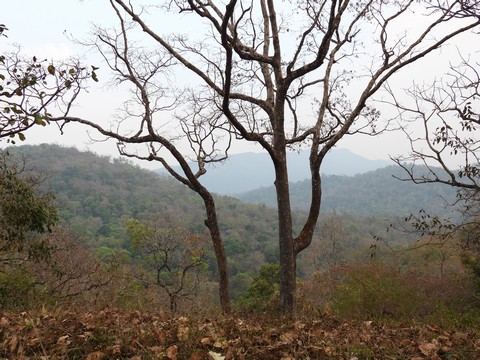
The K Gudi Range’s high altitude and unique mosaic habitat serves as a bridge between the Western Ghats and Eastern Ghats in Karnataka. Offering a hybrid habitat ranging from dry-deciduous to evergreen shola forests and montane grasslands, this range is situated at high altitudes which even goes up to 5900 feet.
Even at these heights, the camp watchers (mostly Soligas) keep vigil whether it is raining or cold. Due to the varying altitudes, the range is home to mega- herbivores and large-prey species like the Indian Gaur, four-horned antelopes as also the Sambar.
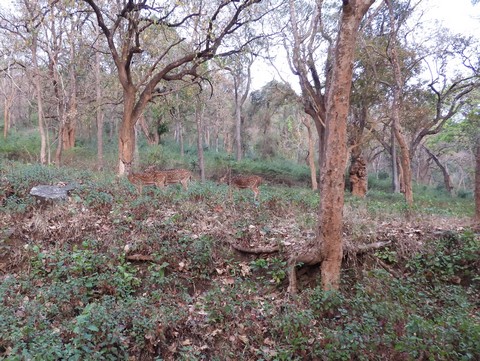
We sighted many herds of chital both in the morning and evening safaris. Since it has a high prey density, it is considered to have more tiger density but till date, even after umpteen visits, I have never seen the elusive tiger in this range. However, Naturalist Prashanth reported seeing a tiger not once but twice this March. Alas! I and Tharangini were not so fortunate.
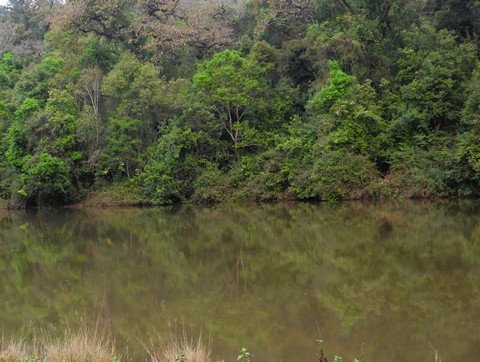
With the 575 square kilometre-tiger reserve’s habitat ranging from dry deciduous to moist deciduous, and semi-evergreen to evergreen and shola patches that too at different altitudes, the K Gudi Range stands apart and is pretty unique and mesmerizing.
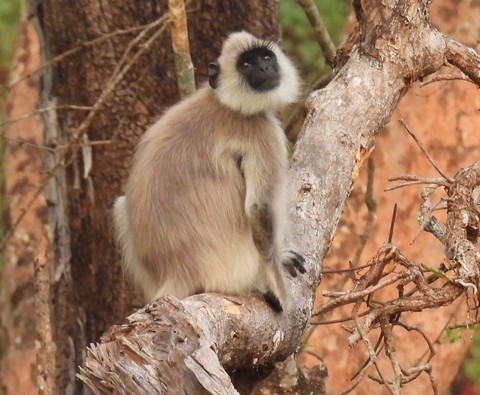
Even as we enter the safari area, the scenery changes for the good, it turns very dense and very chilly in the early morning hours.
The air is heavy with its unique forest scent while the birds are chirping and the macaques are calling.
We waited at one water hole as a tiger had been sighted a day before at the same spot but it didn’t turn up again.
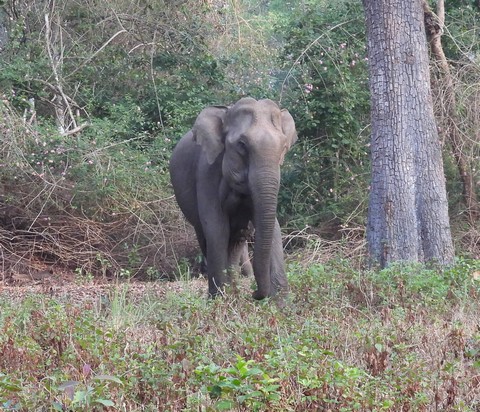
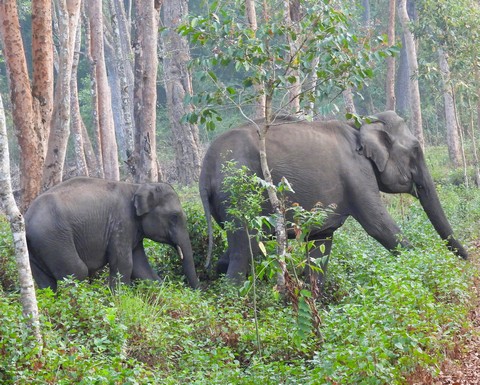
However, our day was made as we encountered a mother elephant which was leading its young calf very carefully.
The moment the duo crossed the safari track, we backtracked for a better view – but the protective mother was not happy as it came after us – maybe, a mock charge as it was not aggressive.
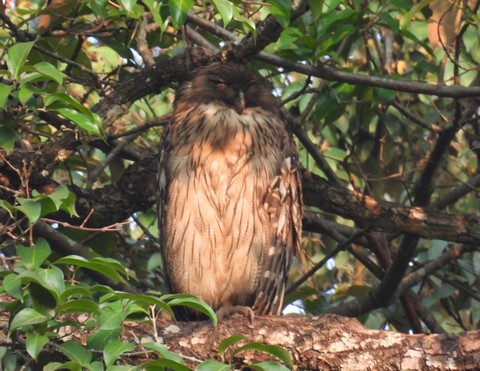
Both in the morning and evening hours, we sighted the brown fish owls since itnot only hunts in the day but also a regular night hunter. It is a nocturnal bird of prey found in Asia – preferring wetlands.
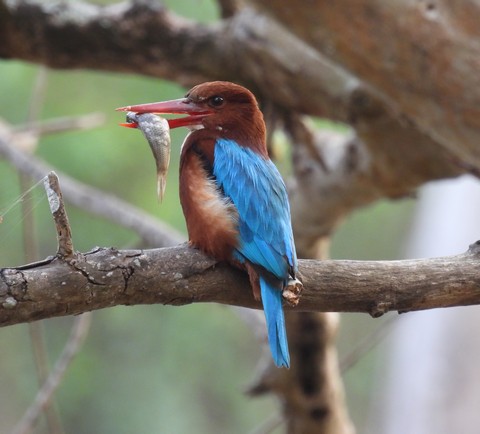
Even as we traversed around the moist forests that was ringing with the calls of many birds, we managed to sight many bird species apart from chitals, Hanuman Langur, Malabar Giant Squirrel, turtles, etc. However, the sight of the common Kingfisher with its feed intact in its bill was a sight to behold!
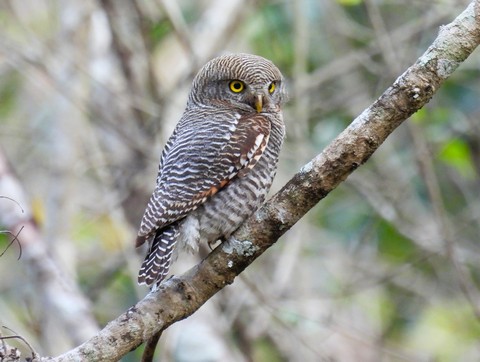
Further, jungle owlets, wild boars, jungle fowl and peregrine falcon was sighted at a great distance. Compared to the Malabar Giant Squirrels in Dandeli wildlife range, here they are multi-coloured. In fact, the squirrel’s coat comprised varying colours from maroon, brown to black, orange, and cream.
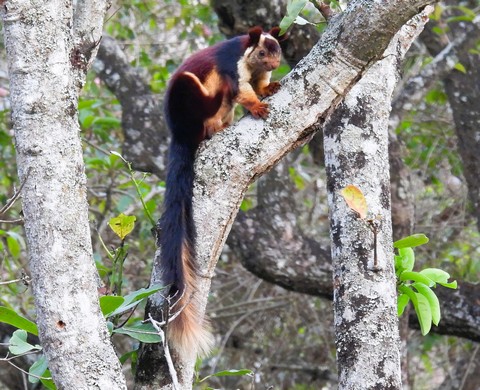
Therefore, the Malabar Giant Squirrels are also known as rainbow squirrels with their multi-coloured coat and bushy tails visible from a distance.
The squirrel’s distinctive colours help them to blend easily with the speckled light of the dense canopy of this moist forest.
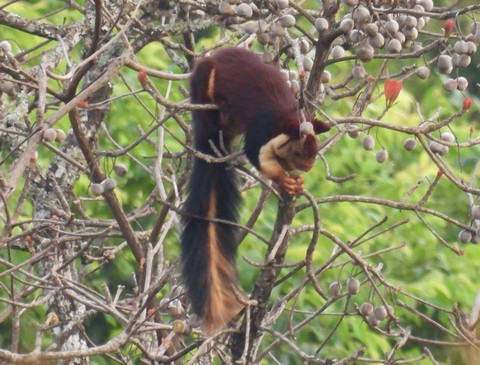
Very difficult to sight them as the Malabar Giant Squirrels are found at the top portion of the canopies with their very long, bushy tails helping them to either leap from tree to tree or keep their balance on the underside of tree branches
Even as the light was fading and the forest was turning eerie and silent, on our way back, we managed to see a herd of Indian Gaurs with male, females and young ones.
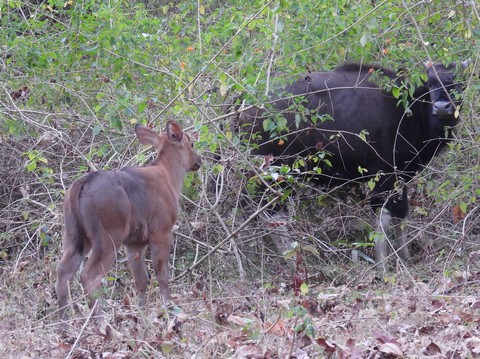
And for the first time, we sighted young cute calves of the Indian Gaur and we could clearly see how protective the mother was with their young ones.
Maybe, weighing about 30-35 kgs or so, they looked different from the adults – they had a light reddish-brown coat and stayed very close to the herd.
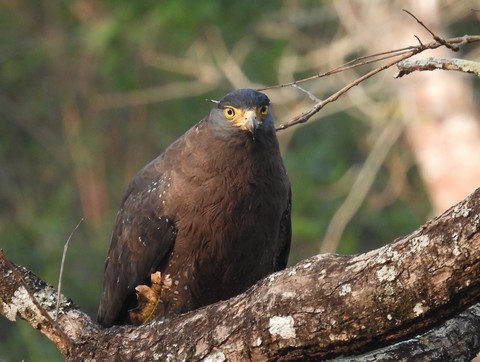
The next morning, we decided to take the morning safari, hoping to see a tiger or any other predatory species. But the first thing we sighted is the crested serpent eagle. It is a common and notable raptor found in the wooded areas of BRT Tiger Reserve and they are usually spotted in and around the K Gudi Wilderness camp area too.
In fact, the mixed landscape of K Gudi is ideal for endemic species of Western Ghats as also a high diversity of bird species. Bird species that are endemic to the Western Ghats like Malabar Whistling Thrush and Malabar Parakeet can be heard and seen as we traverse across the K Gudi Range. Hearing the whistling calls of the Malabar Whistling Thrush is such a pleasure amidst the warning calls of the monkeys.
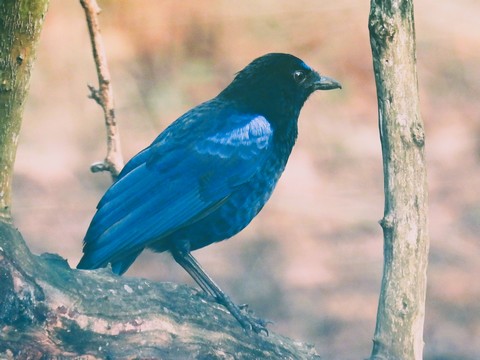
We were able to see many species of owls and barbets and thrushes as we made our way from one part of the safari trail to another even as we crossed a few water holes.
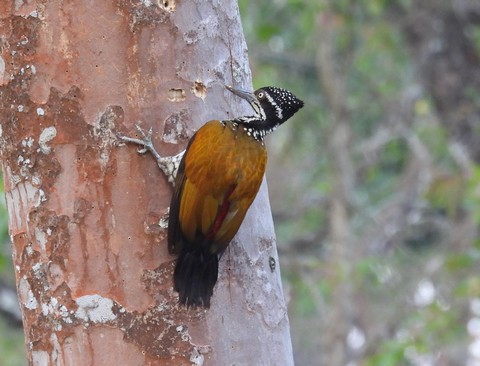
Brown Fish Owl, jungle owlets, hill mynas, golden oriole, drongos, honey buzzard, spot billed ducks, minivets, barbets, orange headed thrush, treepies, flame back woodpeckers and Tickell’s blue flycatchers were some of the birds that were recorded.
However, on the second day of our safari, in the morning hours, when we were returning, we suddenly sighted one male Indian Gaur (weighing maybe, 1400-1500 kgs) standing on the safari road.
Just behind him, we sighted another male gaur – which was injured and seemed to be backtracking. It seemed to have engaged in an intense bout of fighting, leaving it panting and scared. The Indian Gaurs are known to roam freely and venture into other areas to establish their territories.
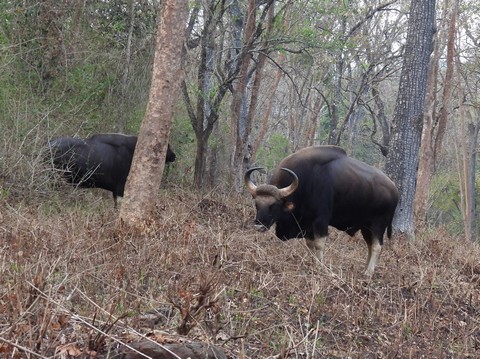
The dominant and aggressive gaur had attacked and injured him while the defeated one was trying to slowly flee from further trouble. This was a territorial fight between two males which usually occurs in the breeding season between December-June.
Usually, they lock their horns to establish their dominance over a territory or a mate. Adult males are known to be very aggressive and nomadic in nature, entering herds to fight with the resident male for dominance.
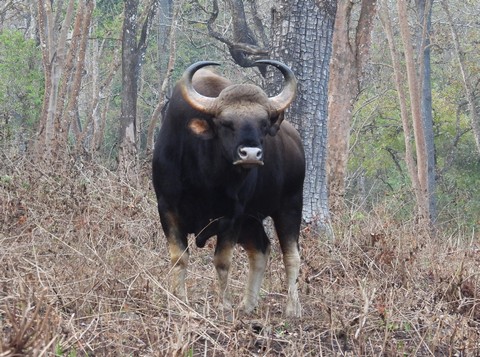
The one aspect about this unique habitat is the profusion of Indian Gaurs and Sambars. We managed to sight a barking deer – almost a fleeting glance.
However, the incredible sightings of gaurs, sambars and wild elephants not once but a few times thrilled us to no end.
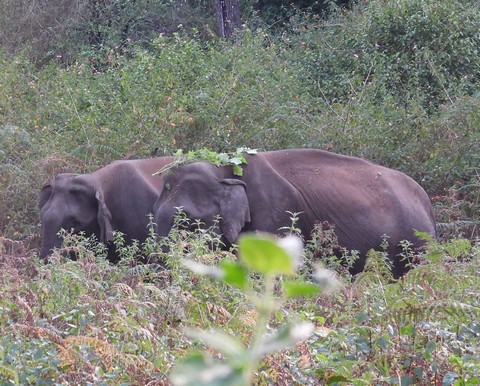
In fact, we saw two elphants with leaves and mud on their backs even as they were indolently feeding on grass. This is said to be a complex behavior of the jumbos which they do basically to protect themselves from the harsh sun rays, insects and also to thermo-regulate themselves.
Although we were not able to sight the big cats, we were very happy with the amazing and high variety of bird species as also the rich habitat that we sighted and recorded on our cameras.
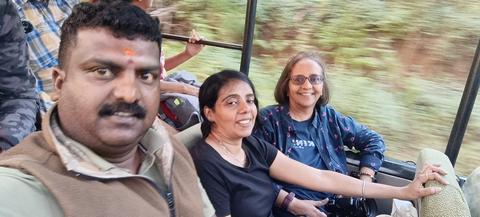
Amidst the lofty ranges of the Western Ghats, the dense foliage and canopies at K Gudi Range of the BRT Tiger Reserve provides a safe and ultimate habitat for various floral and faunal species in the background of many challenging issues be it human-wildlife conflict, forest fragmentation and encroachment.
(PHOTO CREDIT: ALL IMAGES AT THE K GUDI RANGE, BRT TIGER RESERVE BY MEERA BHARDWAJ, A FEW BY PRASHANTH)