
R S Tejus:
Three recent hunting-related cases from Veeranahosahalli wildlife range of Nagarhole Tiger Reserve reveals wildlife crime in some forest-fringe areas is not random. It is a deeper network involving hunting, wild meat demands, possession of guns, cartridges, wildlife articles and repeat offenders.
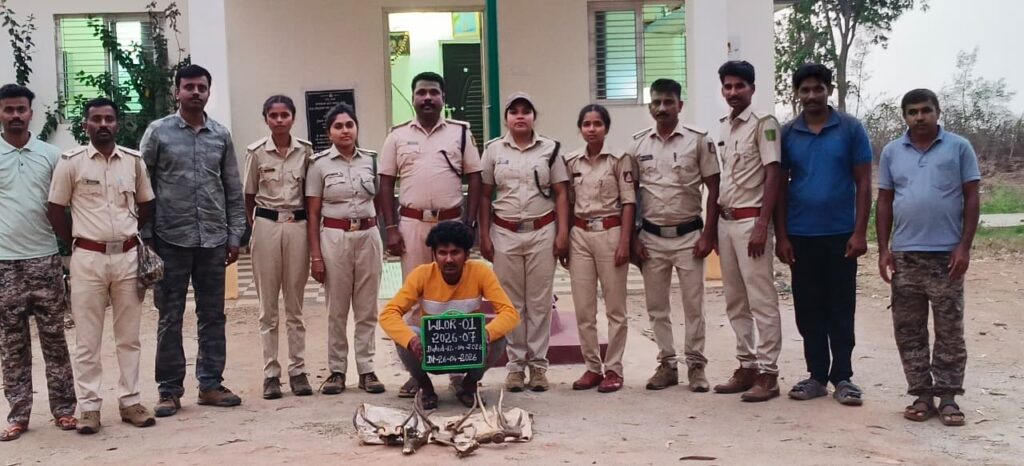
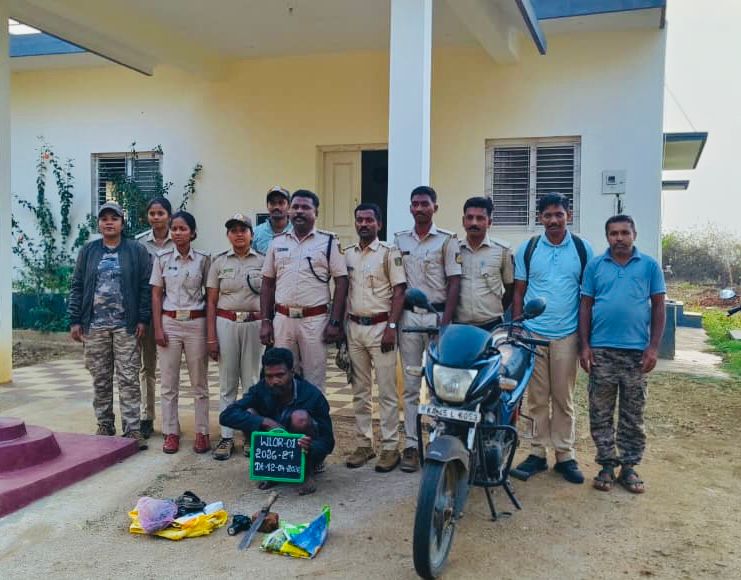
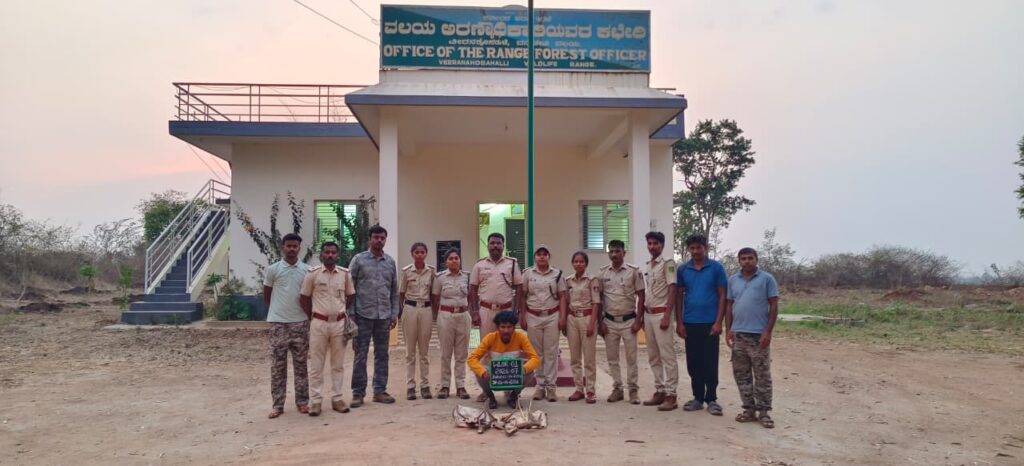
In April 2026, important operations were carried out under the guidance of Seema, DCF and Director, Nagarhole Tiger Reserve, and Lakshmikanth, ACF, Wildlife Sub-Division, Hunsur. On April 12, 2026, around 2.30 am, forest staff took swift action on credible information – some people were coming to hunt wild animals in the Jargal patrol beat Wood Lot forest area under Veeranahosahalli Range. Three persons came on a motorcycle through the Hindugudlu–Bharathavadi road, carrying a gun and entering the forest illegally for hunting.

Ramegowda alias Peteel Ramu, son of Venkategowda, resident of Hindugudlu village was arrested. The forest staff seized a two-wheeler bearing registration number KA-45 L-6053, one knife, three empty plastic bags and one battery. He was produced before the court and remanded to judicial custody until April 15, 2026. The others accused – Srinivasa alias Daasa, son of Manjegowda, and Yashwanth alias Rahul, son of Ramesh, both from Shindenahalli village absconded.
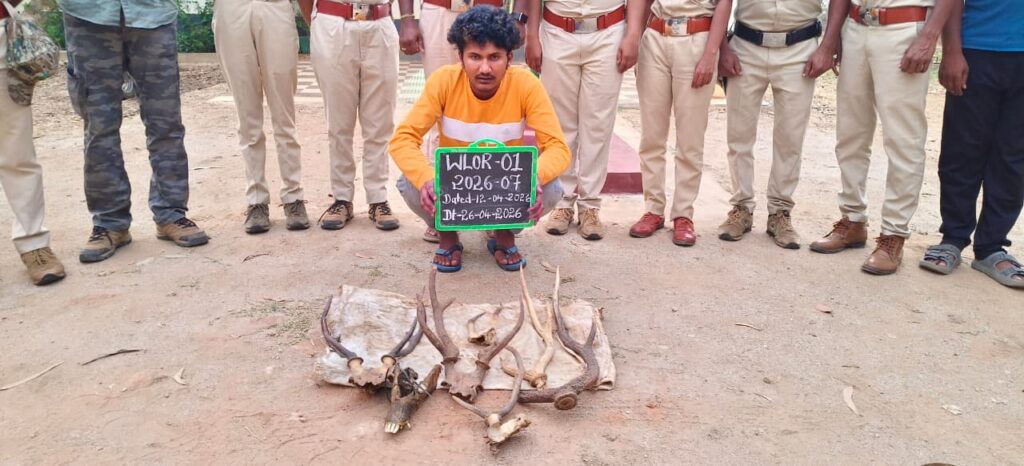
Later, on April 26, 2026, in connection with Case No. 01/2026-27, the forest department arrested Srinivasa alias Daasa near Honnenahalli. During a search of his house, officials seized five deer antlers, one wild sheep horn and one wild boar jaw bone. He was produced before the court for judicial custody. The search continues for the other accused.
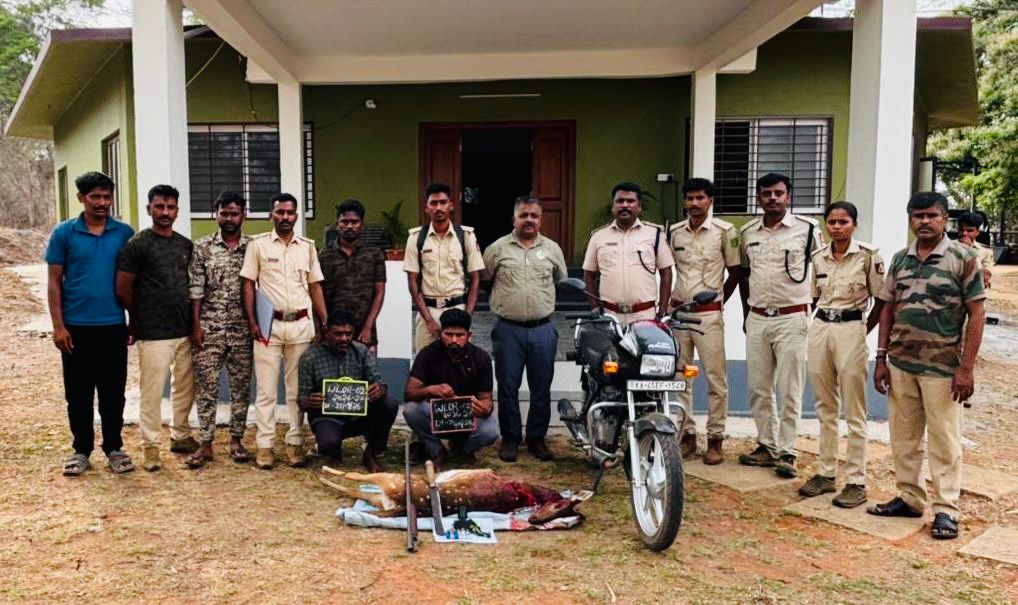
In another case under Veeranahosahalli Range, four persons hunted a female spotted deer near Hosakatte Lake–Erekattte jeep road, in the Erekattte patrol beat of Chamalli Section. Two accused were arrested: Ravi Kumar alias Amase Ravi of Shindenahalli village and Raju alias Gunda of B.R. Kaval village. The department seized the dead spotted deer, one gun barrel, five live cartridges, one used cartridge, one Hero Honda motorcycle and one machete. However, Sunil, son of Seenegowda from Shindenahalli, and M B Ganesh, son of Basavegowda from Mudaganur absconded.
These operations involved officers and staff including Vinod Gowda S, RFO, Sahana S Patil, Naveen Kumar, Shilpa and Shilpa K.E, Dy RFOs, forest guards Venkatesh, Narayan Rao, Shamantha, Avinash, Shilpa and Narayan, and forest watchers Gayathri, Shanthakumar and Shivakumar.
Veeranahosahalli RFO Vinod Gowda S said public participation is extremely important in conservation. “Any valuable information from local people about hunting, movement of suspected offenders, illegal possession of wildlife articles, use of guns or other forest offences can help the department act more effectively.”
The RFO added that the department is working very hard to protect forests and wildlife but farmers and local people living on the forest fringe can play a major role by sharing timely information and supporting conservation efforts.
The villages surrounding Veeranahosahalli Range – Shindenahalli, Negatturu and a few others, have unfortunately been associated with hunting for a long time. This does not mean every person from these villages is involved. Many people live difficult lives and depend on farming and daily wage work. But a small group of habitual hunters have created a serious problem for wildlife and forest staff.

21-years-old Srinivasa alias Daasa has already developed notoriety. Sources say hunting became a passion for him and his gang, involving wild meat consumption, sale of wildlife articles and easy money. Some of the accused are just 18 or in their twenties. This is worrying because young people are entering wildlife crime very early.
Daasa had been arrested a couple of years ago but was back on the streets within days of getting bail. Six months ago, in Kallahalla Range of Nagarhole Tiger Reserve, he and his gang cut teak wood and floated logs through a stream, inspired by the movie Pushpa. If true, this shows the danger of repeat offenders returning to crime.
Such a hunting network works through people who have licensed guns. Some gun owners’ hand over guns and cartridges to hunters in return for wild meat or wildlife articles. Hunters target deer and other wild animals near farms adjoining the forest.
Hunters also mislead forest staff by giving false calls about elephants entering farms. While staff rush to attend the complaint, they hunt elsewhere. It is also difficult to distinguish between cracker sounds used to drive away animals and gunfire. After hunting, some gangs separate the gun barrel and butt, with different persons carrying different parts to avoid detection.
One disturbing local input – one hunter, whose daughter (6 years), has allegedly been fed wild meat since she was two years. If true, it shows that some families have developed the habit of eating wild meat. This is dangerous because children may grow up seeing hunting as routine.
Forest staff deal not only with offenders, but also with wildlife, forest fires, human-wildlife conflict, local pressure and political pressure. A hunter may be arrested today, but tomorrow an elephant may raid the farm of a family connected to the accused. The same forest staff must still attend the situation and protect human life.
Another concern is revenge forest fires, where angry individuals set afire to forest areas after action by the department. Such fires damage wildlife habitat and put staff at risk. Sources also say some habitual hunters get support from family members and local political circles, making enforcement harder.
Senior forest officials say the secret service fund of the Forest Department must be increased and made more intelligence-driven. They add, “Forest crime is no longer random. Hunting, wild meat demand, poisoning, snares, timber movement, encroachment, illegal roads, mining links and trafficking often work through local networks. The fund should help prevent crime before it happens by mapping repeat offenders, identifying demand points for wild meat, tracking transport routes and building source networks in sensitive villages.”
However, the larger problem is that conviction rates in wildlife crime cases remain very low, they add. Easy bail for repeat offenders demotivates frontline staff. The forest staff risk their lives to arrest hunters, but if the same accused returns with guns within days, the system weakens.