
R S Tejus:
The Karnataka Forest Department depends heavily on outsourced staff for its day-to-day functioning. These workers are hired by the department, but their salary payment is routed through third party agencies and contractors. According to forest department sources, there are around 25 agencies and contractors working with the department.
The outsourced system for such workers came into existence through a 2017 order from the HoFF of the Karnataka Forest Department, according to which all such employees should be outsourced. At present, there is no daily wage employee system for these workers.
This has created a complex situation. The department needs manpower on the ground, especially in anti-poaching camps (APCs) and conflict areas. The staff are hired as skilled labourers now. Earlier, it was unskilled, often immediately because there was a need. But once they enter the system, they remain outsourced, with their salaries and statutory benefits dependent on agencies.
A Law Enforcement Department Depending on Outsourced Frontline Staff
The Forest Department is not an ordinary department. Like the police, it is also a law enforcement department. It deals with forest offences, wildlife crime, hunting, illegal trade, encroachment, conflict situations and protection of public natural assets.
This raises a serious policy question. There are no outsourced police constables doing core police duties. Then why is a major part of frontline forest protection dependent on outsourced watchers?
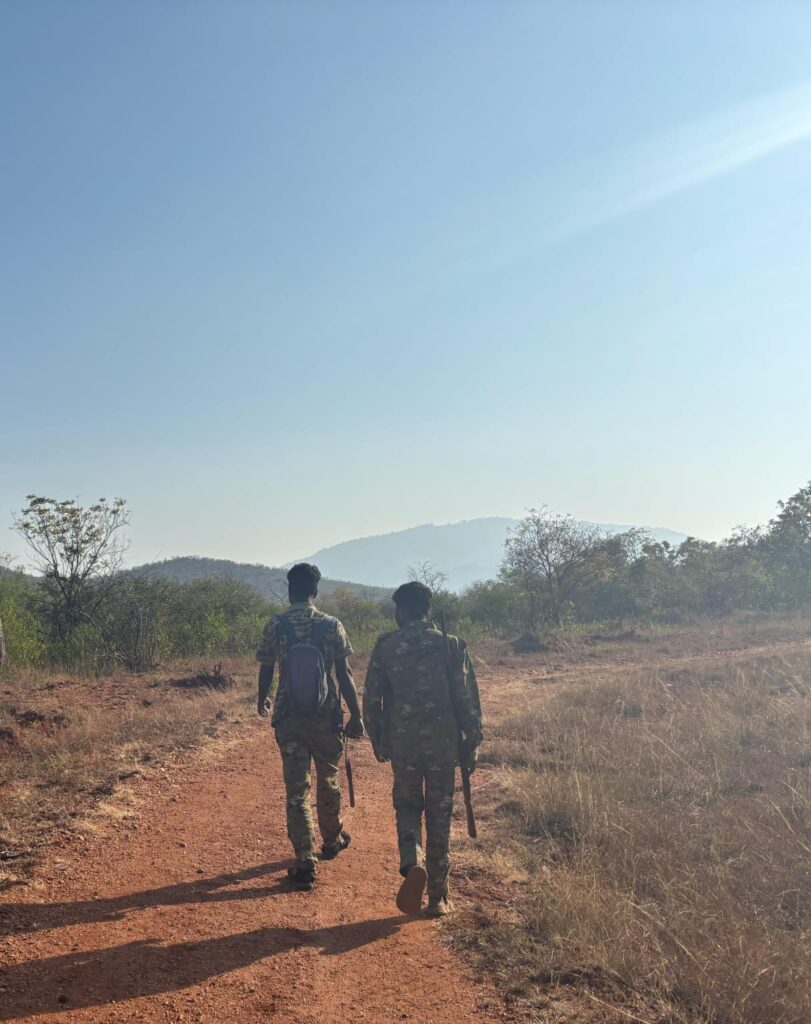
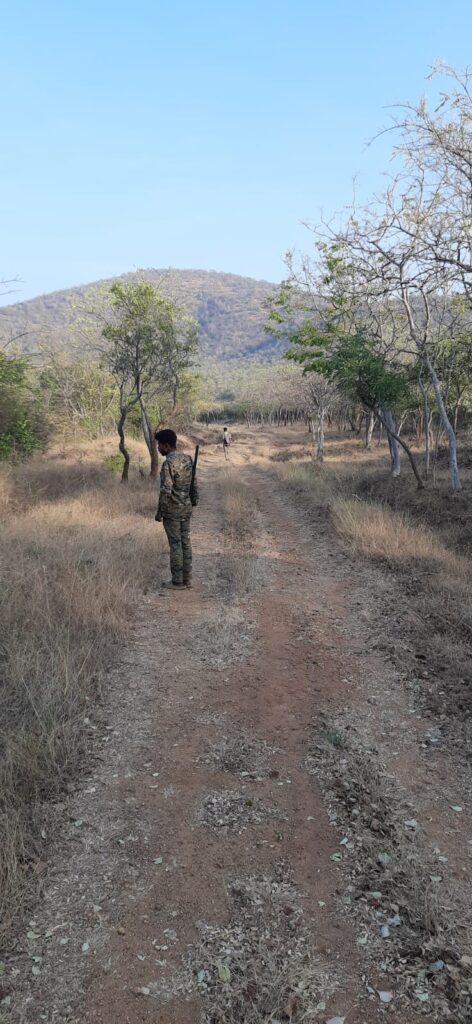
Forest watchers play a crucial role in protection. They stay in anti-poaching camps day and night for weeks, assist in patrolling, support superiors, help during elephant and leopard conflict, drive department vehicles and provide ground-level information. They are among the first people to notice illegal movement, hunting activity or suspicious behaviour inside and around forest areas.
Wildlife crime is not a small issue. INTERPOL has described illegal wildlife trade as one of the world’s largest criminal activities and second only to narcotics, often linked with organised crime, corruption, armed violence and financial crimes. INTERPOL also says it helps police in 196 member countries share data on crimes and criminals and provides technical and operational support.
If wildlife crime is treated globally as a serious organised crime issue, then the people standing at the lowest level of forest protection cannot be treated as casual manpower. The question is not only about salary. It is about how seriously the state views frontline forest staff.
If the concern is that making these workers permanent will increase the burden on the exchequer, then this must be studied properly. A new think tank is needed to examine the issue from all sides — financial, legal, administrative, conservation and human welfare.
How the Payment System Works
Under the present system, the department hires the staff, but the payment is made through agencies. The agency is expected to pay the salary to outsourced watchers in advance. Later, the agency receives payment from the department along with its profits margin.
Agencies are also expected to pay staff salaries for up to three months, even if they have not received payment from the government. The government pays the worker’s net salary along with 3.25% ESI, 13% EPF and 1% to 2% profit charges to the agencies.
An outsourced watcher receives ₹16,199 net salary. ESI is ₹127 and EPF is ₹2,850.
This means the worker receives only the net salary, while ESI and EPF have to be deposited separately in the worker’s name. This is where transparency becomes extremely important.
The Agency Margin
The service charge paid to agencies appears very small on paper.
If calculated on ₹16,199 net salary:
1%
₹161.99
2%
₹323.98
3%
₹485.97
In some cases, agencies reportedly quote only 0.01% as service charge which translates to ₹1.61 on ₹16,199. On paper, this appears to be an extremely low margin. But the overall turnover becomes large because of the number of workers involved. In total around 7,000 long-term outsourced employees (APC watchers, cleaners, gate assistants, IB cleaners, Drivers, Cooks, etc. are working in the Karnataka Forest Department.
Therefore, even if the margin per worker is low, the total contract turnover runs into crores. But exact business model is not known. When attempts were made to contact agencies regarding these issues, they denied speaking about the matter.
The Workers Behind the System
These outsourced workers are not doing minor jobs. They work in anti-poaching camps, as drivers, as computer operators, and sometimes as literary assistants in forest offices. In Nagarhole Tiger Reserve, around 300 outsourced employees are working. In Bandipur Tiger Reserve, the number is around 500.
Outsourced staff also make up the majority in the Elephant Task Force, Leopard Task Force and Rapid Response Teams in the Karnataka Forest Department. This shows the scale of dependency. For elephant-related issues, leopard conflict response, anti-poaching camp work, driving, office support and other field-level duties, the department depends heavily on outsourced staff.
The Salary Gap
The salary difference between permanent and outsourced watchers is sharp.
A permanent forest watcher reportedly receives around ₹40,000 gross and ₹29,600 net salary.
In comparison, outsourced watchers receive around ₹16,199 net.
This gap is significant because outsourced watchers and support staff are also being used in difficult field conditions. They may not hold permanent posts, but they are part of the ground-level forest protection system.
ESI and EPF Concerns
One of the biggest concerns is whether ESI and EPF are being credited properly and on time. ESI and PF have reportedly not been paid for the past 6 to 8 months in some cases. A few officials said agencies may make more money by not crediting the ESI and PF amounts for months. They also said some agencies do not respond even after notices are issued.
This becomes more serious because some outsourced watchers work only for a few months and then discontinue. In such cases, officials say that if there is no proper worker-wise verification, the ESI and PF amounts meant for those workers can be misused by some agencies.
The department has now issued a circular asking respective DCFs to get certificates from agencies regarding their past two years of work, including whether the agencies credited EPF and ESI on time.
The department is also working to streamline the agency system. Agencies that have not paid everything due to outsourced watchers, or have failed to credit EPF and ESI properly, may face disqualification. Officials say the process is being carried out as per the provisions of the The Karnataka Transparency in Public Procurements (KTPP) Act, 1999.
Uniforms, Shoes and Ration
The problems are not limited to salary and statutory benefits. Outsourced watchers have reportedly not received uniforms for the past five years in some PAs. Ration is also not being provided on time in some places. Uniforms and shoes for staff are provided by the Forest Department from foundation money.
In the case of CSR funds, the focus is mainly on anti-poaching camp watchers. Drivers and other outsourced staff are often neglected, even though they are also part of the system. For staff working in anti-poaching camps, ration delay is a serious issue. Many of these camps are inside forests, away from easy access to markets or basic facilities.
The 26-Day and 30-Day Salary Confusion
There has also been confusion over the salary calculation. Workers have demanded a full 30-day salary model. A senior forest officer clarified that salary is being paid for 30 days, but it is divided by 26 days and charged on a per-day basis which is inclusive of holidays.
However, a proposal is now being sent to the Finance Department to work on a full 30-day model. If implemented, this may remove confusion and make the salary structure clearer for workers.
Demand for Daily Wage Status
Another major demand from outsourced watchers is that they should be converted into daily wage workers. Their argument is that if they are treated as daily wage workers, the whole amount will be credited directly into their bank accounts. However, this demand has a complication. Under such a system, there may be no ESI or PF benefits. So, while direct payment may solve one problem, it may create another by removing statutory benefits.
At present, because of the 2017 HoFF order, all such workers are required to be outsourced. This means there is currently no daily wage employee system for them. The issue, therefore, cannot be solved only at the local level. It requires policy-level discussion.
Job Insecurity and Leave Concerns
Another serious concern is job insecurity. In some cases, outsourced watchers who have worked for many years can reportedly be removed if they go on leave for a few days, and others may be hired in their place. This should not be allowed without a proper process.
If a worker has served for years, his experience and service record must be respected. A few days of leave should not become a reason to replace him casually. There has to be a clear leave system, written rules and protection against arbitrary removal.
This issue becomes more important because many outsourced watchers are not new to forest work. Some of them have spent years in the system and understand the ground realities of the forest, the camp, the conflict zones and the field staff network. Removing such workers without a proper process can affect both the worker and the department.
Harsh Conditions in Anti-Poaching Camps
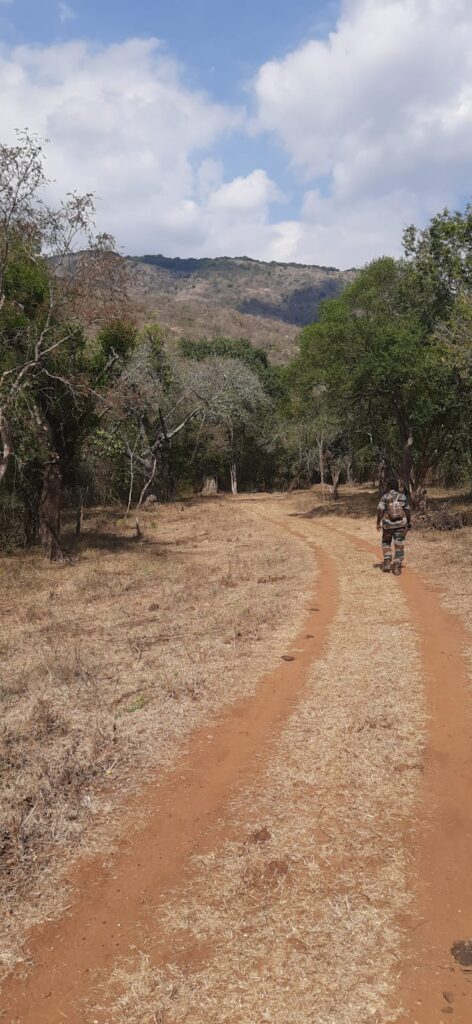
The condition of watchers staying in anti-poaching camps is another major issue. Many APC watchers stay inside forests for weeks, away from their families, in very harsh conditions. They live in remote places, often with limited contact with the outside world. Their work is physically and mentally demanding. They are expected to stay alert, assist in protection work, support field operations and be available in difficult forest conditions.
Yet, their support system remains weak. In case of medical emergencies, only medical charges are being paid. But this may not be sufficient. A worker posted inside forests may need transport support, recovery support, wage protection during treatment, family support and follow-up care. Medical assistance cannot be limited only to medical bills. This shows why the whole issue of outsourced employees must be reassessed properly.
Need for Training
Though these workers are now hired as skilled labourers, many are hired immediately because there is a need on the ground. This is a serious issue. If outsourced watchers are being used in anti-poaching camps, Elephant Task Force, Leopard Task Force and Rapid Response Teams, they need proper training before being placed in sensitive field duties.
Forest work requires discipline, reporting ability, field awareness, basic knowledge of forest offences, communication skills and the ability to handle sensitive information. Without training, both the worker and the department face risk.
In some cases, outsourced watchers are hired from nearby villages. This has both advantages and challenges. Local workers may know the terrain, forest paths and ground realities better. But officials also said that in some cases, not all, such workers may not share information about suspected criminal activities.This is a complex issue. The solution is not to blame workers, but to create a stronger system of screening, training, supervision and accountability.
Identity Cards and Formal Recognition
The department is also issuing ID cards to outsourced watchers, identifying them as outsourced watchers. This is an important step because it gives them some formal recognition within the system.
But an ID card alone cannot solve the larger problems of salary, statutory benefits, training, risk, working conditions and job security.
Committee to Resolve the Issues
Senior forest officials said that a committee is being formed to discuss and resolve the issues of outsourced watchers.
This is important because the issue is not just one of salary. It involves agency contracts, ESI, EPF, ration, uniforms, shoes, training, 30-day salary structure, daily wage demands, skilled labour classification, job security, leave policy, medical emergencies, APC working conditions and the department’s heavy dependence on outsourced staff. A proper solution must look at the full system.
A Voice Raised by Farmers, Silence from NGOs
One point that stands out is that the issue of outsourced forest watchers is being voiced by a farmers’ organisation. This deserves appreciation. These workers are part of the forest protection and wildlife conflict response system. Their welfare is directly linked to conservation and ground-level functioning of the department.
Yet, there appears to be no strong voice from NGOs on this issue. This silence is worth noting, especially when outsourced watchers are working in anti-poaching camps, conflict response teams and field-level protection duties.
What Needs to Be Done
1. Create a transparent digital dashboard
Every outsourced watcher should have a digital record showing salary, ESI, EPF, agency or contractor name, place of posting, ID card status, nature of work, years of service, leave record, medical support and posting history. This will make the system transparent and reduce the chance of workers becoming invisible.
2. Verify ESI, EPF and agency compliance before clearing bills
The circular asking DCFs to verify the agencies past two years of ESI and EPF payment should be implemented seriously. This should not become a paper formality. Worker-wise verification must be done before agency bills are cleared. Agencies that fail to pay salary, ESI or EPF properly should be disqualified as per the Karnataka State Public Procurement Act.
3. Rework the lowest-bidder system
The contract system should not be based only on the lowest bidder. Agency performance, compliance history, ability to pay workers in advance, response to notices and worker welfare should also be considered. A system that protects forests should not be weakened by a contract model that looks only at the lowest quote.
4. Include all outsourced staff in welfare support
CSR and foundation support should not focus only on APC watchers. Drivers, office staff, computer operators, literary assistants and other outsourced workers should also be included. Welfare support must follow the full outsourced workforce, not just one category.
5. Set up a proper think tank to redraw the system
A committee or think tank with forest officials, finance experts, legal experts and people who understand ground realities should study the issue in detail. It must examine salary, 30-day model, training, daily wage demand, agency role, medical support, job security, risk allowance and the question of whether some long-serving workers can be given better security or permanent status. If the concern is cost to the exchequer, that too must be studied openly instead of leaving the workers trapped in uncertainty.
Karnataka’s outsourced forest watchers and support staff form a major part of the Forest Department’s ground-level strength. They work in camps, offices, vehicles, task forces and conflict-response teams.
But the system around them remains complicated. The department hires them, agencies pay them, the government reimburses the agencies, and ESI and EPF must be deposited separately. In this chain, the worker should not become the weakest link.
The department has now begun steps to streamline the process through certificates, possible disqualification of agencies, ID cards, a committee and a proposal for the full 30-day model. These are important steps. But the real test will be implementation.
If Karnataka’s forests depend so heavily on outsourced watchers, then these workers need transparency, timely payment, proper ESI and EPF, uniforms, ration, job security, medical support, training and dignity. Forest protection cannot be strong if the people at the lowest level of that protection system remain insecure.