
R S Tejus:
“Will people who drafted the NTCA Standard Operating Procedures (SOP) smear tiger urine and faeces on their own clothes, wear a tiger mask and enter a tiger enclosure? Would they do what they are asking us – the Karnataka Frontline Forest Staff to do for tiger rewilding?” questions an agitated forest watcher.
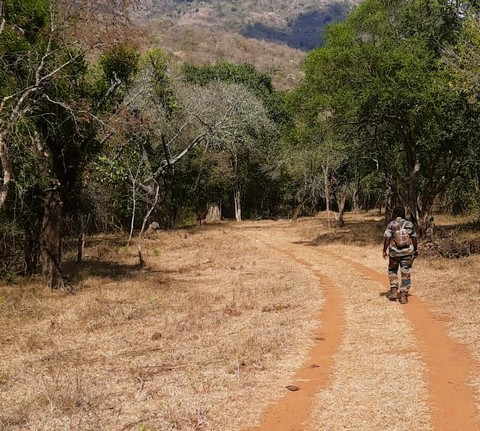
Most of the Karnataka frontline forest staff working in tiger reserves are temporary or outsourced employees hired from nearby villages. They are paid low wages by the contracting agencies and have absolutely no job security.
“I work here to earn a living. Even if they offered me much better pay, I would think twice. I still believe this should never be done. We really do not know what could mean for our health if we come in contact with tiger urine and faeces. We have families depending on us. Protecting forests is noble work, but this is a firm no to smearing tiger urine and faeces on our clothes,” adds another bewildered frontline forest staff.
“Senior wildlife officials must think about our wellbeing first. As it is, we face risks every day, and even news from home can reach us late. I learnt of my father’s death a day later and did not have enough money for the funeral rites. After decades of service, I have almost nothing to show for it. I have given enough to this department. I cannot agree to this macabre procedure,” said a shocked third forest watcher.
OBJECTIONS TO KARNATAKA TIGER REWILDING PROJECT
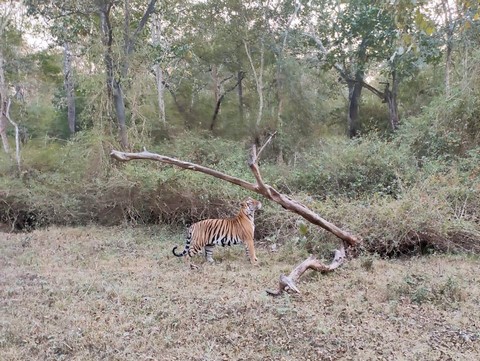
An instruction asking frontline forest staff to approach tiger cubs wearing tiger masks and striped clothing smeared with tiger urine and faeceshas become one of the focal points of objection to Karnataka’s proposed rewilding centre inside Bhadra Tiger Reserve along with other critical observations. The direction forms part of the National Tiger Conservation Authority’s (NTCA) procedure for handling orphaned or abandoned cubs.
In a fresh memorandum dated October 31, the Wildlife Conservation Action Team (WildCAT-C) has asked Karnataka Forest Minister Ramalinga Reddy to stop the project. The representation raises questions about the treatment of forest staff, the science behind rewilding and the legality of creating a fenced rescue facility inside the tiger reserve’s core habitat.

THE MUTHODI REWILDLING CENTRE
The Karnataka Forest Department proposes to rear rescued tiger cubs in the Muthodi range, teach tiger cubs to hunt and release them into the wild. Tenders’ worth over ₹67 lakh were earlier issued for solar fencing and an elephant-proof trench.
Wildlife biologist Dr. Ravi Chellam described the proposal as “unscientific” and “superfluous”, dismissing it as a “conservation overkill” in the context of a growing wild tiger population. He questioned whether such projects suggest a lack of confidence among wildlife managers in the existing in situ conservation model. “These projects are primarily civil engineering work masked as conservation with no credible scientific basis,” he said.
Chellam also warned against treating every cub found alone as abandoned.
There may be natural reasons for separation, he argued, and intervention should not be automatic. He added that it is very natural for around 50% of the cubs to die. He questioned ‘rescuing’ tiger cubs unless there was clear evidence of a human caused death of their mother, for example being poached or killed in a vehicular collision.
The NTCA procedure says handlers must wear a tiger mask and tiger-striped clothing smeared with tiger urine and faeces. It says the purpose is to minimise human imprinting, or the possibility of tiger cubs becoming accustomed to people.
However, the instruction offers no evidence in the relevant passage that dressing a person as a tiger, or applying animal waste to clothing, can reproduce a mother’s behaviour. A cub learns through prolonged contact with its mother, including her movements, calls, hunting attempts and reactions to danger. A tiger mask on a forest staff cannot provide that experience with a mother.
HUMAN RIGHTS VIOLATION
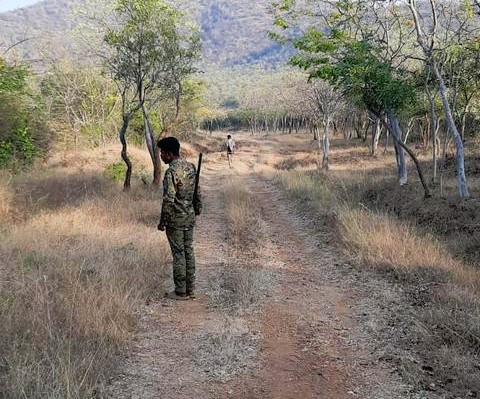
Conservationist Shreedev Hulikere, managing trustee of WildCAT-C and a signatory to the memorandum, objected strongly to the provision. The letter calls it a “very insulting guideline” and says requiring staff to apply tiger excreta “violates the basic human rights”.
The criticism is not merely about an unusual costume. It concerns whether frontline forest staff should be expected to handle and apply urine and faeces to their clothing to follow an unproven procedure. The representation asks the government to stop the practice. There is no justification, the conservationists argue, for compromising workers’ dignity in the name of teaching a tiger to be wild.

Questions over the 50-kill benchmark
The NTCA procedure describes a 50-hectare enclosure, at least two years of rearing, and a minimum record of 50 successful prey kills before a cub is considered for release. Prey would be guided into a controlled area for hunting practice.
A conservationist questioned whether a numerical target captures the difficulty of surviving outside a fence. Hunting is only one skill. Released tigers must find prey without assistance, avoid established adult tigers, move across large areas and locate territories. Animals unable to settle may enter plantations and villages, increasing livestock losses and conflict.
DISCARDING NATURAL SELECTION?
The concern extends to natural selection. Rescuing every weak or apparently abandoned cub may interfere with processes that operate in the wild. At the same time, finding tiger cubs without their mother does not prove they are genetically unfit or even orphaned. That needs careful field verification.
The memorandum also questions the NTCA feeding schedule, which moves tiger cubs from milk and chicken broth through cooked meat before raw meat. It raises concerns about nutrition, taurine (this is a strictly essential amino acid that they must get directly from fresh meat to survive. Being obligate carnivores, their bodies cannot synthesize taurine from other proteins, nor can they store it) and the development of feeding and jaw strength. Those specific claims require independent veterinary review.

Legal scrutiny of Core Habitat
A conservationist also questioned whether a rescue centre can be treated as an ordinary forest-management structure. Section 2(39) of the Wildlife (Protection) Act includes rescue centres in the definition of a zoo, while Section 33(a) requires prior National Board for Wildlife approval for zoo construction inside a sanctuary or a tiger reserve.
Section 38V also recognises core or critical tiger habitat as an area to be kept inviolate for tiger conservation. The conservationist asked whether the necessary approvals and ecological assessments have been obtained, and why alternatives outside Bhadra tiger reserve’s core have not been publicly evaluated.
The proposed fencing and elephant-proof trench could also interrupt movement routes used by resident tigers, elephants and other wildlife, the conservationist warned.

The October 31, 2026 memorandum seeks withdrawal of the e-tender floated on October 1 by the Assistant Conservator of Forests, Bhadra Wildlife Sub-division. It asks the Principal Chief Conservator of Forests and Chief Wildlife Warden to drop the project and focus instead on habitat protection, lawful action against encroachments, resettlement with safeguards and wildlife corridors.
Finally, the Karnataka Forest Department must still answer a basic question: Does tiger conservation requires a permanent rewilding facility within the core area of a naturally recovering tiger reserve like Bhadra Tiger Reserve?
(PHOTO CREDIT: ALL IMAGES ARE REPRESENTATIVE)