
Dr Prayag H S*
A recent Green Minute News report on the proposed Rewilding Centre at Bhadra Tiger Reserve raised questions about frontline forest staff welfare, the scientific basis of the National Tiger Conservation Authority (NTCA) procedure and the legality of building such a facility inside a core area. These are fair questions and deserve open answers.
They also risk being read as a verdict on a larger issue: can orphaned tigers be returned to the wild at all? The evidence on this is more encouraging than the present debate suggests.
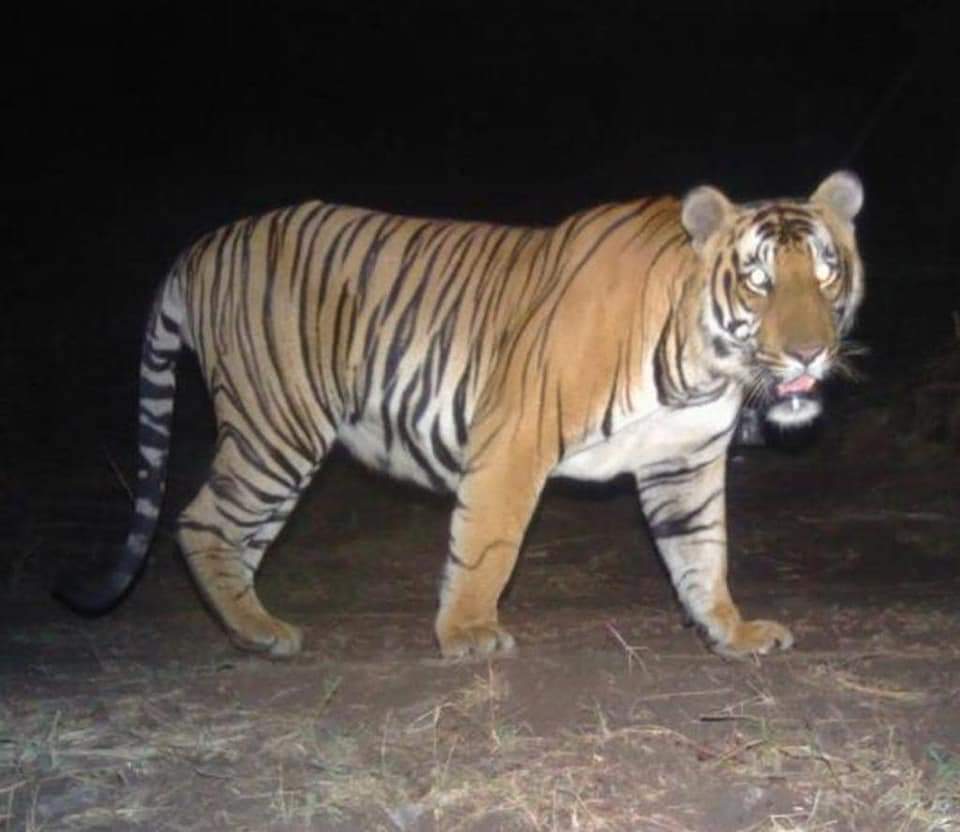
WHAT THE NTCA PROCEDURE ASKS FOR?
The NTCA Standard Operating Procedure (SOP) covers:
- Tiger cubs orphaned by a mother’s death,
- Born with incapacitation, or too weak to survive.
- It calls for rearing in an in-situ enclosure for at least two years,
- A record of at least 50 successful prey kills,
- Radio-collaring before release,
- Consultation with the NTCA, and
- Release into a suitable, productive habitat within the same landscape.
- Its stated aim is to keep human imprinting to a minimum.
PANNA TIGER RESERVE, MP: A TIGER POPULATION REBUILT FROM ZERO
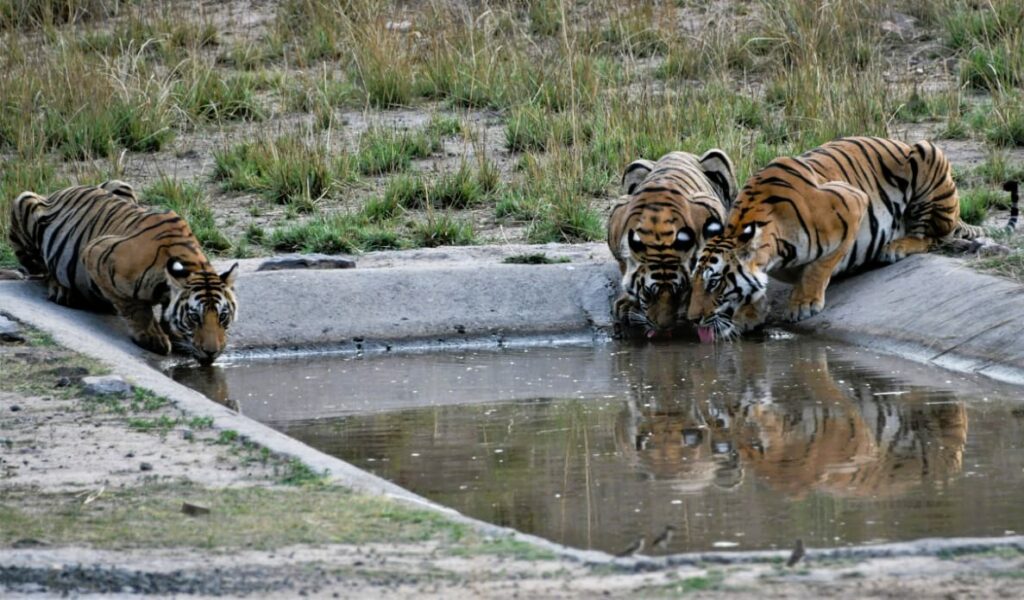
By 2009, Panna Tiger Reserve in Madhya Pradesh had lost every tiger to poaching. Two tigresses were translocated that year from Bandhavgarh and Kanha, and two orphaned sisters, T4 and T5, born in Kanha in 2006, had been hand-reared in an enclosure.
T4 was released in March 2011 and T5 that November.
T4 became the first hand-reared tigress known to give birth in the wild, in November 2011. Her tiger cubs from a later litter survived her death in 2014, and one was collared and went on to hold a territory around Panna Tiger Reserve.
The Panna Tiger Reserve has since recovered from zero tigers to over 80.
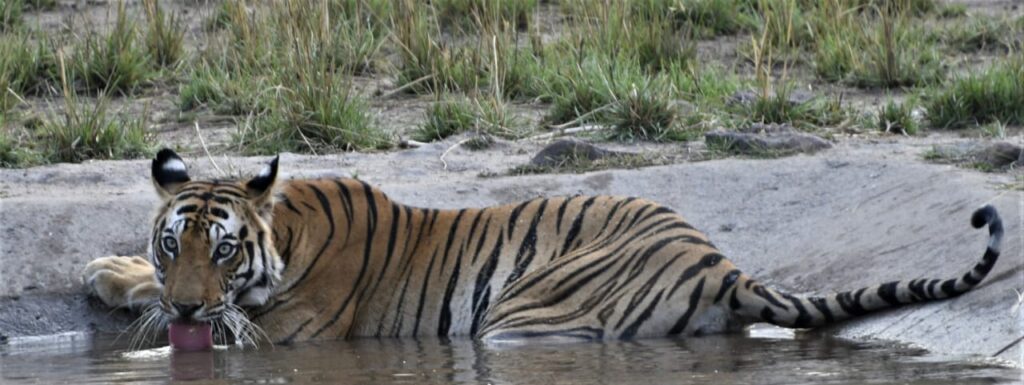
There were setbacks. T5’s first litter was lost after she left her tiger cubs, and both sisters died before their time. A fair account includes them.
Today, Panna Tiger Reserve has totally recovered from its local extinction and is now supporting a healthy population of 80 tigers and that too in a dry forest landscape.
RUSSIAN FAR EAST: THE STRONGEST DATASET
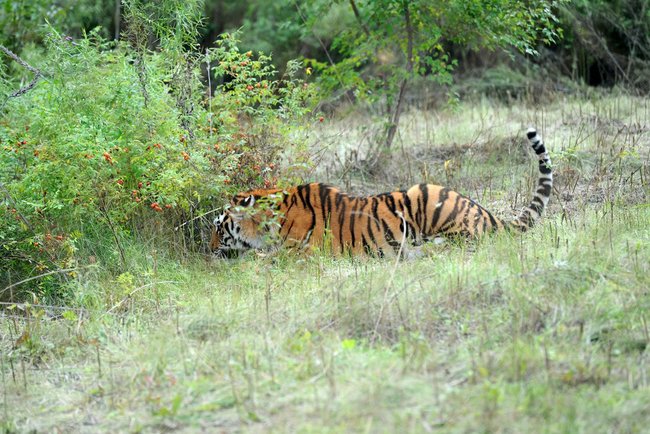
Russian scientists raised 13 orphaned Amur tiger cubs in captivity with human contact being kept to a minimum, then released them in the Pri-Amur region, where tigers had been absent for decades. A 2025 peer-reviewed study in the “Journal of Wildlife Management” examined six of the released tigers in Russian Far East.
Their kill and consumption rates were close to those of wild tigers in Sikhote-Alin, and survival, reproduction and recruitment were high.
PREYING PATTERN
Across 132 hunting events, the tigers took wild prey in patterns similar to wild-born animals in Russian Far East. One young male killed domestic animals, but the others only rarely preyed on dogs or cattle they met. The tigress Zolushka, released in 2013, was photographed with cubs in December 2015, the first litter in that area in decades. At least 12 cubs have been born in the wild since the programme began in Russian Far East.
The authors’ conclusion is the key lesson: captive-raised tigers can survive if they have minimal exposure to humans and learn to hunt wild prey before release.
WHERE THE CRITICS HAVE A POINT
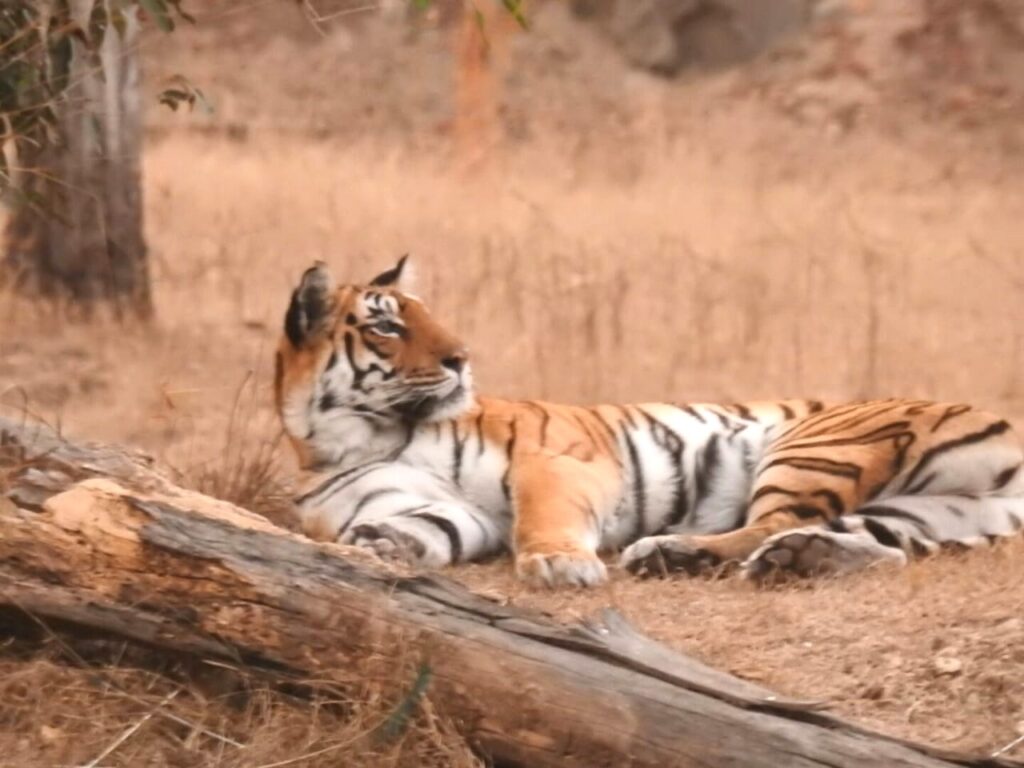
Tiger rewilding is not guaranteed to work. PTRF-84, a hand-reared tigress released in Pench Tiger Reserve in 2021, died eight days after release from injuries in a territorial clash.
- Dr K Ullas Karanth has argued that moving hand-reared tigers is unnecessary in India, and
- Dr Ravi Chellam warns against treating every lone cub as abandoned.
Both cautions are valid. Success has come where release sites had few resident tigers, which is why Panna and the Russian sites worked.
Green Minute News itself notes that the taurine and feeding-schedule claims need independent veterinary review. I agree, and I would welcome it.
The mask-and-scent protocol also has no published trial behind it that I am aware of. The Russian programme’s evidence supports minimising human contact, not this specific method. The NTCA should publish the basis for it.

BHADRA TIGER RESERVE: A SUCCESS THAT RAISES ITS OWN QUESTION
Bhadra Tiger Reserve is one of India’s conservation success stories. After villages were resettled, tiger numbers rose from 9 to about 28 across the tiger reserve and wider landscape, and prey density nearly doubled between 2000 and 2015. WCS estimates the reserve can hold about 50 breeding tigers.
That success is the reason the “siting question” matters. Whether a permanent facility belongs in the core of a recovering tiger reserve, and whether approvals under the Wildlife (Protection) Act have been obtained, should be answered publicly. Alternatives outside the core area should be evaluated, and fencing and trenches should be checked for their effect on movement routes.
PROTECTING THE PEOPLE WHO DO THE WORK
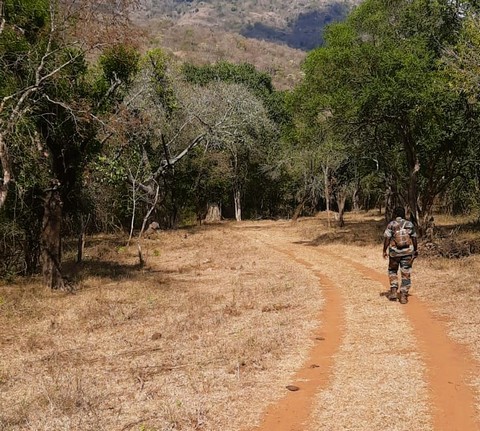
Frontline forest Staff dignity and safety are not obstacles to rewilding.
They are part of doing it well and scientifically which includes the following protocol for handlers:
* Scent cues on outer covers
* Handled with gloves
* Use of washable gear
* Backed by total hygiene
* Regular Deworming
* Vaccination protocols
The work should be allotted only to trained, permanent forest personnel with fair pay, insurance and a say in the protocol, rather than outsourced forest watchers.
THE WAY FORWARD
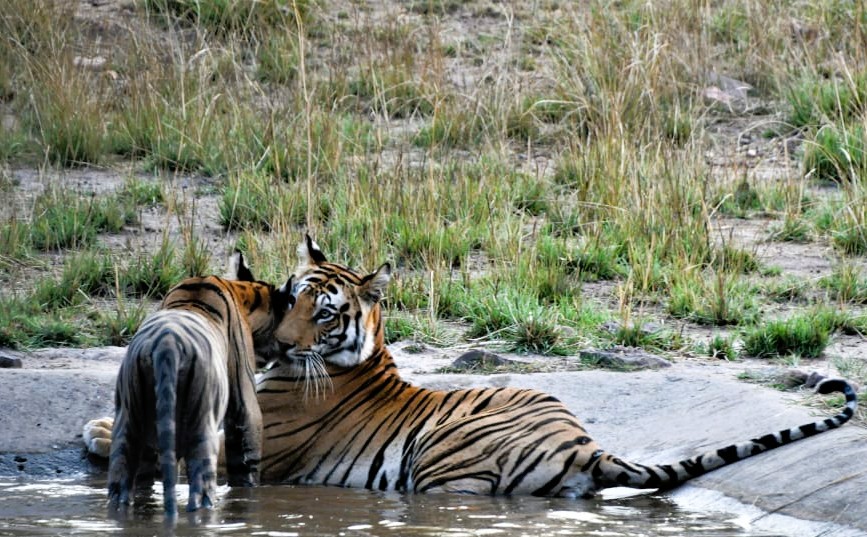
The evidence supports rewilding as a targeted tool for orphaned tiger cubs with confirmed maternal loss, released into suitable, under-populated habitat after monitored hunting trials and collared tracking.
It does not support rescuing every solitary cub, and it does not replace habitat protection, anti-poaching work and corridors. Done carefully, with transparent protocols and respect for field staff, it can restore tigers where they have been lost.
(Sources: NTCA SOP on orphaned/abandoned cubs; Panna Tiger Reserve release notes; Miquelle et al., J. Wildl. Manage. 2025; WCS Bhadra resettlement metrics; Green Minute News, Nov 11, 2026.)
(The author is Deputy Director (Animal Husbandry & Veterinary Sciences), Bannerghatta Biological Park. He has worked in the Panna landscape and for India’s first tiger translocation project as part of his PhD programme. Views expressed are the author’s own, as a wildlife veterinarian, and do not represent the official position of Bannerghatta Biological Park or the Karnataka Forest Department.)
PHOTO CREDIT: IMAGE 5 OF AMUR TIGER IN RUSSIAN FAR EAST – COURTESY WIKIMEDIA COMMONS, Kremelin.ru )