
Meera Bhardwaj:
Was the recent Green Bengaluru 1.5 million plantation drive across 234 acres on a single day just an exercise to enter record books or to demonstrate that Miyawaki Plantation Technique is suitable for highly urbanized cities of India? Environmentalists, ecologists and forest experts advise – Don’t plant Miyawaki forests in unsuitable areas where they don’t belong as they are neither native nor natural forests.
Since Japan’s habitable space is severely limited and urban areas suffer from dense development, the Miyawaki method is an ideal solution for restoring green spaces quickly.
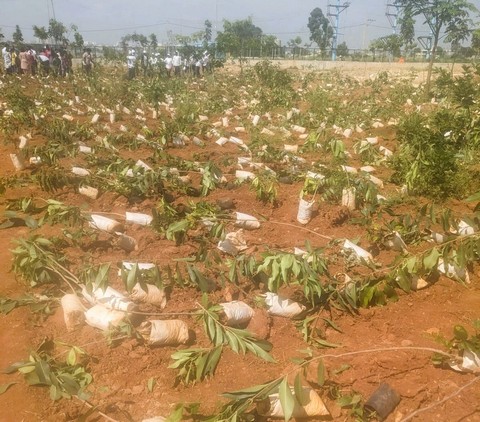
Further, it is shocking that the Karnataka Forest Department was never consulted by the Bangalore Development Authority, the organisers on this futile plantation exercise. Activists said, “The BDA consulted one NGO and based on their discussion, such an exercise was launched hurriedly. It was a pathetic sight to see so many saplings – lakhs of them being wasted while the planted ones all dried up in two of the three selected sites.”
According to forest officials who have been involved in plantation programs across the state, the Miyawaki plantation drive in Bengaluru was the worst ever practise ever done in Karnataka. In Miyawaki technique, no plant will become tree. Rather than going with 10,000 trees per hectare, if they had planted 500 – it becomes high density tree cover. And this will give good results as Bengaluru district has a very good soil profile compared to other cities in the country. Just planting native trees with enough space for them to grow would have been enough for this drive. It is further shocking that the Centre under the guise of Namo Vana are planting 20,000 saplings in one hectare using CAMPA funds.”
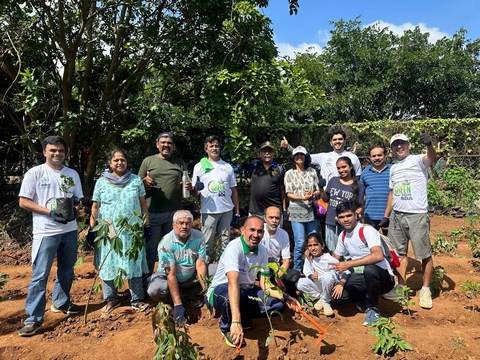
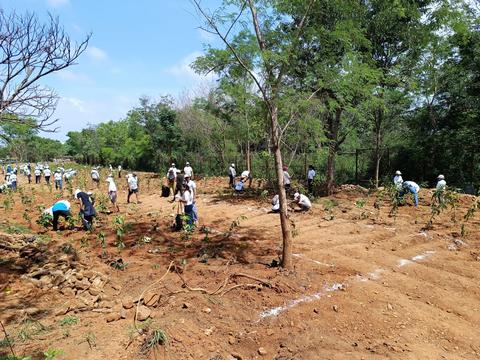
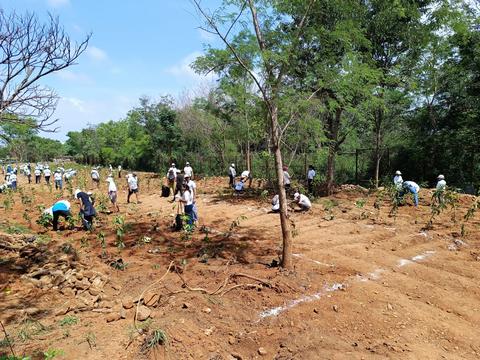
The day-long plantation drive in Bengaluru was held at Nadaprabhu Kempegowda Layout (West), Dr Shivrama Karanth Layout (North) and Banashankari Stage-6th (South). Golur Sitaram, a resident of Poorna Prajna Nagar, Uttarahalli who participated in the drive said, “I questioned the logic behind planting of so many tree saplings in such a small space and that too trees which consume lot of water and have big canopies. But they disregarded and went with the plantation drive. It was very hot that day and many saplings had dried up already. However, in BSK, now they are watering and trying to save them.”
This drive attracted thousands of people to take part in this event but the plantation efforts seem to have failed in the north and western parts of the city for many a reason and local residents said lakhs of saplings and maybe, each worth Rs 300-400 were wasted as they were lying on the ground after the completion of the event. Crores of rupees were wasted which could have been spent wisely.
BANASHANKARI STAGE-6TH
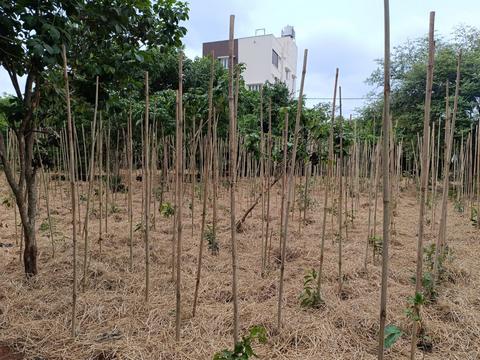
However, in the southern part of Bengaluru, Banashankari, Stage-6th, most of the saplings planted have survived in the four- five zones they were planted on June 27th. But a look at the site revealed that there were too many tree saplings with heavy canopies in such a small space.
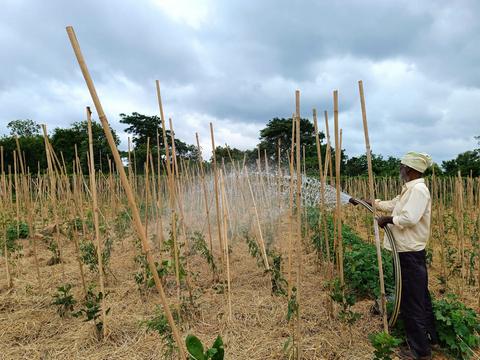
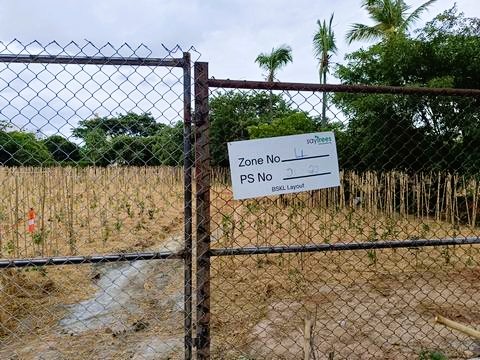
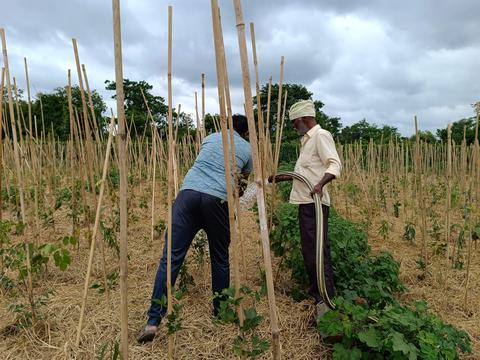
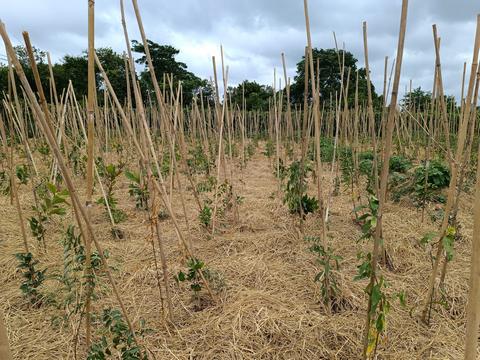
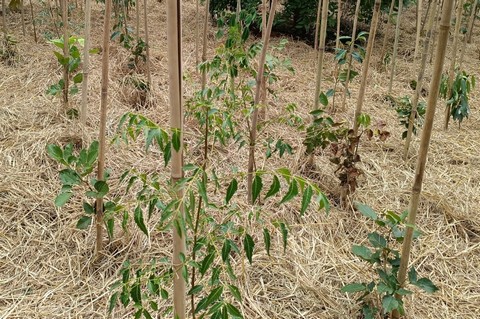
Green Minute News visited the spot on July 8 when the different zones were being secured with fencing and installation of fence gates. Currently, thousands of saplings – look green due to watering every day. Further, the NGO In charge for this area – Say Trees were installing bamboo poles for the planted saplings & they were watering the saplings planted very densely in rows.
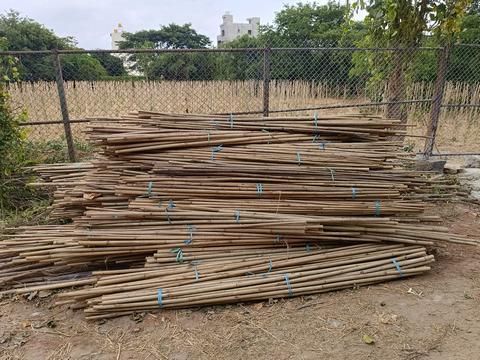
Further, the saplings have been covered with dry grass for water retention while bamboo poles have been provided to give support to the saplings. One of the caretakers at the Site – Zone 4 said, “We have been watering the saplings every day since June 27 since in this weather, they dry up easily.”
There is no problem in getting water supply in BSK as a nearby borewell is sufficient enough to cater to our needs. “We have been de-weeding also but some dried ones and wrongly planted ones were removed. At some places, the ground was levelled due to the rocky outgrowths while many saplings were planted at the right depth and properly by our labourers after the event,” he informed Green Minute News.
TREE SPECIES PLANTED
It is reported that more than 350 native, indigenous trees & shrubs, herbal and medicinal plant species were planted on June 27 across the three sites of Bengaluru. But nobody knows the exact numbers of saplings planted.
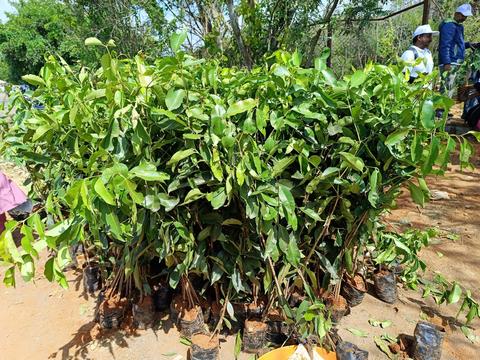
However, a keen look at the various zones of Banashankari Stage-6 site revealed there was more of neem species. We found Pongamia, Cassia fistula, Pterospermum acerifolium, tamarind, Bauhinia, Ficus, Jamun (they need a lot of space), and further fruit trees like Jackfruit and gooseberry too was sighted in the various zones of Banashankari Stage-6th.
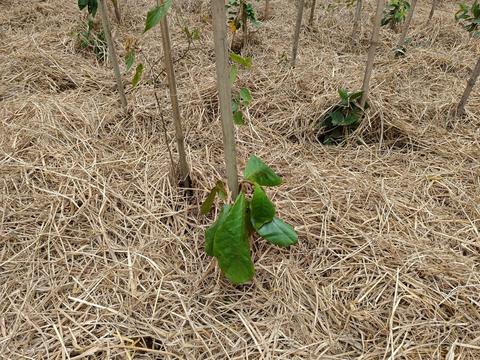
Even teak trees (a water intensive crop) have been planted. Heavy canopy trees have been planted very close to each other in a very tight space while not many herbs and medicinal plants seem to have survived the dry arid conditions.
LOSS OF NATURAL ECOSYSTEM
However, due to this drive, Bengaluru with its unique undulating terrain from the north to south and east to west – lost its original forest ecosystem – arid scrublands, thorny forests and grasslands which are also home to a variety of floral and faunal species.

Many citizens, RWAs, NGOs, people’s group, govt organizations, volunteers, students took part on June 27th to plant 1.5 million tree saplings on a single day but without realizing whether the dream project of the state government was feasible or not.
On one hand, the Karnataka govt is busy proposing projects for both Bengaluru and Karnataka which is likely to destroy forests and tree cover in the long run.
EXPERTS SAY UNSCIENTIFIC PROJECT
Karnataka govt’s ambitious projects under CM DK Shivakumar include building of a futuristic AI township at Bidadi, tunnel project, the Mekedatu Balancing Reservoir project, Sharavathi Pumped Storage project, Bengaluru Racecourse at Kunigal Stud Farm, massive power projects and transmission lines, roads and highways cutting across reserve forests and protected areas in the Western Ghats.
On the other hand, to divert people’s attention, the DK Shivakumar led government proposed a plantation drive (without any studies) that is totally unscientific and unsuitable for either Bengaluru or other cities in India. Many forest officers called this as a nonsensical, water intensive project wherein maintenance costs are too high with 90% of them withering away.
BENGALURU’S NATURAL ECOSYSTEM
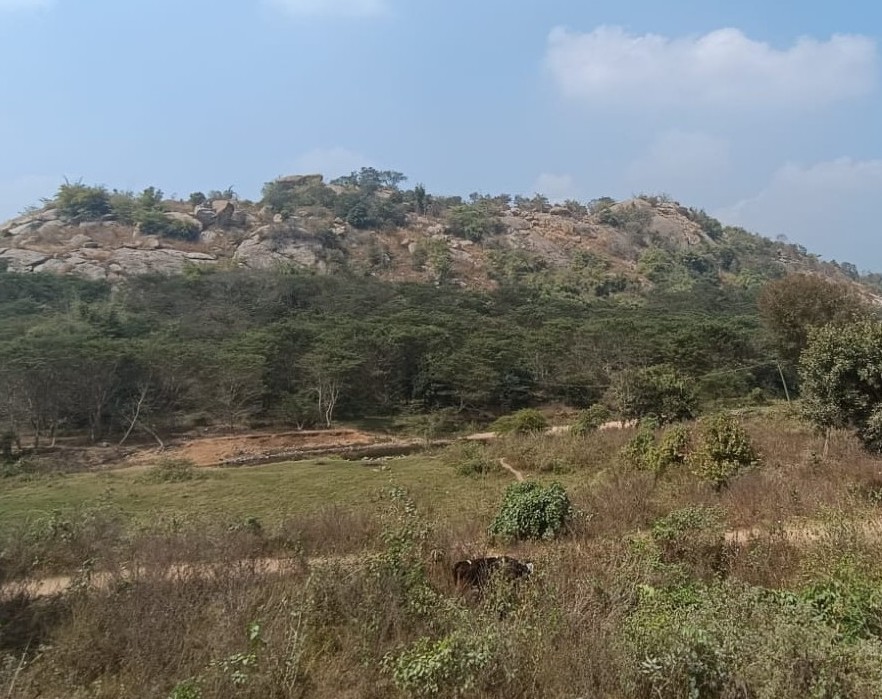
When one looks at Bengaluru’s natural ecosystem, it is a mix of dry deciduous forest and open scrubland. Due to the region’s semi-arid conditions, lower rainfall, and a highly rocky terrain, large swathes of the original native forests have been transformed into dry, open, and thorny scrub or grassland ecosystems in the last 50 years.
So, over 24 square kms of Bengaluru Urban district is home to pure scrub forest.
With urban spaces invading every nook and corner of the city, many green patches around residential colonies have Deccan Scrub Thorn Forests and they are populated by dry and hardy plants. But even now, the remnants of the dry deciduous forest ecosystem can be seen in the Turahalli forest and the area behind Valley School. And these forests are found in the elevated and rocky patches around the outskirts of the southern parts of the city.
MIYAWAKI FOR JAPAN, NOT INDIA
The Miyawaki plantation technique was developed by a Japanese botanist Dr Akhira Miyawaki to suit the needs of Japan which was facing serious environmental consequences due to rampant industrialization.
And further, the Miyawaki technique was not developed for a country like India which has severe constraints like water scarcity, hot summers, arid terrain, extreme heat, humidity and what not. Experts said it was a sheer waste of money and manpower and the traditional method was better than Miyawaki.
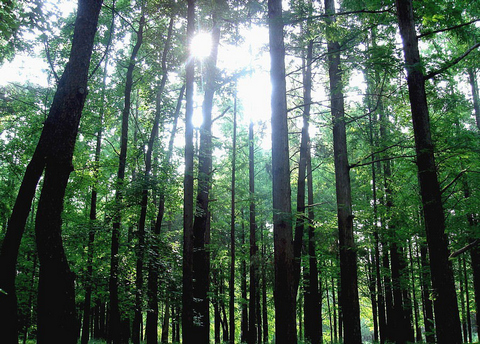
The Miyawaki Plantation Technique was specifically developed to suit the Geo-bioclimatic conditions of Japan, says Vijay Nishant, tree doctor and urban conservationist.
Nishanth adds, “The contemporary forests developed with only 0.6 % indigenous species of Japan neither addressed the problems of climate change nor was it resilient enough to survive. The Miyawaki technique is meant only for urban wastelands and that too in small patches around industrial sites and not by replacing existing scrub forests or grasslands of Bengaluru.”
A TECHNIQUE FOR DEGRADED LANDS
It was in early 1970s Dr Akira Miyawaki, a Japanese botanist proposed the technique of planting dense, native-species tree species for environmentally degraded lands, heavily polluted areas, abandoned mining sites, deforested areas, and urban landscapes across Japan.
He began his journey of adopting this type of technique at Nippon Steel company’s production site but succeeded only after a lot of experimentation.

According to Miyawaki, this plantation technique involves lot of preparation which yields tree cover that are:
- 10 times faster and 30 times denser than the traditional methods of plantation.
- Four types of native species to be planted: Shrub, Sub-tree, Tree and Canopy.
- Ground to be prepared extensively
- Soil dug to a depth of one metre (3.28 feet),
- Soil to be mixed with compost,
- Cocopeat & Rice husk to be used for water retention and root growth.
- Saplings planted densely in mixed manner to stimulate a natural forest
- Planting depending on species
- Stressed on original natural vegetation
- 4-5 saplings per square metre (3.3 by 3.3 feet).
- Watering every day without a break
- De-weeding for three years
- Very high-cost method
- Strict Maintenance for three years.
Every site that was selected for plantation, Miyawaki studied them thoroughly and verified whether it was a remnant of an ancient forest.
He used the seeds from this ancient forest that were preserved around temples and cemeteries (home to many native species).
Miyawaki used these principles to restore native forests for environmental protection, water retention & protection against natural hazards like typhoons, cyclones, crumbling slopes, and cliffs affected by nuclear power plants, etc.
GOVERNMENT GREENWASHING
Further, all sites selected in Japan were “artificially impacted and deforested lands” and not virgin lands like scrub thorny forests, drylands or grasslands as in Bengaluru. Unlike India, the land mass of Japan is very small compared to countries like India, therefore, Miyawaki proposed plantation in the following areas:
- Industrial Areas
- Port Areas
- Safety Buffer Zones around industries
- Abandoned mining sites
- Heavily degraded lands
- Barren lands
- Urbanized lands
- Deforested without humus
Although Miyawaki Plantation Technique specifically aimed for “Restoration of Degraded Forests in Japan” which may closely resemble a natural forest after 50 years, is this technique suitable for developing tree cover in thorny scrub forests and grasslands of Bengaluru. It is shocking that the original ecosystem was destroyed in the three selected sites of Bengaluru to house an “artificial forest” thereby, giving a bad name to Miyawaki Plantation Technique.