
R S Tejus:
A controversy over an approximately seven-kilometre road inside the core area of BRT Tiger Reserve in Chamarajanagar district, Karnataka has raised an important legal and ecological question: does an old Right of Way (RoW) inside a Protected Area permit present-day road construction or upgradation of a mud pathway?
It is absolutely shocking that the construction of a road was started inside the core area of BRT tiger reserve without any permission or even submitting any proposal on the Parivesh by the concerned govt agencies like state PWD.
The Karnataka Forest Department (KFD) records describe the alignment as running from Mavatturu towards Nellikkatri and Honnametti under the Byluru Wildlife Range of BRT Tiger Reserve, while another notice refers to the Mavatturu B Gate–Karadigudda Cross road. The records should therefore, be read together with the exact survey alignment before drawing conclusions about the entire stretch.
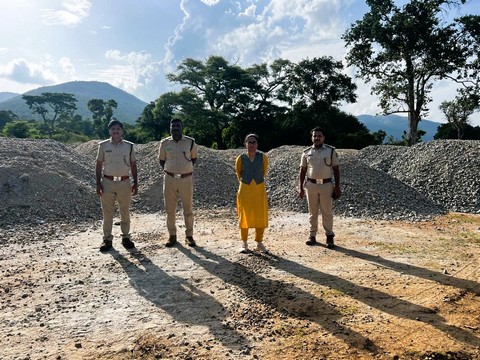
The issue came to the attention of senior Karnataka Forest Department officials after information was received about road activity and construction material being brought into the protected area of BRT Tiger Reserve.
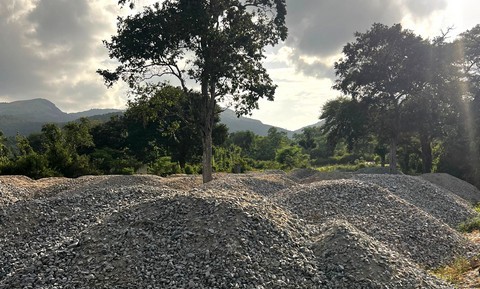
Further, KFD proceedings refer to a Bhoomi pooja on July 4, 2026. On July 6, the Byluru Range Forest Officer issued notices stating that jelly stone had been brought and stored inside the range without Karnataka Forest Department permission and directed those responsible to remove it.
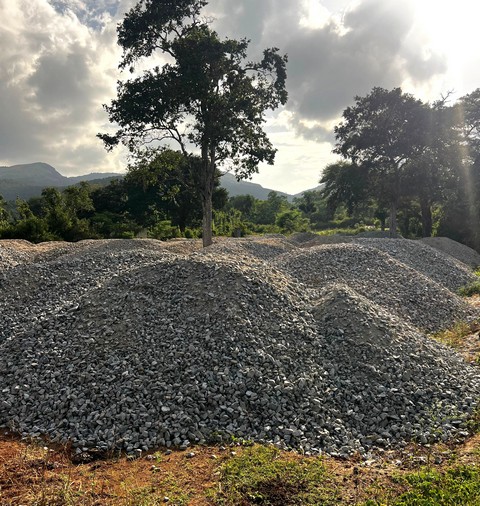
Those served with notice replied that the material was for a government-sanctioned road work. They were given one week to remove it.
When the material remained, the KFD seized approximately 1,100 tonnes of road aggregate on July 16 and registered WLOR No. 03/2026-27 against six persons, including individuals connected with contractors and Public Works Department (PWD) engineering personnel. The case invoked provisions of the Wildlife (Protection) Act, Karnataka Forest Act, Karnataka Forest Rules and Forest (Conservation) Act.
The seized material was later released on interim custody by the jurisdictional court subject to conditions including a ₹4-lakh bond, mahajar, photography and videography. That order concerned custody of the material and was not a final determination on the legality of the road work or the wildlife offence proceedings.
The episode also prompted internal scrutiny. Senior forest officers questioned whether field officials had acted quickly enough once the activity began. The Range Forest Officer maintained that notices were first issued, time was granted for removal, and seizure followed after non-compliance, describing his actions as an exercise of “Administrative Discretion.”
A historical Right of Way does Exist
A historical forest settlement record connected with this landscape is significant because it shows that public Rights of Way were formally recorded decades ago.
One of the entries records a route from Eragabalu to Doddasampagai temple via Nellikatcraibetta, described as two yards broad and open for people and pack animals.
This changes the way the present issue should be framed. The question is not simply whether an old route existed. The real question is:
What exactly was the legally recorded Right of Way, and does the present road proposal remain within its original alignment, width and purpose?
The historical record itself shows that different routes had different widths and permitted uses. Some were available for carts, while others were meant for people, cattle or pack animals.
A recorded RoW was therefore, a defined right, not an unlimited infrastructure corridor.
Praveen Bhargav: RoW is not an unrestricted right to develop
Former National Board for Wildlife member Praveen Bhargav says roads inside Protected Areas cannot be treated as unrestricted merely because an old alignment exists.
Bhargav also cautions against casually calling every historical track an “old road”. In many forests, a track may have originated as a forest coupe path or departmental access route, without constituting a public Right of Way.
In this case, however, the historical record confirms the existence of Rights of Way in the landscape. The next task is therefore, to establish whether the present seven-kilometre alignment corresponds to one of those recorded routes and, if so, what its original width and permissible use were.
Bhargav’s larger point is that the Karnataka Forest Department retains jurisdiction within Protected Areas and forests. Other government departments cannot independently undertake works inside them merely on the strength of administrative sanction.
Where required procedures have not been followed, the KFD can stop the work, book offences and initiate legal action.
This is particularly relevant because the papers in the BRT Tiger Reserve case repeatedly refer to the road as a government-sanctioned work. That does not automatically settle the separate question of compliance with forest and wildlife laws.
Kollegala Sub-Division ACF Mahalakshmi:
“The road work is not allowed. We’ve stopped and acted as per procedures established under the relevant laws.”
Chamarajanagar CCF Malati Priya:
“We’ve strictly instructed the user agencies to adhere to the process and follow the Forest Conservation Act.”
Sanjay Gubbi: Assess the Ecological Footprint, not just the road width
Wildlife biologist and conservationist Dr Sanjay Gubbi says that even where a valid Right of Way exists, managers must assess its present-day ecological impact rather than merely rely on its historical width.
“The assessment should therefore, go beyond the historical width of the road and consider its present-day ecological impacts, including traffic volume, noise, disturbance, wildlife movement, roadkill, edge effects and habitat fragmentation.”
His concern is that resurfacing or upgrading a road can alter its ecological impact even without substantial widening. A better road can lead to more traffic, higher speeds and increased movement of heavy vehicles, extending disturbance well beyond the physical road corridor.
“The fact that a Right of Way or road is legally recognised does not mean that its ecological impacts can be disregarded.”
Construction activity itself can introduce heavy machinery, tippers, labour, noise, pollution and repeated vehicle movement into a sensitive Tiger Reserve landscape.
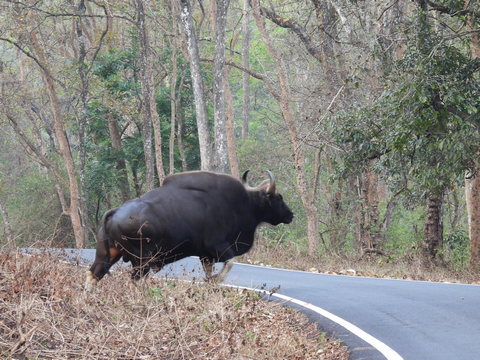
But the Longer-term Concern is Cumulative.
“Multiple roads within relatively small protected areas can progressively fragment habitats and create barriers to wildlife movement.”
For Gubbi, roads inside Protected Areas must therefore, be assessed at the landscape level, taking into account wildlife movement, habitat connectivity, roadkill, traffic intensity, noise and disturbance.
He argues that new road construction and development inside Protected Areas should be avoided wherever possible. Where viable alternatives exist, routes should be shifted outside such areas. Where no alternative exists, mitigation may include wildlife overpasses or underpasses, restrictions on heavy vehicles and controls on traffic volume.
“We cannot continue to sacrifice wildlife habitats at this scale. As our economy grows, pressure for roads, connectivity and vehicular movement will only increase.”
(PHOTO CREDIT: ALL IMAGES COURTESY KARNATAKA FOREST DEPARTMENT)