
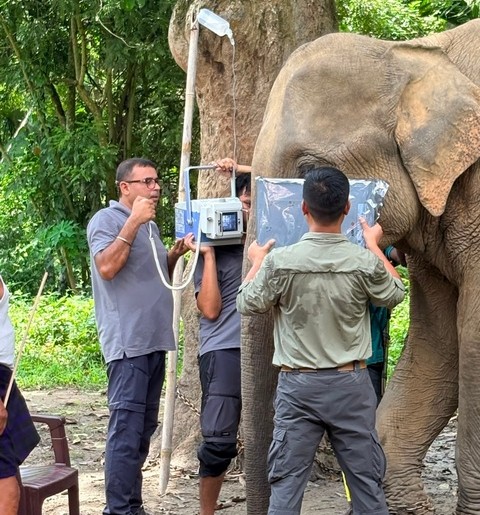
GREEN MINUTE NEWS:
In the recent times, Asian elephants have been caught in deadly snare traps and also hacked for their magnificent tusks by brutal poachers. Such incidents have been witnessed in Assam, however, the gentle giants have been rescued, released and also treated successfully by wildlife veterinarians.
On September 1, 2026, the trunk of a 25-year-old female wild elephant was found caught in a deadly snare trap in Assam’s Raimona National Park by forest staff. In fact, the injured elephant was first spotted near the Daogen Gonthong APC in the Sanfan Range, Kachugaon Forest Division along the Indo-Bhutan border. The badly injured mother elephant was accompanied by her calf.
SAFE INTERVENTION PLAN
Forest guards stationed at the Anti-Poaching Camp in Kachugaon Forest Division immediately began tracking her movements of this snared elephant over the next few days so as to form a very safe intervention plant.
Snare traps are lethal hunting devices that can cause severe lacerations, tissue damage, fractures and prolonged suffering, and may ultimately lead to death if any wildlife like elephants, leopards, etc are unable to free themselves or receive timely treatment.
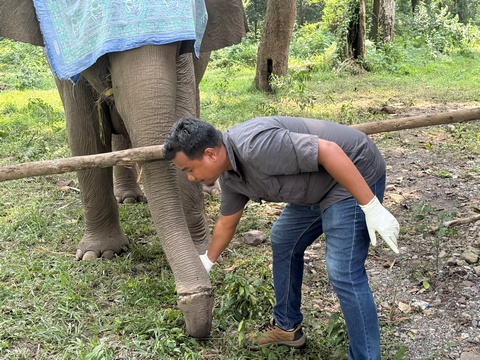
JOINT VETERINARY TEAM
On 7th September, the elephant was sighted again near the APC area, prompting the swift deployment of a joint veterinary team comprising specialists Dr Prabhat Basumatary, FVO, Manas Tiger Reserve, Dr Daoharu Baro, Vet. Wildlife Trust of India (WTI), and Dr Pankaj Chakraborty, VO, State Veterinary Dispensary, Gossaigaon. The forest team was led by Biswajit Basumatary, RFO, Sanfan Range.
The team chemically immobilized the elephant to allow for a safe and thorough examination. The entire procedure was completed in approximately 30 minutes, after which the elephant was safely guided back into the forest.
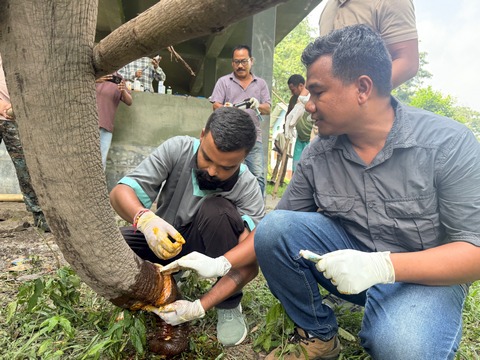
MONITORING THE JUMBO
Dr. Daoharu Baro, Manager (Vet), WTI said, “The elephant had sustained a deep cut wound on her trunk due to the tightly embedded wire snare, resulting in significant soft-tissue injury with pus discharge. We carefully removed the wire, followed by thorough wound cleaning, removal of dead tissue, antiseptic dressing, and provided appropriate wound management.”
Following the intervention, forest officials are continuing to closely monitor the elephant over the coming days to assess her recovery.
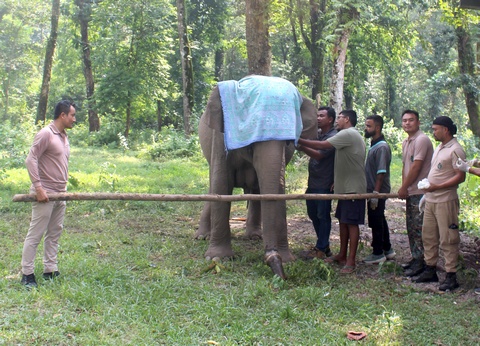
SUCCESSFUL TREATMENT
Mustafizur Ali Ahmed, DFO, Kachugaon Forest Division said the team’s prompt response and expertise had ensure the animal in receiving timely care and successful treatment. This was a challenging task, as our staff had been trying to locate the injured elephant since the first day of the sighting. Finally, the rescue and treatment operation was successfully carried out.
The DFO, Kachugaon Forest Division further added, “There is a possibility that she may have encountered a snare trap in the fringe areas. We are closely monitoring the situation and taking all necessary measures to ensure that such incidents do not happen again.”
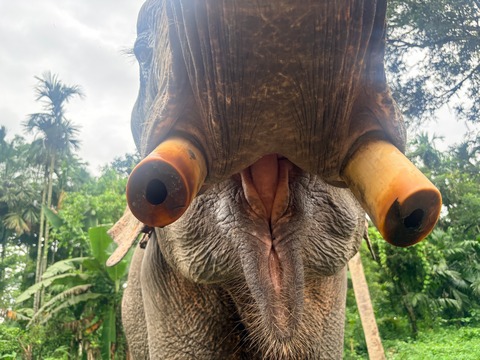
JUMBO MANGAL SINGH’S TUSKS HACKED
In a major medical intervention following a horrific case of wildlife crime, Mangal Singh, a 16-year-old captive elephant underwent a specialized dental procedure in Margherita, Digboi Forest Division, Assam.
In April 2026, the two tusks of an elephant were hacked off brutally by poachers. The incident took place in the Dhulijan forest area of Lakhipathar, Digboi, Assam where poachers hacked off both of the elephant’s tusks, leaving the animal with life-threatening injuries and exposed pulp cavities. The incident sparked widespread outrage of such a heinous crime and concerns on security of captive elephants under the custody of some private ownership.
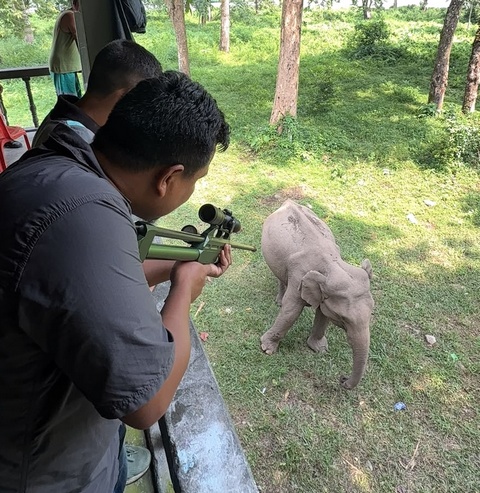
CRITICAL CONDITION
Tusker Mangal Singh is owned by an individual in Margherita. Following the attack, his distressed cries alerted local residents, who immediately informed the Digboi Forest Division, Assam. Government veterinary teams responded promptly and initiated emergency medical treatment.
Dr Mehedi Hassan, Veterinary Surgeon, WTI, said, “During the initial days, the elephant remained in critical condition and suffered from severe bleeding. As both tusks had been cut from near the roots, the pulp cavities were left exposed, resulting in persistent infection despite regular monitoring and treatment.”
KEPT IN FAMILIAR AREA
However, along with local veterinary experts, Dr Mehedi, continued to attend to the elephant to ensure life-threatening infections of the tusker did not occur. Elephants are social animals, and Mangal Singh is a captive-born calf with strong social bonds with the family and the surroundings he grew up in.
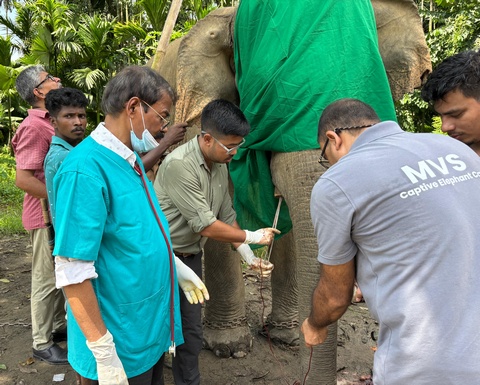
The Centre for Wildlife Rehabilitation and Conservation (CWRC) team decided to keep the elephant in his familiar surroundings, denying relocation to other unfamiliar surroundings, which would put him under further undue stress and prevent further complications from arising.
PULPOTOMY PROCEDURE
In view of his prolonged suffering and the continuing risk of infection, a specialized partial pulpotomy procedure was performed by a joint veterinary team under the leadership of Dr. Bhaskar Choudhury from WTI on 26 August 2026 at Margherita.
Rohini Kumar Das, DFO, Digboi Forest Division said, “Our local veterinarians with experience of handling elephants were also rendering treatment over the past few months. But the exposed pulp cavity required closure in both tusks, which is possible only with a partial pulpotomy. So, with experts, we were able to successfully initiate the complicated procedure.”
INTENSIVE MEDICAL PROCEDURE
Such intensive medical procedures on elephants require multi-disciplinary teams, and the CWRC team ensured this was done most professionally. Dr Bhupen Sarma, professor (retired), Department of Surgery and Radiology and an expert on elephant anesthesia; a special team of Orthodontics from Tinsukia led by Dr Abhishek Ojha; senior veterinarians from the Animal Husbandry Department, Dr. Rabi Shankar Choudhury, Dr. Bishwajit Barua and Dr Mehedi Hassan of WTI were all part of this medical procedure.
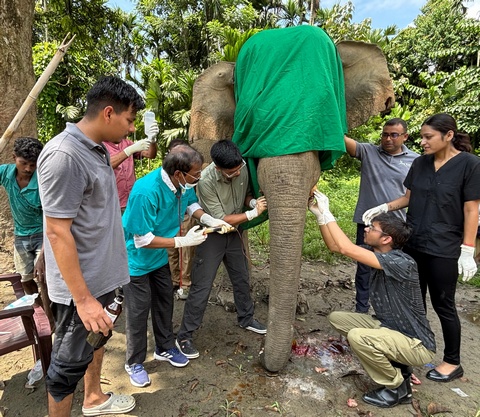
Dr. Bhaskar Choudhury, CWRC Centre Manager and the lead veterinarian at WTI, said,“It is disheartening to see this majestic sub-adult tusker suffered such brutality. The circumstances surrounding the loss of his tusks are deeply concerning and highlight the need for greater protection of elephants, including those under private ownership.”
NEED FOR MORE VIGILANCE
Jose Louies, CEO, WTI stressed, “The case highlights the severe physical and psychological consequences of illegal ivory-related activities and underscores the need for continued vigilance, stronger protection measures and swift action against wildlife criminals.”
The Centre for Wildlife Rehabilitation and Conservation (CWRC), near Kaziranga National Park, is jointly run by the Assam Forest Department, the Wildlife Trust of India (WTI), and IFAW.
(PHOTO CREDIT: ALL PHOTOS COURTESY WILDLIFE TRUST OF INDIA)