
GREEN MINUTE NEWS:
New scientific studies across southern Western Ghats in the states of Karnataka and Kerala reveal that rainfall was the strongest environmental factor linked to reported occurrence of elephants in both the states. The scientists of Centre for Wildlife Studies (CWS) combined 420 community interviews across Karnataka and Kerala with satellite land-cover maps and ecological modelling to understand where the community reported the presence of Asian elephants in the southern Western Ghats.
The study’s central message is – managing human-elephant coexistence in the Western Ghats will depend on more than protecting wildlife reserves. As human settlements expand and habitats fragment, keeping connected habitats intact will require planning that combines scientific evidence with the knowledge of the communities who live alongside elephants every day.
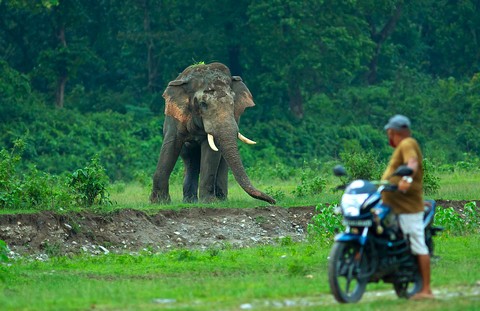
COMMUNITIES UNDERSTANDING ON JUMBO MOVEMENT
The study was led by Dr Simran Prasad (Centre for Wildlife Studies, Bengaluru, and Manipal Academy of Higher Education) and others. And she states, “What stood out to us was how much local communities deeply understand about elephant movement, often noticing shifts in behaviour and responses. By bringing these two aspects together, we were able to build a much richer picture of where and why elephants move through these landscapes.”
The new study titled “Integrating Ecological Modelling and Local Knowledge to Understand Elephant Occurrence and Human–Elephant Interactions in the southern Western Ghats” waspublished in Environmental Management on 10th July 2026. And it examined where people and Asian elephants are most likely to overlap across the southern Western Ghats, and how that overlap may shift by 2030.
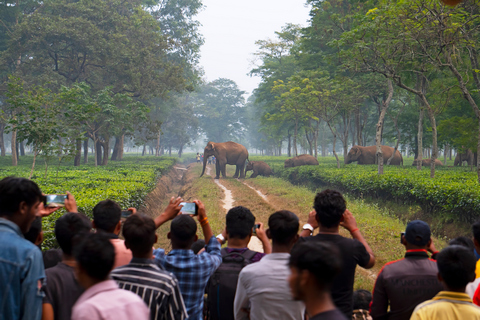
SHARING OF LANDSCAPES
Across the Western Ghats, people and elephants increasingly share the same landscapes. This global biodiversity hotspot of Western Ghats holds the largest wild population of Asian elephants, within one of the world’s most densely populated countries. As farms, settlements, and roads expand into former elephant habitats, understanding where and why elephants are likely to occur in shared landscapes has become central to reducing conflict and supporting coexistence.
This study also cross-examined a practical question: which environmental and social factors best explain where communities report elephant presence, and how might those patterns change in the years ahead?
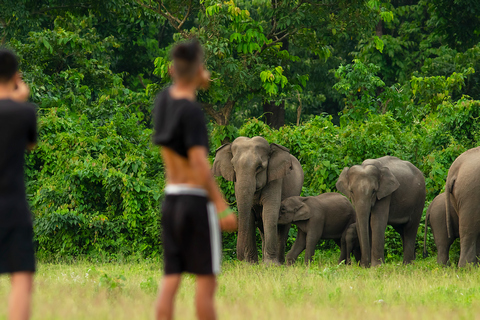
PROXIMITY TO WATER & FOOD
The same conditions that make an area attractive to elephants, including rainfall, water, proximity to forests for food requirements, are often the conditions people extensively depend on to survive. As these landscapes continue to change, the challenge is not just predicting where elephants will go, but ensuring that people and elephants can continue to share these spaces safely, for generations to come,” says Dr Simran Prasad, lead author.
Further, scientists integrated different research methodologies and approaches. In 2022, 507 community residents were interviewed across four areas in Karnataka and Kerala: villages surrounding Bandipur and Nagarhole National Parks, and the Palakkad and Mannarkkad forest divisions. Each interview documented where and how often people encountered elephants, along with their real-life experiences within such landscapes.
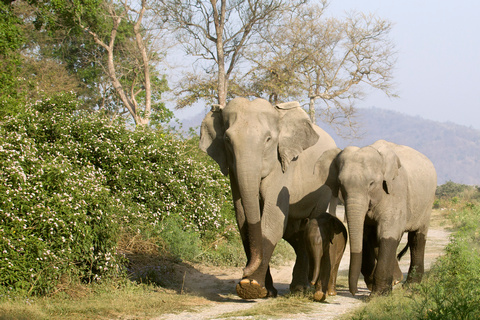
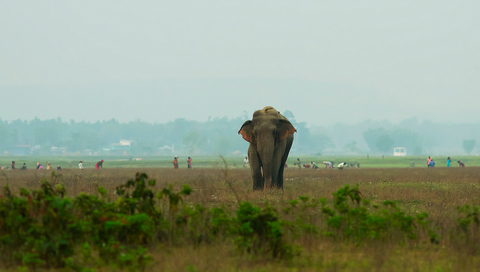
ELEPHANT OCCURRENCES
As per the studies, the residents had lived there for an average 44 years. The team then paired these community accounts with satellite maps of land cover and rainfall and used statistical models to identify which drivers were most strongly associated with reported elephant occurrence. As the analysis is built on community-reported sightings rather than direct tracking, it describes reported occurrences, and the patterns it finds are associations of various drivers.
However, rainfall emerged as the single strongest environmental factor linked to reported elephant occurrence in both states, and the relationships were often complex rather than following simple straight lines. Human land use mattered too, but in revealing ways. In Karnataka, areas of human settlement were positively associated with reported elephant presence, suggesting that elephants there continue to use landscapes close to people.
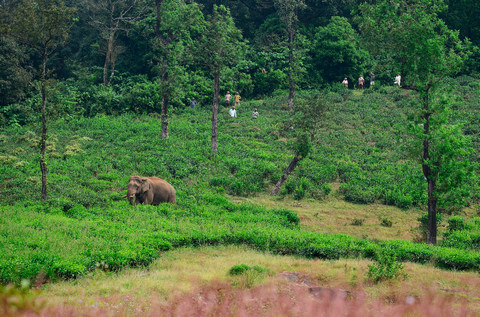
The authors interpret this cautiously: elephants appear to tolerate a certain amount of human pressure, but likely only up to a threshold beyond which they retreat.
Assessing land cover and land use change between 2012 and 2022 showed how quickly these landscapes are changing. In the Karnataka study area, the area classified as human settlement rose by about 31 percent while dense vegetation declined slightly; in Kerala, settlement area increased by roughly 16 percent. When the researchers projected these trends forward to 2030, the modelled patterns of elephant occurrence became more fragmented and harder to predict.
And in Kerala the proximity to protected areas was strongly associated with where elephants were likely to occur. The authors caution that these 2030 figures are projections, but they point in a consistent direction: continued habitat loss and fragmentation could make elephant occurrence more fragmented and difficult to predict, increasing the risk of human-elephant encounters.
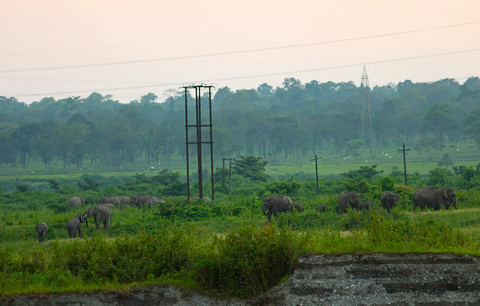
RESTORATION OF CORRIDORS
Drawing on multiple strands of evidence, the authors have recommended protecting and restoring the corridors that let elephants move between habitat patches, restoring fragmented deciduous habitats with native species such as teak, bamboo, and rosewood, and engaging local communities directly through participatory planning and agroforestry that reflects their seasonal knowledge. They argue that conservation works best when ecological modelling and lived local experience are used together.
The study was co-authored by Dr. Krithi K. Karanth (Centre for Wildlife Studies, and Nicholas School of the Environment, Duke University), Dr. Vikram Aditya (Centre for Wildlife Studies), and Dr. Jennifer Solomon (Colorado State University). It paired community interviews with ecological modelling to identify the environmental and social conditions linked to reported elephant occurrence.
(PHOTO CREDIT: ALL IMAGES COURTESY CENTRE FOR WILDLIFE STUDIES – AVIJAN SAHA, KUMBLE D AND ANEESH SANKARANKUTTY )