
Green Minute News:
The People’s Review Panel comprising environmentalists, wildlife experts, ecologists and conservationists trash the National Institute of Advanced Studies (NIAS) Report approving the 2000 MW Sharavathi Pumped Storage Project inside the Sharavathi Lion Tailed Macaque Sanctuary and its Eco-Sensitive Zone (ESZ).
They stressed that the NIAS report had made a complete mockery of the existing rules and regulations governing “protected areas of India and the Eco-Sensitive Zones (ESZ)” notified around it.
Now why did the Standing Committee of the National Board for Wildlife (SC-NBWL) seek comments from NIAS on the Sharavathi Pumped Storage Project (PSP) in the aftermath of issues raised by H S Singh Committee.
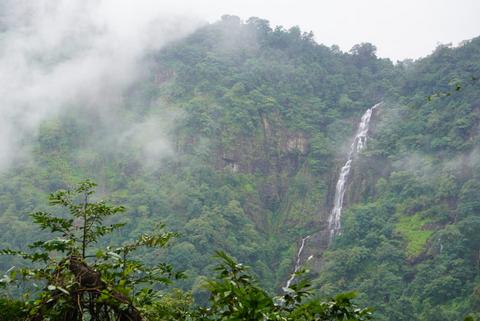
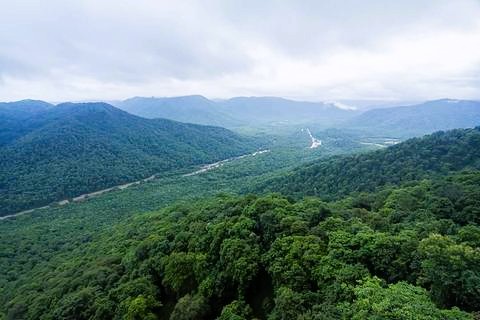
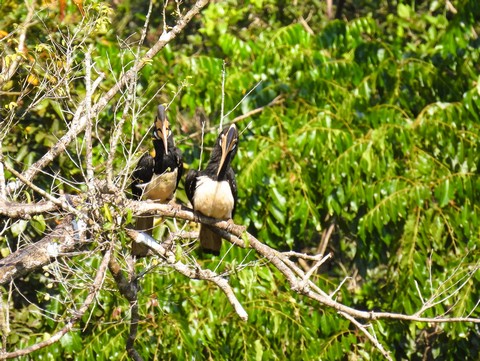
Questioning the NIAS report, experts have called for a complete rejection of this report and say the issues raised by the H S Singh committee should be accepted as final as this eco-disastrous project inside the Sharavathi Lion Tailed Macaque Sanctuary & its ESZ will once again destroy prime, virgin forests of the central Western Ghats teeming with floral diversity and rare, endemic and endangered species.
In fact, the H.S. Singh Committee did not recommend the Sharavathi PSP and stated, “The present proposal lacks compelling technical merit, environmental sustainability, or alignment with public interest. Accordingly, in adherence to statutory conservation mandates, the Committee does not recommend its approval.”
The People’s Review Panel submitting their objections vis-a-vis the NIAS report on Sharavathi PSP says, “We therefore reject the NIAS report with one important exception. We agree with NIAS that the Sharavathi PSP must be appraised as one fully integrated project.”
NEED FOR INDEPENDENT GEOLOGICAL ASSESSMENT
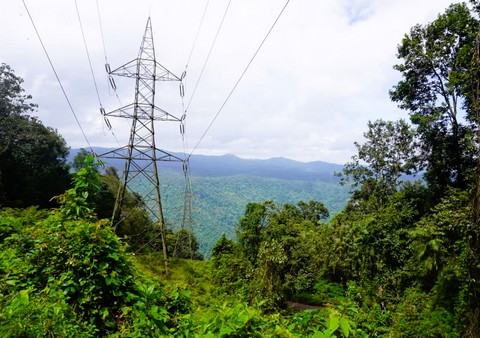
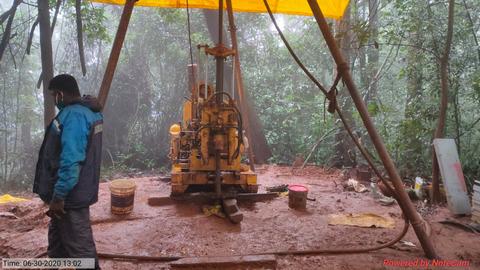
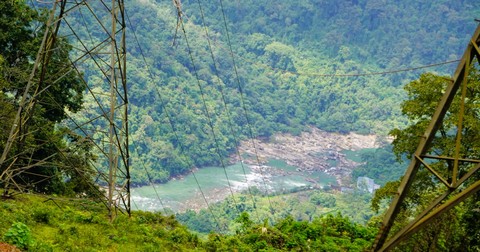
The entire modified project, including transmission and power evacuation, quarries, sand mining bridges, underground works, and associated blasting and excavation, must undergo fresh, integrated appraisal by the SC-NBWL and other competent authorities.
This must include an independent geological and geo-technical assessment by Geological Survey of India (GSI) and a hydrogeological assessment involving Central Ground Water Board (CGWB) before statutory clearances are considered, they further stress.
NIAS-WASHING
The People’s Review Panel comprising independent researchers, wildlife biologists, retired forest officials, hydropower experts, climate experts, ecologists, and environmentalists said, “The gravest consequence of this “NIAS-washing” is the neutralisation of the H S Singh Committee’s project stopping ecological concerns. From the neutralisation of these concerns to the overriding of the adverse site-inspection report by the Deputy Inspector General of Forests (DIGF), Bengaluru, a troubling pattern emerges: dissenting voices within government are marginalised, while findings/concerns that stand in the way of project approval are diluted, overridden or “NIAS-washed”.
Having presented the ecological concerns as “addressed” or “alleviated”, NIAS turns to the legal obstacles themselves. It recommends that the Sharavathi PSP be considered for approval by the SC-NBWL and that Ministry of Environment, Forest and Climate Change (MoEFCC) consider granting the project an exception from the prohibition on major hydroelectric projects in the ESZ of the Sharavathi Lion Tailed Macaque Sanctuary, the People’s Review Panel states.
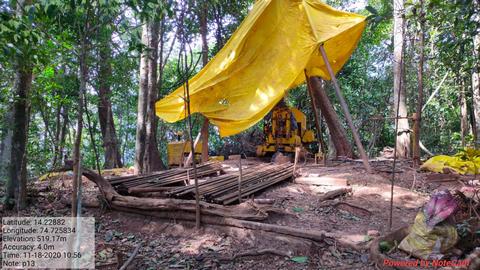
KPCL’S CLAIMS OF REDUCING FOREST AREA
The Panel experts add, “We now place on record what KPCL’s proposed redesign, presented as reducing forest diversion from 54.16 ha to 38.98 ha, actually entails. As per the revised estimates, the total forest area required for the project has been reduced from 54.16 ha to 38.98 ha. The forest area required for above-ground structures has been reduced from 34.173 ha to 14.97 ha. At the same time, the forest area attributed to underground structures has increased from 19.982 ha to 24.014 ha.”
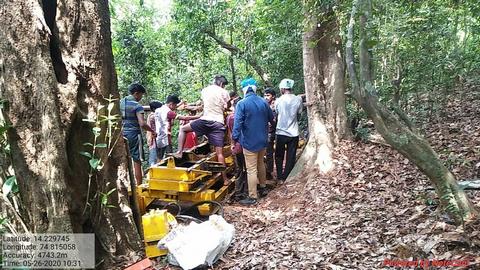
The significance of measuring the scale of underground excavation becomes even clearer from the findings of the H S Singh Committee. The Committee recognised the nature and magnitude of the underground works and sought the inclusion of a geological expert, which as of today has not materialised. Further, the report of the DIGF (Central) have indicated that the area falls within Seismic Zone 3 and the geological formations in the area are unstable.
NIAS RECOMMENDS REGULATORY SUBVERSION
The People’s Review Panel experts add, “When a project conflicts with the legal protections governing a Sanctuary and its ESZ, the project should be reconsidered, not the protections. NIAS turns this principle on its head, and does so in the complete absence of the legal, policy and scientific analysis required to support either recommendation. In plain language, NIAS is lending the authority of a scientific institution to regulatory subversion.
Additionally, the People’s Review Panel place on record in the Annexures A, B C & D, Prof. Mewa Singh’s Letter, Dr. Subash Chandran’s representation, Brij Kishore Singh’s representation, and the media coverage of the Open Letter by retired forest officials, all raising serious concerns about the project and its ecological impacts on the Sharavathi Lion Tailed Macaque Sanctuary.
DO ENERGY STORAGE NEEDS JUSTIFY THIS PSP?
The need for energy storage does not, by itself, justify every means of providing it. If India needs hospitals, it does not follow that a hospital must be built inside a Wildlife Sanctuary, much less that the protections governing the Sanctuary should be changed to accommodate it.
Expert panellists further add that NIAS neither reviewed the key project documents nor engaged with the necessary stakeholders. Instead, its engagement was overwhelmingly with the project proponent, Karnataka Power Corporation Limited (KPCL), whose verbal communication appears to be the primary source of information underlying the entire report.
NIAS FAILS TO ANSWER THE CENTRAL QUESTION?
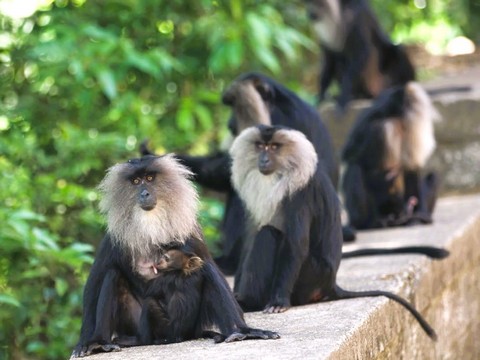
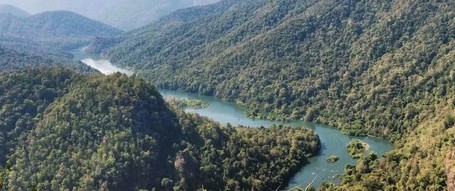
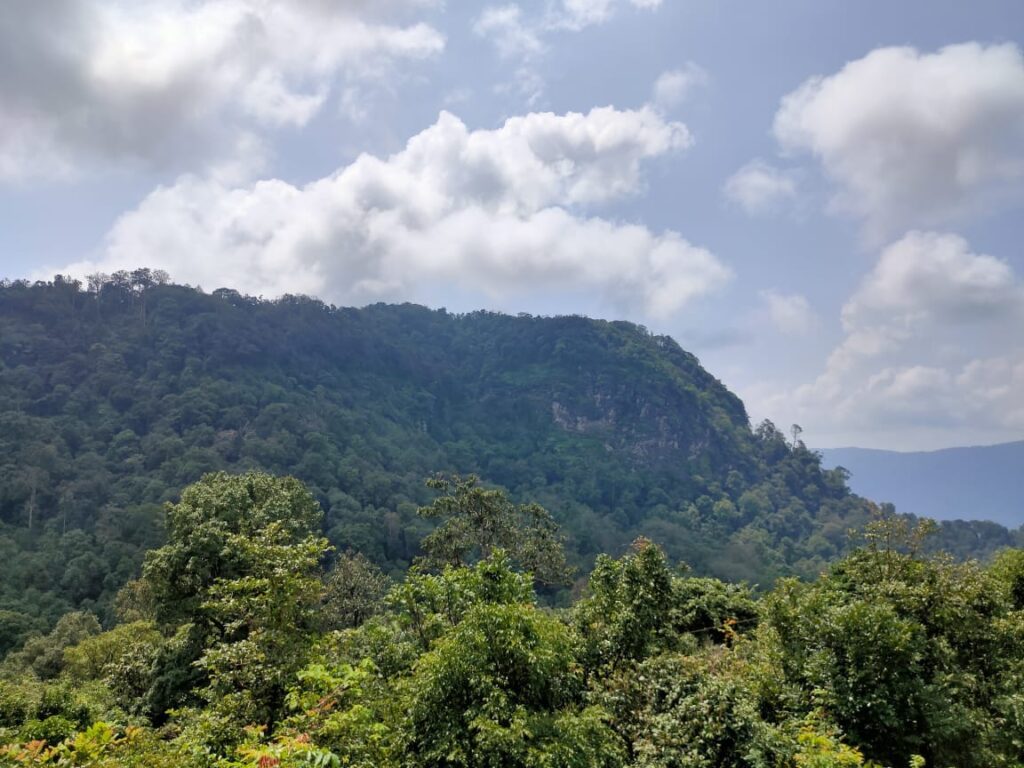
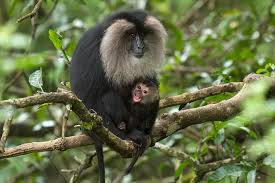
In fact, on this fundamentally compromised foundation, NIAS proceeds to justify the Sharavathi Pumped Storage Project in the Western Ghats and that too inside the protected area of Sharavathi Valley Lion Tailed Macaque Sanctuary and of course, the ESZ. This PA is the only sanctuary in the world to have a contiguous population of more than 730 LTM which are not only endemic but also endangered. NIAS completely fails to address the threshold legal test under Section 29 of the Wildlife Protection Act.
Wildlife experts and conservationists on the panel further add, “The perusal of the entire NIAS report, the central question remains unanswered: Why does this 2,000 MW PSP need to be located inside the Sharavathi Lion Tailed Macaque Sanctuary and its ESZ, despite the site-specific ecological constraints, despite the geological risks, despite the statutorily protected archaeological heritage, despite the available alternatives and, most importantly, despite the legal prohibitions governing the site?”
KPCL PURSUES VARAHI PSP INSIDE TWO SANCTUARIES
Moreover, the same project proponent, KPCL, is pursuing a 2,500 MW Varahi PSP inside the Mookambika and Someshwara Wildlife Sanctuaries in the Western Ghats of Karnataka. An exception for the Sharavathi PSP could therefore, set a precedent not only for Varahi, but for other major projects within Wildlife Sanctuaries across the Western Ghats and India.
If project-specific arguments are allowed to override protections governing such areas, it would undermine the whole conservation framework in India at a time of accelerating biodiversity loss and species extinction.
AVAILABLE ALTERNATIVES
This People’s Review Panel also places on record in Annexure E what NIAS failed to examine: the available alternatives.
Karnataka’s storage and peak power requirements can be met through a combination of alternative locations, different storage technologies, better utilisation of capacity already committed, a portfolio combining different technologies, capacities and locations, measures to reduce or shift peak demand, and changes in electricity procurement behaviour.
The most significant alternative is securing the full 1,600 MW capacity of the Saundatti PSP in Belagavi. Karnataka has contracted only 700 MW, or 44 percent of its capacity.
A BASELESS, UNSCIENTIFIC REPORT
The People’s Review Panel concludes NIAS report on Sharavathi PSP as “Baseless is perhaps the simplest word with which to describe the NIAS report. But several others follow from this review: uncritical, unsubstantiated, unscientific, compromised, proponent-driven and biased.
The NIAS report fails on every count, a few listed:
1. It does not fulfil the SC-NBWL’s mandate.
2. It does not examine the key project documents.
3. It does not consider the H S Singh Committee Report at all, even though the concerns raised in that Report were the very reason NIAS was brought into the process.
4. It does not engage with the necessary stakeholders, including members of the H.S. Singh Committee.
5. It does not independently verify the project proponent’s claims.
6. It does not undertake an alternatives analysis.
7. It does not establish why India’s general need for energy storage justifies the Sharavathi PSP inside the Sharavathi LTM Wildlife Sanctuary.
The 20-member-People’s Review Panel (Octbober 12, 2026) has multi-disciplinary experts from all related fields and they comprise: Ashish Kothari, Environmentalist and founder of Kalpavriksh), Joy K. J, Water and environmental policy researcher), Debadityo Sinha, Conservationist and legal-environmental researcher, Ravi Chellam, Wildlife biologist and conservation scientist, Ravi Chopra, Environmentalist and former head of the Char Dham panel), Sagar Dhara, Environmental engineer and risk analyst, Dr A N Yellappa Reddy, IFS, former Secretary, forest & environment, Karnataka, and Brij Kishore Singh, IFS, former Karnataka PCCF.
The other members include – Justice Gopal V Gowda, former Supreme Court Judge, Joseph Hoover, former member, Karnataka State wildlife Board, Mirza Zulfikar Rahman, Researcher, Developmental Sciences, Dileep Kamat, veteran activist, Nirmala Gowda, environmental management researcher, Rajesh Ramakrishnan, Independent Researcher, Dr Sreepathi, Hon Adjunct Professor, IIT, Dharwar, Shripad Dharmadhikari, IIT, Bombay, Subash Chandran, ecologist & scientist, CES, IISc, Dr Sudhi Seshadri, Independent Research Consultant, and Dr Sreekumar, chemical engineer.