
SADIK KNK:
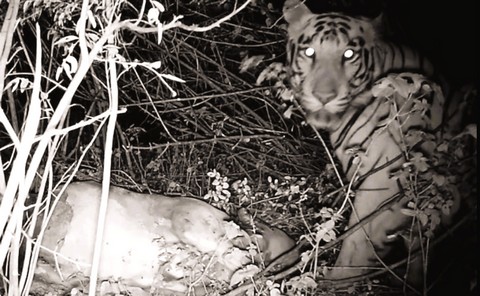
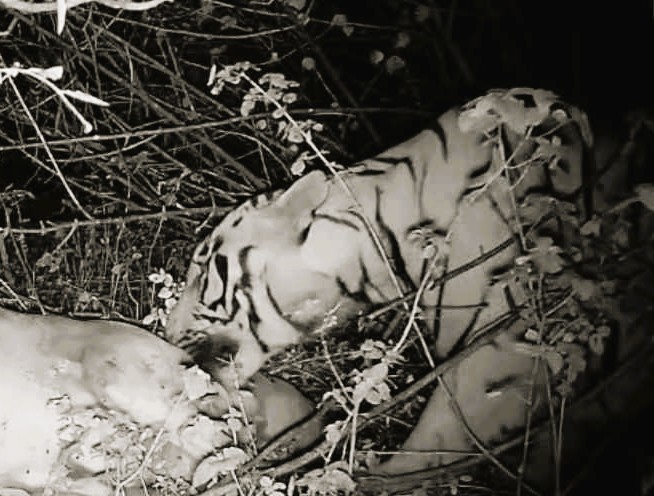
After 56 years, the presence of a tiger has been recorded in Sanapura-Basapura region by Karnataka Forest Department through camera traps in the Kishkindha hills of Koppal district, central part of Karnataka. The last time, tigers had been reported and photographed in Koppal district was in 1970s – by former state minister and avid wildlife photographer M Y Ghorpade.
The presence of a male tiger in Sanapura-Basapura region (a hilly terrain with scrub forests) has elicited a lot of excitement amongst forest officials, wildlife activists, wildlife conservationists and generated curiosity – about its presence in this part of central Karnataka.
One week back, 50 camera traps were installed in the villages of Basapura, Koppal taluk and Temba village of Gangavathi taluk. In fact, two to three times, the presence of a tiger was captured in the camera traps. Presently, inspection is going on and a technical committee is in place to ascertain the background of its presence in the Sanapura-Basapura region and from which area, the male tiger came to Kishkindha hills.
A RARE RETURN TO SCRUB FORESTS
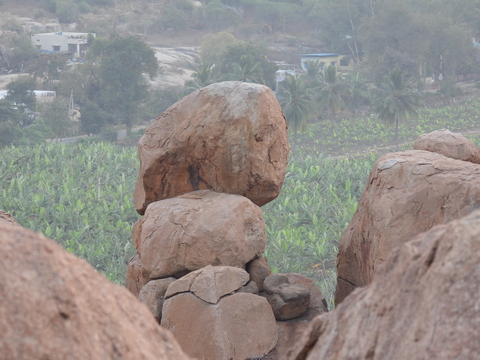
Koppal district is often perceived as an arid, drought-prone region dominated by industries. Beyond this perception, however, Koppal is also defined by its surviving forests which are primarily dry deciduous and thorny scrub and natural scrublands. And this is the landscape I have closely observed, documented faunal species and photographed them for nearly 13 years.
After nearly five decades, a tiger has been spotted in the forest patches near Gangavathi taluk, marking a rare and significant return of tiger to this region. Camera traps installed across the Kishkindha hill ranges first captured the tiger’s movements, documenting its presence for the first time since the 1970s.
WHERE DID THE TIGER COME FROM?
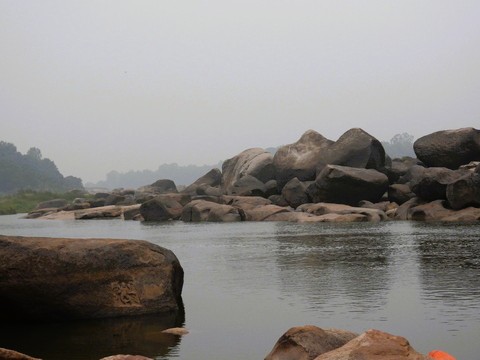
Wildlife experts speculate that the tiger may have either settled in the Kishkindha hills over the recent months or migrated along the corridors of the Tunga and Bhadra river basins from the Bhadra Tiger Reserve. Another possibility is that it may have wandered in from the Srisailam forest range in the neighbouring state of Andhra Pradesh.
These hilly scrub forest area is already a well-known habitat for leopards and sloth bears, and now marks the tiger’s return an extraordinary welcome event. Historically, about 50 years ago, both tigers and elephants roamed the nearby Sandur forests in Ballari district.
MINING, MAIN CAUSE FOR DISAPPEARANCE OF WILDLIFE
The expansion of intensive mining of iron ore and industrial activities across the forests and hills of Kalyana Karnataka have disrupted these wildlife corridors, driving such magnificent big cats and other wildlife away from this region.
Ballari district and especially Sandur taluk has borne the brunt of iron ore mining by both government and private mining companies in the last two decades. Many forested areas in Sandur have lost their hilly green cover and even forest streams due to both legal and illegal mining and even now, mining leases are being given to private companies in virgin forests of Sandur.

Meanwhile, forest officials and field staff are going around these villages warning people not to venture outside during night time and not walk around alone. Making announcements in and around Sanapur village, forest officials in Gangavathi taluk said the presence of a tiger has been confirmed in these regions and people should take all precautions and secure their cattle and not allow children and elderly people to move around in the night.
The return of tiger, the apex predator proves that these resilient habitats still endure in Koppal district and this is a truly joyous and celebratory milestone for local conservation in and around Koppal district.