
Meera Bhardwaj:
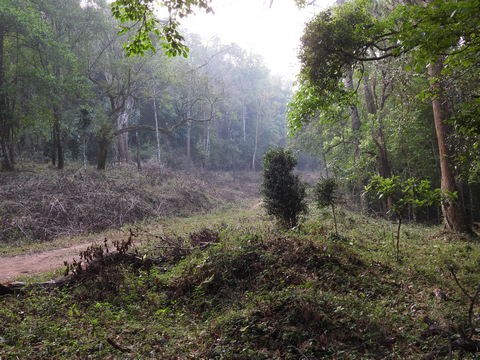
You will hear this bird even before you see it. A piercing whistle echoed through the silent and wooded environs of the BRT Tiger Reserve as we were moving across the undulating wilderness of the K Gudi Range. This wildlife range has moist deciduous forests, semi-evergreen patches, shola grasslands, and open slopes with its hill ranges varying from 3000-6000 feet.
We suddenly stopped and reversed a little back to see only the back of a Crested Serpent Eagle. It was majestically perched in the middle portion of a huge canopied tree but with a bit of clearing for us to sight it. It was half hidden and I was truly disappointed that I couldn’t get a better view of this raptor which is widely seen in the BRT Tiger Reserve in Chamarajanagar district of Karnataka, India.
The Crested Serpent Eagle is listed as a Schedule-1 species under the Indian Wildlife Protection Act, and therefore, receives the highest legal protection and there is absolute prohibition against hunting of this raptor or commercial trade in India.
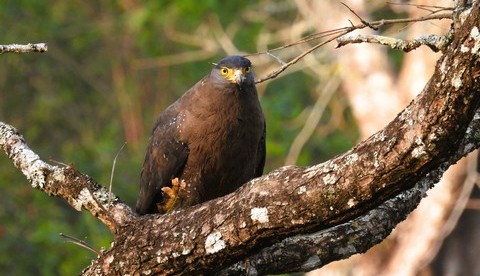
However, when we traversed a bit ahead and took a reverse and came on the other side of the tree, I could get a clear view of the Crested Serpent Eagle – sitting still but very alert in the early hours of a sunny morning. It was already 8 am but very cool and one could hear the regular chirping of birds in the thickly, wooded K Gudi Range of BRT Tiger Reserve.
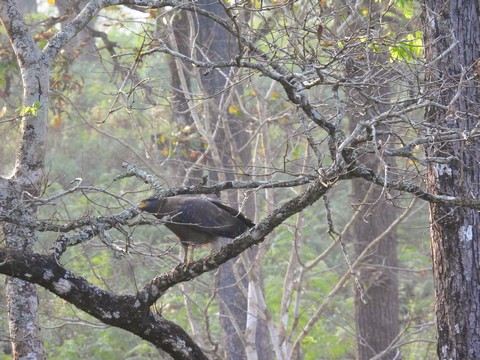
I saw it perched safely, snuggly and comfortable in between two tree branches and it seemed that it had no plans to move in the next few minutes. The most striking part of the Crested Serpent Eagle which is its glowing yellow eyes could be seen clearly even at a great distance. However, its bushy fan-shaped white and black crest was not visible as it was neither alarmed nor excited.
Having a vice like grip when it is holding on to a writhing serpent which is its favourite prey, the Crested Serpent Eagle has short, thick, deeply ridged talons with a heavily scaled and non-feathered legs. These features help it enormously to hold on its prey and separate the snake’s head from its body.
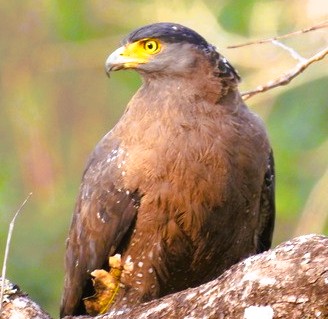
We stayed on for a few minutes to capture this raptor in all its glory even as it once again made an alarming call. We were hoping to see either a tiger or leopard but alas! None of the big predators was sighted. Compared to its body, the raptor looks large headed with long feathers on its back, thereby, giving it a crested appearance.
Compared to other raptors, the Crested Serpent Eagle has a fleshy, naked yellow skin (ceres) at the base of its upper bill and therefore, this gives the medium-sized raptor a large-headed appearance. In raptors, the ceres houses the external nostrils of the bird which further, indicates the health and its maturity through its colour intensity.
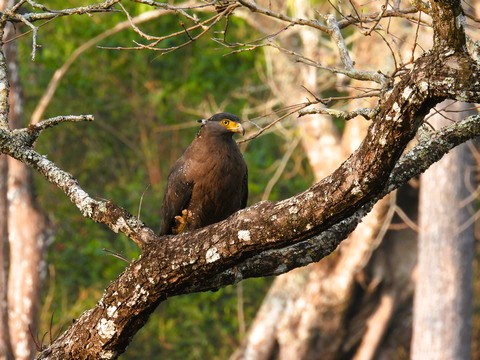
The Crested Serpent Eagle is so named as it largely loves to feast on snakes most of the time. But it also feeds on lizards, birds, fishes, insects, amphibians, earthworms and even termites. It is a medium-sized bird of prey and is dark-brown and black in colour. However, the throat of the Peninsular sub-species is brown while in rest of India, this sub-species has a black throat.
This raptor is an accomplished hunter and one can see from its piercing gaze as it scans the silence of the forest especially the ground vegetation for any signs of its favourite meal, the snakes. The raptor was keenly scouring the ground for any sounds of a snake and so, any rustling sound would change the expression in its keen, piercing gaze.
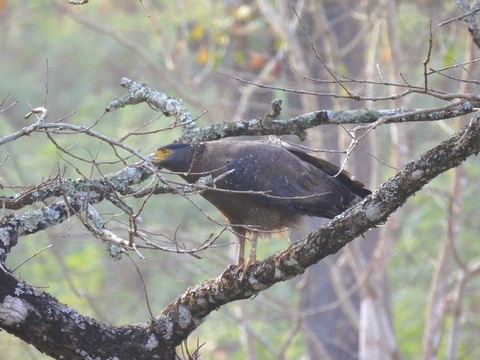
Usually roosting in the dense foliage of huge trees, they have been found to be sitting still for hours together by researchers in Taiwan.
With its wide range of distribution across the Indian sub-continent, and South East Asia from China to Indonesia, there are about 21 sub-species of the Crested Serpent Eagle found in a variety of wet and dry forests.
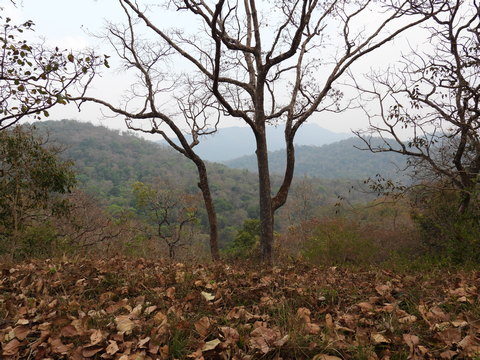
And the one found in Peninsular India – Spilornis cheela melanotis is found in the heavily wooded forests of Western and Eastern Ghats, moist deciduous forests, wet grasslands, and hilly regions.
For these resident raptors, the semi-deciduous and evergreen forests of BRT Tiger Reserve is a perfect habitat and so, it thrives in the densely wooded canopies of these forests.
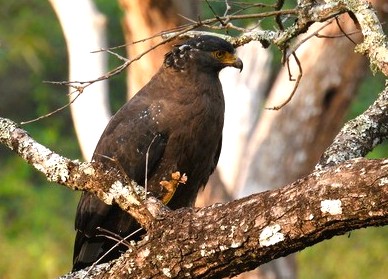
One can sight it during the safari drives both in the morning and evening times but only in the aftermath of its scream or whistle echoing clearly in the silent environs. So, next time when you visit BRT, wait for its clear two-three note whistle.
(PHOTO CREDIT: ALL IMAGES BY MEERA BHARDWAJ AT BRT TIGER RESERVE)